
Workers Comp Physical Therapy Midtown NYC
In Touch NYC Physical Therapy accepts workers’ compensation cases and treats employees recovering from on-the-job injuries at three offices. Workers compensation physical therapy is billed to the insurance carrier, so patients do not pay for authorized treatment while a claim remains established. Care comes from New York State licensed clinicians, including Keith Chan, PT, who holds a master’s degree from CUNY Hunter College and Graston Technique certification.
Every plan is built around the duties an injured employee needs to resume, and recovery targets measurable job function rather than general fitness.
Request An Appointment
Conditions Treated After A Job Injury
Occupational injuries fall into a few recurring patterns, and each responds to a different rehabilitation emphasis.
| Condition | Typical Job Cause | Rehabilitation Focus |
|---|---|---|
| Low back strain | Manual lifting, prolonged sitting | Core stability, hip mobility, lifting mechanics |
| Neck and shoulder strain | Overhead reaching, desk posture | Scapular control, thoracic mobility, postural endurance |
| Repetitive stress injuries | Typing, tool use, assembly tasks | Graded loading, nerve gliding, workstation correction |
| Knee and hip injury | Stairs, kneeling, hard standing surfaces | Gait retraining, quadriceps and glute strength |
| Sprains and fractures | Slips, trips, uneven surfaces | Range of motion restoration, balance retraining |
| Post-surgical recovery | Injuries requiring joint repair | Progressive loading, scar and joint mobility |
Workers comp rehab for repetitive stress injuries begins by identifying the movement pattern that overloaded the tissue. Transit and food service roles tend to produce shoulder and wrist presentations, while desk-based roles produce neck and forearm complaints. Treatment addresses the movement pattern alongside the affected joint, since the original task demand usually remains unchanged.
Conditions extending beyond a single joint are addressed through targeted care for Back Pain & Sciatica, Shoulder Pain, Hip & Knee Pain, and Elbow, Wrist & Hand Pain. Recovery from slips and falls often involves Balance and Gait Disorders, which affect return-to-duty timelines for roles requiring stable footing.


How The New York Claim Process Affects Treatment
Treatment access in New York depends on claim status and provider authorization. The steps below reflect current Workers’ Compensation Board requirements.
- Notify the employer in writing within 30 days of the injury, or within 30 days of learning that employment caused the condition, under the written notice requirement in WCL §18
- File an Employee Claim, Form C-3, with the Board, which must receive notice of the injury or illness within two years.
- Tell the treating clinician the injury is job-related and provide the employer name and insurance payer.
Choosing A Board-Authorized Provider
Outside of emergencies, New York requires that the clinician treating an injured employee be authorized by the Workers’ Compensation Board. Employers generally cannot direct an employee to a specific provider, though exceptions apply where the employer participates in the Preferred Provider Program or an Alternative Dispute Resolution Program. Therapist assistants may also treat injured workers under the direction and supervision of a Board-authorized therapist. The Board’s guidance on who can treat injured workers describes provider categories and authorization requirements.
What Injured Workers Pay
Care for a job-related injury is provided free of cost for the worker’s lifetime under an established claim, with the insurer covering treatment. Injured employees should not pay the provider or route bills through other health insurance. The exception is a claim the Board later finds invalid, in which case the employee becomes responsible for those costs.
The Board’s Medical Treatment Guidelines govern treatment volume, set expected care pathways for common body regions, and define when a variance request is needed.
Workers Comp Physical Therapy in Midtown LocationsWORKERS And Service Areas
Three offices treat occupational injury cases. The Midtown Manhattan clinic is at 162 W 56th St, Suite 302, within walking distance of the Columbus Circle and 57th Street transit hubs, making it reachable for employees commuting from across the borough. Details are available on the Midtown location page, with treatment options listed under Physical Therapy Midtown NYC.
Downtown employees are seen at 111 John St, Suite 1460, in the Financial District. Long Island cases are handled at 65-77 Froehlich Farm Blvd, Suite 812, in Woodbury. Employees looking for a workers comp physical therapist closer to the Upper West Side or Hell’s Kitchen can review coverage on the Physical Therapy Upper West Side and Hell’s Kitchen pages.
Program Structure And Session Length
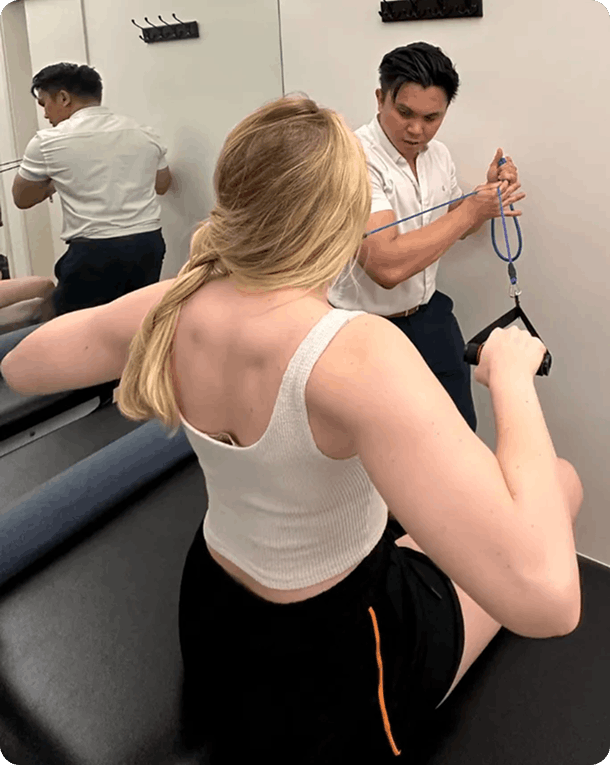
At the first visit, a clinician assesses the injury and reviews job duties to establish a functional baseline. That evaluation measures activity level, aerobic capacity, grip strength, core and joint strength, and mobility in relation to the injury.
Once the baseline is set, an individualized program combines cardiovascular and strengthening exercise with stretching, manual therapy, and mobility work, matched to specific job tasks. Progress updates go to the referring physician and other authorized parties, documenting attendance, participation, and progression. Discharge orders are issued when the patient reaches full function or a documented plateau.
| Program Element | Typical Range |
|---|---|
| Program length | 4 to 8 weeks |
| Session duration | 1 to 3 hours |
| Weekly frequency | 2 to 3 days per week |
Posted on GoogleTrustindex verifies that the original source of the review is Google. This practice is a breath of fresh air. From the front desk to the therapists, everyone is professional and welcoming. I’ve seen Keith for a sports injury and Beth for some chronic pain issues, and both are incredibly skilled. The one-on-one sessions are 30-50 minutes of undivided attention, which is so much better than other clinics I’ve tried. They accept a wide range of insurance plans, including for Pilates-based PT, which is a huge plus. I recommend them to everyone.Posted on GoogleTrustindex verifies that the original source of the review is Google. Keith Chan is a master of his craft. As someone who is very active, I needed a PT who understood that I wanted to get back to my workouts, not just be pain-free. Keith’s background as a personal trainer and his Graston certification made him the perfect fit. He created a plan that was both challenging and safe. Their Midtown clinic is clean, modern, and runs on time. I can’t recommend him enough for anyone looking to recover from an injury and get back to what they love.Posted on GoogleTrustindex verifies that the original source of the review is Google. My knee was in such bad shape when I first came to In Touch. I was practically immobile and somehow pushing myself through the day, but in Keith's hands I have gone through a remarkable transformation. His care and attention, coupled with an intense physical regiment has benefited me greatly. I am glad a good friend recommended him!Posted on GoogleTrustindex verifies that the original source of the review is Google. This place is great. Keith has reduced my pain so much, I don’t know what I did before him. It’s small and intimate and I’ve consistently received great care. Heather is also extremely helpful when it comes to booking and changing appointments. I would 100% recommend this practice.Posted on GoogleTrustindex verifies that the original source of the review is Google. 10/10 just finished day 1 and 10 minutes into the session I knew I came to the right place. Looking forward to working together furtherPosted on GoogleTrustindex verifies that the original source of the review is Google. Keith understands the body better than other physical therapists I’ve been to. I didn’t think my neck and shoulders would ever get back to normal because I hurt for so long. Keith changed that. Never had to take advil to ease the tightness again. Highly recommend the practice.Posted on GoogleTrustindex verifies that the original source of the review is Google. I’ve struggled with migraines and neck tension for years, and Beth at In Touch NYC PT has been a game-changer. She has a deep understanding of the body and doesn’t just treat the symptom; she gets to the root cause. Her Pilates-based approach was new to me, but it’s helped my posture and core strength so much. I’m finally seeing real, lasting results.Posted on GoogleTrustindex verifies that the original source of the review is Google. I cannot say enough good things about Beth and the team at In Touch NYC. After having my second baby, I was dealing with pelvic floor issues that I thought I just had to live with. Beth specializes in this area and made me feel comfortable from the very first appointment. She is patient, understanding, and incredibly skilled. Their Midtown location is calm and welcoming, which makes a huge difference when you’re dealing with sensitive health issues. I finally feel like myself again. If you’re a mom looking for a pelvic floor PT in NYC, this is the place!!Posted on GoogleTrustindex verifies that the original source of the review is Google. I’ve been to a few physical therapy clinics in NYC, but In Touch Physical Therapy is on another level. Keith Chan is incredibly knowledgeable and actually takes the time to listen. I went to their Midtown location for a lingering shoulder issue, and Keith built a plan that finally got me back to full strength. I always left feeling heard and confident in my recovery. Highly recommend if you want real one-on-one care.Posted on GoogleTrustindex verifies that the original source of the review is Google. Keith is exceptional. Professional, knowledgeable, and incredibly attentive. I always feel I’m in the best hands and couldn’t recommend him more highly.
Return-To-Job Conditioning In Manhattan
Conditioning is an advanced therapeutic program for patients who have finished standard rehabilitation but need more function before resuming their duties. The clinic simulates primary job functions with indirect supervision from a therapist.
This can run in a group setting, with each patient working through the tasks specific to their own role. The approach rebuilds job-specific tolerance before you return to full duty.
The clinic team can provide program details; contact us today to learn more.
For Injured Workers
A job-related injury creates financial strain alongside the physical problem, and both affect recovery. Treatment prioritizes reducing discomfort early, then restoring range of motion, strength, flexibility, and stamina. For patients who require surgery, the plan supports complete recovery through each healing stage. Education on managing the injury and preventing recurrence runs throughout.
For Case Managers And Employers
Case managers and employers receive programs designed to return injured employees to full duty safely. Detailed, timely reporting supports claim administration and keeps treatment decisions aligned with the Board’s guidelines. Direct communication between clinicians, employees, and case managers keeps the compensation file current.

5-STAR GOOGLE RATING
We are proud to have a 5-star Google rating! This demonstrates our commitment to excellent service and hopefully builds trust with new customers!

Over 50 5-star google reviews
We are grateful for our more than 50 5-star Google reviews! We strive to continue delivering 5-star service at all of our locations!
Frequently Asked Questions
Is A Physician Referral Required Before Starting Treatment?
Most occupational injury cases arrive with a referral from the treating physician, and that documentation helps the carrier process authorization. In an emergency, an injured worker may seek treatment from a non-Board-authorized provider. Non-emergency care should begin with a Board-authorized clinician as soon as possible after the injury.
Can An Injured Worker Choose Their Own Clinician?
New York gives injured employees the right to select a Board-authorized provider, and employers who recommend a provider must inform employees of that right through Form C-3.1. Employers participating in the Preferred Provider Program or an Alternative Dispute Resolution Program are the exception, since initial care runs through the designated arrangement.
How Does Pre-Authorization Affect The Number Of Visits?
The Medical Treatment Guidelines define expected care pathways for common body regions, and treatment consistent with those pathways follows the established course. Care falling outside the guidelines requires a prior authorization request, and a denied request cannot be billed to the carrier or the patient. Documentation submitted after each visit supports continued authorization.
Are Medication And Travel Costs Covered?
Prescribed medication and medically necessary equipment are covered under an established claim. Mileage, public transportation, and other necessary expenses tied to attending appointments are reimbursable on the same basis.
If you’re interested in work conditioning programs, contact us today to learn more.