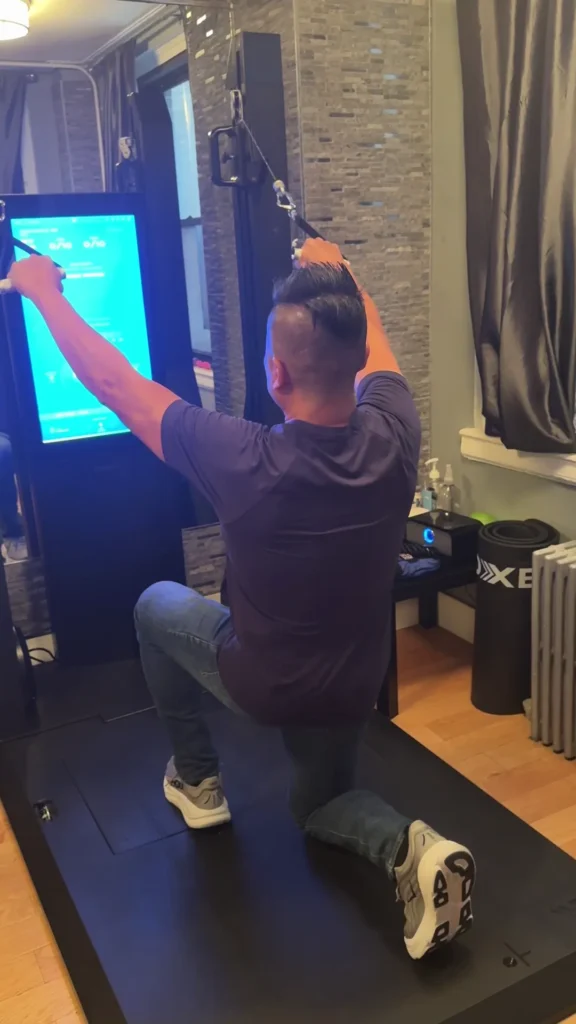
Workers Comp Physical Therapy in Midtown NYC
In Touch NYC Physical Therapy provides workers’ comp physical therapy for Midtown NYC employees who can begin after an on-the-job injury at its office at 162 W 56th St. Treatment is billed to the insurance carrier, so patients do not pay for authorized care while a claim remains established.
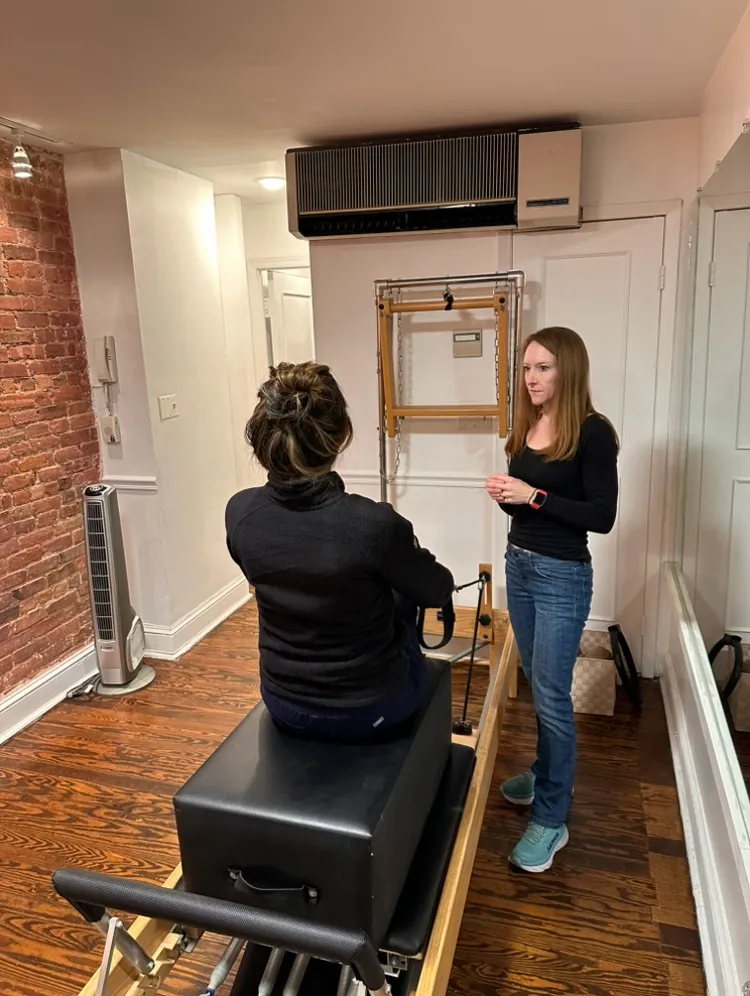
Care at the Midtown office is provided by New York State-licensed physical therapists Keith Chan, MPT, CKTP, and Beth Simoes, MPT, CPI. Every plan is built around the duties an injured employee needs to resume, with recovery targets focused on measurable job function rather than general fitness. Call (212) 288-2988 to start an evaluation.
Request An Appointment
Conditions Treated After A Job Injury
Occupational injuries fall into a few recurring patterns, and each responds to a different rehabilitation emphasis.
| Condition | Typical Job Cause | Rehabilitation Focus |
|---|---|---|
| Low back strain | Manual lifting, prolonged sitting | Core stability, hip mobility, lifting mechanics |
| Neck and shoulder strain | Overhead reaching, desk posture | Scapular control, thoracic mobility, postural endurance |
| Repetitive stress injuries | Typing, tool use, assembly tasks | Graded loading, nerve gliding, workstation correction |
| Knee and hip injury | Stairs, kneeling, hard standing surfaces | Gait retraining, quadriceps and glute strength |
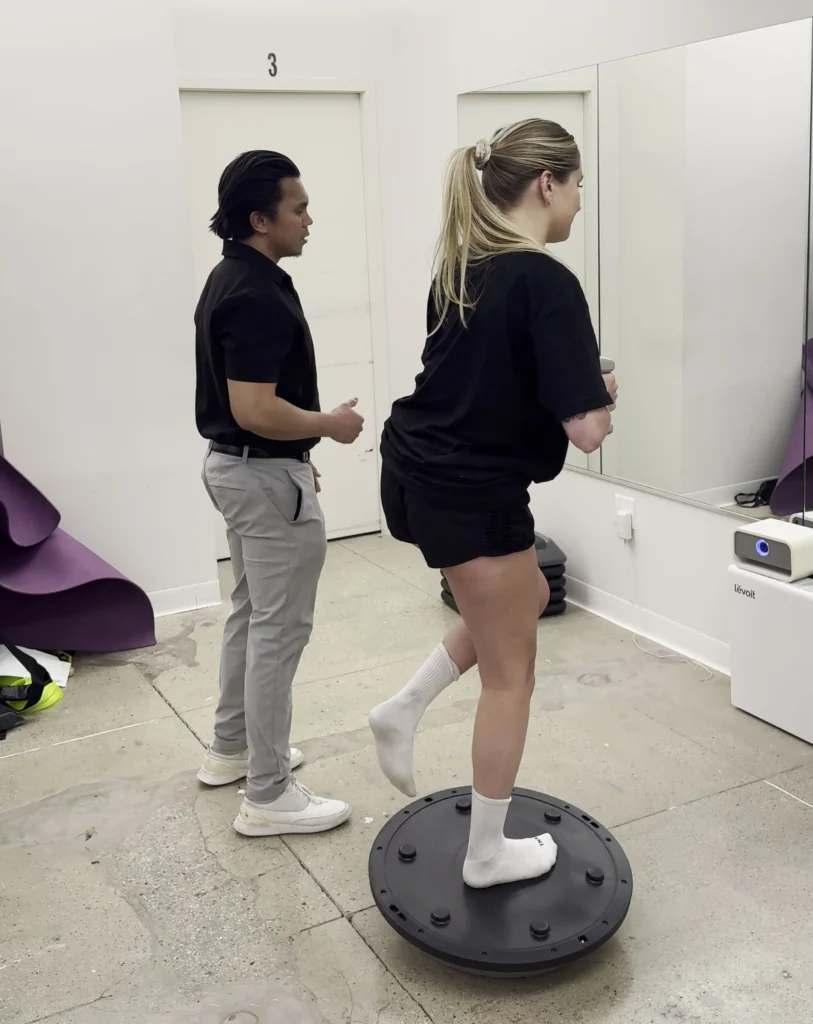
| Sprains and fractures | Slips, trips, uneven surfaces | Range of motion restoration, balance retraining |
| Post-surgical recovery | Injuries requiring joint repair | Progressive loading, scar and joint mobility |
Workers comp rehab for repetitive stress injuries begins by identifying the movement pattern that overloaded the tissue. Transit and food service roles tend to produce shoulder and wrist presentations, while desk-based roles produce neck and forearm complaints. Treatment addresses the movement pattern alongside the affected joint, since the original task demand usually remains unchanged.
Conditions extending beyond a single joint are addressed through targeted care for Back Pain & Sciatica, Shoulder Pain, Hip & Knee Pain, and Elbow, Wrist & Hand Pain. Recovery from slips and falls often involves Balance and Gait Disorders, which affect return-to-duty timelines for roles requiring stable footing.
YOUR MIDTOWN TEAM
Meet Keith Chan
PT, MPT, CKTP | NYC Licensed Physical Therapist
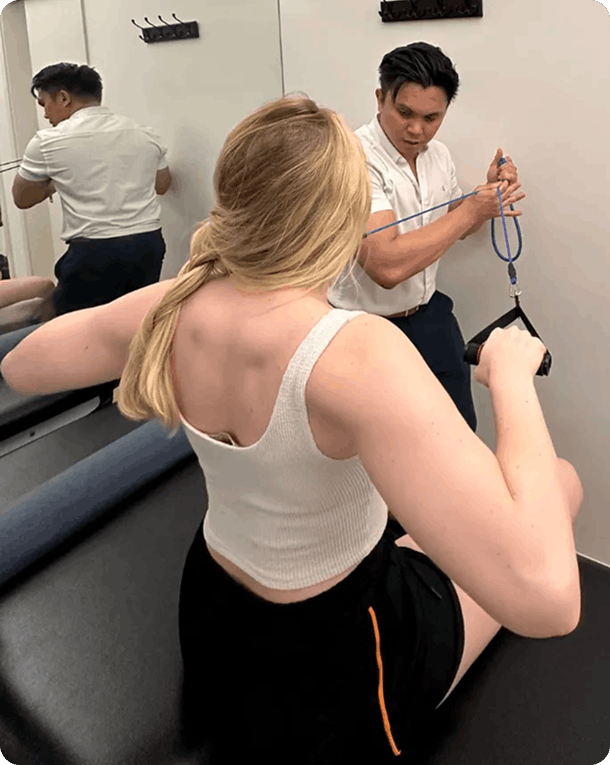
Keith is a New York State licensed physical therapist and the lead physical therapist at the Midtown office. He attended Texas A&M University and completed his Master’s degree in Physical Therapy at City University of New York (CUNY) Hunter College, and he has worked with patients for over ten years. He is a Graston Technique provider, an approach used for the soft tissue restriction that can follow a strain, a repetitive stress injury, or a surgical repair.
He also has over 20 years of experience as a certified personal trainer accredited by NSCA and the Cooper Institute, including more than five years as a Tier 3 trainer at Equinox, a background in progressive strength work that carries into conditioning for patients returning to physically demanding jobs.
Manual Therapy
10+ Years Experience
Strength and Conditioning Background
Lead Physical Therapist
Keith Chan
PT, MPT, CKTP
Meet BETH SIMOES
PT, MPT, CPI | NYC Licensed Physical Therapist
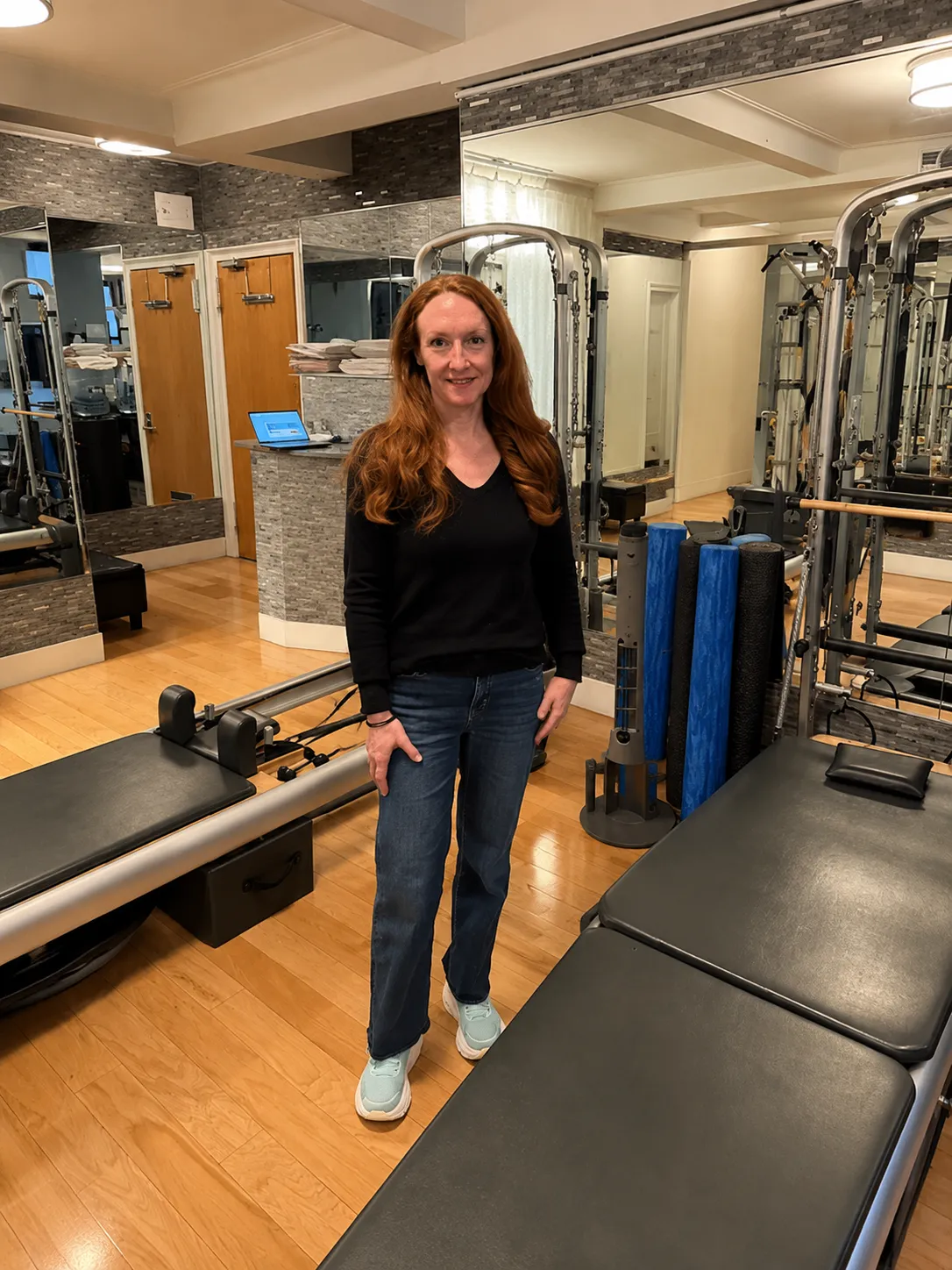
Beth is a New York State licensed physical therapist at the Midtown office. She completed her undergraduate studies at James Madison University and her Master’s degree in Physical Therapy at Hunter College (CUNY).
She is a Certified Pilates Instructor and works with patients on movement mechanics and postural control, which apply to the sustained positions and repetitive demands that contribute to many job-related injuries.
20+ Years Experience
Beth Simoes
How The New York Claim Process Affects Treatment
Treatment access in New York depends on claim status and provider authorization. The steps below reflect current Workers’ Compensation Board requirements.
- Notify the employer in writing within 30 days of the injury, or within 30 days of learning that employment caused the condition, under the written notice requirement in WCL §18
- File an Employee Claim, Form C-3, with the Board, which must receive notice of the injury or illness within two years.
- Tell the treating clinician the injury is job-related and provide the employer name and insurance payer.
Choosing A Board-Authorized Provider
Outside of emergencies, New York requires that the clinician treating an injured employee be authorized by the Workers’ Compensation Board. Employers generally cannot direct an employee to a specific provider, though exceptions apply where the employer participates in the Preferred Provider Program or an Alternative Dispute Resolution Program.
The Board’s guidance on who can treat injured workers describes provider categories and authorization requirements.
What Injured Workers Pay
Under an established claim, the insurance carrier covers necessary treatment for the work-related injury, and the worker is not billed for authorized care. The Workers’ Compensation Board states that this coverage continues for as long as treatment remains medically necessary.
Injured employees should not pay the provider or route bills through other health insurance. The exception is a claim the Board later finds invalid, in which case the employee becomes responsible for those costs.
The Board’s Medical Treatment Guidelines govern treatment volume, set expected care pathways for common body regions, and define when a variance request is needed.
Getting To The Midtown Office
The Midtown office is at 162 W 56th St, Suite 302, between Sixth and Seventh Avenues. Patients travel to this office from Midtown East, Murray Hill, and the Grand Central area. It sits one block south of the 57th Street subway corridor and about three blocks from Columbus Circle.
Nearest subway stations
- 57 St–7 Av (N, Q, R, W), one block
- 57 St (F), one block
- 59 St–Columbus Circle (A, B, C, D, 1), three blocks
Travel costs tied to authorized appointments, including transit fares and mileage, are reimbursable under an established workers compensation claim.
In Touch NYC Physical Therapy also treats work injuries at its Financial District and Woodbury offices.
Program Structure And Session Length
At the first visit, a clinician assesses the injury and reviews job duties to establish a functional baseline. That evaluation measures activity level, aerobic capacity, grip strength, core and joint strength, and mobility in relation to the injury.
Once the baseline is set, an individualized program combines cardiovascular and strengthening exercise with stretching, manual therapy, and mobility work, matched to specific job tasks. Progress updates go to the referring physician and other authorized parties, documenting attendance, participation, and progression. Discharge orders are issued when the patient reaches full function or a documented plateau.
| Program Element | Typical Range |
|---|---|
| Program length | 4 to 8 weeks |
| Session duration | 1 to 3 hours |
| Weekly frequency | 2 to 3 days per week |
EXCELLENT
Based on 50+ reviews
Rhea Jain
I have been visiting Keith for a month now and my experience has been nothing short of great. I had multiple issues to address and in each session we continue to work on it bit by bit. I am already noticing improvement in my strength, posture and endurance. Thanks Keith!!
Constanza Garcia
In Touch NYC is a cut above the rest. One-on-one sessions with a licensed PT every visit. Keith and Beth are both incredible. Midtown and Financial District locations. You won’t be disappointed.
Joseph G
Keith is an awesome physical therapist and human being! He’s been taking care of me for a few months now and I’ve been looking forward to my appointments. I have shown clear progress in my strength rehabilitation, and Keith does an excellent job explaining my exercises, calling out what needs to be done, ensuring progress is made for me, and being a great person to be around.
Cristina Incisa
Keith is exceptional. Professional, knowledgeable, and incredibly attentive. I always feel I’m in the best hands and couldn’t recommend him more highly.
Return-To-Job Conditioning In Manhattan
Conditioning is an advanced therapeutic program for patients who have finished standard rehabilitation but need more function before resuming their duties. The clinic simulates primary job functions with indirect supervision from a therapist.
This can run in a group setting, with each patient working through the tasks specific to their own role. The approach rebuilds job-specific tolerance before you return to full duty.
The clinic team can provide program details; contact us today to learn more.
For Case Managers And Employers
Case managers and employers receive programs designed to return injured employees to full duty safely. Detailed, timely reporting supports claim administration and keeps treatment decisions aligned with the Board’s guidelines. Direct communication between clinicians, employees, and case managers keeps the compensation file current.

5-STAR GOOGLE RATING
We are proud to have a 5-star Google rating! This demonstrates our commitment to excellent service and hopefully builds trust with new customers!

Over 50 5-star google reviews
We are grateful for our more than 50 5-star Google reviews! We strive to continue delivering 5-star service at all of our locations!
Frequently Asked Questions
Is A Physician Referral Required Before Starting Treatment?
Most occupational injury cases arrive with a referral from the treating physician, and that documentation helps the carrier process authorization. In an emergency, an injured worker may seek treatment from a non-Board-authorized provider. Non-emergency care should begin with a Board-authorized clinician as soon as possible after the injury.
Can An Injured Worker Choose Their Own Clinician?
New York gives injured employees the right to select a Board-authorized provider, and employers who recommend a provider must inform employees of that right through Form C-3.1. Employers participating in the Preferred Provider Program or an Alternative Dispute Resolution Program are the exception, since initial care runs through the designated arrangement.
How Does Pre-Authorization Affect The Number Of Visits?
The Medical Treatment Guidelines define expected care pathways for common body regions, and treatment consistent with those pathways follows the established course. Care falling outside the guidelines requires a prior authorization request, and a denied request cannot be billed to the carrier or the patient. Documentation submitted after each visit supports continued authorization.

If you’re interested in work conditioning programs, contact us today to learn more.