
Sciatica Treatment NYC
for Pain Relief and Recovery
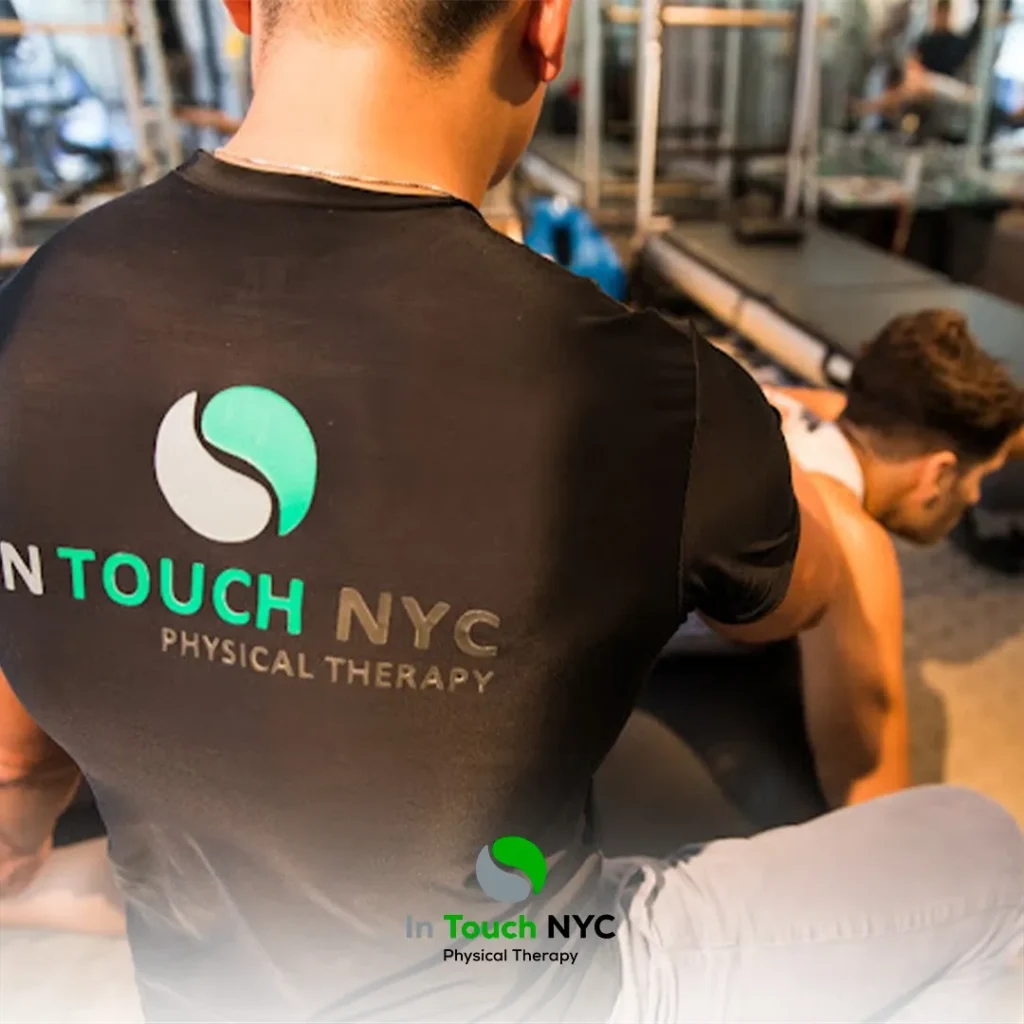
Patients seeking sciatica treatment NYC can start at In Touch NYC without a physician referral, at clinics in Midtown, the Financial District, and Woodbury, NY. Care combines hands-on treatment, nerve mobility work, and graded strengthening for sciatic nerve pain, numbness, and tingling that travel from the lower back into the leg. Most visits run 30 to 45 minutes and open with a full evaluation.
Keith Chan is a New York State licensed physical therapist with a master’s degree from CUNY Hunter College and Graston Technique certification. He also holds personal training credentials from the NSCA and the Cooper Institute.
Sciatica belongs to the wider group of low back conditions, which the World Health Organization calls the single leading cause of disability worldwide, affecting 619 million people in 2020. Unlike most back pain, which has no single identifiable cause, sciatica has a specific source: an irritated or compressed sciatic nerve (WHO).
For patients searching for sciatica pain relief NYC options, medication masks symptoms without addressing the mechanical problem underneath. Rehab works as a first-line, non-opioid choice, which matches CDC guidance preferring non-opioid treatment for subacute and chronic pain (CDC). It can also help some patients avoid invasive surgery.
Request An Appointment
How Rehabilitation Helps With Sciatica
Sciatica often settles on its own, so many patients never address the cause. Restricted joint movement, a weak core, and poor muscle sequencing all remain after the leg pain fades. Each one raises the odds of a worse episode later.
Sciatica responds well to conservative care. Physical therapy for sciatica NYC patients receive here starts by calming the nerve enough to allow movement and safe loading of the spine again.
Once symptoms settle, the emphasis shifts to loading the deep core and restoring segmental motion through graded exercise. Building that capacity lowers re-injury risk, since a pain-free spine isn’t the same as a resilient one.
The last stage covers desk setup, lifting mechanics, and the habits that keep pressure off the nerve. Patients also learn nerve glides, gentle movements that help the sciatic nerve slide freely through nearby tissue.
Treatment Techniques for Sciatic Nerve Pain
Each plan draws from a short set of techniques, chosen after the evaluation:
- Manual therapy: joint mobilization and soft tissue work, including instrument-assisted techniques, for the lower back and hip.
- Nerve glides: repeated movements that calm an irritated nerve and restore its mobility.
- Directional preference exercises: spinal movements, often based on the McKenzie method, that draw leg symptoms back toward the spine.
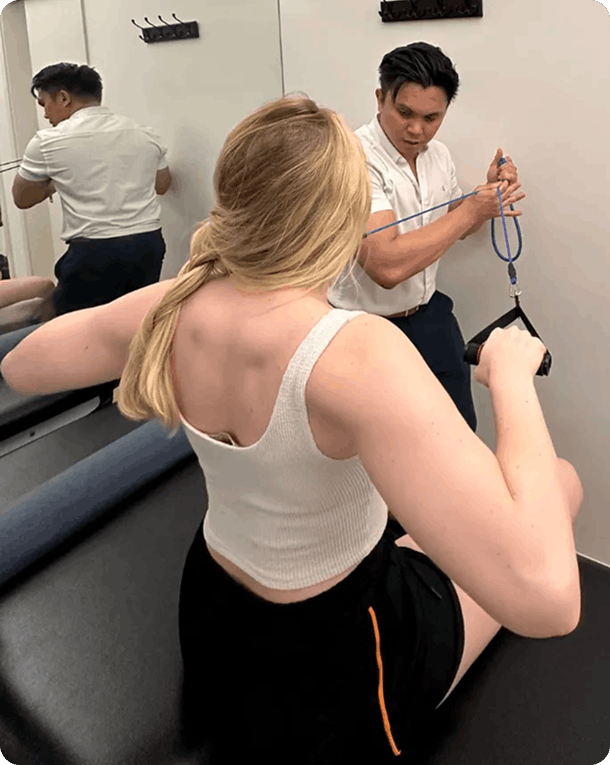
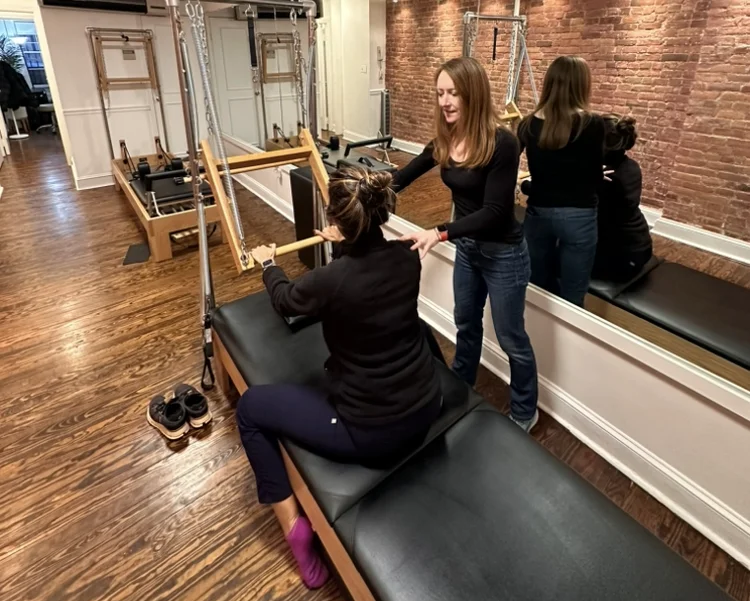
- Core and hip strengthening: graded loading for the trunk and glutes, including clinical Pilates, with cupping added for some patients.

How to Tell If It Is Sciatica
Sciatica Symptoms
Clinicians can usually identify sciatica by its symptoms and on physical exam. It follows the sciatic nerve, the body’s largest nerve, which forms from nerve roots in the lower back and runs through the buttock and down the back of each leg to the foot.
When the nerve is compressed or irritated, it can cause a shooting, stinging, or burning sensation anywhere along that path. Symptoms usually affect one leg, often bring numbness or tingling, and tend to worsen with movement, coughing, or sneezing. Leg pain is usually worse than any back pain (NHS).
When It Is Back Pain Instead
Pain that stays in the back without traveling down the leg is usually not sciatica. Back pain on its own is a broad category, often produced by trauma, lifting injuries, or sustained postural load rather than an irritated nerve.
Clinicians separate the two early because the plan changes. Back pain lasting beyond three months is classed as chronic back pain and treated under a separate plan. Patients with back pain alone can find physical therapy for back pain in New York City on the low back pain page.
Radiculopathy
Radiculopathy is irritation of a nerve root where it exits the spine, often from a herniated disc or a narrowed opening. It causes radiating numbness, tingling, burning, or sharp sensations in a specific part of the leg. When it involves the lower lumbar roots that form the sciatic nerve, most people call it sciatica.
Lumbar radiculopathy treatment in Manhattan starts by mapping the involved nerve root through strength, reflex, and sensation testing.
| Condition | Where It Is Felt | Typical Sensation | Common Source | Rehab Focus |
|---|---|---|---|---|
| Sciatica | Buttock and back of one leg, often to the foot | Shooting or burning pain, numbness, tingling | Herniated disc pressing on a lower lumbar nerve root | Calming the nerve, nerve glides, core loading |
| Upper lumbar radiculopathy | Front or side of the thigh | Numbness, tingling, or weakness in that area | Disc or narrowing at an upper lumbar level | Treating the involved level, retesting strength and reflexes |
| Piriformis syndrome | Deep in the buttock, sometimes down the back of the thigh | Deep ache that worsens with sitting | Piriformis muscle compressing the sciatic nerve | Hip muscle release, gluteal strengthening |
| Sacroiliac joint pain | Low buttock, sometimes the back of the thigh | Aching, worse with stairs or standing on one leg | Irritated joint between the spine and pelvis | Pelvic stability, hip strength |
| Back pain without nerve involvement | Lower back, not down the leg | Dull ache, stiffness, muscle spasm | Strain, joint stiffness, posture | Treated on a separate back pain plan |
Is It Sciatica or Piriformis Syndrome?
Deep buttock soreness does not always come from the spine. In piriformis syndrome, the piriformis muscle in the hip compresses the sciatic nerve outside the spinal canal, producing symptoms that mimic true sciatica.
The distinction changes treatment. Spinal sciatica responds to disc- and nerve-focused care, while piriformis syndrome responds to hip and gluteal soft-tissue work. Patients searching for buttock pain NYC answers often assume the source is a disc when it is not.
Clinicians screen for both through positional testing during the evaluation. Piriformis syndrome physical therapy NYC treatment typically combines manual release of the hip muscles with progressive gluteal strengthening.
The sacroiliac joint can also refer pain into the buttock and thigh. Patients researching buttock pain physical therapy NYC options should know that care for that joint focuses on pelvic stability and hip strength.
Posted on Google
 Monica Alonso
Trustindex verifies that the original source of the review is Google.
This practice is a breath of fresh air. From the front desk to the therapists, everyone is professional and welcoming. I’ve seen Keith for a sports injury and Beth for some chronic pain issues, and both are incredibly skilled. The one-on-one sessions are 30-50 minutes of undivided attention, which is so much better than other clinics I’ve tried. They accept a wide range of insurance plans, including for Pilates-based PT, which is a huge plus. I recommend them to everyone.Posted on Google Maria V.Keith Chan is a master of his craft. As someone who is very active, I needed a PT who understood that I wanted to get back to my workouts, not just be pain-free. Keith’s background as a personal trainer and his Graston certification made him the perfect fit. He created a plan that was both challenging and safe. Their Midtown clinic is clean, modern, and runs on time. I can’t recommend him enough for anyone looking to recover from an injury and get back to what they love.Posted on Google
 Zee D.My knee was in such bad shape when I first came to In Touch. I was practically immobile and somehow pushing myself through the day, but in Keith's hands I have gone through a remarkable transformation. His care and attention, coupled with an intense physical regiment has benefited me greatly. I am glad a good friend recommended him!Posted on Google
 Ava ShabahangThis place is great. Keith has reduced my pain so much, I don’t know what I did before him. It’s small and intimate and I’ve consistently received great care. Heather is also extremely helpful when it comes to booking and changing appointments. I would 100% recommend this practice.Posted on Google
 Jay Yang10/10 just finished day 1 and 10 minutes into the session I knew I came to the right place. Looking forward to working together furtherPosted on Google
 Susan GoldbergKeith understands the body better than other physical therapists I’ve been to. I didn’t think my neck and shoulders would ever get back to normal because I hurt for so long. Keith changed that. Never had to take advil to ease the tightness again. Highly recommend the practice.Posted on Google
 Dana SolaI’ve struggled with migraines and neck tension for years, and Beth at In Touch NYC PT has been a game-changer. She has a deep understanding of the body and doesn’t just treat the symptom; she gets to the root cause. Her Pilates-based approach was new to me, but it’s helped my posture and core strength so much. I’m finally seeing real, lasting results.Posted on Google
 Alma CesarI cannot say enough good things about Beth and the team at In Touch NYC. After having my second baby, I was dealing with pelvic floor issues that I thought I just had to live with. Beth specializes in this area and made me feel comfortable from the very first appointment. She is patient, understanding, and incredibly skilled. Their Midtown location is calm and welcoming, which makes a huge difference when you’re dealing with sensitive health issues. I finally feel like myself again. If you’re a mom looking for a pelvic floor PT in NYC, this is the place!!Posted on Google
 Camila GonzalezI’ve been to a few physical therapy clinics in NYC, but In Touch Physical Therapy is on another level. Keith Chan is incredibly knowledgeable and actually takes the time to listen. I went to their Midtown location for a lingering shoulder issue, and Keith built a plan that finally got me back to full strength. I always left feeling heard and confident in my recovery. Highly recommend if you want real one-on-one care.Posted on Google
 Cristina IncisaKeith is exceptional. Professional, knowledgeable, and incredibly attentive. I always feel I’m in the best hands and couldn’t recommend him more highly.
What Causes Sciatica?
Sciatica usually starts when something presses on or irritates a nerve root in the lower back. That can follow repetitive strain, such as bending repeatedly to pick up a toddler, or sudden trauma like a car accident injury that damages a disc.
Herniated and Degenerating Discs
Herniated discs can compress the nerve root directly and are the most common cause of sciatica (NHS). Degenerative disc disease is common with age; as discs thin, nerve-root openings can narrow, making standing or walking for long periods harder.
Tight Hips and Pelvis
Many patients also lose flexibility in the hips and pelvis, which tightens the gluteal and hip muscles. This alters spinal mechanics, compresses the sciatic nerve as it travels through those tissues, and can overlap with pelvic pain presentations. Sciatica treatment NYC patients receive should address this chain, not just the symptom.
Spinal Stenosis, Slipped Vertebrae, and Pregnancy
Spinal stenosis narrows the space where nerves leave the spine, often causing leg heaviness during walking that eases with sitting. Spondylolisthesis, where one vertebra slips forward, can narrow the same space. In pregnancy, sciatica-like leg pain can also come from pelvic joint strain rather than a compressed nerve, which calls for different care, such as prenatal rehab.
Postural and Occupational Strain
Desk work, long commutes, and sustained poor posture unevenly load the lumbar discs and nerve roots. A Global Burden of Disease analysis attributed 38.8% of years lived with disability from low back conditions to occupational factors, smoking, and high BMI (The Lancet Rheumatology). Work-related sciatica may also qualify under workers’ compensation coverage.
Every plan includes:

Care Led by a Licensed Therapist

Full evaluation and goal setting

30 to 45 Minute Sessions, One-on-One Available on Request
Individualized treatment plan with phased rehabilitation programs
Red Flag Screening at Every Evaluation
Progress tracking and regular reassessment
Sciatica-Related Conditions Treated at In Touch NYC
Clinicians at In Touch NYC treat the spinal and hip conditions that cause or mimic sciatica, including:
- Herniated, bulging, and ruptured discs
- Degenerative disc disease
- Lumbar radiculopathy
- Pinched nerves and nerve compression
- Spinal stenosis and spondylolisthesis
- Piriformis syndrome
- Sacroiliac joint dysfunction
- Facet joint irritation that refers pain into the buttock or thigh
- Arthritis and bone spurs affecting the spine
- Post-surgical recovery, including post-surgery rehabilitation exercises
- Related hip and knee conditions that change walking mechanics
When to See a Doctor for Sciatica
Most sciatica improves with conservative care, but some symptoms need a physician first, and therapists screen for them at every evaluation. Go to an emergency room right away for any of these signs of cauda equina syndrome or another serious spinal problem:
- Sciatica in both legs at the same time
- Severe or worsening weakness or numbness in both legs
- Numbness around the genitals or anus
- New trouble starting or controlling urination
- Loss of bowel control, or not noticing the need to go
Book a physician visit if pain keeps getting worse, foot weakness develops, or symptoms come with fever, unexplained weight loss, or a history of cancer
| Option | Who Provides It | When It Is Used | Role in Recovery |
|---|---|---|---|
| Rehab with a licensed therapist | In Touch NYC clinicians | First-line care for most sciatica; no referral needed for up to 10 visits or 30 days in New York | Calms nerve irritation, restores mobility and strength, lowers recurrence risk |
| Pain medication | Physician or pharmacist | Short-term symptom control | Eases pain for some patients; does not change spinal mechanics |
| Epidural steroid injection | Pain management physician | Severe pain that has not responded to conservative care | Short-term relief that can make exercise easier |
| Decompression surgery | Spine surgeon | Progressive weakness, emergency nerve signs, or severe pain after other care fails | Relieves pressure on the nerve root; rehab usually follows |
What to Expect at a First Visit
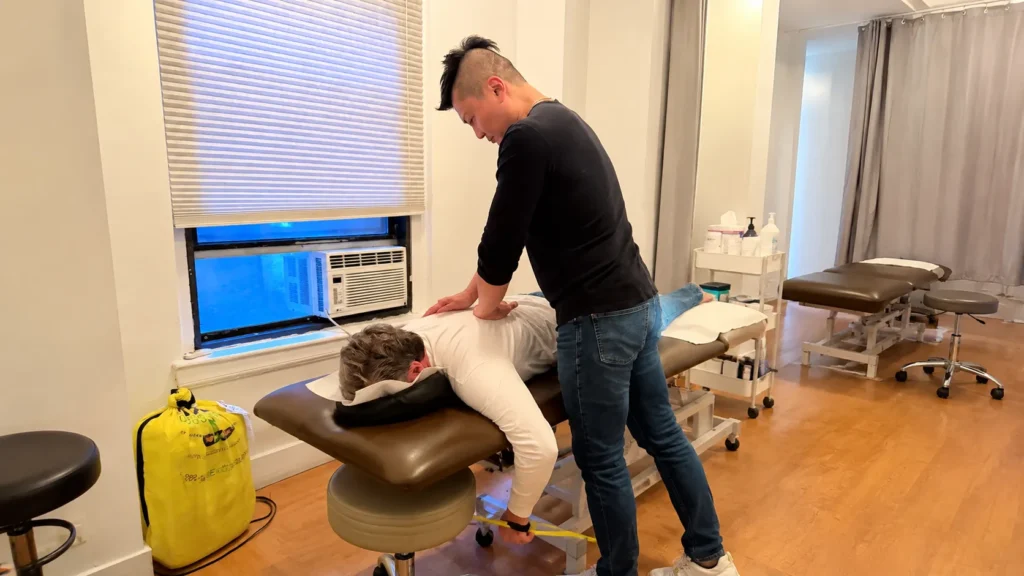
Most visits run 30 to 45 minutes, and the first one is a full evaluation. The therapist maps where symptoms travel, runs nerve-tension tests such as the straight leg raise, and checks strength, reflexes, and sensation. The same visit screens for red flags and sets goals. An individualized plan follows, with rehabilitation in phased stages.
New York permits patients to begin treatment without a physician referral. Under state regulation, a licensed therapist with at least three years of practical experience may treat for up to 10 visits or 30 calendar days, whichever comes first, before a referral is required (NYSED Office of the Professions).
Some plans, including no-fault and workers’ compensation coverage, still require an upfront prescription for reimbursement. Coverage terms vary by plan, so verify them before the first visit to avoid surprises.
How Long Recovery Usually Takes
Treatment length depends on whether symptoms are acute or chronic and what caused them.
| Phase | Typical Timeframe | Focus of Care |
|---|---|---|
| Evaluation | Visit 1 | Full assessment, diagnosis, goal setting, individualized plan |
| Symptom relief | Early visits | Manual treatment and positioning to reduce irritation and nerve compression |
| Strengthening | As symptoms reduce | Deep core loading, graded therapeutic exercise, segmental motion work |
| Prevention | Final stage | Desk setup, lifting mechanics, re-injury prevention |
| Direct access limit | 10 visits or 30 days | Referral required beyond this point under New York regulation |
Acute cases are short-term; chronic cases typically last three months or longer. Timeframes vary by diagnosis and are set during the initial evaluation.
Session Rates and Insurance
Session costs vary by service, and In Touch NYC accepts a range of commercial plans. The clinic uses the word accepts deliberately, since amounts owed depend on individual plan terms.
| Service | Rate Per Session | Typical Session Length |
|---|---|---|
| Physical therapy | $120 | 30 to 45 minutes |
| Sports rehabilitation | $120 | 30 to 45 minutes |
| Cupping and acupuncture | $120 | 30 to 45 minutes |
| Pilates, clinical and rehab-based | $120 | 30 to 45 minutes |
Rates shown are self-pay per session. Amounts owed under an insurance plan depend on individual plan terms.
Five-Star Patient Rating
In Touch NYC holds a five-star average rating across its Midtown, Financial District, and Woodbury locations.
More Than 50 Verified Reviews
Patients have left more than 50 five-star reviews across the practice’s locations.


5-STAR GOOGLE RATING
We are proud to have a 5-star Google rating! This demonstrates our commitment to excellent service and hopefully builds trust with new customers!

Over 50 5-star google reviews
We are grateful for our more than 50 5-star Google reviews! We strive to continue delivering 5-star service at all of our locations!
Contact Us for Relief in Manhattan
Clinicians here manage lower back and sciatic symptoms through targeted treatment. Low back pain physical therapy NYC care is non-invasive and prescription-free, designed to promote natural healing while delivering early relief.
Rather than treating symptoms alone, the approach relieves pressure on the sciatic nerve for longer-lasting results. Patients who prefer a movement-based route can also review lower back relief exercises for daily use. Contact our clinic today for more information, and be sure to schedule an initial consultation.