

At ITNYCPT in New York City, Keith Chan, a New York State-licensed physical therapist, serves as the subject-matter expert for this topic. This guide explains what treatment may include, what exercises are often used, and when symptoms need medical attention.
Key Takeaways
- Physical therapy for a herniated disc can help reduce symptoms, improve movement, and rebuild strength, but it does not simply “push the disc back in.”
- A PT evaluation helps identify which movements increase or reduce symptoms, which makes exercise selection safer and more specific.
- Herniated disc rehab may include walking, extension-based exercises, core stabilization, posture training, and gradual return to activity.
- Many mild to moderate symptoms improve within 4 to 12 weeks, but strength, endurance, and full activity may take 8 to 16 weeks or longer.
- Urgent care is needed for bladder or bowel changes, groin numbness, rapidly worsening leg weakness, fever with severe back pain, or symptoms after major trauma.
Can Physical Therapy Help a Herniated Disc
Physical therapy can often help a herniated disc, especially when symptoms are stable, and there are no serious nerve warning signs. A more detailed guide on how to treat herniated discs with PT can help explain what this process may include.
It does not “push the disc back in” in a simple mechanical way. Instead, conservative treatment helps reduce painful movement patterns, calm irritated tissue, improve strength, and support safer activity over time.
A herniated disc rehab program usually starts with symptom control and safe movement. Over time, the treatment plan may include mobility work, core strengthening, posture training, and gradual return to physical activity.
Results vary based on disc location, nerve irritation, pain sensitivity, job demands, sleep, health history, maintaining a healthy weight, and consistency with home exercises.
What Is a Herniated Disc
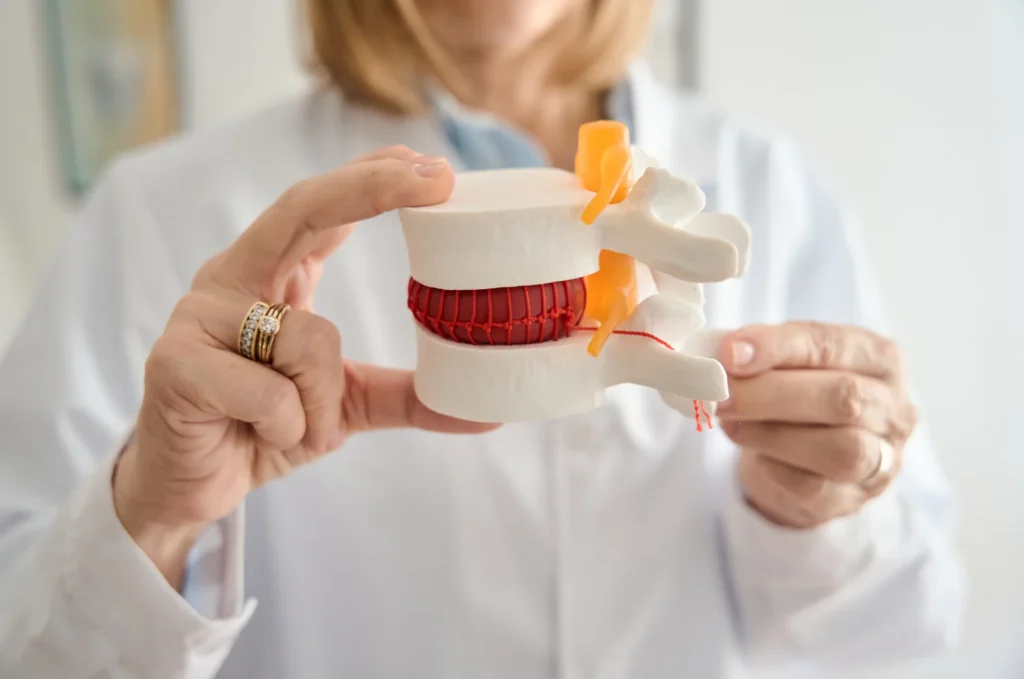
A spinal disc sits between two bones in the spine and helps absorb load. The inside of the disc is called the nucleus pulposus, and the outer ring is called the annulus fibrosus. A herniated disk occurs when the inner disc material pushes out through a tear in the outer layer.
In the lower back, this often affects the lumbar spine. If disc material or inflammation irritates a nerve root, it may press on nearby nerves. Pain may then travel into the buttock, thigh, calf, or foot.
This is why a herniated disc can feel like more than back pain. A herniated lumbar disc may cause symptoms in the back and leg at the same time. The pattern depends on which nerve is irritated.
Common Herniated Disc Symptoms
Symptoms depend on where the disc herniation is and whether a nerve is involved. Some people feel mostly local back pain. Others feel pain that travels into the leg, along with numbness, tingling, or weakness.
Lower Back and Lumbar Spine Pain
Lower back pain from a herniated disc may feel sharp, stiff, achy, or pressure-like. It may worsen with sitting, bending, lifting, coughing, or long periods in one position. Some people feel better when walking or lying in a position that reduces nerve stress.
Herniated Disc and Sciatica Symptoms
Physical therapy for a herniated disc and sciatica often focuses on symptoms that travel down the leg, and treatment for sciatica physical therapy may include movement testing, nerve symptom tracking, and gradual exercise progression.
Sciatica describes pain that follows the path of the sciatic nerve. In some cases, symptoms that feel similar may come from hip-related issues, such as piriformis syndrome physical therapy concerns. It can feel like burning, shooting, or electric pain.

Numbness, Tingling, and Weakness
Numbness and tingling can occur when the irritated nerve affects sensation. Weakness may show up as trouble lifting the foot, pushing off while walking, or climbing stairs. These symptoms should be discussed with a medical professional because nerve findings can change the plan of care.
How a PT Evaluates a Herniated Disc
A physical therapist does not rely on symptoms alone. An evaluation often includes a health history, movement screen, strength testing, nerve-related testing, and goal setting. The goal is to understand which movements increase symptoms, which reduce them, and which activities matter most to the patient.
A PT may look at walking, posture, bending, lifting, hip motion, trunk control, reflexes, sensation, and leg strength. This helps separate general back pain from possible nerve-related symptoms. It also helps guide safe exercise choices rather than relying on a generic routine.
What Is the Best Physical Therapy for a Herniated Disc
There is no single best physical therapy for a herniated disc that applies to every person. Good care depends on exam findings, symptom behavior, movement tolerance, goals, and stage of recovery. A physical therapist usually adjusts treatment as symptoms change.
In a one-on-one session with a licensed Physical Therapist, the plan can be shaped around how your symptoms respond.
This matters because some people need calming strategies first, while others can begin strength work earlier. The best plan is usually the one that matches the person’s symptoms, function, and activity goals.
Disc Herniation Treatment Physical Therapy
Disc herniation treatment physical therapy may include education, pain management, manual therapy, exercise, and activity modification. Manual therapy is a broad category that may include joint or soft-tissue techniques to improve comfort and mobility. Graston Technique may be used when soft tissue restrictions are relevant, but it is only one possible tool.
A PT may also explain when anti-inflammatory medication, muscle relaxants, or a steroid injection may be discussed with a physician.
These options do not replace rehab, but they may support symptom control for some people. In rare cases, surgery may be considered if symptoms are severe, progressive, or not improving with appropriate care.
Herniated Disc Rehab Exercises
Herniated disc rehab exercises vary by phase. Early exercises often focus on reducing symptoms and finding tolerable positions. Later exercises focus on strengthening the muscles that support the spine, hips, and pelvis.
Common exercise categories include:
- Walking: Short walks can improve circulation, reduce stiffness, and keep the body moving without heavy spinal load.
- Prone Press-Ups: You lie on your stomach and gently press your chest upward while keeping the hips down, if this reduces leg symptoms.
- Dead Bugs: You lie on your back, brace the trunk, and move one arm or leg at a time while keeping the spine steady.
- Bridges: You lie on your back with knees bent, lift the hips, and train glute and trunk control.
- Bird Dogs: You start on hands and knees, then slowly reach one arm and the opposite leg while keeping the trunk steady.
These exercises are examples, not universal instructions. A movement that helps one person may worsen another person’s symptoms. The safest exercise choice depends on whether pain centralizes, spreads, improves, or increases during and after the movement.
Walking and Gentle Movement
Walking is often one of the first activities used in the management of lumbar disc herniation. It lets the spine move without the same load as lifting or deep bending. Many people start with short, frequent walks instead of one long walk.
Extension-Based Exercises
Extension-based exercises may help some people with lower back disc symptoms. These movements gently move the spine backward, often while lying on the stomach. They are usually continued only if they reduce leg pain or move symptoms closer to the back.
Core Stabilization Exercises
Core stabilization teaches the trunk muscles to control motion under load. This is different from doing hard abdominal exercises during a painful flare. Pilates-based therapeutic exercise may support core strength, control, mobility, and return to activity when it is matched to the person’s tolerance.
Posture and Movement Training
Posture training does not mean holding one perfect position all day. It means learning how to sit, stand, bend, lift, and change positions with less irritation. A PT may teach hip hinging, breathing, pacing, and load management for work, commuting, childcare, or exercise.
What Not to Do With a Herniated Disc
A herniated disc does not always require bed rest. A short rest may help during a severe flare, but prolonged inactivity can increase stiffness, weakness, and fear of movement. Most rehab plans encourage safe movement as soon as the body can tolerate it.
Common things to avoid during a flare include:
- Heavy lifting with a rounded back, especially if it increases leg pain.
- Repeated bending and twisting when symptoms are sensitive.
- Pushing through sharp, spreading, or worsening nerve pain.
- Starting intense core workouts before basic control returns.
- Staying in one position for hours without movement breaks.
These limits are not permanent for every person. The goal is usually to reduce irritation first, then rebuild capacity. A PT can help decide when a movement is safe to reintroduce.

How Long Recovery May Take
Recovery timelines vary, but many mild to moderate herniated disc symptoms improve over 4 to 12 weeks with consistent conservative treatment. Some people feel less pain within 2 to 6 weeks. Strength and endurance may take 8 to 16 weeks or longer to develop.
Returning to normal activity may also take that long. Long-term results often depend on strength, movement habits, workload, health history, sleep, and consistency with home exercise. Progress is not always linear so that symptoms may change with sitting time, stress, travel, or sudden increases in activity.
How to Reduce Future Flare-Ups
Prevention does not mean avoiding all bending, lifting, or exercise. It means building enough strength and movement control to handle normal life with less irritation. Staying active, using better lifting mechanics, taking movement breaks, and maintaining a healthy weight can all reduce repeated stress on the lumbar spine.
Long-term physical therapy often focuses on capacity. This may include hip strength, trunk endurance, walking tolerance, and gradual return to physical activity. The goal is not perfect posture, but better control during real tasks.
When PT May Not Be Enough
Physical therapy may not be enough when symptoms keep worsening, weakness progresses, or pain does not respond to appropriate conservative treatment.
A physician may consider imaging, medication changes, injections, or a surgical consult based on the full clinical picture. This doesn’t mean PT failed; it means the plan may need more medical input.
Insurance may affect where and how care is delivered. A deductible is the amount you pay before insurance covers certain costs. A copay is a fixed amount you pay for each visit, while coinsurance is a percentage of the cost of the visit.
When to Seek Urgent Care
Seek urgent medical care if you have new loss of bladder or bowel control, numbness in the groin or saddle area, rapidly worsening leg weakness, fever with severe back pain, or symptoms after major trauma.
These signs are uncommon but require prompt evaluation. In rare cases, serious nerve compression or another medical issue may require urgent treatment.
For non-urgent symptoms, a clear evaluation can help you understand what is likely driving the pain. The most useful next step is understanding your symptoms, tracking changes, and matching rehab to what your body can tolerate.
References: Mass General Brigham, ChoosePT, and Evolve PT were reviewed for clinical context, patient education structure, and common herniated disc rehab topics.