

ITNYCPT operates in New York City, and Keith Chan is a New York State-licensed physical therapist who evaluates and treats lower extremity nerve and gait conditions.
Key Takeaways
- Physical therapy for foot drop strengthens the ankle, retrains walking, and improves toe clearance.
- Common causes include peroneal nerve injury, lumbar spine compression, and neurological conditions.
- Treatment options include PT, an AFO brace, functional electrical stimulation, and surgery if nerve function doesn’t return.
- A structured plan includes evaluation, progress tracking, gait retraining, and exercise progression.
- The 10 exercises for foot drop combine dorsiflexion work with balance drills, each with a clear dose.
- Recovery can take weeks to more than a year, depending on the extent of nerve involvement.
Foot Drop Treatment Options
The main foot drop treatment options are physical therapy, an ankle-foot orthosis (AFO), functional electrical stimulation (FES), and surgery. Foot drop treatment first targets the underlying cause, then protects walking while the nerve recovers. Many people combine approaches, such as PT plus a brace. Because the ankle and foot are central to the condition, care often overlaps with broader foot-and-ankle pain management.
| Treatment | What It Does | Best Suited For | Notes |
|---|---|---|---|
| Physical therapy | Strengthens the ankle lifters, retrains gait, and improves balance | Most causes, especially nerve compression and post-surgery recovery | Progress is reassessed at regular visits |
| Ankle-foot orthosis (AFO) | Holds the ankle near neutral so the toes clear the ground | Moderate to severe weakness or high trip risk | Off-the-shelf or custom; often the first step |
| Functional electrical stimulation (FES) | Electrical pulses activate the nerve during each step | Central causes such as stroke, MS, or spinal cord injury | Surface or implanted units |
| Nerve surgery | Decompression, repair, graft, or transfer of the nerve | Persistent compression or nerve injury | Discussed when weakness does not improve |
| Tendon transfer or ankle fusion | Reroutes a working tendon or fuses joints for stability | Long-standing cases with no nerve recovery | Usually considered after about a year; PT follows |
When clinicians treat the cause successfully, the weakness often improves or disappears. When the cause is chronic, such as ALS or multiple sclerosis, the problem may be permanent, according to MedlinePlus.
Can Physical Therapy Help Foot Drop?
Yes, in many cases. PT improves the ability to lift the toes and clear the ground while walking through strengthening, balance work, and gait retraining. Outside the US, the same care is often called physiotherapy for foot drop. Results depend on the cause, nerve recovery, and consistency, and the goal is safer walking rather than a guaranteed full reversal.
What Improves With Treatment
Ankle strength, toe clearance, and walking stability usually improve first, which means fewer toe catches and smoother steps. PT exercises for drop foot also reduce compensations, such as hip hiking, that overload other leg muscles. Even partial gains can make daily walking easier.
Limits of Conservative Care
Conservative care cannot fully restore strength when nerve damage is severe or permanent. In those cases, physical therapy for drop foot syndrome shifts toward safety and function, and a brace may be needed to hold the ankle near neutral. Some conditions require a healthcare professional to evaluate you before rehab progresses. A plan must match the diagnosis and daily demands.
Can Foot Drop Be Cured Permanently?
Sometimes. It often resolves completely when the cause is reversible, such as nerve compression that is relieved early, and rehab can restore function once nerve signals return. It is usually permanent when the cause is progressive, such as ALS, where care focuses on long-term support and safety.
What Causes Drop Foot Syndrome?
The most common causes of drop foot are peroneal nerve injury near the knee and L5 nerve root compression in the lower back, according to MedlinePlus. Stroke, multiple sclerosis, and other nerve or muscle conditions are less common sources. The condition itself is a symptom, not a diagnosis, and often shows up as toe dragging or a high-stepping “steppage” gait.
Peroneal Nerve Injury
Peroneal nerve injury damages the nerve that wraps around the outside of the knee and powers the muscles that lift the ankle and toes. Compression, trauma, habitual leg crossing, long periods of kneeling, and hip replacement surgery are common triggers.
Exercises for peroneal nerve damage and at-home peroneal nerve treatment focus on targeted strengthening and reducing pressure. Start drop-foot exercises due to nerve damage gently, and avoid tight straps near the knee.
Lumbar Spine Compression
Lumbar spine compression weakens the ankle when a herniated disk, spinal stenosis, or bone spur pinches the L5 nerve root or sciatic nerve.
Symptoms may include weakness, numbness, or radiating discomfort, similar to patterns seen with back pain & sciatica. Rehab may include graded mobility, trunk control, and strengthening, and a structured approach to herniated disc treatment is sometimes needed before ankle work can progress. Pilates-based therapeutic exercise can improve control and alignment.

Neurological Conditions
Neurological conditions weaken ankle lift by disrupting signals between the brain, spinal cord, and leg muscles. Examples include stroke, multiple sclerosis, ALS, Charcot-Marie-Tooth disease, and diabetic neuropathy; Guillain-Barré syndrome can also cause leg weakness, covered in Guillain-Barré physical therapy. In these cases, neurological physical therapy focuses on repetition, coordination, and safe gait training.
When to See a Healthcare Professional
Seek immediate care if ankle weakness appears suddenly, and schedule an appointment if it lasts more than a few days. Urgent signs include new difficulty lifting the forefoot, rapidly worsening weakness, severe numbness, or changes in speech or facial movement, which can indicate a stroke. Also visit promptly if weakness worsens with back pain or affects balance.
How Is Foot Drop Diagnosed?
Diagnosis starts with a physical exam of walking, shin and ankle strength, and sensation, with nerve tests or imaging added when the cause is unclear. A physician may order electromyography (EMG) and nerve conduction studies to locate the nerve problem, plus X-ray, ultrasound, or MRI to look for a herniated disk or cyst. Blood tests can check for diabetes-related neuropathy.
Foot Drop Physical Therapy Protocol
A typical protocol moves through four stages: evaluation, strength and motor control training, gait retraining with bracing as needed, and a home program. The evaluation also shows whether imaging or medical follow-up is needed. A strong foot drop treatment physical therapy plan ties each finding to a measurable goal.
Strength and Motor Control Training
Strength work starts with seated or assisted ankle lifts and progresses to standing and stepping drills. Exercises evolve as control improves.
Gait Retraining and Bracing
Gait retraining teaches the leg to clear the toes during swing and land steadily during stance, while an AFO holds the ankle near neutral until strength returns. The American Orthopaedic Foot & Ankle Society notes that off-the-shelf or custom AFOs are usually the first step. A PT can check fit and match the design to strength and activity level.
Manual therapy, dry needling, and tools such as the Graston Technique may help when soft tissue limits ankle motion, and gait work often overlaps with care for Balance and Gait Disorders. Home carryover is essential for progress.
Nerve Stimulation and Assistive Devices
Electrical nerve stimulation and walking aids help when the muscles cannot lift the ankle on their own. FES sends small pulses to the nerve at the right moment in each step and is mainly used for central causes such as stroke, multiple sclerosis, or spinal cord injury, per NICE guidance. Surface units attach below the knee, while implanted systems require a procedure. The broader range of physical therapy electrical stimulation techniques also includes TENS and neuromuscular electrical stimulation (NMES), which are used alongside strengthening. A cane or walker can add stability early on.
Treatment Cost and Insurance
Self-pay physical therapy at ITNYCPT costs $120 per session, and most sessions last 30 to 45 minutes. With insurance, your out-of-pocket cost depends on your deductible (paid before coverage begins), copay (a fixed fee per visit), and coinsurance (a percentage of the session cost).
For a deeper breakdown, the cost of physical therapy guide covers typical ranges, insurance variables, and self-pay options. Before starting, confirm which plans the clinic accepts and how many visits the policy covers.
| Service | Typical Session Length | Self-Pay Rate | Role in Recovery |
|---|---|---|---|
| Physical Therapy | 30 to 45 minutes | $120 per session | Core treatment: strengthening, gait retraining, and progress monitoring |
| Fall Prevention | 30 to 45 minutes | Contact clinic | Balance and safety training; recommended for high trip risk |
| Pilates (Clinical) | 50 minutes | Contact clinic | Trunk control and alignment work; used alongside PT when appropriate |
How Physical Therapy Progress Is Measured
Progress is measured with ankle strength tests, toe clearance during walking, timed single-leg balance, and fewer trips in daily life. These objective markers show whether the current plan is working. If there’s no measurable change, adjust the plan.
Foot Drop Physical Therapy Exercises (10 Examples)
The most effective PT exercises train the shin muscles that lift the ankle, then build balance and walking control.
What Is the Best Exercise for Foot Drop?
Ankle dorsiflexion, lifting the toes toward the shin, is the core exercise most programs build on because it trains the exact muscles that raise the forefoot. No single exercise works best for everyone, since the right choice depends on strength level and cause.
10 Exercises for Foot Drop
These 10 exercises for foot drop combine dorsiflexion exercises with balance and control drills often used in PT. A common starting dose is 2 to 3 sets of 10 to 15 repetitions, once or twice a day, adjusted by a therapist.
- Seated ankle dorsiflexion: With your heel on the floor, lift your toes toward your shin, hold for 5 seconds, then lower slowly.
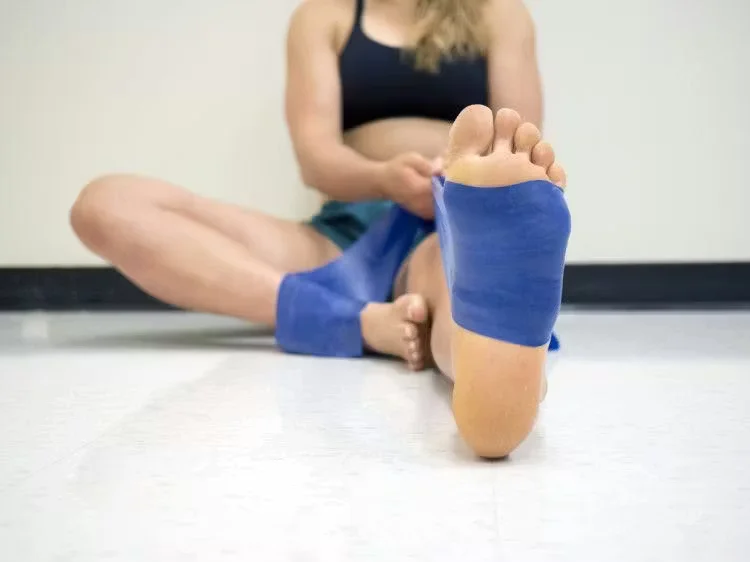
- Resistance band dorsiflexion: Loop a light band over the forefoot, anchor it to a table leg, and pull the toes up. Foot drop exercises with resistance band work allow small, steady load increases.
- Toe raises at the wall: Stand with your back against a wall and lift the toes and balls of both feet, holding for 2 to 3 seconds.
- Heel walking: Walk 10 to 20 steps on your heels near a counter, stopping when your toes start to sink.
- Ankle alphabet: Trace the letters A to Z with the big toe while seated to build range of motion.
- Towel scrunches: Curl the toes to draw a towel inward, repeating 2 to 3 rounds for arch control.
- Step taps: Tap the forefoot on a low step, then return it flat to the floor, holding a rail.
- Single-leg balance: Stand on the affected leg near a counter for 20 to 30 seconds, then reduce hand support.
- Yoga toe lifts: In mountain pose, lift all ten toes while keeping the arches stable. Yoga exercises for foot drop like this one build balance and ankle awareness.
- Assisted toe raises: Sit with a strap looped around the forefoot and gently pull upward while trying to lift actively.
These 10 exercises for foot drop combine dorsiflexion exercises for foot drop with balance and control drills often used in PT.
Foot Drop Exercises at Home
You can do nearly all 10 exercises above at home with a chair, a towel, a light resistance band, and a counter for support. A common question is how to fix foot drop at home, and the answer is consistency and safe form: pick a few controlled, pain-free exercises and repeat them most days. Stop if weakness worsens or balance declines.

Home Remedies for Foot Drop
The most useful home remedies for foot drop are supportive shoes, avoiding leg crossing, gentle calf stretching, limiting long periods of kneeling, and fall-proofing the home. These habits support recovery but do not replace treatment of the cause. People often ask how to cure drop foot naturally; no remedy has been shown to cure it, and natural recovery depends on the nerve healing once the cause is addressed.
For fall-proofing, the NHS recommends clear floors, no loose rugs or cords, good lighting, and stair handrails. Structured Fall Prevention care can build these safety habits alongside strength work.
Foot Drop Exercise Machine and Massage
Both help as add-ons, but neither replaces strengthening. A stationary bike or guided ankle device adds safe repetitions as long as it reinforces proper mechanics. Foot drop massage eases calf and shin tightness; avoid deep pressure over the outer knee, where the nerve runs close to the bone.
Recovery Timeline and Signs of Healing
How Long Does Recovery Take?
Mild compression often improves within weeks to a few months, while nerve injuries can take several months to a year because nerves regrow slowly. Progressive neurological causes may need long-term management. Consistency, sleep, workload, and overall health also influence progress.
| Cause | Typical Range | Notes |
|---|---|---|
| Mild nerve compression | Weeks to 3 months | Often resolves once pressure is relieved and PT begins |
| Lumbar radiculopathy (L5) | 1 to 6 months | Depends on how long compression was present before treatment |
| Traumatic peroneal nerve injury | 3 months to 1 year | Nerves regrow slowly; consistent PT supports function during recovery |
| Stroke or MS | Ongoing management | PT and FES can improve function; full resolution depends on the neurological cause |
| After tendon transfer surgery | 8 to 12 weeks post-cast, then PT | Per AOFAS; PT follows cast removal with progressive loading |
Signs of Healing: Foot Drop
Signs of healing foot drop include better toe clearance, easier forefoot lifting, and steadier placement while walking. A stronger shin contraction is often an early sign. Returning sensation may also appear as tingling where there was numbness.
When Surgery Is Considered
Surgery is considered when weakness does not improve with conservative care or when testing shows a structural cause, such as ongoing nerve compression.
Options include nerve decompression, nerve repair or transfer, tendon transfer (most often the posterior tibial tendon), and ankle fusion for long-standing cases. Per AOFAS, tendon transfer is usually considered after about a year without returning function, followed by 8 to 12 weeks of PT once the cast comes off.
That post-surgical rehab phase follows the same structured approach used in ACL rehabilitation: progressive loading, gait retraining, and measurable milestone-based progression.
Factors That Influence Recovery
Recovery speed depends most on the severity of nerve damage and how long symptoms lasted before treatment. Key factors include:
- Injury severity and extent of nerve involvement
- How long symptoms were present before treatment started
- Sleep quality and overall recovery habits
- Daily workload and physical demands
- Overall health history, including metabolic or neurological conditions
- Consistency with exercises and follow-up sessions
- Adequate rest between training sessions
- Baseline strength and conditioning of the leg muscles
- Training age and prior activity level
- Ability to adjust volume and intensity to avoid setbacks
A therapist can help adjust training load when progress stalls.