
Shoulder Pain in Manhattan
for Pain Relief and Recovery
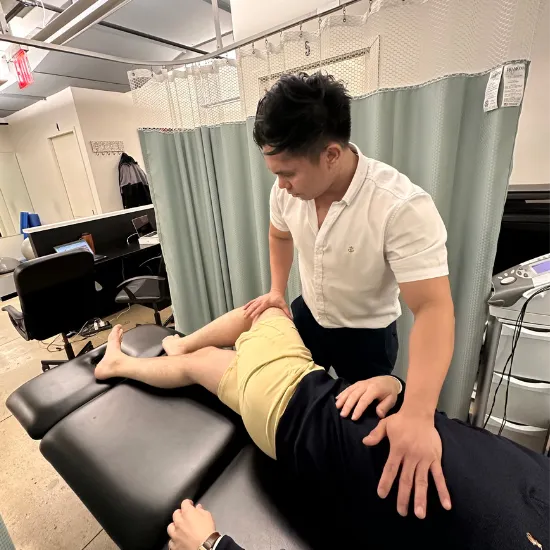
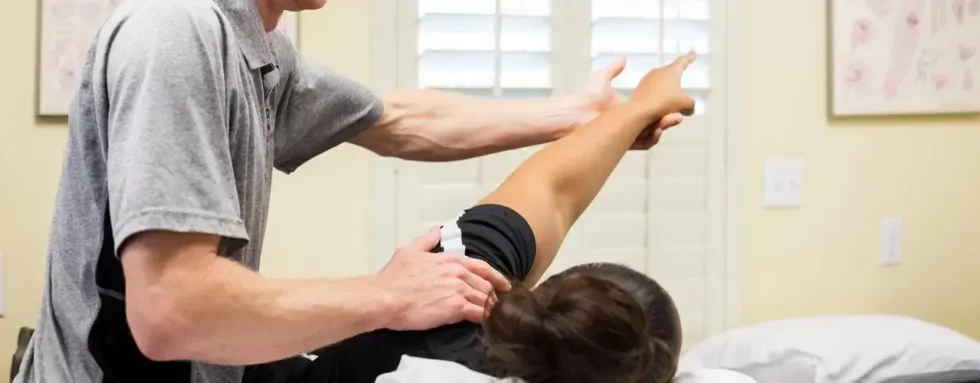
At In Touch NYC Physical Therapy (ITNYCPT), we start shoulder pain treatment for Manhattan patients with a hands-on evaluation. From there, we build a plan that combines manual therapy, targeted exercise, and a home program to ease symptoms, restore motion, and rebuild strength.
Keith Chan, a New York State licensed physical therapist with a Master’s degree from CUNY Hunter College and Graston Technique certification, leads the team that treats these conditions at ITNYCPT.
Does placing a jar on a high shelf feel impossible? Do you wonder whether you’ll sleep on your side again without waking up sore? Has a recent injury left your arm almost immobile? Problems range from the short-term ache of a pulled muscle to the bone-on-bone friction of arthritis. Contact one of our physical therapists to find out how treatment can help.
Request An Appointment
How Shoulder Pain Feels Depends on the Cause
The shoulder moves through a wider range than any other joint, and that mobility also leaves it open to injury and overuse. The way it hurts often points to the source.
With tendon impingement, it may hurt as you raise your arm, then ease before the arm reaches straight overhead. A worn, arthritic joint may ache with every movement in any direction. An acute injury can cause sharp, intense symptoms that make it hard to move the arm at all.
How the Joint Works
The shoulder is a ball-and-socket joint. The head of the humerus (upper arm bone) sits in a shallow socket on the scapula (shoulder blade). Cartilage keeps the bone ends from rubbing together, and small fluid-filled sacs called bursae keep nearby tendons from rubbing against bone.
Four muscles and their tendons, called the rotator cuff, hold the ball in the socket and control rotation. Because the socket is shallow, the joint relies on these muscles for stability. That’s why rotator cuff weakness or irritation often leads to symptoms.
Conditions We Treat
Much of the shoulder pain NYC patients bring to us comes from desk work, overhead training, heavy bags, or an old injury that never fully healed. Harvard Health Publishing’s lists rotator cuff problems, bursitis, frozen shoulder, and osteoarthritis among the most common causes.
| Condition | Common Signs | What PT Focuses On |
|---|---|---|
| Impingement | Ache when lifting the arm to shoulder height; catching during overhead reaching | Posture, shoulder blade control, rotator cuff strength |
| Rotator cuff tendinitis | Ache on the outside of the upper arm when reaching overhead or behind the back | Calming the tendon, then gradual loading |
| Bursitis | Discomfort with overhead motion; tenderness at the top of the shoulder | Heat or ice, activity changes, tendon glide exercises |
| Frozen shoulder | Gradual stiffness, lost rotation, aching at night | Stage-matched mobility work and gentle stretching |
| Osteoarthritis | Ache with most movements, morning stiffness, grinding | Range of motion, strengthening, activity pacing |
| Dislocation or instability | A slipping feeling; unease with the arm overhead | Stability, control and strength after physician care |
Shoulder Impingement
Impingement happens when a tendon or bursa gets pinched in the narrow space under the top of the shoulder blade, usually during overhead reaching. For shoulder impingement physical therapy in NYC, patients start with us; we target posture, shoulder blade control, and rotator cuff strength so the tendon has room to move without catching.
Rotator Cuff Tendinitis and Tears
Overuse from work or sport can irritate and inflame the rotator cuff tendons, and that swelling can cause impingement when you lift your arm. Shoulder tendinitis physical therapy in NYC for runners, lifters, swimmers, and desk workers first calms the tendon, then gradually loads it so it can handle daily demands again.
Good shoulder tendinitis treatment in NYC for athletes balances rest and progressive loading rather than relying on rest alone. For partial or full-thickness tears, see Does Rotator Cuff Physical Therapy Treatment Help Tears Heal.
Shoulder Bursitis
Friction from neighboring tendons can inflame the bursae and make overhead motions uncomfortable. Shoulder bursitis physical therapy combines heat or ice, activity changes, workplace ergonomics or training adjustments, and exercises that help the tendons glide smoothly over the bursa.
Frozen Shoulder (Adhesive Capsulitis)
Frozen shoulder causes aching and marked stiffness as the joint capsule thickens and tightens. It tends to move through three stages, freezing, frozen, and thawing, according to a review in the Singapore Medical Journal. Frozen shoulder physical therapy in NYC: Patients at ITNYCPT receive mobility work matched to each stage instead of forcing motion too early.
Arthritis
Osteoarthritis occurs when joint cartilage wears down, a common age-related issue. Rheumatoid arthritis develops when the immune system attacks the membranes around the joint. Regular exercise can ease both the ache of osteoarthritis and the stiffness that often comes with it.
Dislocation and Instability
When the head of the humerus pops out of its socket, the joint is dislocated. Shoulder injury treatment for NYC patients should begin once a physician has put the joint back in place, then focus on rebuilding stability and control. If the labrum was also damaged, What Exercises Help a Torn Shoulder Labrum? covers the rehab stages.
Shoulder Pain Treatments in Manhattan
You don’t have to rely on painkillers or schedule surgery to get relief. We treat many of the conditions behind these symptoms safely and non-invasively.
How We Diagnose the Cause
We start by discussing your symptoms and asking which movements trigger them. From there, we run specific tests, such as resisted-motion checks and provocation tests, to identify which tissue is involved. X-rays or an MRI from your doctor can add detail about arthritis, tears, or a past dislocation. If anything points outside the scope of PT, we refer you to a physician.
What Treatment Includes
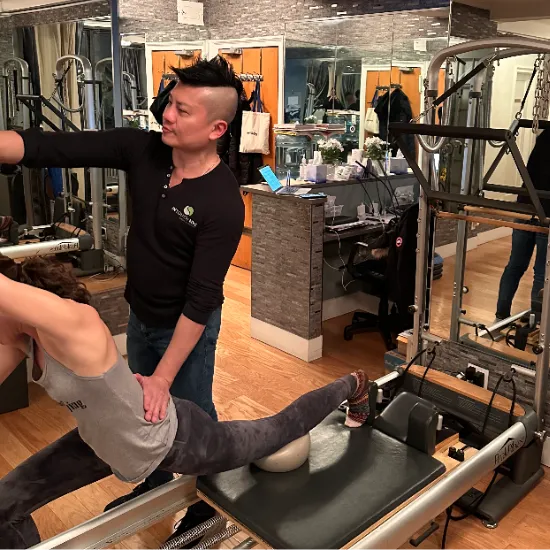
Once we know the cause, we recommend the right mix of methods to manage or fully relieve your symptoms. Shoulder pain physical therapy in NYC patients receive at ITNYCPT usually includes:
- Manual therapy: Soft tissue massage, joint mobilization, and, when it fits, the Graston Technique to ease tension and improve joint movement.
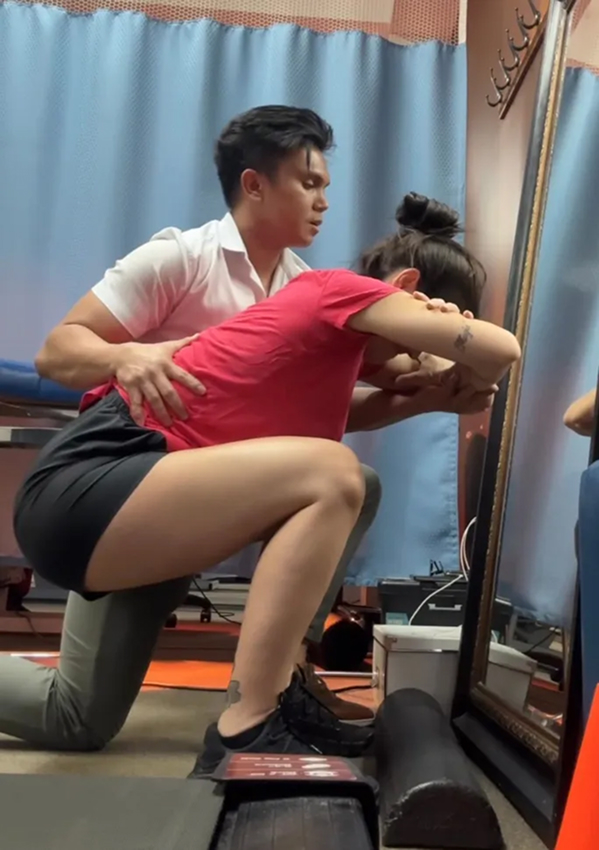
- Range-of-motion exercises: Guided movement that helps the surrounding muscles, tendons, and ligaments work properly again.
- Strengthening exercises: Rotator cuff and shoulder blade work, added once symptoms settle; whether and when it starts depends on the diagnosis.
- Symptom management: Identifying the motions and activities that aggravate the joint, plus heat or ice when helpful.
- Home program: Short daily exercises that carry progress between visits.
Following your therapist’s advice between sessions matters, since home exercise has a big effect on how quickly each stage progresses. For a closer look at each option, read Physical Therapy for Shoulder Pain: Treatment and Recovery.
Posted on GoogleTrustindex verifies that the original source of the review is Google. This practice is a breath of fresh air. From the front desk to the therapists, everyone is professional and welcoming. I’ve seen Keith for a sports injury and Beth for some chronic pain issues, and both are incredibly skilled. The one-on-one sessions are 30-50 minutes of undivided attention, which is so much better than other clinics I’ve tried. They accept a wide range of insurance plans, including for Pilates-based PT, which is a huge plus. I recommend them to everyone.Posted on GoogleTrustindex verifies that the original source of the review is Google. Keith Chan is a master of his craft. As someone who is very active, I needed a PT who understood that I wanted to get back to my workouts, not just be pain-free. Keith’s background as a personal trainer and his Graston certification made him the perfect fit. He created a plan that was both challenging and safe. Their Midtown clinic is clean, modern, and runs on time. I can’t recommend him enough for anyone looking to recover from an injury and get back to what they love.Posted on GoogleTrustindex verifies that the original source of the review is Google. My knee was in such bad shape when I first came to In Touch. I was practically immobile and somehow pushing myself through the day, but in Keith's hands I have gone through a remarkable transformation. His care and attention, coupled with an intense physical regiment has benefited me greatly. I am glad a good friend recommended him!Posted on GoogleTrustindex verifies that the original source of the review is Google. This place is great. Keith has reduced my pain so much, I don’t know what I did before him. It’s small and intimate and I’ve consistently received great care. Heather is also extremely helpful when it comes to booking and changing appointments. I would 100% recommend this practice.Posted on GoogleTrustindex verifies that the original source of the review is Google. 10/10 just finished day 1 and 10 minutes into the session I knew I came to the right place. Looking forward to working together furtherPosted on GoogleTrustindex verifies that the original source of the review is Google. Keith understands the body better than other physical therapists I’ve been to. I didn’t think my neck and shoulders would ever get back to normal because I hurt for so long. Keith changed that. Never had to take advil to ease the tightness again. Highly recommend the practice.Posted on GoogleTrustindex verifies that the original source of the review is Google. I’ve struggled with migraines and neck tension for years, and Beth at In Touch NYC PT has been a game-changer. She has a deep understanding of the body and doesn’t just treat the symptom; she gets to the root cause. Her Pilates-based approach was new to me, but it’s helped my posture and core strength so much. I’m finally seeing real, lasting results.Posted on GoogleTrustindex verifies that the original source of the review is Google. I cannot say enough good things about Beth and the team at In Touch NYC. After having my second baby, I was dealing with pelvic floor issues that I thought I just had to live with. Beth specializes in this area and made me feel comfortable from the very first appointment. She is patient, understanding, and incredibly skilled. Their Midtown location is calm and welcoming, which makes a huge difference when you’re dealing with sensitive health issues. I finally feel like myself again. If you’re a mom looking for a pelvic floor PT in NYC, this is the place!!Posted on GoogleTrustindex verifies that the original source of the review is Google. I’ve been to a few physical therapy clinics in NYC, but In Touch Physical Therapy is on another level. Keith Chan is incredibly knowledgeable and actually takes the time to listen. I went to their Midtown location for a lingering shoulder issue, and Keith built a plan that finally got me back to full strength. I always left feeling heard and confident in my recovery. Highly recommend if you want real one-on-one care.Posted on GoogleTrustindex verifies that the original source of the review is Google. Keith is exceptional. Professional, knowledgeable, and incredibly attentive. I always feel I’m in the best hands and couldn’t recommend him more highly.
What to Expect at Your First Visit
Every course of shoulder physical therapy in Manhattan starts the same way. We ask when the problem started, what makes it worse, and what you want to get back to, whether that’s sleeping through the night, lifting at the gym, or working at a desk without aching.
The visit itself usually runs 30 to 45 minutes and includes a check of your posture and shoulder blade position alongside the diagnostic tests above. You’ll leave with a plan, a starting set of home exercises and a realistic idea of how many visits you may need. One-on-one sessions are available upon request.
Your care includes:

Full evaluation and goal setting

Individualized treatment plan with phased rehabilitation programs

Progress tracking and regular reassessment
98%
Cost, Session Length and Insurance
Self-pay physical therapy at ITNYCPT is $120 per session. ITNYCPT accepts many insurance plans, including Cigna and Medicare, and our front desk can confirm coverage before your first visit.
New York lets patients see a licensed physical therapist without a referral for up to 10 visits or 30 days, whichever comes first, according to the New York State Education Department. Some plans still require a referral, so check your plan’s rules before booking.
Shoulder Pain Relief in Midtown and Across Manhattan
Our Midtown office offers shoulder pain relief for Midtown commuters who can schedule before or after work, and it serves patients from Midtown East, NoMad, and the Upper West Side. Our Financial District office serves patients who live or work in Lower Manhattan.
We are proud of our Google rating and the reviews patients have left us. Ask our front desk for our current rating and review count, or check our Google Business Profile directly.

5-STAR GOOGLE RATING
We are proud to have a 5-star Google rating! This demonstrates our commitment to excellent service and hopefully builds trust with new customers!

Over 50 5-star google reviews
We are grateful for our more than 50 5-star Google reviews! We strive to continue delivering 5-star service at all of our locations!
Shoulder Pain FAQs
It depends on the cause. Mild tendinitis or bursitis often improves over several weeks of consistent care, while frozen shoulder can take several months to a year to fully resolve, according to Harvard Health Publishing. nofollow. Your therapist will give you a timeline after your evaluation.
Does Massage Help Adhesive Capsulitis?
Many people search for adhesive capsulitis massage in New York City clinics that offer it as a stand-alone fix. Soft tissue work can ease muscle tension and make movement more comfortable, but it works best as one part of a plan that includes gradual stretching and mobility exercises.
Do I Need a Doctor’s Referral?
Not always. New York’s direct access rule lets you start PT without a referral for up to 10 visits or 30 days. After that, or if your insurance plan requires it, you’ll need a referral to continue.
When Should I See a Doctor Instead?
See a physician promptly if symptoms follow a fall or hard impact, if you can’t lift your arm at all, or if the joint looks deformed. The same applies to arm or shoulder discomfort paired with chest pressure, shortness of breath, fever, or unexplained numbness.
Can PT Help Me Avoid Surgery?
For many conditions, including impingement, tendinitis, bursitis, and some rotator cuff tears, conservative care is the usual first step. Your therapist will tell you if your progress suggests a surgical consult makes sense.
Scheduling
Your Evaluation
Request An Appointment