


Keith Chan is a New York State-licensed physical therapist at ITNYCPT in New York City. He works with patients who have neurological and neuromuscular conditions, including those managing Guillain-Barré syndrome, and similar complex diagnoses. His approach reflects what the research supports: consistency and individualization matter most.
Key Takeaways
- Rett syndrome physical therapy treatment focuses on preserving existing function, not achieving full recovery – when stability is the realistic goal, maintaining it is the clinical win.
- PT goals shift across four distinct stages of the condition, from supporting motor milestones in infancy to managing comfort and caregiver safety in adulthood.
- Scoliosis affects up to 94% of individuals with Rett syndrome, making postural management and structured exercise a central and ongoing part of any PT plan.
- A 2020 systematic review identified nine evidence-supported PT approaches for Rett syndrome, and research consistently supports multimodal, individualized programs over any single method.
- What happens at home between sessions matters as much as the sessions themselves – caregiver training and personalized home exercise programs are well-documented and effective parts of Rett treatment.
What Does Physical Therapy Do for Rett Syndrome and What Are the PT Goals?
Physical therapy for individuals with Rett syndrome targets the physical challenges the condition creates over time. The goal is not to reverse the disorder. It is to keep the body working as well as it can for as long as possible.
Core PT goals for patients with Rett syndrome include:
- Maintaining joint range of motion and preventing contractures
- Supporting posture and sitting balance
- Slowing scoliosis progression
- Preserving walking ability where it exists
- Managing muscle stiffness and spasticity
- Reducing the impact of repetitive hand movements
When stability is the realistic goal, maintaining it is the win.
Can Rett Syndrome Be Treated?
There is no cure for Rett syndrome. Rett syndrome treatments focus on managing symptoms and slowing decline.
In 2023, the FDA approved trofinetide (Daybue) as the first drug made specifically for Rett syndrome. This followed clinical trial results showing reductions in some behavioral and functional symptoms.
Physical therapy, occupational therapy, and speech therapy remain the core of ongoing care for most individuals with the condition.
Physical Challenges PT Addresses in Rett Syndrome
Motor Skill Loss, Muscle Tone, and Spasticity
Symptoms of Rett syndrome often appear between 6 and 18 months. This happens after a period of normal growth. Early on, the condition causes low muscle tone.
Over time, spasticity increases. Both affect how a person moves and how much help they need. PT uses exercise and positioning to manage these changes and support any remaining movement.
Scoliosis and Spinal Deformities
Scoliosis affects up to 94% of individuals with Rett syndrome. Without management, the spinal curve can worsen quickly. This affects balance, breathing, and daily comfort.
Postural programs and structured exercise are the main PT tools for slowing this process. Bracing or surgery may be needed depending on how severe the curve becomes.
Gait, Ambulation, and Hand Function
Many individuals with Rett syndrome lose the ability to walk on their own over time. Apraxia is the inability to carry out a learned movement even when the person understands the instruction.
It affects both walking and hand use. PT works on this through repeated movement practice, supported walking, and targeted gait interventions – the same principles used in foot drop treatment and other conditions affecting voluntary movement.
Rett Syndrome Physiotherapy Treatment by Stage
Stage 1: Early Intervention
Stage 1 typically starts between 6 and 18 months. Physical signs are often mild at this point. PT focuses on sensory input, positioning, and supporting motor milestones.
We recommend early referral, even before problems become visible. Preventing loss is easier than recovering it later.
Stage 2: Managing Rapid Skill Loss
Between ages 1 and 4, previously learned skills regress quickly. Hand use, walking, and communication can all decline quickly. PT focuses on keeping joint range, managing tone, and slowing skill loss through regular movement practice. Sessions are often more frequent during this phase.
Stage 3: Maintaining Function During the Plateau
Between ages 2 and 10, the condition tends to level off. Small motor gains are sometimes possible during this window. PT focuses on keeping existing skills and maintaining postural routines. How consistent therapy is during this stage affects how much function carries into later years.
Stage 4: Preserving Mobility in Adulthood
After age 10, mobility tends to decline further. Joint stiffness, reduced walking, and worsening scoliosis become more common. PT shifts toward comfort, pain control, and caregiver teaching.
Caregivers learn safe ways to move and position a person with Rett syndrome.
Rett Syndrome Exercises Used in Physical Therapy
Physical therapy for Rett syndrome uses different types of exercises depending on the goal. Some focus on maintaining joint mobility and managing posture. Others focus on building strength and maintaining the ability to move independently.
Range of motion and postural exercises target joint flexibility and body alignment:
- Passive shoulder and hip rotations – the therapist moves the limb through its full range while the patient remains relaxed, preventing stiffness and contractures
- Supported seated trunk tilts – the patient shifts weight side to side in a chair to maintain spinal mobility and sitting balance
- Supine hamstring stretches – gentle lengthening of the back of the leg to reduce tightness and support comfortable positioning
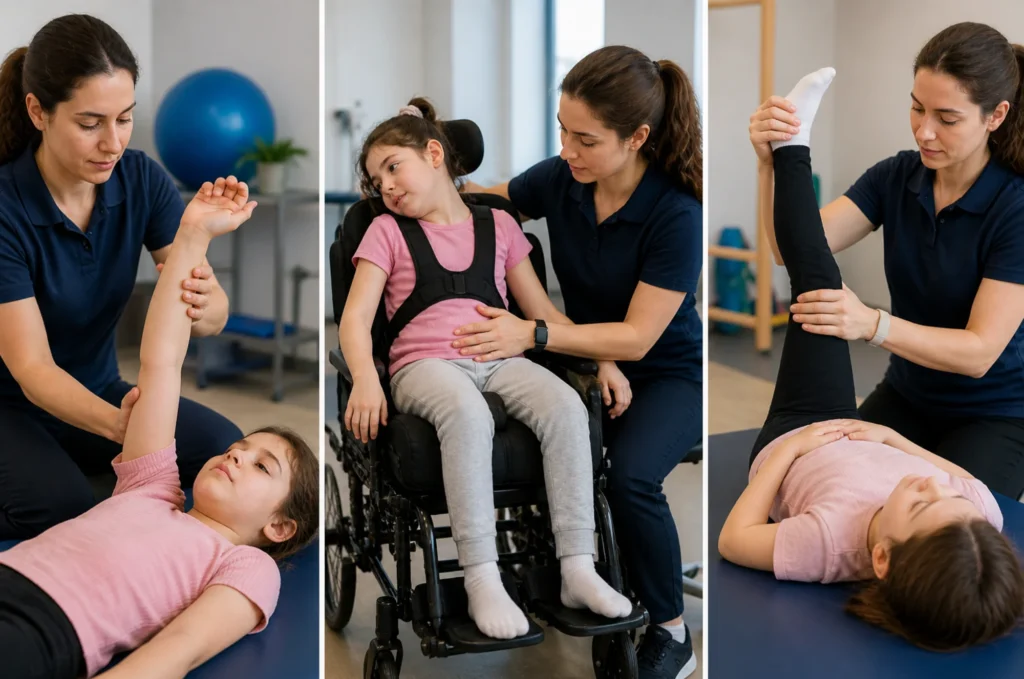
Strengthening and mobility exercises focus on keeping the body active and functional:
- Supported treadmill walking – the patient walks with partial body weight support to maintain leg strength and cardiovascular fitness without overloading the joints
- Sit-to-stand practice – repeated transitions from a chair to standing to build lower limb strength and improve postural control
- Stair stepping with hand support – stepping up and down with assistance to train leg strength, coordination, and balance in a functional movement pattern.
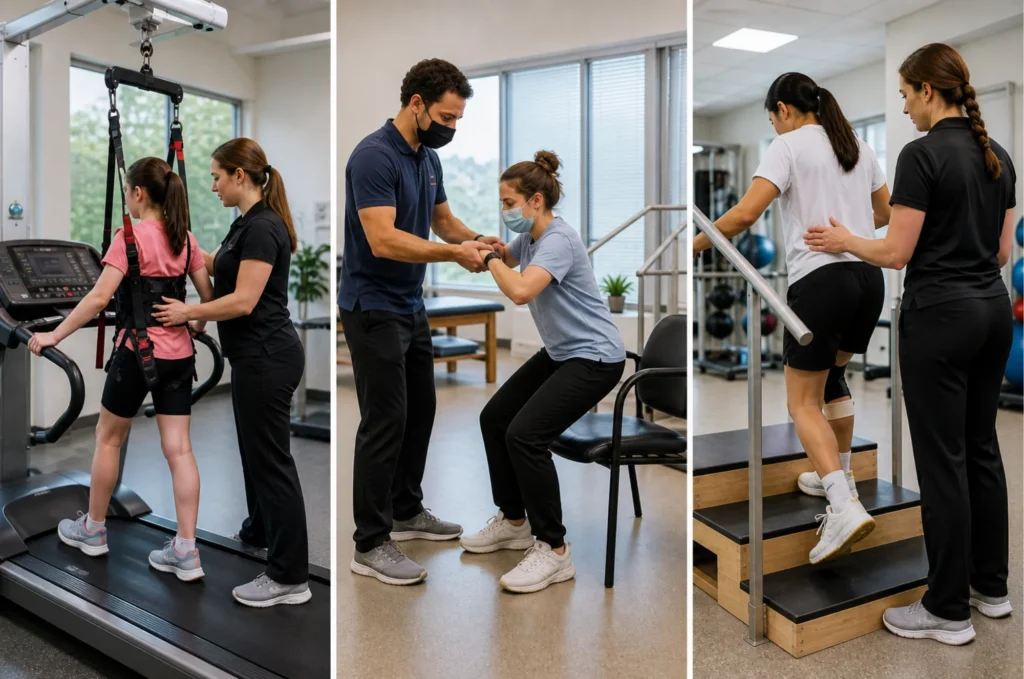
Postural management includes sleep-positioning systems, fitted seating, and planned position changes throughout the day. Standing programs help support bone density, which is often lower in individuals with Rett syndrome due to limited weight-bearing activity.
Where core control is a key goal, Pilates-based therapeutic exercise offers a clear and adaptable structure. Braces, splints, walkers, and wheelchairs are also common parts of a Rett syndrome PT plan, and equipment needs should be reviewed regularly.
Home Exercise Programs and Caregiver Involvement
PT sessions alone are rarely enough for a condition that affects the individual every day. What happens at home between sessions matters just as much.
A study of 40 girls and women with Rett syndrome found that a personalized at-home program made a difference. The program targeted motor function, hand function, joint range of motion, and fitness. It produced measurable gains.
Caregiver training is a core part of this model. Therapists show parents and caregivers how to do daily exercises safely. They also show how to add movement into everyday tasks like dressing and mealtimes.
Rett Syndrome Treatment Guidelines: How PT Fits Into Overall Care
PT is one part of a broader Rett treatment plan. Guidelines recommend pairing it with occupational therapy, speech therapy, nutrition support, and medical care.
This helps address symptoms such as seizures and breathing problems. Therapies for Rett syndrome work best when the care team shares goals and updates them together as the condition changes.
Physical and occupational therapy serve different but related roles. PT focuses on gross motor skills, mobility, and posture. Occupational therapy focuses on daily tasks, feeding, dressing, and hand use. The two work closely together, especially around seating, device access, and safe transfers.
Hippotherapy, hydrotherapy, and music therapy can support conventional therapy. Their benefit depends on session frequency and caregiver involvement. It also depends on when PT starts and the child’s age. Complications can affect progress, like severe scoliosis or frequent seizures.
Music therapy has shown benefit for individuals with Rett syndrome by reducing hand stereotypies and supporting communication. None of these replaces PT. They add to it.
Rett Syndrome Life Expectancy and Finding Ongoing Care
Many people with Rett syndrome live well into adulthood. Research shows more than 50% reach age 50. Ongoing physical therapy supports mobility, cardiovascular health, and posture, contributing to a longer, more comfortable life. Therapy goals shift over time – from skill maintenance to comfort and function – but the need for consistent care does not stop.
When you look for a physical therapist, prioritize a licensed professional with experience in pediatric neurology or neurodevelopmental conditions. Rett syndrome affects roughly 1 in 10,000 females, so direct experience is not always available.
Experience with cerebral palsy, Down syndrome physical therapy, or similar neurodevelopmental conditions is a reasonable sign of relevant skills.
At the first visit, the therapist will assess joint range of motion, muscle tone and strength, posture and balance, gait, scoliosis, and hand use. From that, they build an individualized plan with clear goals, a session schedule, and a home program for caregivers. The plan should be reviewed and updated regularly as the condition changes.