
At ITNYCPT in New York City, Keith Chan is a New York State licensed physical therapist. He shares clinical insight on this topic. He draws on experience treating a wide range of movement and orthopedic conditions.
This guide explains how therapy for rheumatoid arthritis may support mobility, relieve pain, and improve long-term function.
Key Takeaways
- Physical therapy for rheumatoid arthritis can help reduce stiffness, improve strength, and support safer movement during daily activities.
- A treatment plan should match the person’s symptoms, affected joints, flare patterns, goals, and health history.
- Exercise for RA often includes range-of-motion exercises, strengthening, low-impact cardio, and activity pacing.
- Flares may require rest, lower exercise intensity, shorter sessions, or medical input when symptoms worsen sharply.
- PT can support function and pain management, but it does not replace rheumatology care or medical treatments for RA.
Does Physical Therapy Help Rheumatoid Arthritis?
Yes. Physical therapy can help people with RA move with less stiffness, build strength, and protect a painful joint during daily tasks. It does not cure RA or replace medical treatments for rheumatoid arthritis. It can support safer movement and better exercise habits.
A physical therapist can help identify which activities increase symptoms and which movements may reduce pain. The goal is to create a treatment plan based on symptoms, disease activity, goals, and health history.
How RA Affects Movement
RA can affect movement because inflammation changes how joints feel and function. Pain, swelling, fatigue, and stiffness can make tasks like walking, typing, dressing, gripping, or climbing stairs harder.
Joint Pain and Swelling
RA often affects the hands, wrists, knees, ankles, and feet. A swollen or painful joint may feel warm, tender, or hard to move through its full range of motion.
When motion becomes limited, people may avoid activity. Over time, this can reduce strength, balance, and confidence with daily activities.
Does RA Affect Muscles?
Yes. RA can affect muscles indirectly. Pain and swelling may cause a person to move less, which can reduce strength and endurance.
Fatigue can also limit exercise tolerance. This is why an exercise plan may need shorter sessions, gradual progress, and rest periods.
Morning Stiffness and Fatigue
Morning stiffness is common in RA and may last longer than general joint stiffness. Gentle motion, heat, and pacing may help reduce stiffness before more active exercise.
Fatigue can change how much a person can do in one day. A plan should consider sleep, work demands, flare patterns, and usual activity level.
Physical Therapy Treatment for Rheumatoid Arthritis
Physical therapy treatment for rheumatoid arthritis usually starts with an evaluation. The physical therapist reviews symptoms, medical history, joint range of motion, strength, balance, posture, gait, and goals.
The plan may include exercise programs, education, joint protection, pacing, manual therapy, home exercises, and broader arthritis physical therapy treatment strategies. The plan should change over time as symptoms, strength, and activity tolerance change.
Physical Therapist for Rheumatoid Arthritis
A physical therapist can help identify whether movement problems come from stiffness, weakness, swelling, or poor load tolerance. This matters because two people with the same diagnosis may need different care.
For example, one person may need hand mobility and grip control, while another may need knee strength and walking support. PT for RA should match the person, not just the diagnosis.
Movement Assessment
A movement assessment may include range of motion, strength, balance, walking, posture, and task testing. The therapist may also ask what triggers symptoms and what helps them settle.
This helps guide the exercise plan. It also helps the person understand which movements are safe, which need to be changed, and which may need to wait during a flare.

Exercise Planning
Exercise is often part of physiotherapy for rheumatoid arthritis, but the dose matters. The plan may include mobility work, gentle strengthening, balance training, walking, or low-impact cardio.
A good exercise plan starts at a level the person can tolerate. Progress may include more repetitions, more resistance, longer time, or harder tasks as control improves.
Manual Therapy for Rheumatoid Arthritis
Manual therapy may include hands-on techniques for soft-tissue work, joint mobilization, or pain control. It should be gentle and based on symptoms, joint health, and comfort.
Soft-tissue tools, including the Graston Technique, may be used when muscle or tissue restriction is present. These tools are not a stand-alone solution, but they may support movement when paired with exercise and education.
Rheumatoid Arthritis Physical Therapy Exercises
Rheumatoid arthritis physical therapy exercises should focus on motion, strength, function, and safe load. The best exercise depends on the affected joints, disease activity, and daily movement needs.
Common options include:
- Gentle range of motion exercises for stiff joints
- Strength exercises for muscles around affected joints
- Walking, cycling, or pool exercise for low-impact conditioning
- Balance work for safer movement
Strength and Stability Exercises
Strength exercises help muscles support the joints during daily activities. This may help with standing from a chair, carrying groceries, walking up stairs, or staying steady while moving.
Exercises may start with body weight, light bands, or small weights. Progress should be gradual because too much load too soon can irritate symptoms.
Low-Impact Cardio
Low-impact cardio can support endurance and general health. Walking, cycling, elliptical training, or water-based exercise may work well for some people with RA.
The right amount varies. A person may need shorter sessions during periods of higher symptoms and longer sessions when symptoms are stable.
Physical Therapy for Hands and Knees
Physical therapy for rheumatoid arthritis in the hands and knees often targets range of motion and strength. It also focuses on joint protection and task changes. These areas matter because they affect gripping, cooking, typing, walking, stairs, and transfers.
Physical Therapy for Rheumatoid Arthritis in Hands
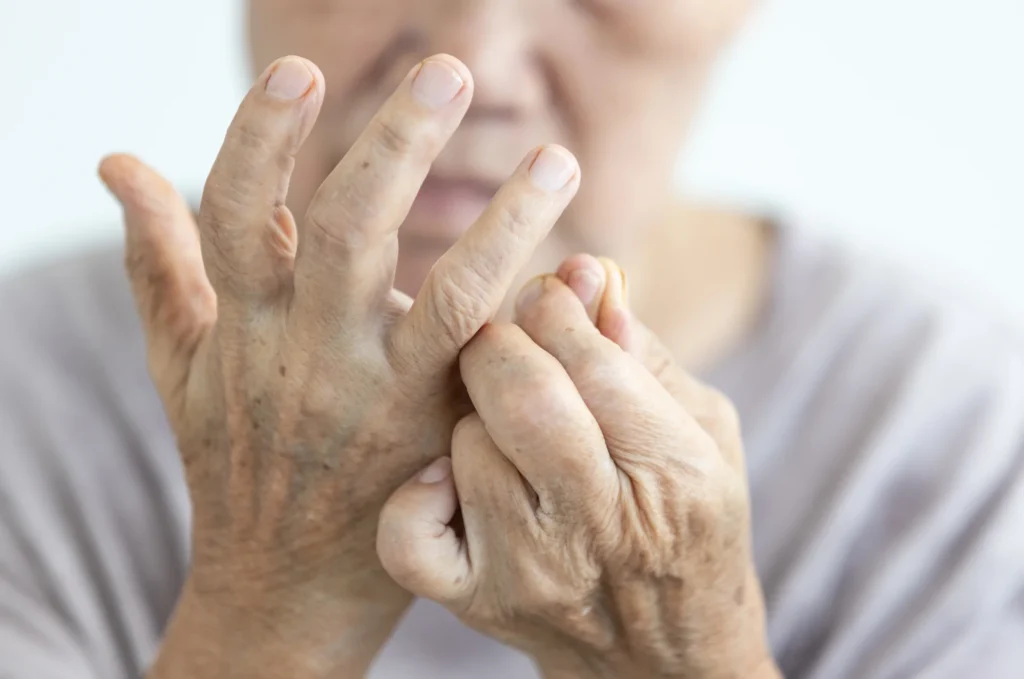
Physical therapy for rheumatoid arthritis of the hands may include gentle finger, thumb, and wrist mobility exercises, as well as principles commonly used in hand therapy and rehab. It may also include grip and pinch exercises if the joints tolerate them.
Hand care may involve joint-protection strategies, splints, and adaptive tools to reduce stress on painful joints. For example, a jar opener, built-up pen grip, or wrist support may make cooking, writing, or typing easier. Understanding what hand therapy can and cannot do can also help set realistic expectations before using splints, tools, or task changes for hand-heavy activities.

Does Physical Therapy Help Knee Arthritis?
Physical therapy may help with knee arthritis by improving strength, walking mechanics, and load control. For people with RA, knee symptoms may change with inflammation, activity, footwear, and strength.
Exercises may focus on the hips, thighs, calves, and balance. The goal is to reduce stress on the knee during walking, stairs, standing, and transfers.
What Does an Arthritis Flare Feel Like?
An arthritis flare may feel like more pain, swelling, warmth, stiffness, and fatigue than usual. A flare can make joints feel sensitive, heavy, or harder to move.
Rest can help when joints feel swollen, hot, or more painful than normal. Rest does not always mean no movement; it may mean reducing load, intensity, or repetitions.
Activity modification may include shorter walks, lighter resistance, fewer repetitions, or more breaks. As symptoms calm, activity can slowly increase again.
Medical care may be needed for swelling, redness, or fever. Seek help for sudden severe pain, new weakness, or major loss of function. A rheumatologist or physician can assess disease activity and medication needs.
Disadvantages of Physiotherapy for Rheumatoid Arthritis
Disadvantages of physiotherapy for rheumatoid arthritis can include bad timing. It can also involve too much strain. Sometimes, the exercises do not match the symptoms. PT should not force painful motion or ignore active inflammation.
Adjust the exercise if pain increases during the session and does not settle afterward. It may also need adjustment if swelling, fatigue, or stiffness becomes worse the next day.
PT may not be enough when RA is not medically controlled. People with RA often need a broader care plan. It may include rheumatology care, medication, sleep support, nutrition guidance, and paced activity.
What Results Can You Expect?
Results vary because RA symptoms differ from person to person and with disease activity. But some people notice reduced stiffness, improved strength, improved balance, and greater confidence in daily activities. In some cases, patterns of pain improvement may also become clearer as patients learn which movements help and which need adjustment.
Progress depends on consistency, flare patterns, joint changes, health history, medication response, sleep, stress, and workload. The goal of physical therapy for rheumatoid arthritis is not a promised result. It offers a safer, clearer path to movement, function, and long-term self-management.