
Keith Chan, a New York State licensed physical therapist at ITNYCPT in New York City, works with patients through this kind of ongoing management.
Key Takeaways
- Physical therapy helps manage the physical effects of Charcot-Marie-Tooth disease by supporting strength, balance, gait, and joint mobility.
- CMT treatment should be personalized because symptoms, severity, and disease progression vary from patient to patient.
- Low-impact exercise, stretching, balance work, and gait training can help reduce fall risk and support daily function.
- Braces, shoe inserts, and occupational therapy may help when CMT affects walking, hand use, or daily tasks.
- Physical therapy cannot stop nerve degeneration, but it can help slow functional decline and preserve independence.
What Is CMT in Physical Therapy?
CMT, also called hereditary motor and sensory neuropathy, is a Charcot-Marie-Tooth disease that slowly damages peripheral nerves. Patients develop muscle weakness, foot deformities such as high arches and foot drop, reduced sensation, and coordination problems.
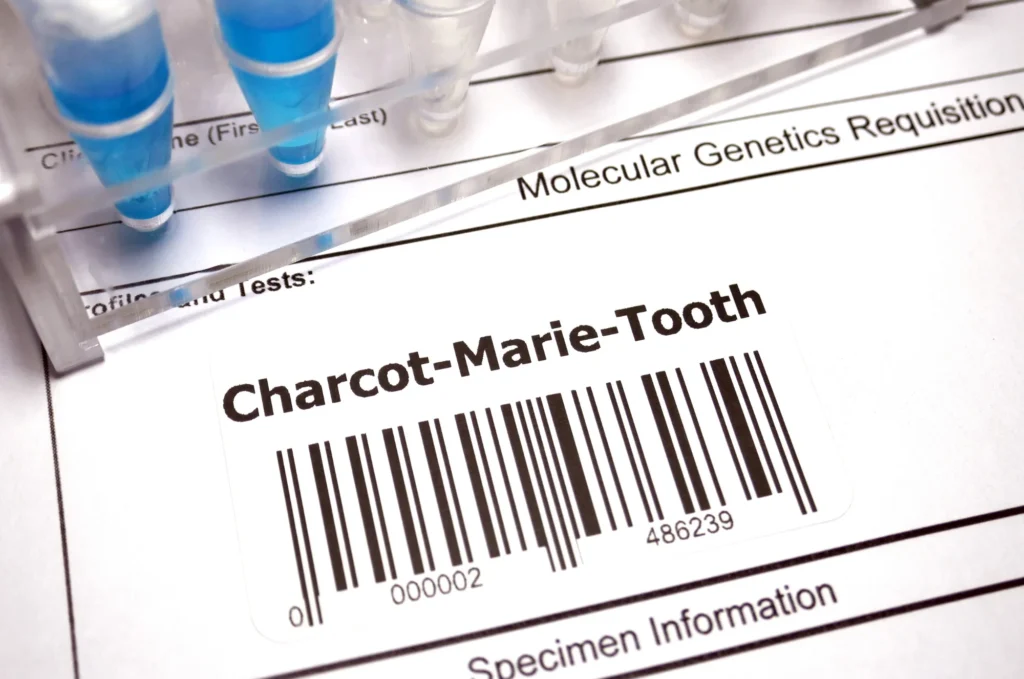
Clinicians typically confirm the diagnosis through nerve conduction studies, electromyography, and genetic testing.
The management of CMT focuses on slowing the physical consequences of nerve damage rather than stopping the disease itself. Physical therapy works with the muscles and joints that remain functional, preserving strength, range of motion, and movement quality over time.
Is Physical Therapy Good for CMT?
Yes. Physical therapy directly addresses the functional consequences of nerve degeneration in patients with CMT. A structured program delivers several practical benefits:
- Builds muscle strength and slows its decline
- Helps patients improve balance and corrects gait patterns that cause secondary joint pain
- Reduces contracture risk and preserves range of motion
- Supports quality of life over the long term
Why Starting Charcot-Marie-Tooth Therapy Early Matters
CMT progresses slowly, which makes it easy to delay treatment. Starting Charcot-Marie-Tooth therapy early helps the physical therapist do more.
It also gives the patient more time to build lasting exercise habits. Muscles weaken faster without structured training, and contractures become harder to address once they form.
What a CMT Treatment Plan Includes
A CMT treatment plan starts with a full PT evaluation. It includes a medical history review.
It also screens movement patterns. It checks strength, balance, and range of motion. Clinicians then develop individualized CMT treatment plans based on each patient’s specific deficits, goals, and disease stage.
How CMT Type and Severity Affect Treatment
CMT1 affects the myelin sheath around nerve fibers, while CMT2 damages the axons directly. A physical therapist calibrates the program’s intensity and goals based on the patient’s condition and the patient’s progress.
Managing Pain in CMT
Musculoskeletal pain from compensatory movement and neuropathic pain from nerve damage are both common in CMT. PT addresses the first type through strengthening and load management, while neuropathic pain typically requires medication.
Some nerve pain medicines have side effects that affect energy and coordination. The PT and prescribing doctor should stay aligned.
Orthotics and Physical Therapy
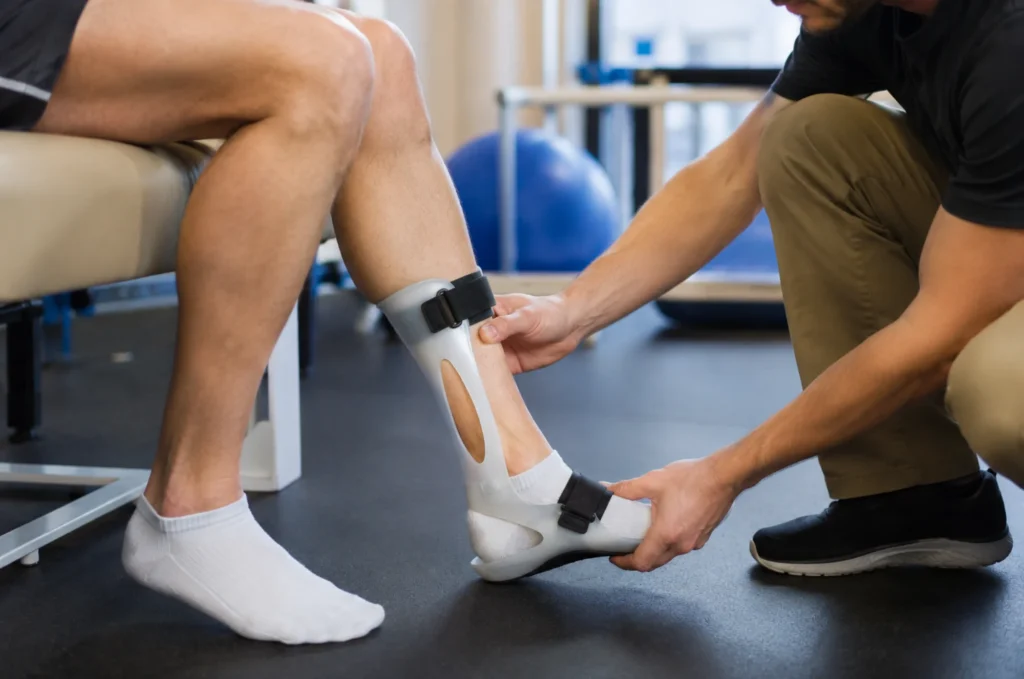
Assistive devices such as ankle-foot orthoses, shoe inserts, and thumb splints support joints. Weakened muscles may no longer stabilize these joints. A physical therapist works with an orthotist. They ensure these devices support the exercise program and do not replace muscle strengthening.
When to See a Neurologist or Orthotist
See a neurologist if CMT symptoms change quickly, pain increases, or weakness starts affecting daily function. A neurologist can review nerve changes, medication needs, and testing.
See an orthotist if foot drop, ankle instability, high arches, or tripping make walking harder. Braces or shoe inserts may improve support and safety.
Occupational Therapy and CMT
When CMT affects the hands and arms, occupational therapy helps with daily tasks. It uses adaptive techniques and tools to support function. Physical and occupational therapy often run in parallel, with each discipline targeting a different set of limitations.
Which Physiotherapy Exercises Are Used for Charcot-Marie-Tooth Disease?
Charcot-Marie-Tooth disease physiotherapy uses low-impact exercises that build strength and coordination without overloading compromised nerves. Programs combine several types of training, tailored to the patient’s current capacity.
Strengthening Weak Muscles
Resistance training targets the feet, ankles, and lower legs, where muscle strength losses are typically most pronounced in CMT. Exercises use body weight, resistance bands, or light weights and progress gradually over time.
Balance and Gait Training
Physical therapists use progressively unstable surfaces and movement drills to improve balance and retrain postural responses weakened by CMT. Gait training corrects compensatory patterns that place excess stress on the hips, knees, and lower back.
Patients with dizziness, head injury history, or balance changes may also benefit from concussion physical therapy when symptoms overlap with vestibular or coordination problems.
Stretching and Contracture Prevention
Daily stretching keeps your joints flexible and lowers the risk of contractures.
This is especially true in the calves, ankles, and plantar fascia. A physical therapist prescribes and updates the stretching program as the patient’s condition changes.
What Is the Best Exercise for CMT?
No single exercise works best for all patients with CMT. People frequently recommend swimming and cycling for cardiovascular and muscular conditioning because they don’t place a heavy load on the ankles. Pilates-based therapeutic exercise can help some patients:
- It can improve core control.
- It can improve trunk stability.
- It can also help patients with lower limb weakness.

Exercise Safety and What to Avoid
Overexertion can temporarily worsen symptoms and reduce long-term compliance. Programs should start conservatively and progress under professional supervision, and generic fitness routines are not appropriate substitutes for a PT-guided plan.
What Research Says About Exercise for CMT
Systematic reviews of exercise interventions for Charcot-Marie-Tooth disease show consistent improvements in walking capacity, balance, and lower-limb strength among patients who follow structured programs. Individualized, supervised programs produce better outcomes than generic or unsupervised approaches.
What to Expect from CMT Physical Therapy
PT for CMT is a long-term commitment that adjusts as the disease progresses. Patients who understand this from the start tend to stay engaged and respond more effectively to functional changes.
How Often Should You See a Physical Therapist?
Most patients with CMT begin with one to two sessions per week, shifting to monthly reassessments once a home program is established and exercise independence builds. However, the duration of physical therapy depends on symptoms, goals, and disease progression.
Home Exercises and Between-Session Practice
Consistent home exercise drives most of the functional progress in CMT physical therapy. Physical therapists design and regularly update home programs to extend the work done in clinic sessions.
How Therapists Measure Your Progress
Progress is tracked using timed walking tests, balance scales, and muscle strength assessments. The Charcot-Marie-Tooth Functional Outcome Measure (CMT-FOM) is a validated tool designed for this population that measures changes in daily physical function over time.
What Physical Therapy Cannot Fix About CMT?
Physical therapy manages the functional consequences of CMT. It does not stop the underlying nerve degeneration, and patients will experience gradual changes in strength and sensation over time, regardless of their program. The goal is to delay functional decline, reduce fall risk, and preserve independence as long as possible, not to reverse the condition.
Is There a New Treatment for CMT?
Research into disease-modifying treatments is active. Gene therapy targeting the PMP22 gene duplication in CMT1A is among the most advanced areas of investigation, alongside stem cell research and neuroprotective compounds. None are currently available in routine clinical practice, and patients interested in trials should speak with their neurologist.
Finding Physical Therapy for CMT in NYC
Effective long-term care for CMT requires a physical therapist who understands progressive neuromuscular conditions and adjusts programs as the disease changes.
At ITNYCPT, sessions are one-on-one with a New York State-licensed physical therapist and are available at locations across New York City.
Keith Chan holds a Master’s in Physical Therapy from CUNY Hunter College, has over a decade of clinical experience, and is a Graston Technique provider, relevant when managing musculoskeletal restrictions alongside nerve-related weakness.