
Keith Chan, a New York State-licensed physical therapist at ITNYCPT, works with patients throughout New York City, treating a wide range of musculoskeletal conditions through individualized physical therapy plans.
Key Takeaways
- Dry needling is a Western medicine technique that inserts a thin, solid needle into myofascial trigger points to release muscle tension, increase blood flow, and reduce pain – it is not acupuncture and does not involve any injected substance.
- It is used to treat a wide range of musculoskeletal conditions, including shoulder pain, low back pain, tennis elbow, plantar fasciitis, tension headaches, and TMJ pain.
- Most patients experience mild, temporary discomfort during treatment and need between 3 and 6 sessions to see consistent results, with home exercises between sessions to support long-term recovery.
- Dry needling is most effective as part of a broader physical therapy plan that includes manual therapy, therapeutic exercise, and progressive strengthening – not as a standalone treatment.
- Without insurance, a single session typically costs $75 to $175; with in-network coverage, out-of-pocket costs generally range from $20 to $60 per visit, depending on your plan’s deductible, copay, and coinsurance structure.
What Is a Dry Needling Procedure?
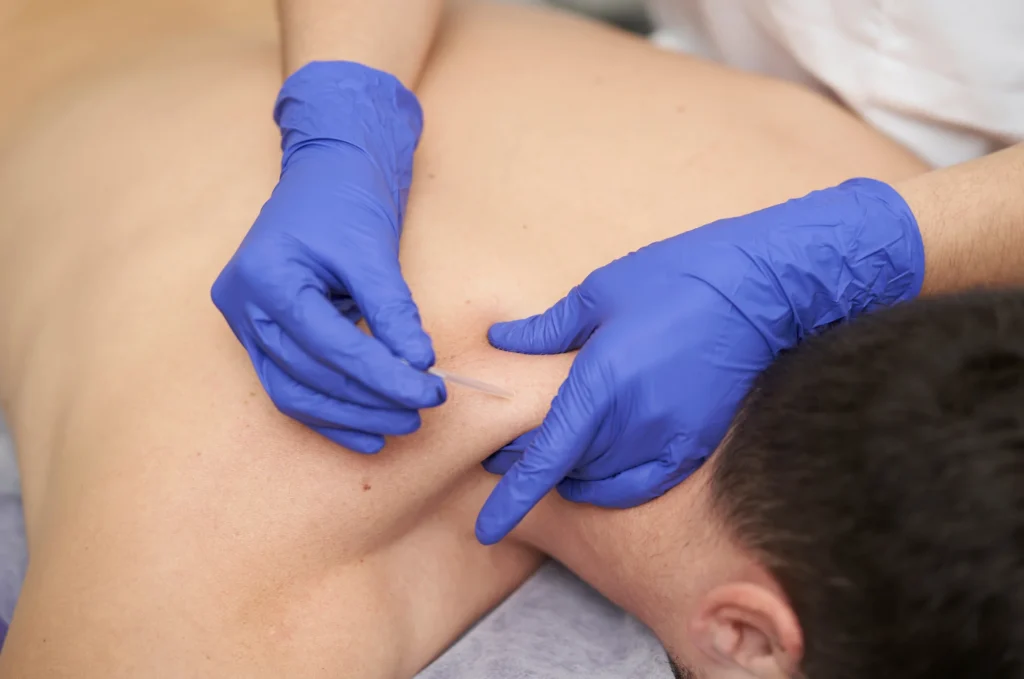
A dry needling procedure involves inserting a thin, solid, filiform needle into muscle tissue without medication or injection. Also called dry needling or trigger point dry needling, this treatment is always delivered by licensed physical therapists as part of a broader, individualized plan of care.
Dry Needling Physical Therapy vs. Acupuncture
The comparison between dry needling and acupuncture is one of the most common questions patients ask. Acupuncture, rooted in traditional Chinese medicine, targets energy pathways throughout the body, while dry needling, grounded in Western anatomy, addresses myofascial trigger points directly in muscle tissue.
Who Is Qualified to Perform Dry Needling?
In New York, dry needling must be performed by a licensed physical therapist who has completed post-graduate training in the technique. Confirm licensure and specific dry needling training before scheduling.
How Dry Needling Treatment Works
Dry needling works by targeting myofascial trigger points – tight, irritable spots in skeletal muscle that produce local or referred musculoskeletal pain. The needle produces a local twitch response that releases tension, helps increase blood flow, and resets the nerve-to-muscle signal to promote healing.
What a Trigger Point Is
A trigger point is a dysfunctional band of muscle fiber that sustains myofascial pain by restricting local circulation. It can refer to pain in distant areas – a trigger point in the neck, for example, can produce a tension headache.
What the Needle Does in the Muscle
The local twitch response signals that the tissue has been disrupted, thereby increasing blood flow, releasing built-up tension, and normalizing motor end-plate activity that drives dysfunction. The result is reduced pain and improved muscle function.
Superficial vs. Deep Needling Techniques
Superficial dry needling targets tissue just below the skin; deep dry needling enters the muscle directly at the trigger point. Your physical therapist selects the technique based on assessment findings and your individual response to treatment.
Conditions Therapeutic Dry Needling Can Help Treat
Therapeutic dry needling treats low back, hip, knee, and shoulder pain. It also treats tennis elbow, plantar fasciitis, IT band syndrome, Achilles tendinitis, and carpal tunnel syndrome.
Dry needling therapy also helps with tension headaches, neck pain, whiplash, and TMJ pain. In these cases, trigger points cause myofascial pain and referred symptoms.
The Graston Technique – instrument-assisted soft tissue mobilization – is often used in the same session to address fascial restrictions alongside the needling work.

What to Expect during a Dry Needling Session
How a Physical Therapist Evaluates You First
Your physical therapist will assess posture, movement quality, and range of motion to identify which trigger points are contributing to your symptoms before beginning dry needling treatment. This evaluation determines both whether dry needling is appropriate and which muscles to treat.
Is Dry Needling Painful?
Most patients feel a dull ache or brief local twitch response at the needle site, lasting only a few seconds. Discomfort is generally mild and temporary.
How Long Does Dry Needling Usually Last?
Sessions run 15 to 30 minutes as part of a one-on-one physical therapy appointment. Electrical stimulation may be applied afterward to reduce post-treatment soreness and support tissue recovery.
How Many Sessions Does Dry Needling Typically Take?
Most patients see consistent improvement between 3 and 6 sessions. Home exercise carryover between appointments plays a meaningful role in how well long-term results hold. For a broader look at how long physical therapy takes across different conditions, timelines vary depending on your diagnosis, treatment response, and consistency with your program.
Dry Needling Benefits
Pain Relief, Reduced Tension, and Better Mobility
The core benefits of dry needling are pain relief, reduced muscle tension, and improved range of motion – outcomes that enable patients to engage more effectively in therapeutic exercises that drive long-term recovery.
How It Fits into a Broader Treatment Plan
Dry needling works best alongside manual therapy, Pilates-based therapeutic exercise, and progressive strengthening. It is used to promote healing and to reduce acute pain, so the rest of the treatment plan – including Pilates-based therapeutic exercise and progressive strengthening – can build on that foundation.
Side Effects and Recovery
Is There a Downside to Dry Needling?
The side effects of dry needling are generally mild. Soreness in the treated area typically resolves within 24 to 48 hours, and minor bruising or post-session fatigue are also possible.
When to Follow Up with Your Physical Therapist
Contact your physical therapist if soreness lasts more than 48 hours, if significant swelling develops, or if your symptoms worsen after a session.
Understanding what counts as normal pain after physical therapy can help you decide when a reaction needs attention and when it is part of the expected recovery process.
Who Is a Good Candidate for Dry Needling?
Dry needling is suitable for patients with muscle pain, movement restrictions, or soft tissue injuries that haven’t responded to other treatments. Dry needling may not be appropriate if any of the following apply:
- Pregnancy
- Active bleeding disorder or use of blood-thinning medication
- Compromised immune function
- Local infection or open skin in the treatment area
- Strong needle phobia
Your physical therapist will screen for these factors during your initial evaluation and may recommend manual therapy or the Graston Technique as alternatives.
Dry Needling Physical Therapy Cost and Insurance Coverage
Dry Needling Cost without Insurance
Without insurance, a single session typically costs between $75 and $175, with New York City prices sitting toward the higher end of that range.
How Much Does Dry Needling Cost with Insurance?
Coverage varies by plan. With an in-network physical therapist, a session with insurance typically costs between $20 and $60 out of pocket, depending on your plan structure. Before your first appointment, clarify these key terms with your insurer:
- Deductible: your out-of-pocket threshold before coverage begins – until it is met, you may pay the full session rate
- Copay: a fixed cost per visit, commonly $25 to $50 for physical therapy
- Coinsurance: your percentage share of costs after the deductible is met, typically 20% to 30%
Call your insurer directly and ask whether dry needling is covered under your physical therapy benefit, whether a referral is required, and whether your plan limits the number of visits per year.