


At ITNYCPT, a New York City outpatient clinic, Keith Chan is a licensed physical therapist in New York State. He helps people with fibromyalgia and uses personal treatment plans based on each patient’s symptoms, goals, and current abilities.
Key Takeaways
- Physiotherapy does not cure fibromyalgia, but it can reduce pain, improve daily function, and teach long-term self-management skills that reduce how often and how badly flare-ups occur.
- The strongest evidence supports combining aerobic exercise, strengthening, and patient education – no single treatment works as well on its own.
- A PT evaluation is the starting point for building a personalized plan; it covers your health history, movement, pain sensitivity, and goals before any treatment begins.
- Flare-ups do not mean stopping PT – sessions are modified, not canceled, and staying somewhat active during a flare tends to support faster recovery.
- Progress is not a straight line, but most patients see reduced pain intensity, better sleep, and shorter flare-ups over several months of consistent care.
Does Physical Therapy Help Fibromyalgia?
Yes. Physical therapy does not cure fibromyalgia, but it can reduce pain, improve physical activity tolerance, and help patients manage symptoms and improve daily function over time.
Exercise has the strongest research support of any treatment for fibromyalgia, with a low risk of side effects when paced correctly. Clinical guidelines recommend combining aerobic exercise, strengthening, and patient education as the foundation of fibromyalgia physiotherapy.
PT can also improve range of motion, build muscle endurance, and teach pacing strategies that reduce flare-up frequency. It works best as part of a broader plan that may include medication, cognitive behavioral therapy, and coordination with a rheumatologist – a model consistent with integrative physical therapy.
Pain neuroscience education – a recognized part of fibromyalgia therapy – helps patients understand how the nervous system amplifies pain, which leads to better long-term outcomes.
What Is Fibromyalgia?
Fibromyalgia is a chronic pain condition that changes how the brain and nervous system process pain signals. It affects about 10 million people in the United States, most often adults between 30 and 50.
Common Symptoms and How They Affect Daily Life
The symptoms of fibromyalgia go well beyond widespread pain. They include constant fatigue, unrefreshing sleep, and morning stiffness. They also include thinking and memory problems (fibro fog).
Some people are sensitive to cold, light, or noise. Other symptoms include headaches and jaw pain from muscle tension. Stress and poor sleep make all of these worse.
There is no blood test or scan that confirms fibromyalgia. Doctors diagnose it by first ruling out other conditions. These include Lyme disease, thyroid problems, and Type 2 diabetes.
What to Expect at a Fibromyalgia Physiotherapy Evaluation
A PT evaluation covers your health history, a movement screen, pain sensitivity testing, and goal setting. Your therapist will ask about your symptoms of fibromyalgia and how they affect your work, sleep, and daily routine. This information shapes a treatment plan built around your current abilities and long-term goals.
Fibromyalgia Physical Therapy Treatment
A fibromyalgia physiotherapy treatment plan usually combines:
- Therapeutic exercise, including aerobic, strengthening, and flexibility work
- Manual therapy and soft tissue techniques
- Pain neuroscience education
- Physical modalities such as heat, cold, and electric stimulation
- Pacing and activity management strategies

Fibromyalgia Physical Therapy Exercises
Exercise programs for fibromyalgia start low and build slowly. Aerobic exercise – walking, cycling, swimming, or using an elliptical – begins at a conversational pace and builds over the course of weeks.
In some cases, Pilates-based exercises are added to build core control and support a return to activity. How Pilates reduces pain is well documented, and the same principles apply to managing musculoskeletal symptoms such as those seen in fibromyalgia. Warm water therapy can help people who find land exercises too hard early in treatment. It can reduce stiffness and joint stress.
Manual Therapy and Hands-On Treatment
A physical therapist may use gentle joint work, massage therapy to boost circulation and ease tight muscles, and dry needling for local pain relief. When soft tissue restriction is present, the Graston Technique may help reduce pain and support recovery. It uses tools to treat muscles and connective tissue.
Heat, Cold, and Electrical Stimulation
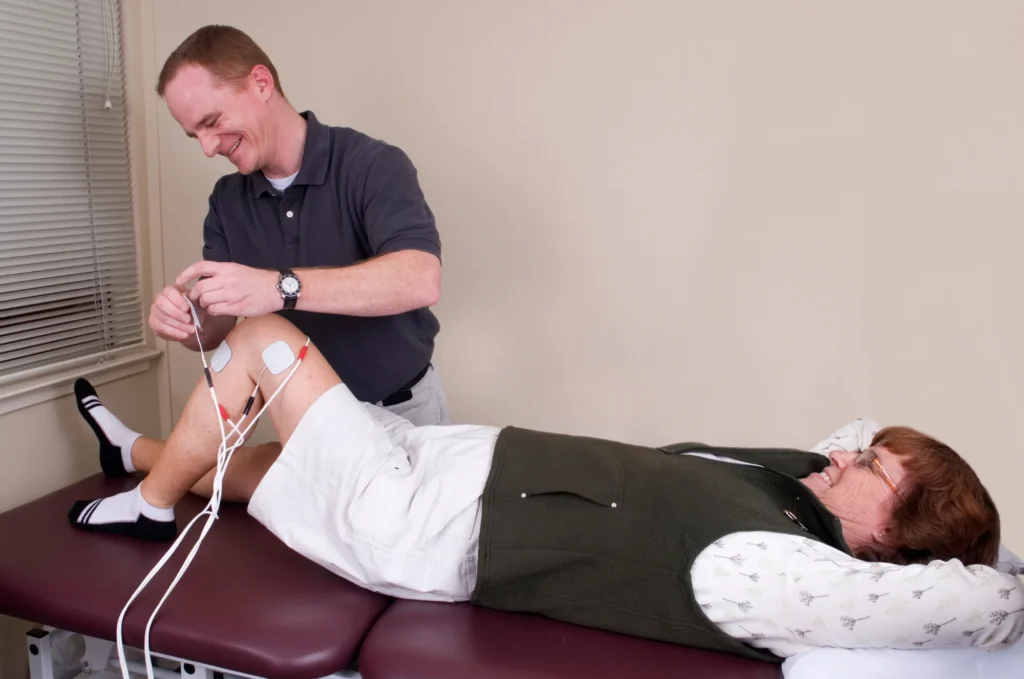
Transcutaneous electrical nerve stimulation (TENS) blocks pain signals at the nerve level and helps some patients manage severe pain between sessions. Ultrasound, biofeedback, moist heat, and cold compresses round out the physical modalities used to support symptom control as part of a broader treatment plan.
How Long Does Fibromyalgia Physical Therapy Take?
Most patients need several months of steady fibromyalgia physical therapy before noticing real improvement. Sessions are typically 45 to 60 minutes long and occur 1 to 2 times per week, early in care.
Factors That Affect Your Timeline
Treatment time depends on how severe your symptoms are. It also depends on other conditions, like arthritis or heart disease. Sleep quality matters. Doing home exercises regularly matters. Stress levels can affect recovery.
Your therapist reassesses often and updates the treatment plan as your physical function improves. Progress is not a straight line – but over time, most patients see reduced pain intensity, better sleep, and shorter flare-ups.
Is Fibromyalgia Physiotherapy Safe?
Yes. Fibromyalgia physiotherapy is safe when a licensed physical therapist paces treatment to match each patient’s sensitivity.
Can Physical Therapy Make Fibromyalgia Worse?
Some soreness when starting a new exercise program is normal and not a sign that things are getting worse. Knowing what normal pain after physical therapy looks like – versus pain that needs attention – helps you stay confident in the process. A therapist experienced in treating fibromyalgia will start at a low intensity and adjust based on your feedback.
How Long Does a Fibromyalgia Flare-Up Last?
Flare-ups can last a few days or several weeks. Common triggers include overexertion, poor sleep, illness, and stress.
During a flare, PT is modified – not stopped. Your therapist will lower the intensity and focus on gentle movement and heat. Staying a little active during a flare tends to support faster recovery than stopping all physical activity.
What to Look for in a Physical Therapist for Fibromyalgia
Look for a licensed physical therapist with experience in chronic pain or muscle and joint care. One-on-one sessions allow for close observation and real-time adjustments that group care cannot provide. Ask about their approach to pacing, education, and experience treating fibromyalgia before your first appointment.