

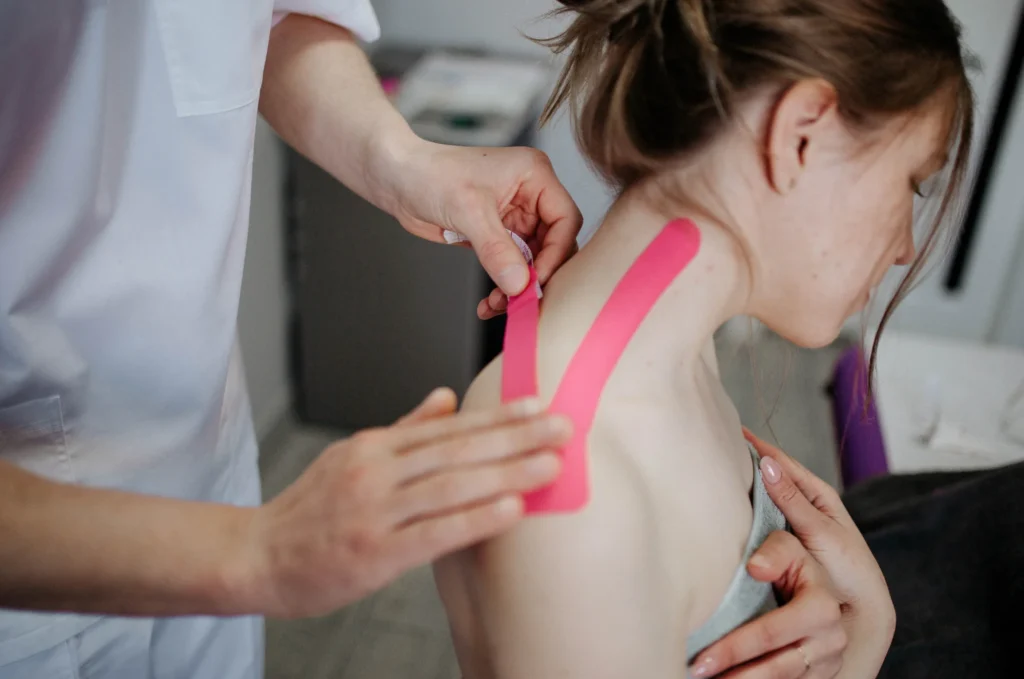
Kinesio tape for physical therapy is an elastic tape. It supports movement, reduces swelling, and improves body awareness during rehab. It does not heal an injury on its own, but it may help some people move with less pain. It can support them as they build strength, mobility, and control.
At ITNYCPT in New York City, Keith Chan, a licensed physical therapist, checks how kinesio tape fits a rehab plan. He bases it on each patient’s movement, symptoms, and goals.
Key Takeaways
- Kinesio tape is a stretchy elastic tape that may help support movement, reduce swelling, and provide short-term pain relief while allowing a normal range of motion.
- The effects of kinesio tape vary between individuals, and it works best as part of a broader physical therapy program that includes exercise, movement training, and education.
- Physical therapists use different types of tape depending on the goal, with kinesiology tape commonly chosen when support is needed without significantly limiting movement.
- Proper application matters because tape placement, tension, and the body area being treated can influence comfort, movement, and overall effectiveness.
- Research shows that kinesio tape may help some people with pain, swelling, or movement awareness, but it should not be viewed as a standalone treatment or a cure for an injury or condition.
Does KT Tape for Physical Therapy Help?
Yes. KT tape may help relieve pain in the short term while also providing light support and movement feedback.
It can be useful during walking, exercise, sport, or daily tasks because it allows a range of motion instead of locking a joint in place. Results vary based on the injury, skin tolerance, activity level, how the tape is applied, and whether symptoms include pain after physical therapy.
Physical therapy should not depend on tape alone. A complete plan usually includes evaluation, exercise, load management, reassessment, and home exercise carryover. Tape works best when it supports a clear rehab goal.
What Is Kinesio Tape?
Kinesio tape is a stretchy adhesive tape placed on the skin over muscles, joints, or other body parts. Kinesio taping is designed to move with the body rather than fully restrict motion. This makes it different from rigid sports tape or traditional athletic tape.
A physical therapist may use kinesiology tape to support motion, reduce swelling, or help a person feel more aware of how an area moves. It may also be used as a therapeutic tape during activity. It should not be used over open wounds, rashes, infected skin, or irritated skin.
What Tape Do Physical Therapists Use?
Physical therapists may use kinesiology tape, sports tape, rigid tape, or other physical therapy devices depending on the goal. Kinesiology tape used by physical therapists is usually elastic and flexible. Rigid tape gives stronger support but limits movement more.
The best kinesiology tape is usually breathable, flexible, and secure during activity. It should stay on without causing skin irritation.
Tape choice can depend on sweat, body hair, skin sensitivity, and the area being taped. Tape color does not change how the tape works, even though different colors may look more noticeable on the skin.
How Does KT Tape Work?
The basic idea is that applying the tape may affect skin feedback, body awareness, and fluid movement under the taped area. Some methods aim to gently lift the skin, which may reduce pressure and support lymphatic drainage.
How does therapeutic tape work in a rehab setting? It may help the nervous system notice joint position, posture, and movement. It may also help a person feel more supported during controlled activity.
Common KT tape benefits may include:
- Light support during movement
- Short-term pain relief
- Better awareness of posture or joint position
- Support for swelling control
- More comfort during rehab exercises
Claims about improved circulation or improved blood flow should stay realistic. Some people notice reduced swelling or improved comfort, while others notice little change. Tape should support treatment, not replace it.
Kinesiology Tape for Athletes
Kinesiology tape for athletes is often used during training, competition, or return-to-sport programs. Athletes may use it for feedback, light support, swelling control, or comfort. It should not be viewed as a direct way to improve athletic performance.
Athletes still need strength, mobility, conditioning, recovery, and smart workload planning. Training age, sleep, pain sensitivity, and injury history can all affect results. Tape may support activity, but it cannot replace a structured rehab plan.

How to Use Kinesiology Tape
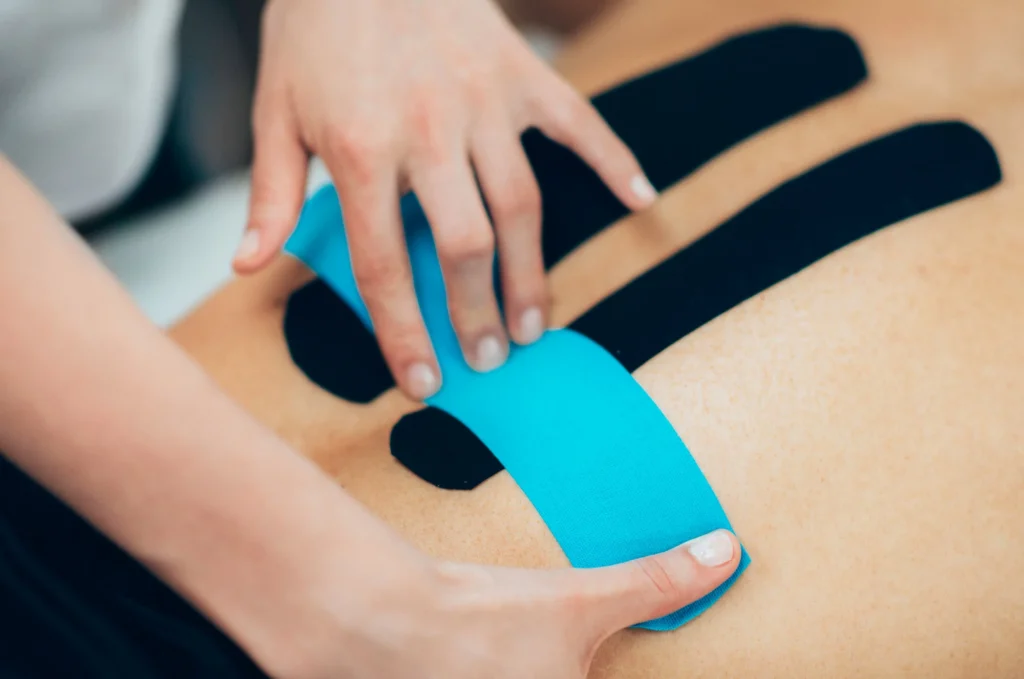
How to use kinesiology tape depends on the body area, the goal, and the person’s skin. A physical therapist may apply kinesiology tape after checking movement, symptoms, strength, and activity demands. Tape direction, stretch, and anchor points all matter.
For knee pain, how to use kinesiology tape depends on the problem. Taping for kneecap tracking is different from taping for swelling, tendon pain, or general support. Applying the tape with too much stretch may irritate the skin or fail to support the movement issue.
The taping technique should match the condition and body part. A pattern used for the knee may not make sense for the shoulder, back, ankle, or foot. The same person may also need a different tape pattern as symptoms change.
Basic safety steps include:
- Apply tape to clean, dry skin.
- Avoid open wounds, rashes, infected skin, or fragile skin.
- Avoid tape if you have a known adhesive allergy.
- Do not stretch the tape too much.
- Remove the tape if itching, burning, redness, or blistering occurs.
Kinesiology Tape for Common Conditions
Kinesiology tape for back pain may help some people feel more supported during bending, sitting, walking, or exercise. It may also improve awareness of posture or movement habits. Back pain still needs a broader plan that considers strength, mobility, stress, sleep, and daily load.
KT tape may help heel pain linked to plantar fascia irritation or foot strain, but it cannot remove a heel spur. KT tape may also help some people with knee comfort during a torn meniscus rehab plan, but it cannot repair the tear.
For lipedema, tape may support fluid movement in some cases, but it should not replace medical care, compression guidance, or supervised treatment when needed.
What the Research Says
Research on kinesiology tape is mixed. Some studies show short-term benefits for pain, swelling, or movement awareness, while others show small or unclear effects. This means tape may help some people, but it should not be the main treatment.
A realistic view is best. Tape can support physical therapy by helping someone move better or tolerate exercise more easily. Long-term progress still depends on strength, range of motion, balance, load tolerance, function, and the duration of physical therapy for the specific condition.
Safety, Skin Reactions, and Removal
Kinesiology tape is generally low-risk, but skin irritation can occur. Redness, itching, burning, blistering, or rash are signs to remove the tape. People with fragile skin, allergies, poor circulation, a risk of infection, or open wounds should be careful.
To remove the tape, peel it slowly while supporting the skin. Removing it after a shower may help loosen the adhesive. Do not pull quickly, especially on sensitive areas.
What to Expect in Physical Therapy
A physical therapy evaluation usually includes health history, movement screening, strength testing, symptom review, and goal setting. A physical therapist may decide whether tape fits the plan after seeing how the body responds to movement. The plan may also include therapeutic exercise, manual therapy, education, and home exercises.
At ITNYCPT, outpatient care in New York City may include one-on-one sessions with a licensed physical therapist. It may also include an individualized plan that progresses over time.
Pilates-based therapeutic exercise may be used, when appropriate, to improve core strength, control, and mobility. It may also support return to activity. Soft tissue tools, such as the Graston Technique, may be discussed when soft tissue work is relevant. Tape is only one possible part of care.