

ITNYCPT provides outpatient physical therapy in New York City. We help patients manage pain, improve movement, and return to daily activities. Keith Chan, a New York State-licensed physical therapist, serves as the subject-matter expert for this educational guide.
Key Takeaways
- Hip bursitis physical therapy can help reduce outer hip pain, improve movement, and support a safer return to walking, stairs, and daily activity.
- Treatment often includes load control, stretching, strengthening, manual therapy, and a home exercise plan that changes as symptoms improve.
- Helpful hip bursitis exercises may include glute bridges, clamshells, side-lying leg raises, supported squats, and step-up progressions.
- You should avoid painful pressure on the outer hip, sharp pain during exercise, sudden increases in training, and repetitive movements that trigger symptoms.
- Recovery varies based on symptom duration, severity, sleep position, workload, health history, and adherence to the plan.
Can Bursitis Be Treated With Physical Therapy?
Yes, hip bursitis can often be treated with physical therapy. This is most helpful when pain relates to movement, weakness, pressure, or repetitive stress. Physical therapists assess how your hip moves, which activities worsen symptoms, and which muscles need better support.
The goal is to relieve pain while improving range of motion, strength, control, and activity tolerance. A bursitis PT plan should help you know what to change and what to practice. It should also show how to avoid repeated irritation.
What Is Hip Bursitis?
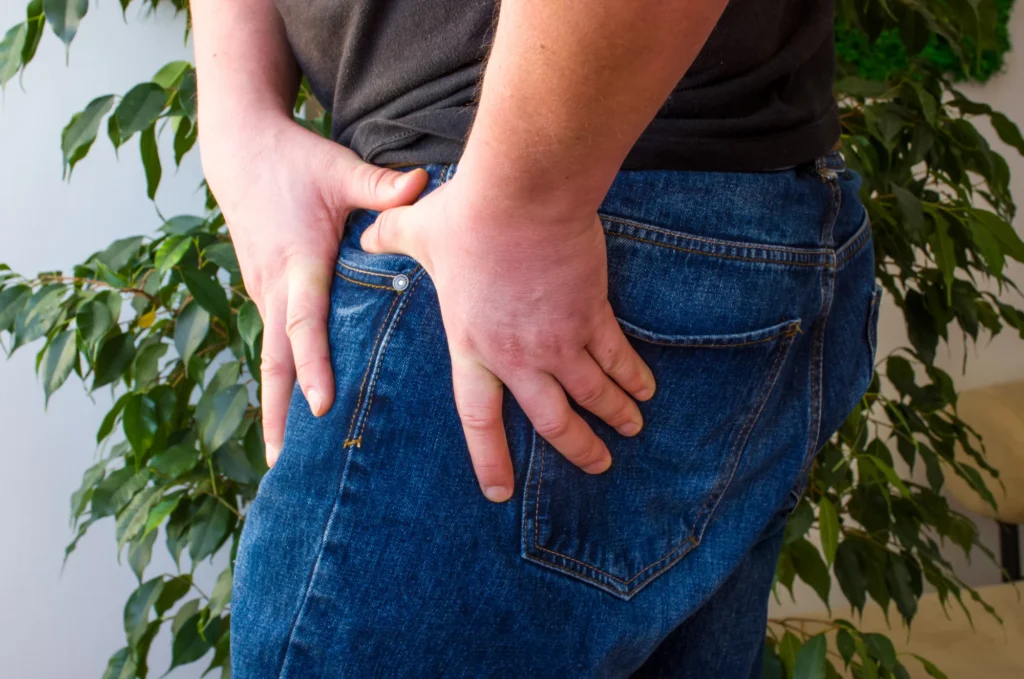
Hip bursitis means a bursa near the outer hip has become irritated or swollen. Many cases involve trochanteric bursitis, which affects the area near the bony point on the outer hip.
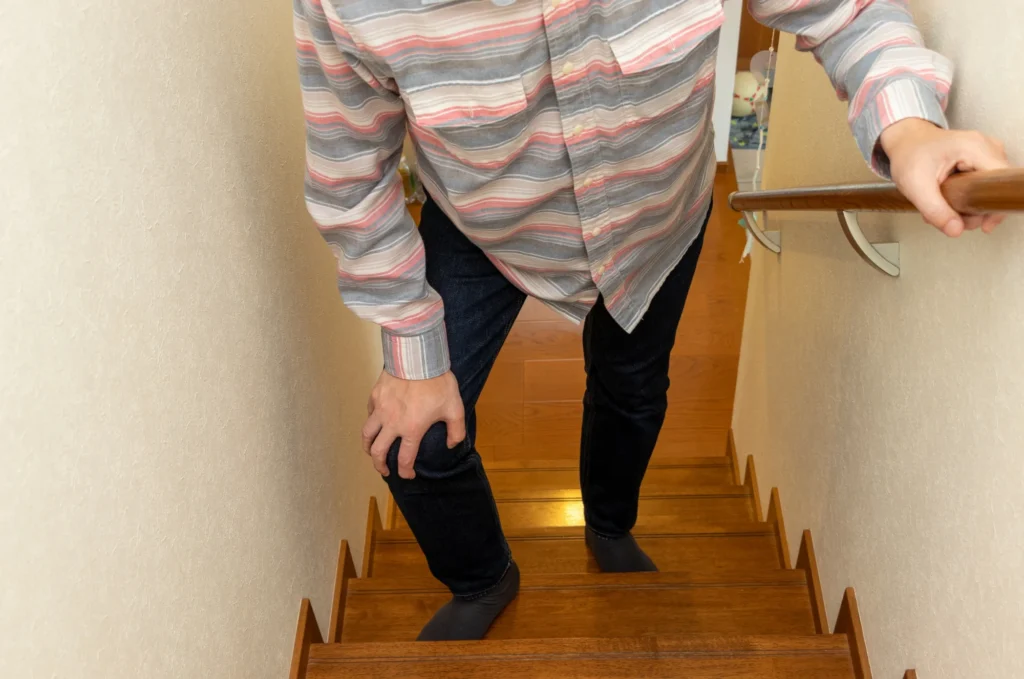
People with hip bursitis may feel pain when lying on their side, walking, climbing stairs, standing from a chair, or getting in and out of a car. Pain may also increase after long walks, on hills, during workouts, or after prolonged standing.
Symptoms and Causes of Hip Bursitis
Hip bursitis usually causes tenderness on the outer hip. Some people also experience stiffness, aching, swelling, or pain that radiates down the outer thigh.
Common causes include repeated pressure, sudden increases in activity, poor load control, weak hip muscles, and limited hip or back mobility. Sleep position, training volume, job demands, health history, and recovery habits can also affect symptoms.
How Physical Therapists Evaluate Hip Bursitis
A physical therapy evaluation usually starts with your health history, pain pattern, daily demands, and goals. The therapist may ask when symptoms began, what makes them worse, and what helps them calm down.
The movement screen may include walking, balance, squatting, stair-climbing motion, hip strength testing, and range-of-motion checks. The PT then builds an individualized plan that changes as pain, strength, and function improve.
Bursitis Physical Therapy Treatment
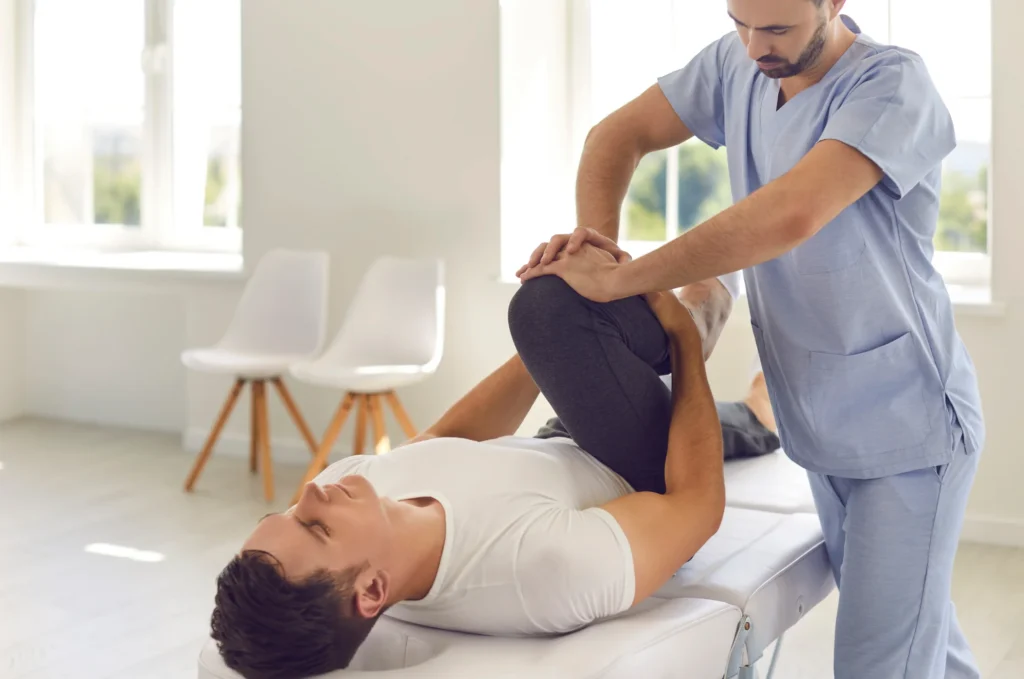
Bursitis physical therapy treatment often includes education, activity changes, therapeutic exercise, manual therapy, and home exercise carryover. The plan should match your pain level, your activity goals, and your hip’s response to load.
A hip-focused plan may include:
- Reducing pressure on the outer hip during sleep and sitting.
- Stretching and strengthening to improve hip control.
- Physical therapy modalities may include manual therapy when stiffness limits motion.
- Graston Technique when soft tissue work fits the case.
- Follow-up reassessment to progress exercises safely.
Early care usually focuses on reducing avoidable irritation. This may mean avoiding long periods of lying on your side, crossing your legs, standing with one hip dropped, or pushing through sharp pain during exercise.
Physical Therapy for Hip Bursitis Exercises
Physical therapy for hip bursitis usually starts with load control, then moves into stretching and strengthening exercises.
The goal is to reduce pressure on the outer hip while using exercise progressions similar to those used in physical therapy for runner’s knee, where hip control can also affect lower-body movement.
It also aims to improve control around the hip joint. It helps build tolerance for walking, climbing stairs, standing, and daily movement.
Bursitis physical therapy exercises should feel controlled and tolerable. A good exercise should help reduce pain, improve range of motion, or strengthen the muscles that support the hip without increasing hip bursitis pain later that day.
Glute Bridge
Lie on your back with your knees bent and feet flat. Keep your feet hip-width apart and flat on the floor.
Gently tighten your glutes and lift your hips until your body forms a straight line from your shoulders to your knees. Pause briefly at the top, then lower with control.
This exercise helps strengthen the glutes without placing direct pressure on the outer hip. It is often useful for people with hip bursitis because stronger glutes can reduce stress on the irritated, inflamed bursa.
Clamshell
Start lying on your side with your knees bent. Keep your hips stacked, your feet together, and avoid rolling your pelvis backward.
Lift the top knee slowly while keeping your feet touching. Lower the knee with control instead of letting it drop.
This movement targets the side hip muscles that help control the hip during walking and climbing stairs. If lying on your side increases your pain, place a pillow between your knees or ask a physical therapist to adjust your position.
Side-Lying Leg Raise
Start lying on your side with the painful hip on top if that position feels comfortable. Keep the top leg straight and the pelvis steady.
Lift the top leg a short distance, then lower it slowly. Do not swing the leg or let the toes turn upward.
This exercise can help build outer hip strength, but it may be too irritating in early trochanteric bursitis. If symptoms increase, a bursitis patient plan may start with bridges or standing exercises first.
Supported Squat
Stand with your feet flat and hold a counter or chair for support. Bend your hips and knees as if you are sitting back into a chair.
Keep your knees aligned with your feet, and avoid shifting all your weight to the painful side. Move only as low as you can control without sharp pain.
Supported squats help connect hip strength to daily tasks like sitting, standing, and stairs. They also support a gradual return to loading after hip bursitis pain improves.
Step-Up Progression
Use a low step and place one foot fully on the step. Push through the whole foot and rise slowly with control.
Keep your pelvis level and avoid letting the knee collapse inward. Step back down slowly instead of dropping.
This exercise helps people with hip bursitis rebuild tolerance for walking and climbing stairs. Start low, use support if needed, and progress only when pain stays stable during and after exercise.
What Should You Not Do With Bursitis?
You should not keep repeating the movement or position that caused the flare. For hip bursitis, this often includes sleeping directly on the painful outer hip, doing painful hills, increasing stairs too quickly, or forcing deep stretches.
You should also avoid testing the hip with hard exercise every day, especially if you notice increased pain after physical therapy or delayed soreness that does not settle. A better approach is to track symptoms, build gradually, and progress only when pain stays stable.
How to Heal Hip Bursitis Quickly
The fastest safe way to heal hip bursitis is to calm irritation, reduce pressure, keep gentle movement, and build strength step by step. Quick recovery does not mean pushing through sharp pain.
Recovery time varies. Symptom duration, consistency, sleep, workload, health history, pain sensitivity, and exercise progression all affect results.
Chronic Bursitis Treatment
Chronic bursitis treatment often needs more than rest. Long-term hip bursitis may require changes in strength, gait, sleep position, training load, and daily movement habits.
Structured follow-up matters because the plan may need updates. If symptoms do not improve, a medical provider may check for other causes of outer hip pain.
When to Seek Medical Care
Seek urgent care if you have a fever, severe swelling, redness, warmth, sudden inability to bear weight, or intense pain after trauma. These signs may indicate infection, fracture, or another condition that requires medical review.
You should also seek medical advice if pain gets worse, does not improve with simple care, or limits daily tasks. Physical therapy can help many cases of hip bursitis. Safe care depends on a clear diagnosis and steady progress.