

Keith Chan, ITNYCPT’s subject-matter expert, is a New York State-licensed physical therapist. Recovery varies based on symptom duration, workload, consistency, health history, sleep, and pain sensitivity.
Key Takeaways
- Physical therapy for patellofemoral pain focuses on reducing knee stress, strengthening the hips and quadriceps, and restoring safe movement.
- PFPS exercises often progress from low-load movements to squats, step exercises, single-leg tasks, and activity-specific training.
- Mild discomfort may be acceptable during exercise, but sharp pain, swelling, limping, or symptoms that remain worse the next day may signal excessive load.
- Walking is often suitable when distance, speed, and terrain remain tolerable, though hills and stairs may require temporary adjustments.
- Many people improve within 6 to 12 weeks, but recovery may take longer depending on symptom duration, workload, consistency, and health history.
How Does Physical Therapy Help?
Physical therapy helps reduce pain and improve the knee’s ability to tolerate walking, stairs, exercise, and other forms of weight-bearing.
Therapy for patellofemoral syndrome usually addresses the hip, knee, ankle, movement habits, and recent changes in activity. PFPS treatment should progress as pain, strength, and function improve.
A physical therapist may examine strength, range of motion, balance, knee flexion, and control during squats or step-downs.
This history and physical examination also considers whether other conditions could explain the pain. The findings guide an individualized plan rather than a standard exercise routine.
What Is Patellofemoral Pain Syndrome?
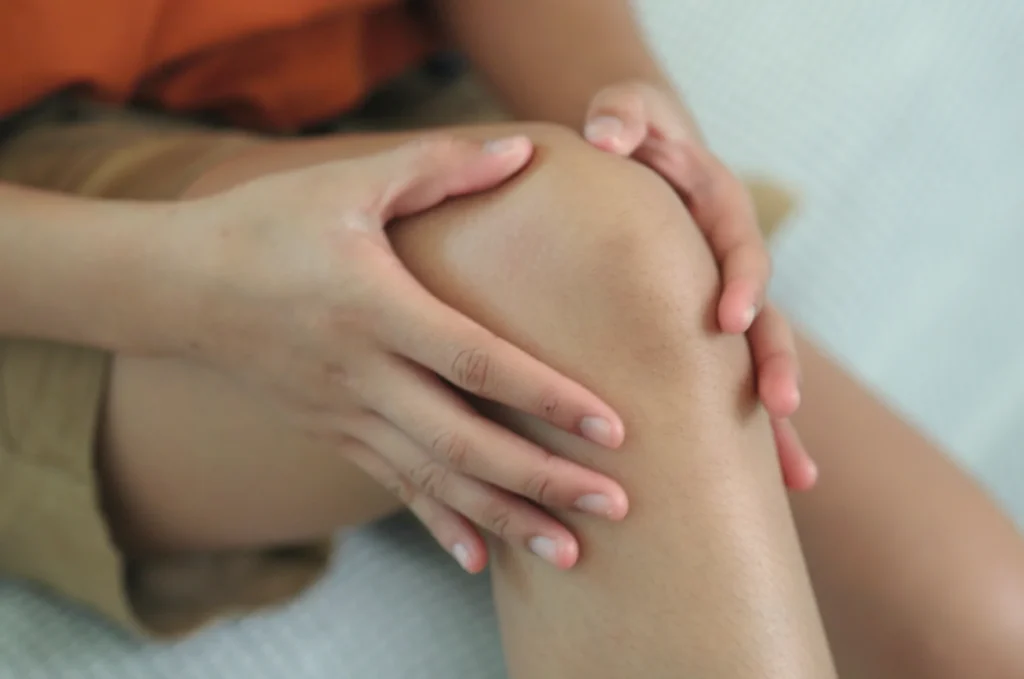
Patellofemoral pain syndrome PFPS causes anterior knee pain around or behind the kneecap. PFPS is also called runner’s knee, although it can affect runners and non-runners who may benefit from physical therapy for runner’s knee.
Pain often increases during running, stairs, squatting, kneeling, or prolonged sitting. The symptoms may come from increased sensitivity in the patellofemoral joint and nearby soft tissues.
PFPS often develops when physical demand rises faster than the knee can adapt. Contributing factors may include hip or quadriceps weakness, limited ankle mobility, rapid training changes, and poor control of knee valgus.
Knee valgus during movement is not always the same as structural genu valgum, but genu valgum treatment with physical therapy may also address strength and movement control when appropriate.
Pain localized below the kneecap may involve the patellar tendon and require a different approach to physical therapy for patellar tendinopathy.
How Do You Rehab Patellofemoral Syndrome?
Rehabilitation starts by reducing activities that cause repeated flares while maintaining as much safe movement as possible. The treatment of patellofemoral pain then builds strength and movement capacity in stages. Complete rest is rarely the only answer because the knee must regain tolerance for daily and athletic demands.
A typical progression may include:
- Reduce running distance, hills, stairs, or deep knee bending during a flare.
- Begin low-load exercises for the quadriceps muscles and hips.
- Add resistance, deeper movement, and single-leg control gradually.
- Progress to stairs, longer walks, running drills, or sport-specific tasks.
- Reassess pain, movement, and function throughout rehabilitation.
One-on-one outpatient physical therapy may include movement testing, goal setting, therapeutic exercise, and a home program. Pilates-based therapeutic exercise can support core control, mobility, balance, and coordinated movement when appropriate. Structured follow-up helps the therapist adjust exercise load as the knee improves.
Patellofemoral Syndrome Physical Therapy Exercises
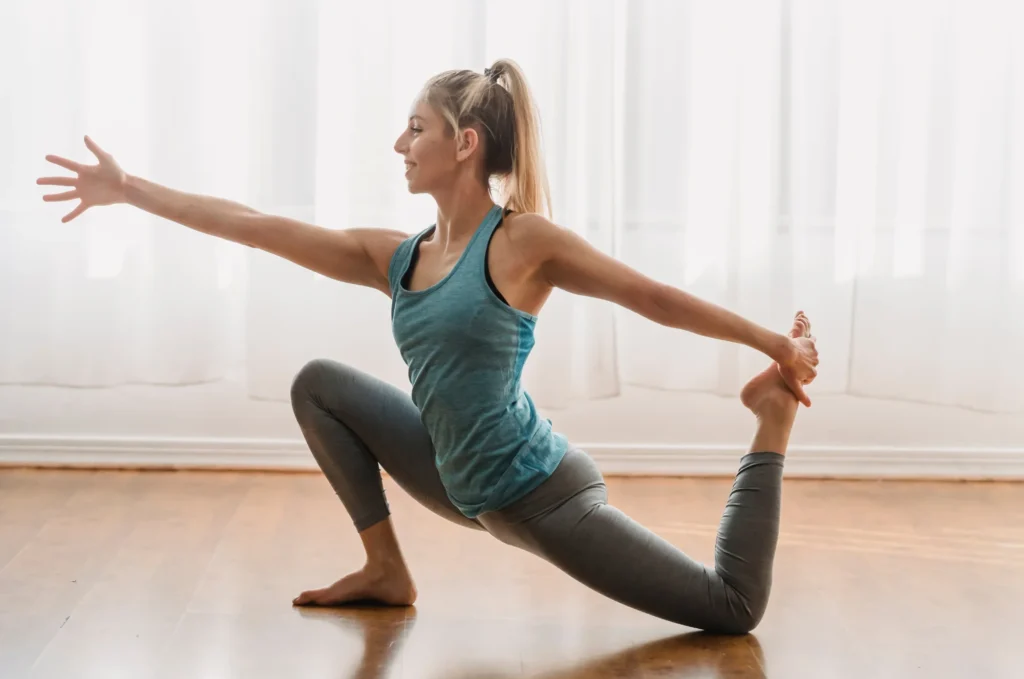
Physical therapy exercises for patellofemoral syndrome should strengthen both the knee and hip while preparing the person for daily tasks or sports.
Patellofemoral pain physical therapy exercises often begin with controlled, low-load movements and progress toward squats, steps, and single-leg activities. No single set of PFPS exercises works for every person.
Common exercises include:
- Quad sets: Tighten the thigh while keeping the leg straight to activate the quadriceps.
- Straight-leg raises: Lift the straight leg while keeping the knee stable.
- Bridges: Raise the hips to strengthen the glutes and support hip control.
- Side-lying leg raises: Train the outer hip muscles that help control thigh position.
- Squats: Begin with a comfortable depth and gradually increase knee flexion.
- Step-ups and step-downs: Build strength and control for stairs and single-leg tasks.
- Calf, hamstring, and quadriceps stretches: Address mobility limits that affect movement.
The vastus medialis obliquus is part of the quadriceps, but exercises cannot fully isolate it from the rest of the muscle group. Current rehabilitation often focuses on overall quadriceps strength combined with hip strengthening. A systematic review of exercise approaches supports combined hip and knee work for many patients with patellofemoral pain.
How Much Exercise Pain Is Acceptable?
Mild discomfort may be acceptable during exercise when it remains controlled and settles soon afterward. Exercise should not cause sharp pain, major swelling, limping, or a clear decline in function. The knee’s response later that day and the next morning helps determine whether the workload was appropriate.
Reduce the depth, weight, repetitions, or speed if pain rises with each repetition. Symptoms should return close to their usual level within about 24 hours. Lasting pain during walking, stairs, or prolonged sitting may mean the exercise progressed too quickly.
What Exercises Should You Avoid with PFPS?
People with PFPS do not need to avoid one exercise forever, but they should modify activities that create strong or lasting symptoms.
Running, jumping, deep squats, and lunges may need to be temporarily limited during a flare. A smaller range of motion or lighter load may allow the same movement without excessive irritation.
Avoid repeatedly pushing through pain that causes swelling, limping, or next-day decline. High-impact activity may be replaced for a period with cycling, swimming, or level walking when those options are comfortable. The goal is to maintain activity while controlling the amount of stress placed on the knee.
Is Walking Good for Patellofemoral Pain?
Yes. Walking is often useful when the distance, speed, and terrain do not cause a lasting increase in symptoms. It provides regular weight-bearing exercise with less impact than running. Short, level walks may be easier to tolerate than hills, long distances, or fast walking.
Increase one variable at a time, such as distance or pace. Downhill walking and stair descent can place more demand on the quadriceps and patellofemoral joint. Return to flatter routes when symptoms continue to rise after hills or stairs.
What Else Supports PFPS Treatment?
Exercise and load management are the main parts of patellofemoral pain syndrome treatment, while other options may provide short-term support.
Patellar taping, foot orthotics, manual therapy, and knee braces may reduce symptoms for selected patients. These tools do not replace progressive strengthening.
Manual therapy may address temporary stiffness in joints or soft tissues. The Graston Technique is one form of instrument-assisted soft tissue treatment that may be used when tissue mobility is relevant. Its value depends on the examination and should be considered part of a wider active plan.
Does PFPS Ever Go Away?
Yes. PFPS often improves, but the timeline differs from person to person. Some people notice progress within 6 to 12 weeks, while symptoms that have lasted for months may require a longer rehabilitation period. Return to running or sport should depend on strength and activity tolerance rather than a fixed date.
Signs of progress include less pain during stairs, improved tolerance for prolonged sitting, and fewer symptom flares. Recovery may take longer when job demands or training loads remain high, sleep is poor, or home exercise is inconsistent. Symptoms can return when activity increases faster than the knee’s current capacity.

What Can Slow PFPS Recovery?
Recovery may slow when a person rests without rebuilding strength, increases several training variables at once, or follows a generic program that does not match their needs. One person may need greater quadriceps strength, while another may need better hip strength, ankle mobility, or movement control. Repeated flares show that the current load or exercise plan may need adjustment.
Regular reassessment helps track strength, mobility, pain, and activity tolerance. The therapist can then change resistance, exercise selection, or movement range. This approach keeps physical therapy focused on the factors that affect the individual patient.
When Should You Seek Medical Care?
Seek an evaluation when knee pain persists, limits normal activity, or worsens despite reasonable activity changes.
Imaging is not always needed for typical PFPS, but it may be considered after trauma, when the examination suggests another condition, or when progress remains limited.ITNYCPT operates in New York City and provides knee pain relief in Midtown through outpatient care delivered one-on-one by a licensed Physical Therapist.
Prompt medical attention is appropriate for major trauma, rapid swelling, visible deformity, inability to bear weight, or a hot and red knee with fever. Locking, repeated giving way, or worsening swelling also needs assessment. Sudden calf swelling, chest pain, or trouble breathing requires urgent care.