


At ITNYCPT in New York City, Keith Chan is the subject-matter expert for this article. He is a New York State-licensed physical therapist.
Physical therapy does not follow one fixed plan after spinal cord injury. Recovery depends on the type and level of spinal cord injury, health status, pain, spasticity, goals, and practice over time. A clear plan helps patients and caregivers know what therapy is working on and why each step matters.
Key Takeaways
- Physical therapy helps improve movement, strength, breathing, and daily function after spinal cord injury.
- Recovery depends on the type and severity of the injury, overall health, and consistent practice.
- Treatment may include transfer training, wheelchair skills, gait training, strengthening, and breathing exercises.
- Physical therapy goals often focus on safety, independence, and quality of life.
- Progress varies from person to person.
How Can Physical Therapy Help
Physical therapy after spinal cord injury focuses on function, safety, and long-term independence. A spinal cord injury SCI may affect movement, feeling, breathing, balance, bowel and bladder control, blood pressure, and skin health. Physical therapists help find which skills are limited and which skills may improve with practice.
Therapy may support muscle strength, sitting control, transfers, wheelchair use, walking, and activities of daily living. It may also help reduce muscle tightness, protect joints, improve posture, and lower the risk of other problems.
Common physiotherapy activities after spinal cord injury include strength work, balance exercises, and gait training when walking practice is safe.
A good therapy plan also looks at quality of life. For one person, progress may mean walking farther or standing with support. For another person, progress may mean safer transfers, better wheelchair control, less shoulder strain, or more independence at home.
What Affects Treatment and Recovery
Spinal cord injury recovery varies because each injury affects the body differently. A complete spinal cord injury means there is no motor function or feeling below the affected level. Incomplete spinal cord injuries mean some movement or feeling remains, which may affect functional recovery.
The level of spinal cord injury is an important factor because it helps explain which muscles may work. A C4 spinal cord injury physical therapy plan may focus on breathing support, head and neck control, positioning, powered mobility, caregiver training, and equipment setup.
A lower-level injury may involve more trunk control, leg strength, standing, balance, or walking practice.
Recovery also depends on pain, spasticity, fatigue, sleep, health history, fitness level, and access to a structured rehabilitation program. Care may involve physical medicine and rehabilitation doctors, nurses, physical therapists, occupational therapists, and other providers.
Similar team-based rehabilitation approaches are also used in conditions that affect movement and muscle control, such as physical therapy for spinal muscular atrophy.
This team approach helps connect body function with daily tasks, home needs, and long-term goals.
Spinal Cord Injury Physical Therapy Evaluation
A spinal cord injury physical therapy evaluation starts with a detailed health history. The therapist reviews the injury level, symptoms, medical limits, equipment, home setup, daily goals, and current function. This helps guide safe treatment choices from the first visit.
The movement screen may include strength testing, joint motion, feeling, balance, transfers, breathing control, and wheelchair or walking ability. The therapist may also check posture, shoulder strain, skin risk areas, pain triggers, fatigue, and comfort with sitting or standing. These findings help shape an individualized plan of care.
Common evaluation goals may include:
- Measuring current motor function and movement control
- Checking joint motion, posture, and muscle tone
- Finding safe transfer and mobility methods
- Reviewing walking, standing, or wheelchair needs
- Setting goals for home, work, school, or community tasks
- Planning home exercises and follow-up testing
A good evaluation should also define how progress will be measured. Examples include transfer safety, sitting time, wheelchair distance, standing time, walking distance, pain level, skin health, or exercise consistency. These measures help patients and caregivers see what is changing over time.
Physical Therapy After Spinal Cord Injury
Physical therapy after spinal cord injury often changes by phase. In acute care, treatment may focus on breathing, positioning, blood flow, skin protection, and safe early movement when allowed by the medical team. The goal is to reduce problems and support medical stability.
During inpatient spinal cord injury rehabilitation, therapy often becomes more focused on daily function. A person may work on rolling, sitting balance, bed mobility, transfers, wheelchair skills, pressure relief, strengthening, and endurance. Occupational therapists may also help with dressing, bathing, eating, hand use, and other activities of daily living.
Outpatient physical therapy continues after discharge when a person needs more help with movement, strength, pain control, endurance, wheelchair skills, or return to activity.
In New York City, outpatient care may include one-on-one sessions with a licensed physical therapist, follow-up checks, and a home plan. Therapeutic exercise may change as the person gains control, strength, and confidence.
Spinal cord injury rehabilitation may also include real-life mobility goals. This can include ramps, transfers into a car, tight apartment spaces, curbs, or managing fatigue during errands. These goals matter because recovery is not only about what happens in a clinic.
Spinal Cord Injury Physical Therapy Exercises
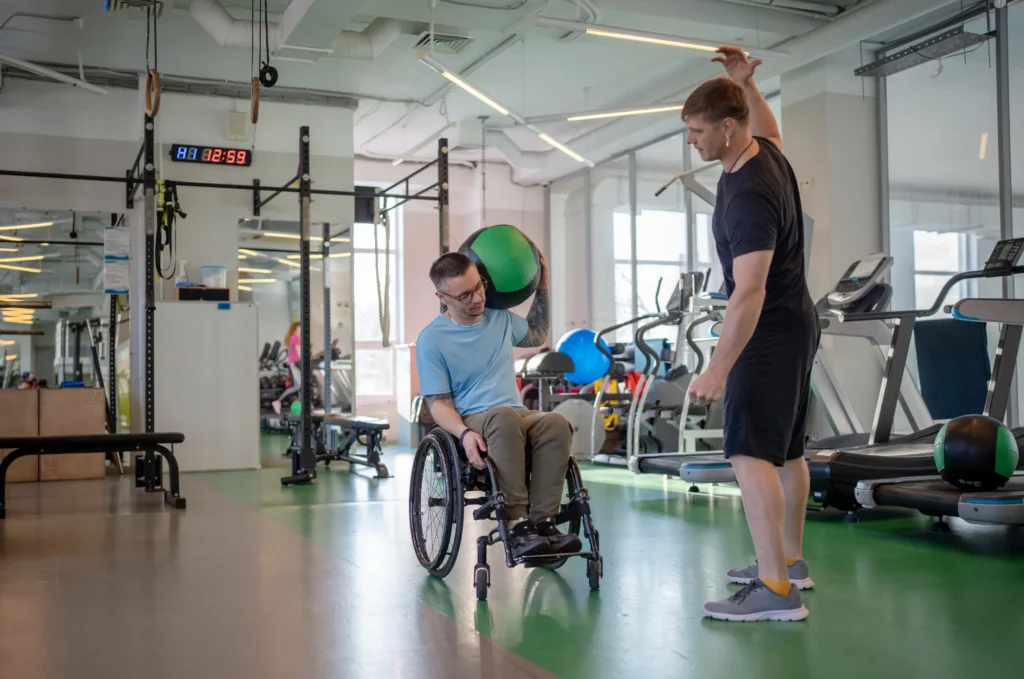
Spinal cord injury physical therapy exercises should be tailored to the person’s injury, healing phase, medical needs, and safety risks.
Physiotherapy for spinal cord injury may include joint mobilization, strength training, balance training, standing practice, walking drills, breathing support, and daily task training.
The therapist adjusts exercises based on fatigue, muscle tone, pain, blood pressure, skin health, and movement ability.
Common exercise categories include:
- Range of motion: ankle pumps, heel slides, hip and knee bends, shoulder raises, wrist motion, and gentle trunk turns to keep joints moving.
- Upper body strength: seated rows, supported push-ups, band pulls, shoulder rotation, and triceps work for transfers and wheelchair use.
- Core and sitting control: supported sitting holds, side-to-side weight shifts, reaching tasks, pelvic tilts, and seated balance practice.
- Assisted leg exercises: assisted marching, short knee extensions, supported bridges, and assisted hip movements when leg function allows.
- Standing practice: tilt-table standing, standing on parallel bars, sit-to-stand drills, and supported weight shifts when safe.
- Gait training: stepping in parallel bars, treadmill walking with body-weight support, walking with braces, or walking with assistive devices.
- Breathing support: belly breathing, assisted coughing, rib-expansion drills, and postural work to support breathing.
Pilates-based therapeutic exercise may help some people train core control, breathing, posture, and smooth movement.
Examples may include supported pelvic tilts, modified bridges, arm spring work for trunk control, rib breathing, and controlled reaching from a stable seated position. These exercises must be appropriate for the level of injury, pain, spasticity, strength, and transfer safety.
Manual therapy may help when joint stiffness, soft-tissue tightness, or pain limits movement. It is one of several physical therapy modalities that may be used to support mobility, comfort, and movement quality.
A therapist may work on shoulder motion, rib cage motion, hip mobility, or soft tissue limits that affect transfers or posture.
Graston Technique is one tool that may be considered for soft tissue work when it fits the plan and medical needs.
Some rehabilitation programs may include electrical stimulation to help activate muscles, support blood flow, or assist movement training. Electrical stimulation is not right for every person. It depends on health status, feeling, skin condition, implanted devices, spasticity, and treatment goals.
Wheelchair Skills, Transfers, and Daily Function
Wheelchair skills are often a major part of spinal cord injury rehabilitation. Therapy may include wheelchair pushing, turning, braking, pressure relief, ramp use, doorway practice, and safe setup before transfers. The goal is to reduce strain while improving safe movement in real spaces.
Transfer training teaches a person how to move safely from one place to another. Examples include bed-to-wheelchair transfers, wheelchair-to-toilet transfers, car transfers, and, when appropriate, floor recovery planning.
Training may include hand placement, use of a transfer board, trunk control, shoulder protection, and caregiver assistance.
Daily function also includes energy management. A person may need to plan rest breaks, skin checks, pressure-relief timing, and safe routes through the home or workplace. These details can make therapy more useful outside the clinic.
Respiratory Care and Pressure Injury Prevention
Spinal cord injury can affect breathing, especially when the injury involves the neck or upper trunk. Therapy may include breathing exercises, posture work, chest expansion drills, assisted cough methods, and signs to watch for during breathing strain. Breathing support can be an important part of care after spinal cord injury.
Pressure injury prevention is another key safety goal. Reduced feeling can make it harder to notice pressure, rubbing, heat, or skin irritation. Therapy may include wheelchair fit review, cushion education, pressure-relief practice, positioning ideas, and skin-check routines.
A pressure relief plan may include changing position often, checking cushions, shifting weight, and teaching caregivers how to help safely. The plan should match the person’s feelings, mobility, equipment, and daily routine. Small habits can lower risk when practiced daily.
Common Safety Concerns
Safety matters because spinal cord injury can affect more than muscles. Blood pressure changes can affect therapy, especially when moving from lying down to sitting or standing. Some people feel dizzy when upright, while others may have dangerous blood pressure spikes from autonomic dysreflexia.
Pain and spasticity can also change how a person moves. Spasticity means increased muscle tone or muscle activity that happens without full control. Therapy may use stretching, positioning, strength work, movement practice, breathing control, and pacing to manage symptoms without forcing motion.
Seek urgent medical care for sudden, severe headache, chest pain, trouble breathing, signs of infection, new loss of function, a possible fracture, deep pressure wounds, or signs of autonomic dysreflexia.
Signs may include sudden high blood pressure, sweating, flushing, chills, blurred vision, or a pounding headache. These symptoms need prompt medical care.
What Results Can You Expect
Results vary widely after spinal cord injury. Some people improve walking, standing, hand use, strength, or endurance. Others make their biggest gains in transfers, wheelchair skills, posture, pain control, skin safety, or caregiver routines.
Physical therapy can support daily function and quality of life, but it cannot promise a specific result. The right goals depend on the type and level of injury, health status, home needs, and daily routine. Regular reassessment helps the plan stay realistic and useful.
Progress may be slow and uneven. Many people also wonder how long physical therapy takes, but timelines vary depending on the injury, overall health, goals, and treatment consistency.
A person may improve in one area while another area stays limited. Clear goals, steady practice, and home exercise carryover help patients and caregivers understand what is changing and what still needs support.
Questions to Ask Your Therapist

A good therapy plan should be clear, specific, and realistic. Ask what your evaluation showed, which goals matter most, which exercises are safe at home, and how progress will be checked. You can also ask how your injury level, health history, equipment, and daily routine affect your plan.
Useful questions include:
- What should I practice at home?
- Which signs mean I should stop an exercise?
- How will we measure progress?
- What equipment may help with daily movement?
- How should I protect my skin during the day?
- What should I do if blood pressure symptoms appear?
- How often should my plan be updated?
Spinal cord injury rehabilitation is usually a long-term process. Progress may come through small changes in strength, control, endurance, positioning, transfers, or independence. A clear plan helps patients, caregivers, and clinicians understand what therapy is targeting and why each step matters.