

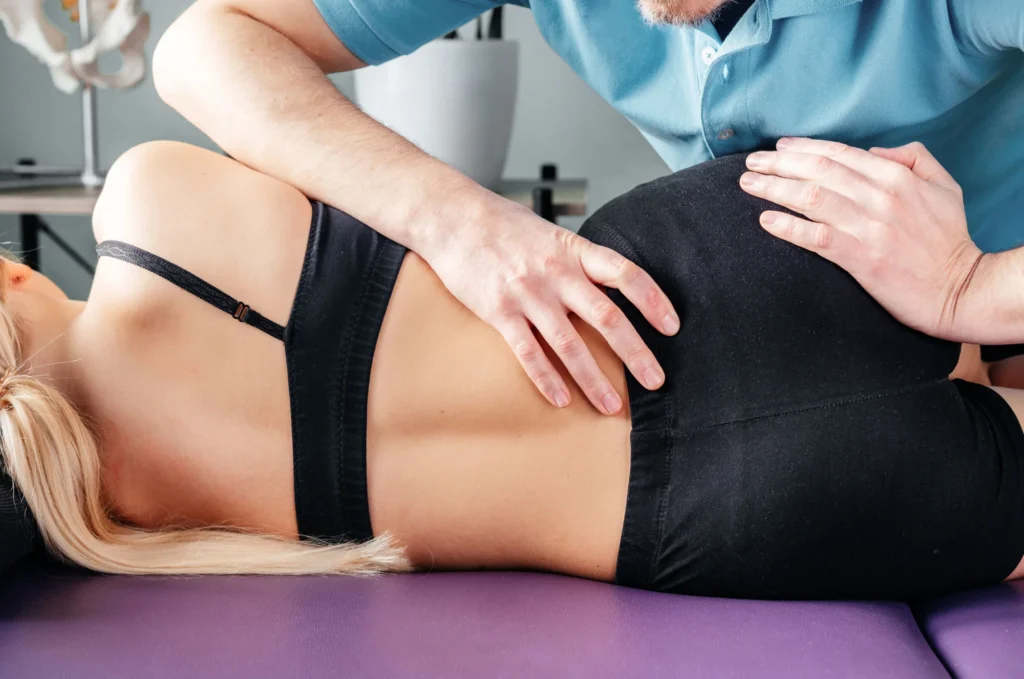
Keith Chan is a New York State-licensed physical therapist. He is also a subject-matter expert for ITNYCPT in New York City. He provides clinical insight into physical therapy on this topic. The right exercises should match your pain level, mobility, health history, and daily demands.
Key Takeaways
- Sacroiliac joint dysfunction physical therapy exercises often combine gentle stretching, mobility work, core control, and hip strengthening.
- A simple SI joint exercise routine may take 10 to 20 minutes, but the right exercises depend on pain level, movement control, and symptom response.
- Common exercises include knee-to-chest stretches, glute bridges, bird dogs, clamshells, hamstring stretches, pelvic tilts, and side planks from the knees.
- Exercises that overload or twist the pelvis may irritate symptoms during a flare, especially high-impact movements, deep twisting, and painful single-leg loading.
- Medical evaluation may be needed if pain follows trauma, includes numbness or weakness, affects bowel or bladder control, or limits walking, sleep, work, or daily tasks.
Best Exercises for SI Joint Dysfunction
The best exercises for SI joint dysfunction typically combine SI joint stretches, sacroiliac joint mobility exercises, core control, and SI joint strengthening.
A simple routine may take 10 to 20 minutes. These exercises are not meant to force the joint into place. They help the pelvis, hips, and trunk share load with less irritation.
Physical therapy exercise programs are often used as a first-line option for sacroiliac joint dysfunction, sometimes with manual therapy when appropriate.
Exercise and manual therapy may help reduce pain and disability, but outcomes vary by pain source, consistency, load tolerance, and health history. A physical therapist may adjust reps, range of motion, resistance, and exercise order based on how symptoms respond.
| Exercise | Main Goal | Dose |
|---|---|---|
| Knee to Chest Stretch | Gentle mobility and pain relief | 15 to 30 seconds |
| Glute Bridge | Hip and glute strength | 8 to 12 reps |
| Bird Dog | Trunk and pelvic control | 6 to 10 reps |
| Clamshell | Side hip strength | 8 to 12 reps |
| Hamstring Stretch | Posterior thigh mobility | 15 to 30 seconds |
| Lower Abdominal March | Core control | 8 to 12 reps |
| Piriformis Stretch | Buttock mobility | 15 to 30 seconds |
| Pelvic Tilts | Sacroiliac joint mobility | 8 to 15 reps |
| Side Plank From Knees | Lateral trunk stability | 5 to 15 seconds |
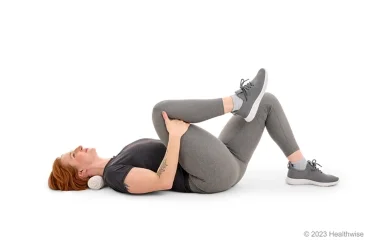
Single Knee-to-Chest Stretch
The knee-to-chest stretch is a gentle stretch for sacroiliac joint pain, low back stiffness, and hip tightness. Lie on your back with your knees bent and feet flat on the floor. Bring one knee toward your chest, or bring the knee to your chest only as far as comfortable. Hold the stretch for 15 to 30 seconds, then return to the starting position.
You should feel a stretch in the low back, hip, or buttock, not sharp pain. Some people feel better with the opposite leg straight, while others need both knees bent. Do not pull hard or force the position. Repeat 2 to 4 times per side.
Glute Bridge
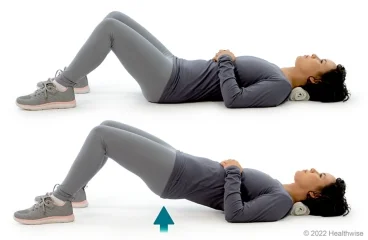
The glute bridge is one of the most useful strengthening exercises for SI joint pain. Lie on your back with your knees bent and feet flat on the floor. Tighten your lower stomach, press through your heels, and lift your hips until your shoulders, hips, and knees form a straight line. Lower slowly and repeat 8 to 12 times.
This exercise trains the glutes, hamstrings, and trunk. It may help when SI joint dysfunction feels worse with stairs, walking, or standing. Keep your ribs relaxed and avoid arching your lower back. If pain increases, reduce the height of the bridge or stop.
Bird Dog
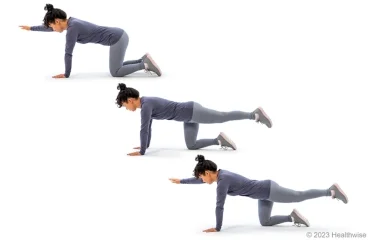
The bird dog is often used in PT exercises for SI joint dysfunction because it targets trunk and pelvic stability. Start on your hands and knees with your back level. Slowly reach one arm and leg in opposite directions while keeping your pelvis still. Return to the starting position and switch sides for 6 to 10 reps.
The goal is control, not height. Your arm and leg should move without twisting your trunk or sinking into your lower back. Start with only the arm or only the leg if the full version feels too hard. Move slowly and keep your breathing steady.
Clamshell
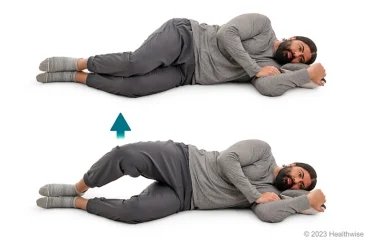
The clamshell strengthens the side hip muscles, which help control the pelvis during walking and climbing stairs. Lie on your side with your hips and knees bent to about 90 degrees. Keep your feet together and lift the top knee without rolling your pelvis backward. Lower slowly and repeat 8 to 12 times per side.
This exercise can help when sacroiliac joint dysfunction worsens with single-leg loading. If you feel it mostly in the front of the hip, reduce the range. Keep your pelvis stacked and avoid swinging the leg. Small, controlled motion works better than a large movement with poor form.
Hamstring Stretch
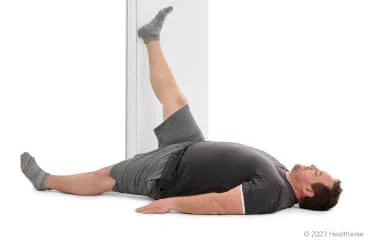
A hamstring stretch can help when tightness runs from behind the thigh through the pelvis. Lie on your back and raise one leg while keeping the knee slightly bent. You may hold behind the thigh or use a towel behind the leg. Hold the stretch for 15 to 30 seconds.
The straight-leg position is not required for everyone. If keeping the leg straight causes tingling, burning, or pulling down the leg, bend the knee or stop, since symptoms that travel down the leg may need a different approach, such as treatment for sciatica.
You should feel a stretch behind the thigh, not nerve-like symptoms. This is why SI joint stretches should stay mild.
Lower Abdominal March
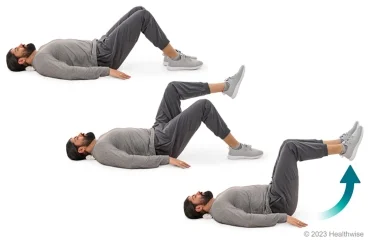
The lower abdominal march trains core control without heavy loading. Lie on your back with your knees bent and feet flat on the floor. Tighten your lower stomach, then lift one foot a few inches without shifting your pelvis. Lower the foot and switch sides for 8 to 12 reps.
This exercise helps the trunk stay stable while the legs move. It can prepare you for harder exercises for SI joint pain. Keep breathing and avoid bracing so hard that your ribs lift. If your back arches, make the movement smaller.
Piriformis Stretch
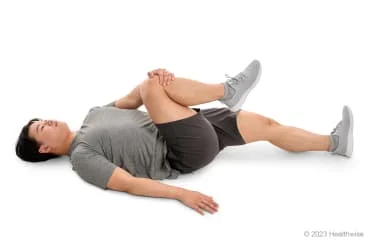
The piriformis stretch targets the deep buttock area. It may also be discussed in the context of physical therapy for piriformis syndrome when symptoms include buttock tightness or sciatica-like pain. Lie on your back and cross one ankle over the opposite thigh. Pull the uncrossed leg toward your chest until you feel a stretch in the buttock. Hold for 15 to 30 seconds and repeat 2 to 4 times.
This stretch should not create sharp hip, groin, or leg pain. Use a smaller range if symptoms increase. Some people respond well to this stretch. Others need more strengthening and less stretching.
Pelvic Tilts and Cat-Cow
Pelvic tilts and cat-cow are simple sacroiliac joint mobility exercises that can reduce guarding and improve control. For pelvic tilts, lie on your back with knees bent and feet flat, gently press your lower back into the floor, then return to neutral. For cat-cow, start on your hands and knees, slowly round your back, then move into a gentle arch. Repeat either movement 8 to 15 times.
These movements work well as warm-ups before strengthening. Keep them small and easy. Do not force the end range or push into pain. If kneeling bothers your knees, use padding for cat-cow.
Side Plank From Knees
The side plank from the knees trains side trunk and hip stability. Lie on your side with your knees bent and your elbow under your shoulder. Lift your hips until your shoulders, hips, and knees form a straight line. Hold for 5 to 15 seconds, then lower.
This exercise is more advanced than the earlier floor exercises. It may help when symptoms relate to poor control of the side hip or trunk. Keep the hold short at first. Longer holds are not useful if your form breaks down.
How to Choose the Right Exercise
Choose exercises based on pain level, movement control, and how symptoms respond over the next 24 hours. If pain is high, start with pelvic tilts, knee-to-chest stretches, lower-abdominal marching, and gentle mobility for 5 to 10 minutes.
If pain is mild and controlled, add glute bridges, clamshells, and bird dogs. If symptoms stay calm, progress to side planks and other advanced SI joint exercises.
A balanced plan often includes one mobility exercise, one gentle stretch, and one or two strengthening exercises. Stretching may help with stiffness, while strengthening may help with load control. The best option is the one your body tolerates consistently. If pain rises and stays elevated, reduce range, reps, or load.
Sacroiliac Joint Dysfunction Rehab Exercises
Sacroiliac joint dysfunction rehab exercises usually progress in phases. Early rehab focuses on pain relief, gentle motion, and basic muscle activation. Middle rehab adds strength, endurance, and better control during daily tasks. Later rehab may add resistance, balance, or activity-specific movement.
Progression should depend on response, not a fixed calendar. Some people notice early pain relief within a few days. Strength and control often take 4 to 8 weeks of consistent work. Treatment plans should consider pain duration, workload, sleep, stress, training age, and health history.
Sacroiliac Joint Pain Exercises to Avoid
Sacroiliac joint pain exercises to avoid are usually movements that overload or twist the pelvis during a flare. These exercises are not always harmful, but they may not fit your current tolerance. Avoiding them for a short period can help calm down symptoms. Reintroducing them later may make sense when strength and control improve.
Common exercises to limit during painful flares include:
- High-impact jumping or running that increases pelvic pain
- Deep twisting movements that cause sharp pain
- Heavy single-leg exercises that feel unstable
- Loaded bending or lifting that worsens symptoms
- Aggressive stretching that causes pain instead of relief
Mild muscle effort is normal, but sharp pain is not. Pain that spreads, lasts into the next day, or changes your walking pattern may mean the exercise is too much. A lower-load version may work better. Pain relief often comes from the right dose, not the hardest exercise.

How Physical Therapy Guides Exercise
Physical therapy for SI joint dysfunction usually starts with an evaluation. A physical therapist may ask about symptom location, triggers, injury history, activity level, and goals.
The exam may include a movement screen, strength testing, mobility checks, and task-specific testing. This helps separate SI joint irritation from nearby hip, lumbar spine, or nerve-related pain.
Care may include therapeutic exercise, manual therapy, education, home exercise carryover, and other physical therapy modalities as appropriate for the patient’s needs.
Pilates-based therapeutic exercise may support core strength, control, and mobility, and facilitate a return to activity when it fits the patient’s needs.
Manual therapy may help with short-term stiffness or soft-tissue sensitivity, and the Graston Technique may be used when soft-tissue work is appropriate. Follow-up visits allow reassessment and exercise changes over time.
When to Seek Medical Care
Seek medical care if pain follows a fall, major trauma, fever, unexplained weight loss, or new bowel or bladder changes. You should also get evaluated if pain is accompanied by numbness, weakness, or loss of control in the leg.
These symptoms may point to issues beyond simple SI joint dysfunction. Urgent symptoms should not be managed with exercise alone.
You should also consider evaluation if exercises worsen symptoms or if pain limits walking, sleep, work, or daily tasks. In New York City outpatient physical therapy, one-on-one care with a licensed Physical Therapist often includes reassessment, exercise changes, and home plan updates.
A structured assessment can help determine whether the SI joint is the primary source of pain or part of a larger movement problem.
This article is educational and does not diagnose your pain. Sacroiliac joint pain can feel similar to hip, lumbar spine, or nerve-related pain. Sacroiliitis may cause pain and stiffness in the buttocks or lower back, and symptoms may worsen with stairs, standing, or prolonged sitting.