

At ITNYCPT in New York City, Keith Chan, a New York State-licensed physical therapist, serves as the subject-matter expert for this topic.
Recovery varies based on injury severity, workload, health history, pain level, and consistency with rehab.
Key Takeaways
- Forearm muscle strain physical therapy can help reduce pain, restore range of motion, and rebuild grip strength when symptoms do not improve with basic self-care.
- A forearm strain often causes pain with gripping, wrist motion, lifting, typing, or sports, while numbness, tingling, or spreading pain may point to another issue.
- Rehab usually includes load management, stretching, strengthening, grip work, and a gradual return to normal activity.
- Mild forearm strains may improve in about 1 – 3 weeks, while moderate strains may take 4 – 8 weeks or longer, depending on workload, severity, and consistency with rehab.
- Medical care may be needed when pain is severe, swelling is significant, movement is limited, or symptoms do not improve.
Can Physical Therapy Help a Strained Forearm?
Yes, physical therapy can help a strained forearm when forearm soreness, weakness, stiffness, or forearm muscle tightness does not improve with basic self-care. A PT evaluation looks at your pain pattern, forearm and wrist function, grip strength, wrist and elbow motion, and activity limitations.
Physical therapists often use education, load changes, manual therapy, exercises and stretches, and home exercise carryover to promote healing. Treatment should progress in stages, from calming symptoms to restoring strength and returning to normal activity.
A useful table of contents for forearm rehab usually includes symptom control, mobility, strengthening, activity changes, and return-to-use testing. This helps keep the plan organized rather than jumping straight into random exercises.
How to Know if You Strained Your Forearm
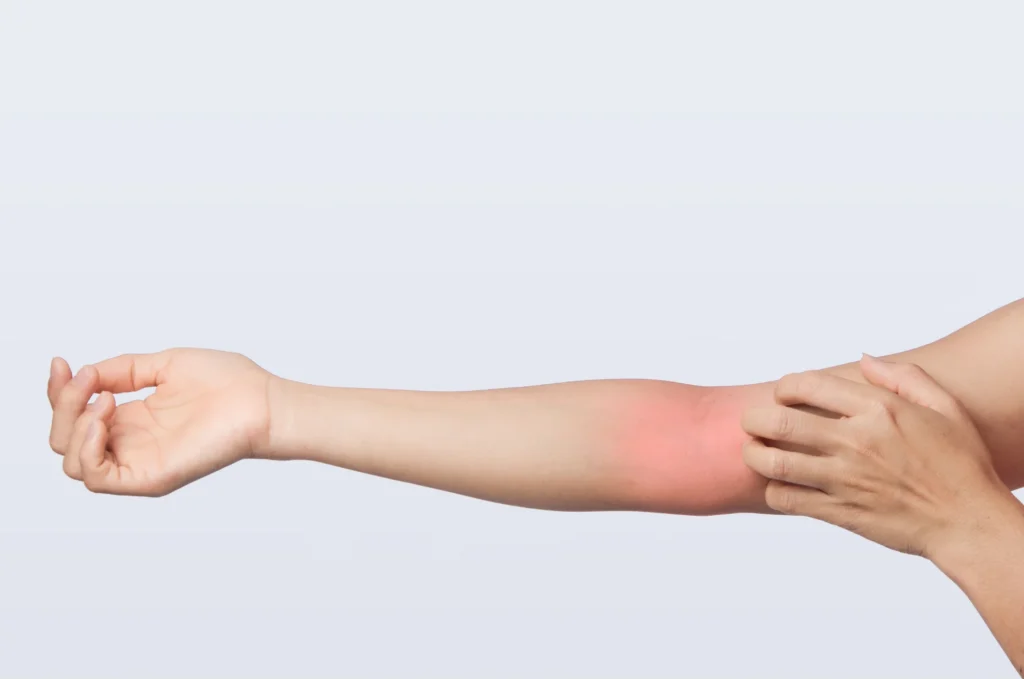
You may have strained your forearm if pain starts after lifting, gripping, pulling, typing, racket sports, or sudden force. A strain may feel like aching, pulling, sharp pain, swelling, or weakness when you squeeze an object.
Symptoms often increase when you bend the wrist, turn a doorknob, hold a pan, open a jar, or move the wrists and fingers against resistance. Forearm soreness is usually milder and improves with rest, while a strain tends to cause more specific pain during activity.
Forearm sprain treatment differs from strain treatment because a sprain affects ligaments, while a strain affects muscles and tendons. Forearm pain can also come from tennis elbow, carpal tunnel syndrome, nerve irritation, tendon problems, or other medical conditions.
Pain, numbness, tingling, hand weakness, or symptoms that travel from the neck need a more careful evaluation. These signs may point to nerve involvement rather than a simple pulled muscle.
Common Causes of Forearm Strain
Forearm strain often results from repeated stress, sudden force, or excessive load before the tissue is ready. Typing, mouse use, tool work, racket sports, climbing, lifting, and heavy gripping can all irritate the forearm.
Sudden increases in training, poor wrist position, fatigue, or limited recovery can increase symptoms. A person who types all day may need a different plan than a weightlifter, musician, tennis player, or rock climber.
Common triggers include:
- Repeated gripping during lifting, climbing, or tool use
- Long typing or mouse sessions with poor wrist position
- Racket sports that overload the wrist extensors
- Sudden pulling, catching, or twisting force
- Returning to exercise too quickly after rest
Physical Therapy for Forearm Strain
Physical therapy for forearm strain starts with a history, movement screen, strength testing, and goal setting. The therapist may test wrist flexion, wrist extension, forearm rotation, elbow motion, grip strength, and pain response.
One-on-one care delivered by a licensed Physical Therapist can help adjust the plan as symptoms change. Treatment may include load management, manual therapy, therapeutic exercise, structured follow-up, and guidance similar to what is often discussed in hand therapy.
Graston Technique may be used as a soft-tissue tool when appropriate, and joint mobilizations may also be considered when stiffness limits movement, but these techniques should support movement and strengthening rather than replace them.
Pilates-based therapeutic exercise may also help with control, posture, mobility, and return to activity when the whole movement pattern matters.
Forearm Stretching Exercises
Forearm stretching exercises can help when tightness limits motion or increases strain during daily use. Stretching should feel controlled and mild, not sharp or aggressive.
For a wrist extensor stretch, straighten your elbow, turn your palm down, and gently bend your wrist toward the floor with the other hand. Stop when you feel a stretch along the top of the forearm. Hold for 20 to 30 seconds, repeat 2 to 3 times, and avoid forcing the wrist.
For a wrist flexor stretch, straighten your elbow with your palm facing up. Use the other hand to gently pull the fingers back toward the floor. You should feel a stretch along the palm side of the forearm.
To loosen tight forearm muscles, combine gentle stretching, light movement, and reduced gripping load. Heat may help before exercise if the arm feels stiff. An ice pack may help after activity if symptoms feel irritated and you need short-term pain relief.
Forearm Muscle Strain Rehab Exercises
Forearm muscle strain rehab exercises should move from gentle motion to controlled loading, and some wrist pain exercises may overlap when symptoms involve the forearms and wrists. The goal is to restore the range of motion, improve grip strength, and help the forearm tolerate daily tasks again.
Start with low effort and increase slowly. Mild discomfort can occur during rehab, but sharp pain, spreading pain, or lasting symptom flare-ups may mean the exercise is too hard.
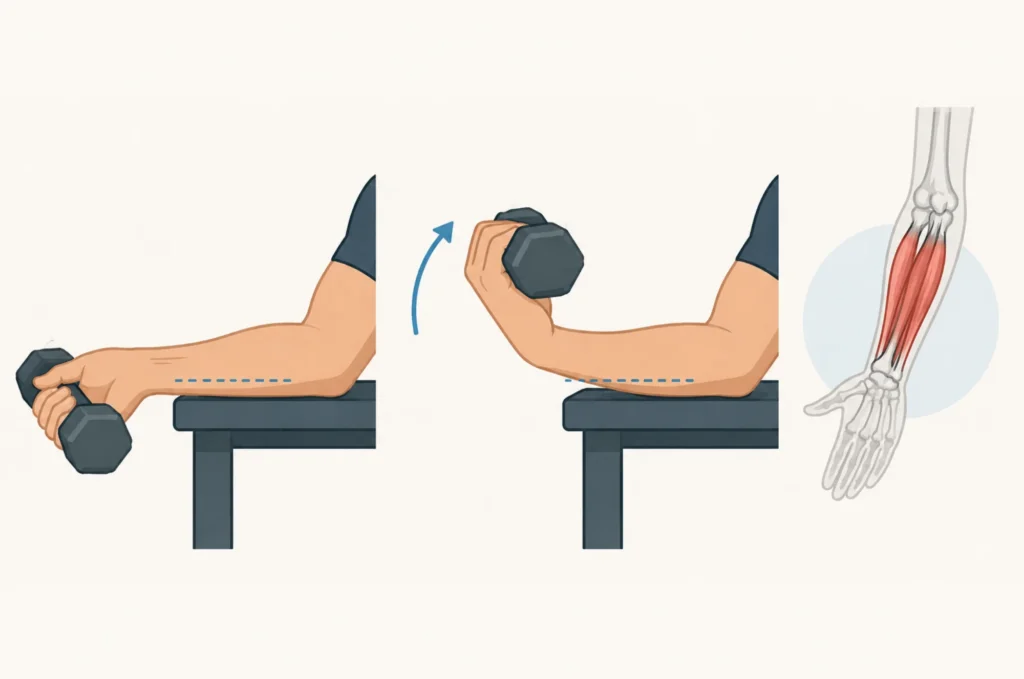
Wrist Flexor Exercise
Rest your forearm on a table with your palm facing up and your wrist just past the edge. Hold a light weight, bend the wrist upward, then lower it slowly.
Try 2 sets of 10 – 15 reps with smooth control. This exercise targets the muscles on the palm side of the forearm, which help with gripping and wrist bending.
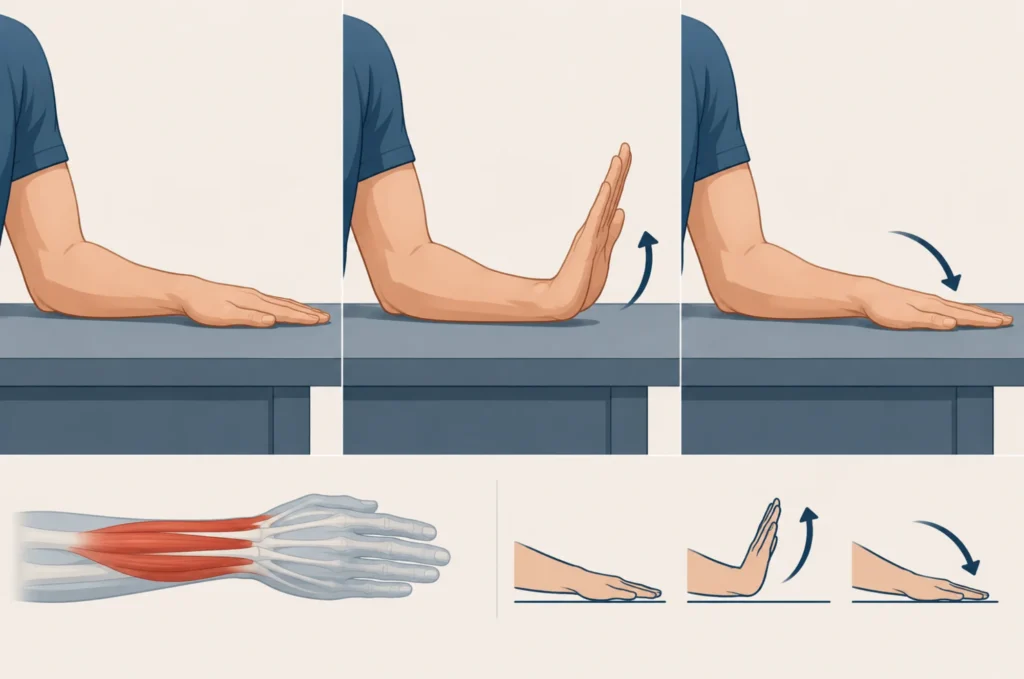
Wrist Extensor Exercise
Rest your forearm on a table with your palm facing down. Lift the back of the hand upward, pause briefly, then lower slowly.
Try 2 sets of 10 – 15 reps. This targets the muscles often involved in gripping, typing, and tennis elbow-related strain.
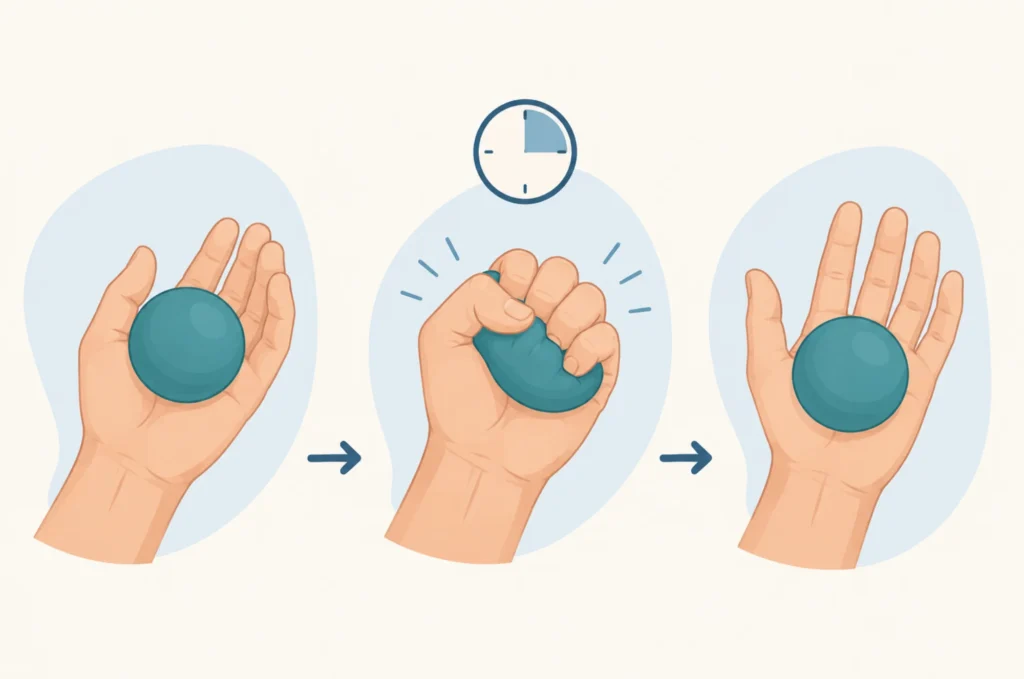
Grip Exercise
Hold a soft ball, towel, or therapy putty, which is also common in many hand therapy exercises. Squeeze gently for 3 to 5 seconds, then relax fully.
Start with 8 – 12 reps. Avoid excessive squeezing early in recovery, as high-force gripping can irritate healing tissue.
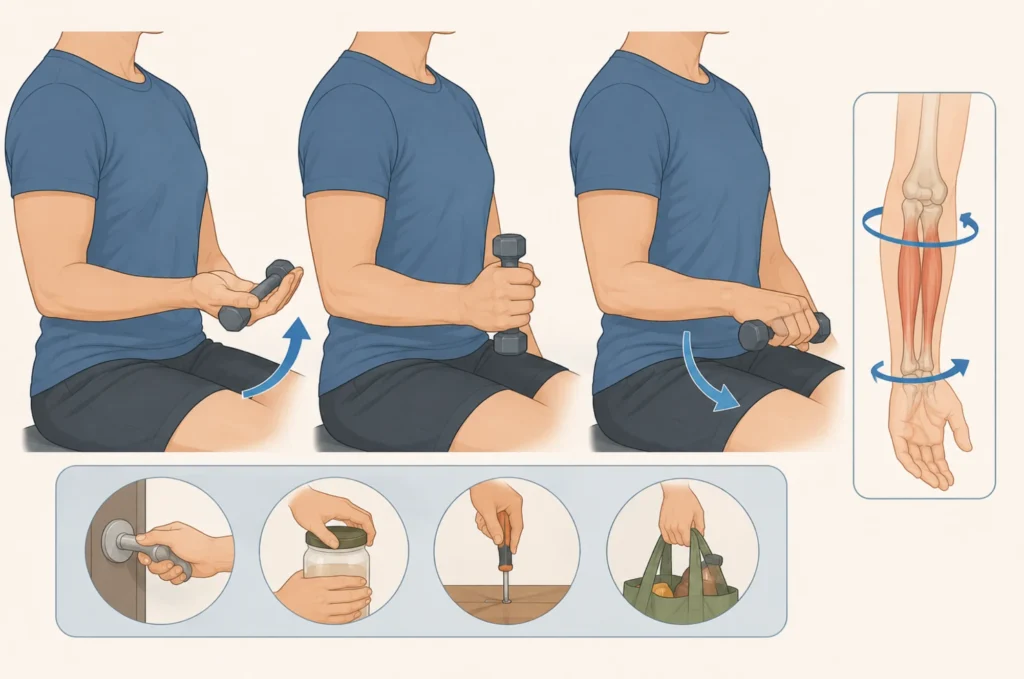
Forearm Rotation Exercise
Hold a light object, such as a small hammer or light dumbbell, with your elbow bent at your side. Slowly turn the palm up, then down.
Keep the motion controlled and stop before pain increases. This exercise helps restore the rotation used for turning keys, opening jars, using tools, and carrying objects.
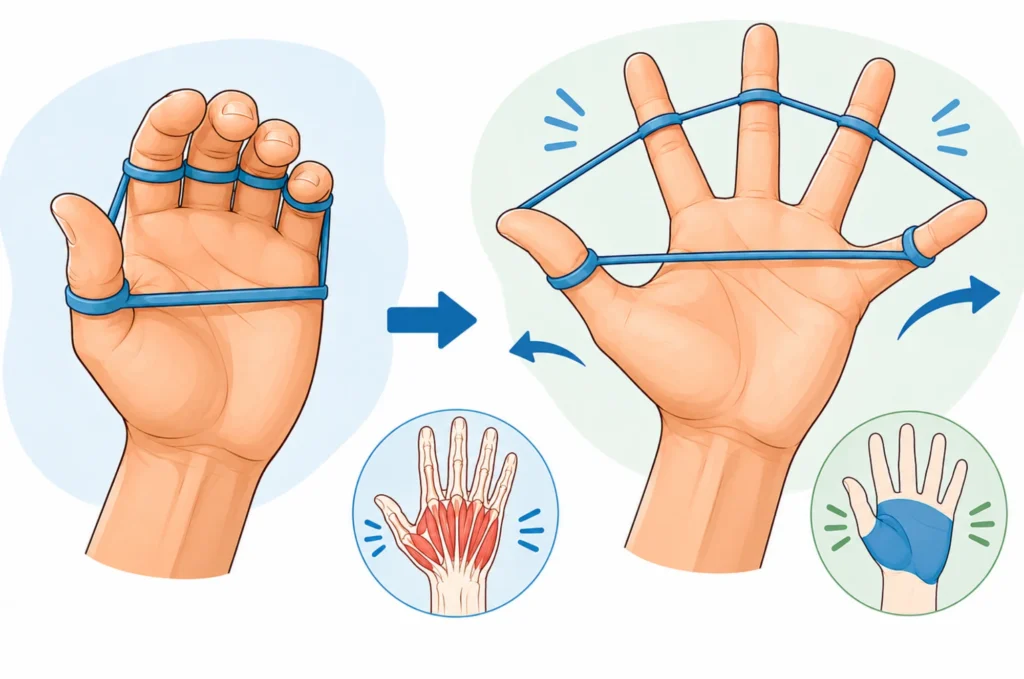
Finger Extension Exercise
Place a rubber band around your fingers and thumb. Open the fingers against the band, then return slowly.
Try 2 sets of 10 – 15 reps. This helps balance gripping work with the muscles that open the hand.
Recovery Time for Forearm Strains
Mild forearm strains may improve in about 1 – 3 weeks, while moderate strains may take 4 – 8 weeks or longer. Forearm flexor strain recovery time depends on pain level, strength loss, job demands, training load, and consistency with rehab.
Recovery may slow when a person returns to gripping, lifting, typing, or sports too quickly. Poor sleep, repeated overload, high stress, and unmanaged medical conditions can also affect healing.
A safe return usually depends on function, not just time. You should be able to move the wrist, grip objects, and perform daily tasks without sharp pain or next-day flare-ups.
When to Seek Medical Care
Seek medical care if pain is severe, swelling is significant, or you cannot move the wrist, hand, or elbow normally. You should also get checked if you have numbness, tingling, spreading pain, sudden grip weakness, or symptoms that do not improve.
These signs may point to a condition beyond a simple pulled muscle in the forearm. A clearer diagnosis helps guide the right treatment plan.
Forearm Strain Prevention Tips
Forearm strain prevention focuses on strength, mobility, workload, and recovery. Warm up before lifting or sports, increase training gradually, and take breaks from repeated gripping.
Keep the wrist neutral during typing or tool work when possible. Build wrist flexor strength, wrist extensor strength, grip control, shoulder support, and movement tolerance over time.
References
- American Academy of Orthopedic Surgeons: Muscle Strains in the Thigh
- Cleveland Clinic: Muscle Strains
- Mayo Clinic: Sprains and Strains
- National Institute of Neurological Disorders and Stroke: Carpal Tunnel Syndrome