

Keith Chan, a New York State-licensed physical therapist, passed this exam more than a decade ago before building a career that includes a master’s degree from CUNY Hunter College and Graston Technique certification, the kind of milestone recognized each year during Physical Therapy Month.
This article covers what the exam involves, how it is scored, and what to expect from test day through results, alongside a few fun facts about physical therapy worth knowing along the way.
Key Takeaways
- The National Physical Therapy Exam (NPTE) is a computer-based, five-hour exam administered by FSBPT, and a passing score is required for state licensure as a physical therapist or physical therapist assistant.
- The exam includes 250 multiple-choice questions, but only 200 are scored, and candidates need a scaled score of 600 or higher out of 800 to pass.
- Content is organized by body system, with musculoskeletal and neuromuscular topics accounting for the largest share of questions, alongside nonsystem categories such as safety and professional responsibilities.
- Registration requires school-confirmed eligibility, an FSBPT account, and an Authorization to Test (ATT) letter before a seat can be booked at a Prometric testing center.
- Candidates who don’t pass can retake the NPTE, but FSBPT caps attempts at 6 total, with no more than 3 allowed within any 12 months.
What Is the National Physical Therapy Exam (NPTE)
The National Physical Therapy Examination (NPTE) is a standardized exam administered by the Federation of State Boards of Physical Therapy (FSBPT).
It measures whether a candidate has the entry-level clinical knowledge needed to practice safely as a physical therapist or physical therapist assistant. State licensing authorities require a passing score before issuing a PT or PTA license.
The physical therapy exam is computer-based and administered at Prometric testing centers across the country, not on paper or remotely.
Is the National Physical Therapy Exam Hard
Most candidates describe the therapy exam as demanding, largely due to its length and scope. Testing takes close to five hours and covers multiple body systems in one sitting, requiring sustained focus.
Difficulty also depends on preparation time, comfort with clinical reasoning questions, and how recently core coursework was studied. The pass rate section later in this article offers a data-based view of how candidates actually perform.
How Is the PT Examination Structured and Scored
The PT examination relies on clinical scenarios rather than simple recall questions. The exam uses a scaled scoring system, not a raw percentage, so the passing score reflects a fixed standard of difficulty rather than a percentage of correct answers.
Exam Length and Number of Questions
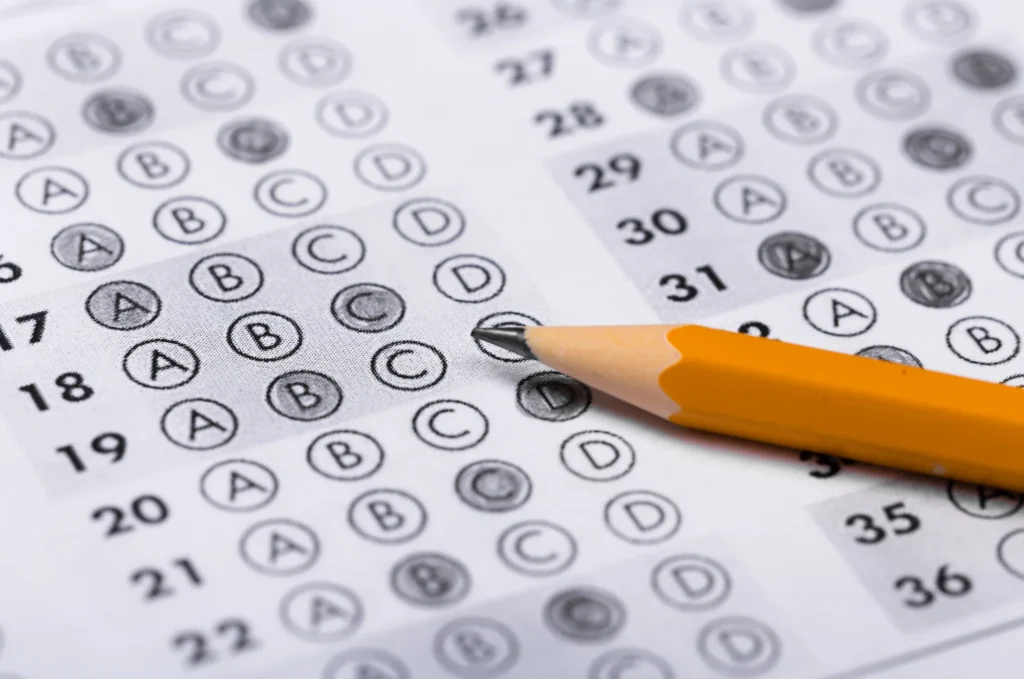
The NPTE for physical therapists includes 250 multiple-choice questions, though only 200 are scored. The remaining 50 are pretest items FSBPT uses to evaluate future exam content and do not count toward the final result. Total test day time runs close to five hours.
Scoring Scale and Passing Standard
Scores are reported on a 200-800 scale. A scaled score of 600 or higher is required for passing the NPTE. Because the scale stays the same across exam versions, the correct answers needed to reach 600 may vary.
That is why FSBPT does not publish a fixed number of correct answers to pass the exam.
What Content Areas Does the Physical Therapy License Test Cover
The physical therapy license test organizes its content outline into body systems and nonsystem categories that reflect real clinical practice.
Body Systems Covered on the Exam
Musculoskeletal and neuromuscular/nervous system topics make up the largest share of questions, followed by cardiovascular and pulmonary topics.
Additional systems include integumentary, gastrointestinal, genitourinary, and metabolic/endocrine topics. Each system tests examination skills, intervention choices, and clinical decision-making specific to that body area.
Nonsystem Topics Covered on the Exam
Beyond body systems, the content outline includes equipment and devices, therapeutic modalities, safety, professional responsibilities, and evidence-based practice.
Many of these questions present a clinical scenario and ask the candidate to identify the safest or most appropriate next step, not just a textbook answer.
Who Administers the PT Licensure Exam and How Do You Register
The PT licensure exam is administered by the Federation of State Boards of Physical Therapy (FSBPT), which builds the content outline, scores the exam, and reports results to state licensing
authorities. APTA is a separate professional association that supports PTs and PTAs but plays no role in creating or scoring the exam.
Role of FSBPT and APTA
FSBPT controls eligibility, testing schedules, and each candidate’s Authorization to Test (ATT). APTA’s role is limited to professional advocacy and member resources, separate from exam administration.
Eligibility and Registration Steps
Candidates must have graduated or be nearing graduation from a CAPTE-accredited PT or physical therapist assistant program, a requirement shaped by the shift toward recognizing physical therapy as a doctoral rather than a professional degree, before their school confirms their eligibility with FSBPT.
To schedule your exam, candidates create an FSBPT account, pay the exam fee, and wait to receive your Authorization to Test (ATT) letter before booking a seat at a Prometric testing center.
Some states add extra steps, such as background checks or jurisprudence exams, before a license is issued, which matters for anyone weighing multi-state licensure paths like travel physical therapy after passing the NPTE.

NPTE Exam Dates and What Happens on Exam Day
FSBPT offers the exam in scheduled windows throughout the year. Exact dates vary by exam type and by year, so candidates should confirm the current schedule directly on FSBPT’s website before building a study timeline.
2026 Testing Windows
FSBPT lists PT and PTA test dates separately, typically clustered in January, April, July, and October. Registration deadlines generally fall four to five weeks before each testing window, so registering early helps secure a seat.
What to Bring and When to Arrive
A valid, government-issued photo ID matching the name on the ATT letter is required at check-in. Arriving early is recommended, as check-in includes identity verification and a review of the testing center’s rules. Phones, notes, and other personal items are not permitted at the testing station.
National Physical Therapy Exam Practice Questions and Preparation
Practice questions built around clinical scenarios tend to be more useful than simple recall drills, since the NPTE scored sections test judgment as much as memorization.
A study plan built around the content outline, with additional time for musculoskeletal and neuromuscular material, aligns with how heavily the exam weights those areas. The following steps outline a general preparation approach:
- Review the FSBPT content outline early to identify weaker subject areas
- Practice with scenario-based questions rather than flashcard-style recall
- Study safety and professional responsibility topics throughout preparation, not only near the end
- Take a timed practice exam to build stamina for the full test day length
National Physical Therapy Exam Pass Rates
Pass rates vary by attempt, school, and testing period. FSBPT publishes aggregate pass rate data on its website rather than a single fixed figure.
Pass Rate by State and Retake Limits
First-time pass rates are generally higher than repeat-attempt pass rates. Candidates who don’t pass may retake the NPTE, but FSBPT limits candidates to a total of 6 attempts, with no more than 3 within any 12 months.