


Keith Chan is a New York State-licensed physical therapist at In Touch NYC Physical Therapy. He says an early check helps identify the source of the symptom. It may be the wrist alone, or it may also involve posture-related muscle tension in the neck and shoulders.
This article covers exercises and other methods to treat carpal tunnel syndrome. It also shares realistic timelines for relief.
Key Takeaways
- Physical therapy treats carpal tunnel syndrome through a combination of exercise, manual therapy, and activity modifications, and it works well for most mild-to-moderate cases.
- Nerve and tendon gliding exercises are the core of most treatment plans, and consistency with home exercises directly affects how quickly symptoms improve.
- A typical course of physical therapy runs six to eight weeks, though recovery time varies with symptom severity and how long the condition has been present.
- Surgery is generally considered only when nerve compression is severe or when weeks of physical therapy have not reduced symptoms.
- Ergonomic changes, such as adjusting keyboard position or incorporating breaks during repetitive tasks, help prevent carpal tunnel syndrome from returning after treatment.
What Is Physical Therapy for Carpal Tunnel Syndrome
Physical therapy for carpal tunnel syndrome is a non-surgical treatment option. It uses exercise, hands-on work, and changes to daily habits. Carpal tunnel therapy starts with a review of symptoms and health history. Next comes a movement check and strength test of the hand and fingers.
The physical therapist checks grip strength, wrist motion, and nerve function. This helps diagnose carpal tunnel syndrome and rule out issues in the neck or shoulder. From there, a care plan is built around what was found, not a generic template.
Sessions in NYC outpatient clinics usually run 30 to 45 minutes. They take place over several weeks. Care comes from a licensed physical therapist in one-on-one sessions, and the plan shifts as symptoms change. Follow-up visits check grip strength and nerve symptoms again, since progress at each visit shapes what comes next.
Can Physical Therapy Improve Carpal Tunnel Syndrome
Physical therapy can alleviate carpal tunnel syndrome in most mild-to-moderate cases. One study compared physical therapy to surgery. It found similar results for hand function and grip strength at 3, 6, and 12 months in some patients.
A few factors affect how much improvement occurs: how long carpal tunnel syndrome symptoms have lasted, whether a condition like diabetes increases pressure on the median nerve, and how well a patient sticks to home exercises.
Severe nerve compression or cases with muscle loss in the hand may require a different plan, since hand therapy has limits worth understanding before starting treatment.
Physical Therapy Interventions for Carpal Tunnel Syndrome
Exercise is the base of most physical therapy plans for carpal tunnel syndrome. It comes first, ahead of other methods. The methods below work together, but exercise carries the most weight day-to-day.
PT Exercises for Carpal Tunnel: Nerve Gliding and Tendon Work
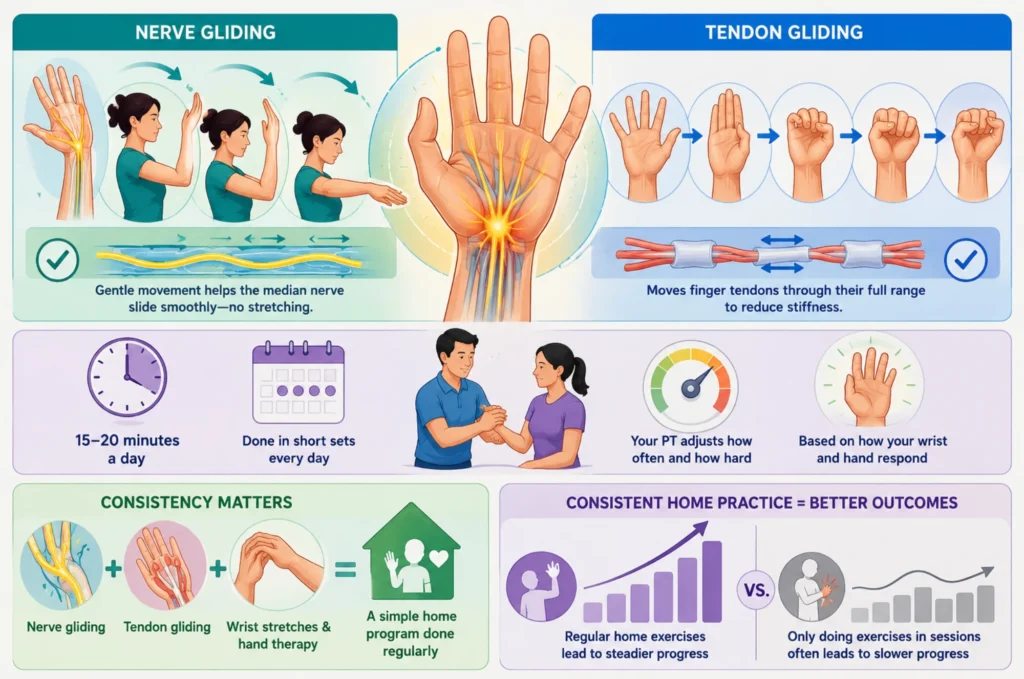
Physical therapy for carpal tunnel exercises centers on two types: nerve gliding and tendon gliding. Nerve gliding moves the median nerve gently through the carpal tunnel. It does not stretch the nerve. This keeps it moving instead of sticking to nearby tissue.
Tendon gliding moves the finger tendons through their full range of motion. This cuts stiffness in the hand and fingers.
These PT exercises for carpal tunnel are done in short sets. Most take 15 minutes to 20 minutes a day. A physical therapist adjusts how often and how hard, based on how the wrist and hand respond.
A home program usually pairs both exercise types with hand and wrist therapy exercises, such as wrist stretches. Staying consistent between clinic visits speeds up symptom improvement. Patients who do home exercises regularly tend to see steadier progress than those who only exercise during sessions.
Manual Therapy and Splinting
Manual therapy includes joint work on the small bones of the wrist and soft-tissue work on the forearm muscles.
This can ease stiffness and improve blood flow around the compressed nerve. Some physical therapists use Graston Technique. This is a tool-assisted soft tissue method used when tight tissue is part of the problem.
A wrist splint holds the hand in a neutral position. This lowers pressure inside the carpal tunnel and around the transverse carpal ligament, a band of tissue that forms part of the tunnel. Many patients wear a wrist splint at night because wrist position during sleep often worsens symptoms.
A doctor may also suggest a steroid injection or anti-inflammatory drugs NSAIDs to reduce swelling around the nerve. This applies more to irritated cases. These are medical choices made outside of physical therapy. A physical therapist can still coordinate care alongside them.
Ergonomic and Activity Modification
Ergonomic changes target the repetitive movements that often cause carpal tunnel syndrome. These changes also help prevent carpal tunnel syndrome from coming back. Common fixes include:
- Moving a keyboard and mouse so wrists and hands stay in a neutral position
- Changing grip on tools used often at work
- Adding short breaks during repeat tasks to cut strain
A physical therapist looks at daily tasks and workstation setup to find specific triggers. Then they suggest fixes based on the cause of the most strain.
How Long Physical Therapy Takes for Carpal Tunnel Syndrome
Treatment for carpal tunnel syndrome with physical therapy usually runs 6 to 8 weeks. Sessions happen once or twice a week.
Recovery time depends on how severe the symptoms are. It also depends on how long the symptoms have lasted. It depends on how well patients do their home exercises between visits.
Mild cases sometimes improve in a few weeks. More established nerve compression can take longer to resolve.
What to Expect at Your First Physical Therapy Visit
The first visit includes a full check of the wrist, hand, and forearm. A physical therapist reviews symptoms of carpal tunnel syndrome, such as numbness, tingling, or pain at night. They also test grip strength and range of motion.
Keith Chan, who holds a Master’s degree in Physical Therapy from CUNY Hunter College and has worked with many patients for over a decade, says a thorough first check helps set realistic expectations for the weeks ahead. The therapist then explains the care plan, including how often to exercise and when to follow up.

Physical Therapy vs Surgery for Carpal Tunnel Syndrome
Physical therapy and surgery are both proven treatment options. The right choice depends on how bad symptoms are.
Surgery usually comes up when nerve compression is severe, when there is muscle loss in the hand, or when weeks of physical therapy have not helped.
Physical therapy stays the first choice for mild to moderate cases. Some patients also use physical therapy after surgery to rebuild strength and motion during recovery, similar to how physical therapy for shoulder pain supports recovery in other joints.
Common Questions About Physical Therapy for Carpal Tunnel Syndrome
Does physical therapy help carpal tunnel without surgery? Yes, in many mild-to-moderate cases, physical therapy eases symptoms without surgery.
Is carpal tunnel syndrome permanent? Not always. Early treatment often prevents long-term nerve damage, though severe or long-standing cases may not fully resolve.
Can carpal tunnel come back after physical therapy? Symptoms can return if the activities that caused the strain go unaddressed. This is why ergonomic changes are part of most treatment plans.