

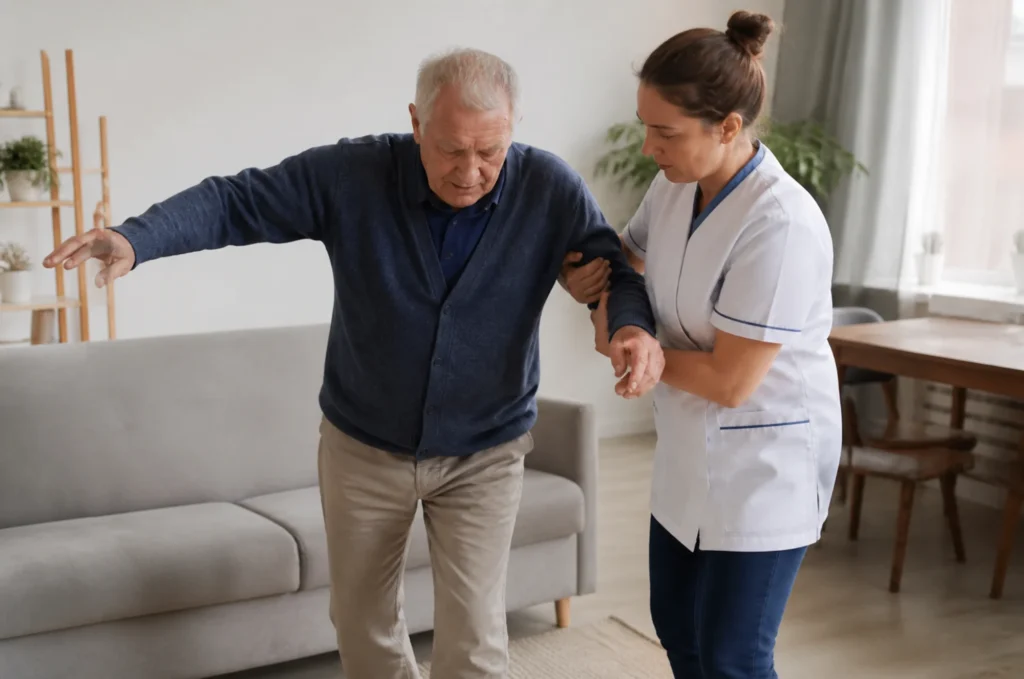
Ataxia physical therapy focuses on safer movement, better balance, improved walking control, and daily function. Ataxia can affect the arms and legs, posture, speech, and balance and coordination, so treatment depends on the cause and severity.
This article was reviewed for clinical accuracy by Keith Chan, a New York State-licensed physical therapist at ITNYCPT in New York City. It explains common therapy goals, exercises for ataxia, and realistic expectations.
Key Takeaways
- Ataxia PT may help improve balance, walking control, coordination, muscle strength, and safety during daily movements.
- Treatment depends on the cause and severity of ataxia, so that care may include physical therapy, occupational therapy, speech therapy, medical care, and adaptive support.
- Common exercises for ataxia include sit-to-stand practice, weight shifting, standing heel-to-toe balance, walking drills, and controlled turning practice.
- Home exercise programs should prioritize safety, clear instructions, and realistic progression over difficult balance tasks performed too soon.
- Results vary by diagnosis, symptoms, consistency, health history, and whether the condition is stable, episodic, or progressive.
Does Physical Therapy Help Ataxia?
Yes. Physical therapy may help people with ataxia improve movement control, muscle strength, walking safety, and fall risk. It does not treat every cause of ataxia, but it can help people move with greater control when the plan aligns with their symptoms.
The effect varies by diagnosis. A person with episodic ataxia may need a different plan than someone with cerebellar ataxia or multiple system atrophy. Some people work toward improvement, while others focus on maintaining quality of life over the long term.
What Is Ataxia?
Ataxia is a movement problem that affects coordination. It can make walking, turning, reaching, speaking, and using the hands harder. Some people also have slurred speech, poor balance, or trouble placing their feet accurately.
There are different types of ataxia, and the cause affects the care plan. Ataxia may relate to genetic conditions, stroke, multiple sclerosis, medication side effects, alcohol use, vitamin issues, infections, or degenerative disease.
A medical provider may use imaging, lab work, neurological exams, or genetic tests when the cause is unclear.
Ataxia PT Treatment Options
Ataxia treatments may include physical therapy, occupational therapy, speech therapy, medical care, and adaptive support. The goal is to match care to the person’s symptoms, safety needs, daily activities, and health history.
Physical therapists often assess walking, balance, reactions, strength, posture, coordination, and fall risk. A PT evaluation may include a health history, movement screen, gait assessment, balance testing, and goal setting.
This process is also common in structured rehab plans, where post-surgery rehabilitation exercises are adjusted over time based on strength, mobility, safety, and function. The plan changes over time based on progress, fatigue, safety, and function.
Occupational therapy focuses on daily tasks such as dressing, feeding, bathing, writing, cooking, and using tools. Speech therapy may help when ataxia affects speech, swallowing, voice control, or communication. Medical care helps identify causes, manage symptoms, and guide safe treatment choices.
Ataxia Physical Therapy Interventions
Ataxia PT interventions often target balance, coordination, walking, strength, and safer movement. The right plan depends on whether symptoms are mild, moderate, severe, stable, or changing.
Balance training may include sitting balance, standing balance, reaching, weight shifts, and supported stepping. A balance exercise should match the person’s current ability and safety level. For example, someone may start near a counter before moving to a harder setup.
Coordination exercises train controlled movement, not speed. A person may practice stepping to visual targets, touching markers, moving slowly with accuracy, or shifting weight with control. Strength work may target the hips, trunk, legs, shoulders, and core to support posture and walking.
Pilates-based therapeutic exercise may help some people improve core control, mobility, and movement awareness. Manual therapy or soft-tissue work, including techniques such as the Graston Technique, may be used when stiffness or soft-tissue limitations affect movement.
These tools should support the larger therapy plan, not replace balance, coordination, or walking practice.
Cerebellar Ataxia Gait Training
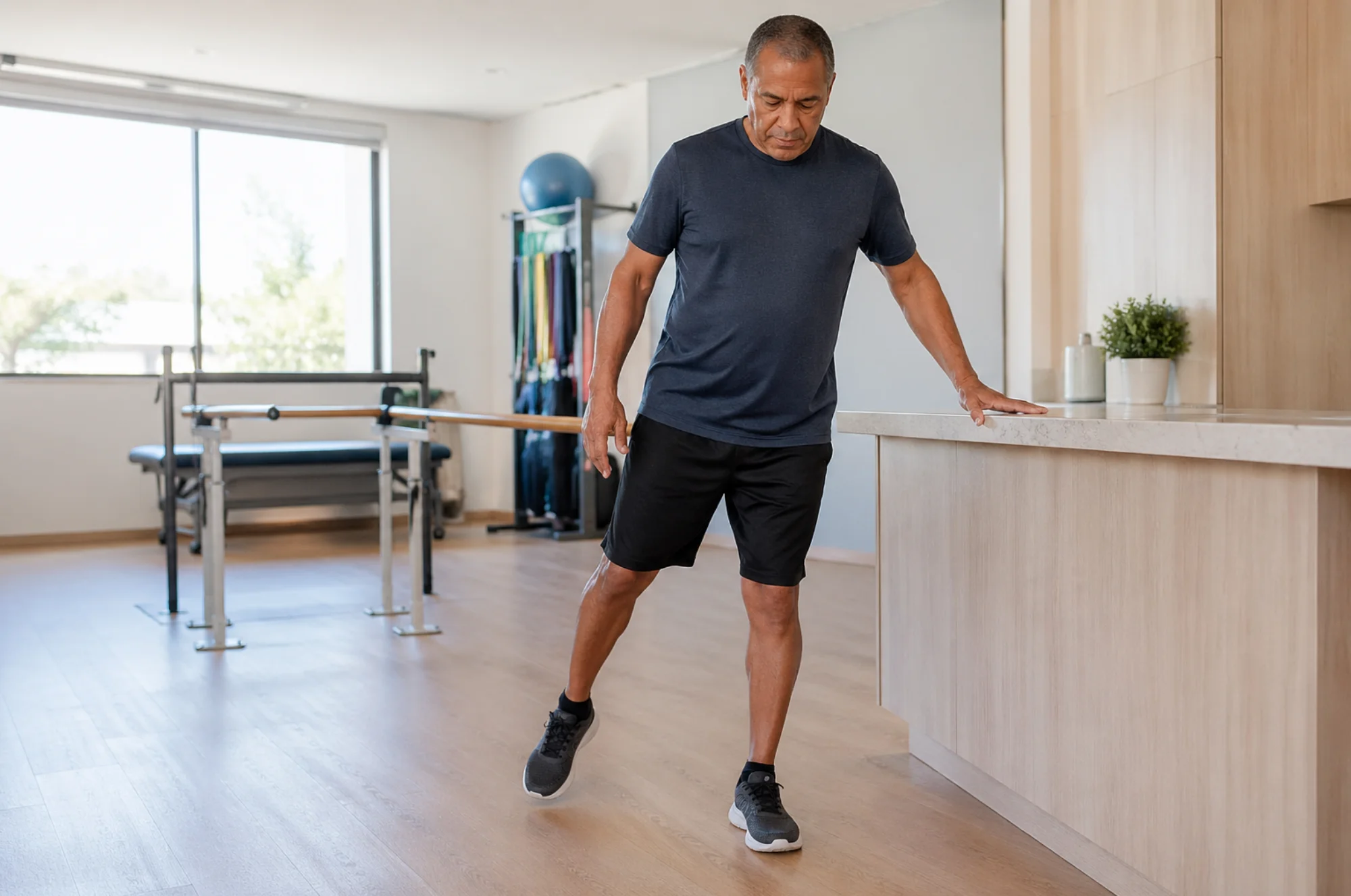
Cerebellar ataxia PT gait training focuses on step control, foot placement, turning, and safe use of walking aids. Gait training means practicing walking in a structured way. It may include visual targets, controlled speed, step timing, and walking with support.
Some people with ataxia take uneven steps or place their feet too wide or too narrow. A therapist may use floor markers, counting, mirrors, or verbal cues to improve consistency. Turning practice may include small turns, wide turns, stopping before turning, and changing direction safely.
Walking aids can help some people move with less risk. A cane, walker, trekking pole, or other device should match the person’s balance, strength, coordination, and living environment. The goal is safer walking, not perfect walking.
Ataxia Physical Therapy Exercises
Ataxia PT exercises should be specific, safe, and adjustable. There is no single best exercise for ataxia because symptoms and goals differ. The best exercise is the one a person can do safely and repeat with good control.
Common exercise categories include:
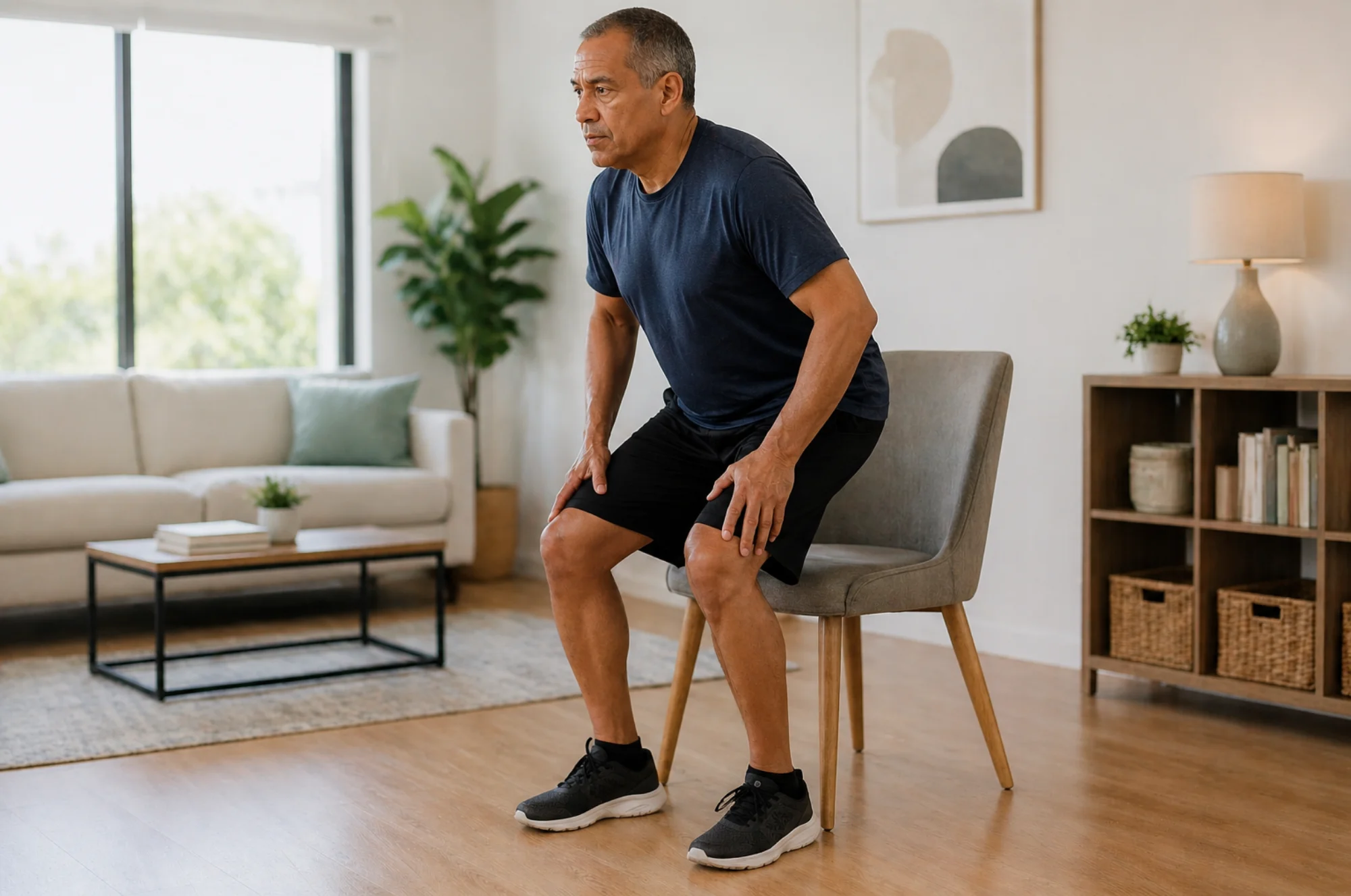
- Sit-to-stand practice for leg strength and transfers, often starting with 5 to 10 controlled repetitions from a stable chair
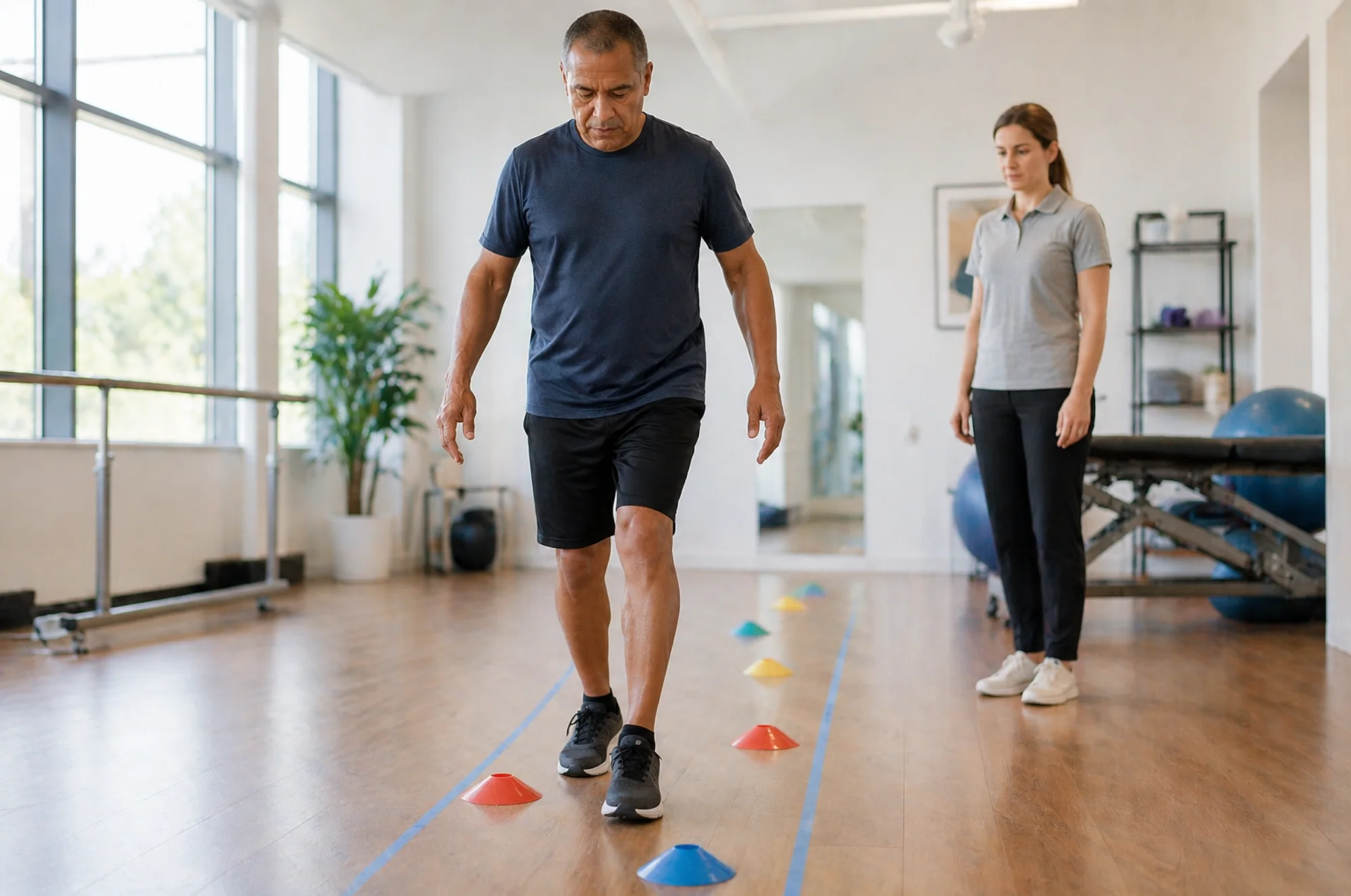
- Weight-shifting exercises for balance control are usually performed near a counter or sturdy surface
- Standing heel-to-toe practice for narrow-stance balance, with support nearby if needed
- Quadruped weight shifting for trunk and shoulder control, adjusted based on wrist, knee, and core tolerance
- Walking and turning practice for daily mobility, using visual markers or clear floor targets when helpful
Ataxia exercises for walking may include marching with support, step taps, side stepping, and walking between visual markers. These drills should feel controlled, not rushed.
A therapist may progress the task by changing speed, reducing hand support, adding turns, or increasing distance only when the person can stay safe.
If the movement becomes unsafe, the exercise should be modified. A safer version may include a wider stance, more hand support, fewer repetitions, or shorter practice time. The goal is steady control, not forcing a harder version too soon.
What Improves Ataxia?
What improves ataxia depends on the cause. Some causes may improve with medical treatment, while genetic or degenerative forms may require long-term symptom management. Physical therapy can support function, but it should fit within the full medical picture.
Consistent practice helps the body repeat safer movement patterns. Home exercise programs work best when they are short, clear, and realistic. Safer movement strategies may include slowing turns, using hand support, improving lighting, removing trip hazards, and planning rest breaks.
How to Do Ataxia Exercises Safely at Home
To do ataxia exercises safely at home, use a stable surface for support, choose simple movements, follow clear repetition limits, and stop if balance feels unsafe. Home exercises may support progress, but they should not replace medical evaluation when symptoms are new, worsening, or unexplained.
A home plan should explain where to stand, what to hold, how many repetitions to do, and when to stop. Exercise near a counter, wall, or sturdy chair if balance is limited. Avoid hard balance drills when tired, dizzy, or alone if fall risk is high.
Pediatric Ataxia Physical Therapy
Pediatric ataxia physical therapy uses many of the same goals, but the format often looks different. Children may work on balance, coordination, strength, walking, stairs, play skills, and school-related movement.
Exercises often need to feel like games while still targeting a clear goal. Family support matters because children may need help practicing safely at home. The plan should fit the child’s age, attention, fatigue, and safety needs.
Ataxia Occupational Therapy Interventions
Ataxia occupational therapy interventions focus on daily function. This may include hand coordination, feeding, dressing, hygiene, writing, computer use, kitchen safety, and hand therapy exercises when fine motor control is affected.
Daily task practice breaks an activity into smaller steps. For example, a person may practice reaching, grasping, stabilizing, and placing an object. Adaptive tools may include weighted utensils, shower chairs, grab bars, nonslip mats, and dressing aids.
What Not to Eat With Ataxia?
There is no single diet rule for every person with ataxia. Diet advice depends on the cause, medical history, swallowing safety, medications, and nutritional needs. Alcohol may worsen balance and coordination for many people, and some people need guidance from a physician or dietitian.
What Results Can You Expect?
Results vary by diagnosis, severity, consistency, sleep, stress, health history, and daily demands. Some people improve walking control, balance confidence, strength, or daily function. Others focus on maintaining mobility, reducing the risk of falls, and adapting to changes over time.
When to Seek Medical Care
Seek medical care promptly if ataxia starts suddenly, worsens quickly, or appears with severe headache, weakness, numbness, confusion, vision changes, trouble speaking, chest pain, or loss of consciousness. A medical evaluation is also important when falls increase or swallowing becomes difficult.
What to Ask a Physical Therapist
Ask what symptoms the plan targets, how progress will be measured, which exercises are safe at home, and when the plan should be updated.
You can also ask how gait training, balance work, strength training, manual therapy, Pilates-based therapeutic exercise, or assistive tools fit your specific situation.
Reviewed for clinical accuracy by Keith Chan, New York State-licensed physical therapist.
[/et_pb_text][/et_pb_column][/et_pb_row][/et_pb_section]