

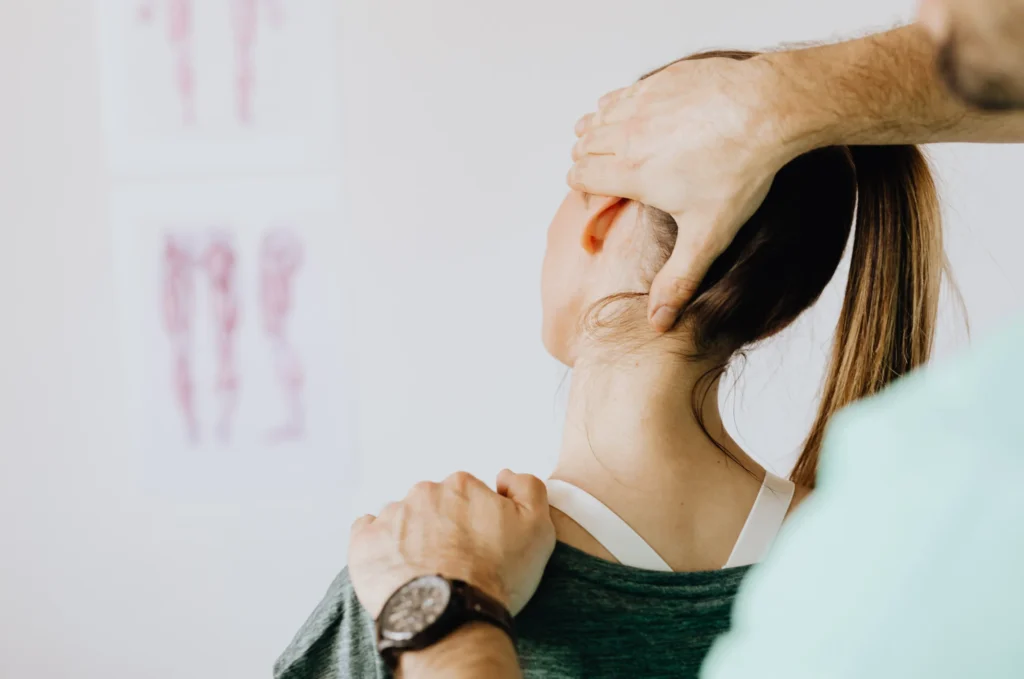
Keith Chan is a New York State licensed physical therapist at ITNYCPT in New York City. He reviewed this topic from a clinical perspective. This guide explains what cervical spine PT may include, what an evaluation entails, and when neck pain symptoms may require medical review.
Key Takeaways
- Cervical spine physical therapy can help with neck pain, stiffness, headaches, and some nerve-related arm symptoms when the treatment plan aligns with the person’s symptoms and goals.
- A cervical spine PT evaluation may include symptom history, movement testing, posture review, strength testing, sensation testing, reflex screening, and goal setting.
- Treatment may include manual therapy, cervical traction, posture education, therapeutic exercise, home exercises, and activity changes.
- Cervical spine exercises often progress from gentle mobility to strengthening, stabilization, and return-to-activity work as symptoms improve.
- Medical evaluation may be needed for neck pain after major trauma, new weakness, worsening numbness, balance changes, fever, sudden severe headache, or loss of bowel or bladder control.
What Is Cervical Spine Physical Therapy?
Cervical spine physical therapy is a conservative treatment for pain, stiffness, and limited range of motion. movement cervical symptom response cervical vertebrae that support the head, protect spinal nerves, and allow the neck to turn, bend, and look up or down. Physical therapy may include movement testing, manual therapy, therapeutic exercise, posture education, and a home plan.
Cervical vertebrae treatment focuses on how the neck moves and how symptoms respond to activity. When joints, discs, muscles, or soft tissue become irritated, movement may feel stiff, guarded, or painful. A person with chronic neck pain may need a different plan than someone with a short-term strain.
When Can Cervical Therapy Help?
Cervical therapy can help when neck symptoms affect movement, sleep, work, exercise, or daily comfort. It may support pain relief, better mobility, and improved control of the neck and shoulder area. The plan depends on the cause, symptom behavior, and the person’s goals.
Common reasons people seek cervical spine PT include:
- Neck pain after long computer use
- Neck and shoulder tightness
- Headaches linked to neck tension
- Arm pain, numbness, or tingling
- Symptoms related to herniated discs or nerve irritation
- Stiffness from poor posture or repeated positions
Neck pain and stiffness can come from muscles, joints, discs, or irritated soft tissue. Some headaches may also relate to neck joints, muscle tension, or posture.
Physical therapy does not treat all headaches. Sudden or severe headaches need a medical check. Headaches with neurological symptoms also need medical evaluation.
Arm pain, numbness, or tingling can happen when spinal nerves in the neck become irritated. This may occur with cervical radiculopathy, often called a pinched nerve in the neck. Physical therapists may screen strength, reflexes, sensation, and symptom response to neck positions.
Cervical Spine Physical Therapy Evaluation
A cervical spine physical therapy evaluation, a range of motion, and a clear history. The physical therapist asks when symptoms began, where the pain travels, which movements trigger it, and what helps. They may also ask about work setup, sleep, exercise habits, medication use, muscle relaxants, past injuries, and health history.
The exam may include neck range of motion, shoulder movement, grip strength, posture review, and nerve testing. This helps separate simple neck pain from symptoms that may involve nerves or other medical concerns. The findings guide treatment options, exercise selection, and the starting level for care.
Reflex, sensation, and strength testing can help determine whether spinal nerves are involved. Reflex testing looks at how the nervous system responds. Sensation testing checks for positions at work, while strength testing assesses weakness in the neck, shoulder, arm, hand, or grip.
Commuting, laptop work, phone use, and prolonged sitting can place repeated strain on the neck. A practical plan may include movement breaks, workstation changes, and strategies for carrying bags or changing work positions. The evaluation also helps set goals, such as sitting longer, turning the head while driving, lifting safely, or reducing symptoms caused by flare-ups.

Cervical Spine PT Treatments
Common cervical spine PT treatments may include manual therapy, therapeutic exercise, cervical traction, posture education, and activity changes. Manual therapy is hands-on care that may target joints, muscles, or soft tissue. The Graston Technique is a recognized tool that some clinicians use for soft-tissue work.
Cervical traction applies a gentle pulling force to the neck. Some people with nerve-related symptoms may feel temporary relief when traction reduces irritation or pressure. It is not right for everyone, so the response should guide whether it stays in the plan.
Therapeutic exercise helps restore motion, strength, and control over time. Pilates-based therapeutic exercise may support core strength, breathing control, mobility, and movement coordination when it fits the plan. Education also matters because posture, workload, sleep, and activity choices can affect symptoms.
Cervical Spine Physical Therapy Exercises
Cervical spine physical therapy exercises often change across rehab phases. Early exercises may focus on gentle movement and reducing pain. Later, body exercises may stretch and strengthen the neck, shoulders, and upper back.
Home exercises usually progress from simple mobility work to strength, control, and return-to-activity drills. This progression helps the neck tolerate more load over time. The exact pace depends on symptoms, irritability, consistency, and how the body responds between visits.
Cervical exercises at home may include slow rotation, side bending, chin tucks, shoulder blade squeezes, breathing drills, and light mobility work. Cervical neck exercises to relieve pain should not create sharp pain, spreading symptoms, or increased numbness. Mild stretching or effort can be normal, but significant changes in symptoms should be discussed with a clinician.
Cervical spine stabilization exercises train control of the neck and upper back. They are associated with deep neck flexors, shoulder muscles, and trunk control. Stabilization does not mean keeping the neck stiff; it means building control so the neck can move with less strain.
People sometimes ask how to strengthen C5 and C6, but C5 and C6 are spinal levels, not muscles. A PT may focus on muscles commonly linked to those nerve levels, such as parts of the shoulder and arm. Exercises may include gentle resumption of shoulder strength, scapular control, and neck stabilization.
Some exercises may be too early in rehab. Heavy overhead lifting, aggressive neck stretching, fast twisting, or loaded neck movements can irritate symptoms in some cases. Avoiding exercise early does not mean avoiding it forever, since many activities can return later with better tolerance.
Cervical Radiculopathy and PT
Cervical radiculopathy occurs when a nerve root in the neck becomes irritated or compressed. It can happen with herniated discs, age-related joint changes, or narrowing of the nerve canal. Symptoms may travel into the shoulder, arm, hand, or fingers.
A pinched nerve may feel sharp, burning, electric, numb, or tingly. First signs of C7 nerve compression may include pain, tingling, numbness, changes in grip strength, or triceps weakness radiating to the back of the arm, forearm, or the middle finger area. Symptoms vary, so testing strength, reflexes, sensation, and movement responses provides clearer information.
PT may reduce arm symptoms by improving neck mechanics, calming irritated tissue, and changing positions that increase nerve stress. Cervical traction and posture have been present recently; graded strengthening and activity changes may help some people. Imaging may be needed when symptoms are severe, worsening, linked to trauma, or not improving as expected.
How Long Does Neck PT Take?
Neck PT timelines vary, but many people start noticing small changes within 2 to 4 weeks when symptoms are mild or recent. This may include easier neck motion, fewer flare-ups, less pain during daily tasks, or better tolerance for sitting at a desk. More consistent improvement often takes 4 to 8 weeks, especially when the plan includes home exercises and changes in activity.
Chronic neck pain, nerve-related symptoms, herniated discs, or symptoms that radiate into the arm may take longer to resolve. In these cases, a reasonable timeframe may be 8 to 12 weeks or longer, depending on symptom severity, workload, sleep, health history, and adherence to the plan. Some people need a longer progression if changes in mobility, posture tolerance, or nerve irritation improve slowly.
Treatment plans vary because neck pain has many causes. Two people may share the same diagnosis but need different plans. One may need mobility work, while another may need strengthening, traction, or activity modification.
Signs of progress may include better movement, fewer flare-ups, lower pain intensity, improved sleep, and less neck and shoulder tension during the day. Progress is not always linear. A long workday, poor sleep, stress, or a new activity can cause a temporary flare, but the plan may still be working if symptoms settle faster and function continues to improve.
When to Seek Medical Care
Most neck pain does not require urgent care, but some symptoms need prompt evaluation. Seek medical care for neck pain after major trauma, new balance problems, loss of bowel or bladder control, fever, unexplained weight loss, or sudden severe headache. New or worsening weakness, numbness, or other neurological symptoms should also be reviewed.
This guidance is general and educational. Physical therapists can screen for signs that need referral, but medical evaluation may be needed when symptoms fall outside a typical musculoskeletal pattern. Safety matters most when symptoms change quickly or affect strength, coordination, or sensation.

Medical review note: This article is for educational purposes only and should not replace a diagnosis or individualized medical advice. It was reviewed from a physical therapy perspective to support clarity, accuracy, and responsible patient education.