

Keith Chan is a New York State licensed physical therapist at ITNYCPT in New York City. He treats patients with many conditions. He also often answers questions from people thinking about a career in physical therapy.
This guide covers what to look for at both the undergraduate and graduate levels, how the admissions process works, what DPT programs cost, and what the profession looks like once you are licensed.
Key Takeaways
- Becoming a licensed physical therapist requires two stages of education: an undergraduate degree that meets DPT prerequisites, followed by a three-year Doctor of Physical Therapy program, for a total of seven years on the standard path.
- Every legitimate DPT program in the United States must hold CAPTE accreditation, and a program’s NPTE first-time pass rate is one of the clearest indicators of how well it prepares graduates for licensure.
- Physical therapy school rankings from U.S. News reflect academic reputation among peers. Still, they do not measure the quality of clinical placements, program culture, or how well a program fits your specific career goals.
- Tuition for a three-year DPT program ranges from roughly $60,000 at in-state public universities to over $180,000 at private institutions, so comparing cost against NPTE pass rates and employment outcomes is essential before committing to a program.
- Most DPT programs require a minimum GPA of 3.0, documentation of PT observation hours, and at least one letter of recommendation from a licensed physical therapist, with applications submitted through the PTCAS centralized system.
The Two Paths in Physical Therapy Education
Undergraduate Pre-PT Programs vs. Graduate DPT Programs
The phrase “colleges for physical therapy” refers to two distinct stages of education, and mixing them up leads to poor planning early on. At the undergraduate level, it refers to four-year colleges where future physical therapists build a strong academic foundation.
They also gain the clinical experience needed for admission to DPT programs. These programs are not physical therapy programs themselves. They are pre-PT pathways.
At the graduate level, “colleges for physical therapy” means accredited Doctor of Physical Therapy programs. These professional degrees are required to practice in the United States. Universities, health sciences schools, or academic medical centers house these programs. Understanding which stage you are planning for determines what you should look for.
What Degree Do You Need to Become a Physical Therapist?
A Doctor of Physical Therapy degree is the required entry-level credential for physical therapists in the US.
A bachelor’s degree alone does not qualify you to practice, regardless of your major or clinical experience.
The standard path includes four years of undergraduate study and a three-year DPT program. This totals seven years before you can take the licensing exam.
If you are considering a supporting role in the field rather than becoming a licensed PT, there are also schools with physical therapy assistant programs that lead to a PTA license through a two-year associate degree — a separate and shorter path worth exploring if you want to know how to become a physical therapy assistant.
Best Colleges for Physical Therapy at the Undergraduate Level
Majors, Prerequisites, and What DPT Programs Expect
DPT programs do not require a specific undergraduate major, but they do require specific prerequisite courses. Most programs expect completed coursework in biology, chemistry, physics, anatomy, physiology, statistics, and psychology.
Majors like kinesiology, exercise science, and biology tend to cover these naturally, but students in other majors can meet requirements with careful course planning from day one.
The practical move is to pull the prerequisite lists for DPT programs you are interested in during your first year, not your junior year. That gives you time to complete everything without scrambling or delaying graduation. Colleges with strong pre-health departments typically have advising resources built specifically for pre-PT students.
Clinical Hours, Research, and Hands-On Experience
Most DPT programs require applicants to document a set number of observation hours working alongside a licensed physical therapist before applying. Requirements vary by program, typically ranging from 100 to 200 hours.
Undergraduates who attend colleges with clinical partnerships, campus PT clinics, or structured health sciences internship programs have a more direct path to accumulating those hours.
Research experience is an added advantage, especially for physical therapy programs at research-focused universities.
Examples include the University of Pittsburgh, Emory University, and the University of Iowa. Participating in undergraduate research demonstrates academic initiative and prepares students for the evidence-based culture central to physical therapy education.

Pre-Health Advising and DPT Acceptance Rates
Pre-health advising is one of the most underrated features of a strong pre-PT college. A dedicated advisor helps you meet prerequisites, plan your application, and understand PTCAS requirements before deadlines become an issue. Some universities publish their students’ DPT acceptance rates directly. This gives you a real measure of how well the program prepares applicants.
What to Look for in a School for Physical Therapy at the Graduate Level
CAPTE Accreditation: The Standard All DPT Programs Must Meet
CAPTE stands for the Commission on Accreditation in Physical Therapy Education. Every DPT program in the United States must hold CAPTE accreditation to operate legitimately.
Graduates of non-accredited programs cannot sit for the NPTE licensing exam, which means they cannot practice as physical therapists. Verify accreditation status through the CAPTE directory at capteonline.org before applying to any program.
NPTE First-Time Pass Rates and What They Reveal
The National Physical Therapy Examination (NPTE) is the licensing exam all DPT graduates must pass. Programs publish their first-time pass rates, and these numbers offer one of the clearest signals of program quality available to applicants.
A program with a consistent first-time pass rate above 90% is preparing graduates well. Rates below 85% warrant a closer look at curriculum design, clinical education hours, and board preparation resources before you commit.
Program Length and Clinical Training Hours
Most DPT programs last 3 years and require 90 to 120 credit hours. A large part of this time is spent in full-time clinical internships.
These internships are called clinical affiliations. They usually last 30 to 40 weeks. More clinical hours mean more hands-on patient contact before graduation, which matters considerably in a profession built around one-on-one care.
Physical Therapy School Rankings and the Top 10 Programs in the US
How US News Ranks Physical Therapy Schools
US News & World Report ranks DPT programs annually based on peer surveys sent to deans and faculty at other institutions.
Physical therapy school rankings reflect academic reputation as assessed by professionals in the field, not clinical outcomes, student satisfaction, or employment rates. That makes them a reasonable starting reference, but not a complete evaluation tool.
Top 10 Physical Therapy Schools and What They Have in Common
Among the best physical therapy schools in the United States, the following programs consistently appear at the top of US News rankings:
- University of Southern California
- University of Delaware
- Northwestern University
- Washington University in St. Louis
- University of Pittsburgh
- Emory University
- University of Iowa
- Duke University
- University of Miami
- Arcadia University
These top-rated PT schools share several characteristics: strong NPTE first-time pass rates, established clinical education networks, active research faculty within a dedicated department of physical therapy, and current CAPTE accreditation in good standing.
How to Build Your PT School List Beyond the Top 10
Hundreds of CAPTE-accredited DPT programs operate across the United States, and the top 10 are not where your research should stop. The American Physical Therapy Association (APTA) maintains a complete, searchable directory at apta.org where you can filter programs by state, program length, and tuition to build a realistic application list.
Physical therapy school rankings are a useful first filter. But they do not reflect clinical placements in your area. They also miss class size, faculty access, and program culture.
A program outside the top 20 may have stronger connections to outpatient orthopedic clinics, sports medicine settings, or academic medical centers that align directly with your career goals.
The right program for you is the one that fits your specialization interests, geography, and budget, not just the one with the highest rank.
Accelerated BS/DPT and 3+3 Physical Therapy Programs
How Combined and 3+3 Programs Work
Some universities offer combined BS/DPT programs that shorten the total time from 7 years to 6. The most common format is the 3+3 program: three years of undergraduate coursework followed directly by three years in the DPT program.
Students are typically given conditional admission to the DPT phase during their undergraduate application and must maintain a required GPA throughout to advance.
GPA Requirements, Program Length, and Trade-Offs
Most combined programs require a cumulative GPA between 3.0 and 3.5 to move from the undergraduate phase into the DPT. The trade-off is less flexibility: you commit to the career path earlier.
You have less time to build a broad clinical observation record. You also have less time to explore related areas of health science. For students who are fully certain about physical therapy, saving a full year of tuition and time is a meaningful advantage.
The Real Cost of PT School and How to Evaluate It
Average Tuition Across Top-Rated PT Schools
PT school is a major financial commitment. Annual tuition at top-rated PT schools ranges from roughly $20,000 at in-state public universities to over $60,000 at private institutions.
A three-year DPT program can cost between $60,000 and $180,000 in tuition before accounting for living expenses, program fees, and travel for clinical rotations.
How to Weigh Cost Against Program Outcomes
Tuition should always be weighed against outcomes. A lower-cost program with a 95% NPTE first-time pass rate and strong clinical training may deliver better value over time than an expensive program with weaker results.
Key data points to compare include the first-time NPTE pass rate. Also, compare the employment rate within six months of graduation.
Review the average starting salary, too. Most programs make this data available on their department of physical therapy admissions pages or provide it upon request.
How to Apply to Colleges with the Best Physical Therapy Programs
The PTCAS Application Process Step by Step
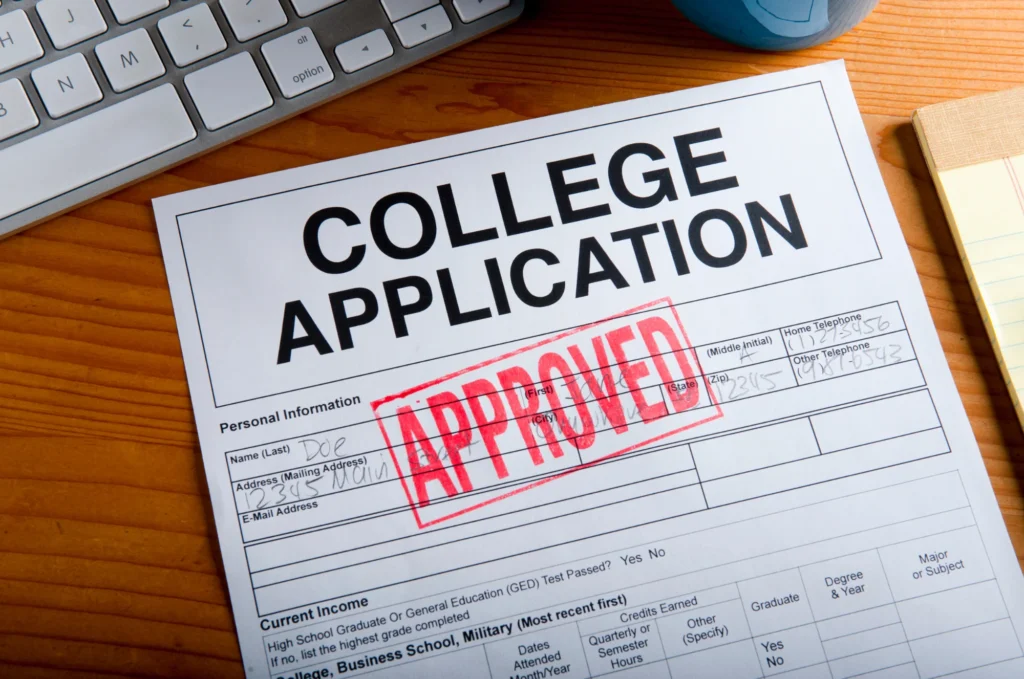
PTCAS (Physical Therapist Centralized Application Service) is the primary application system for DPT programs in the United States. Most colleges with the best physical therapy programs accept applications through PTCAS, which allows you to complete one application and submit it to multiple programs at once.
Applications typically open in early summer and close in late fall, with admission decisions arriving in late winter or early spring.
A complete PTCAS application includes:
- Transcripts from every institution attended
- A personal essay
- Documentation of observation hours with a licensed PT
- Three to four letters of recommendation
GPA, Prerequisites, and Letters of Recommendation
Most DPT programs expect a minimum cumulative GPA of 3.0. Competitive applicants usually have GPAs from 3.4 to 3.6.
All prerequisite courses must be completed at an accredited institution. Some programs also require minimum grades in certain science prerequisites.
At least one recommendation letter must come from a licensed physical therapist you shadowed or assisted directly, because it confirms firsthand familiarity with the profession.
What Happens After PT School?
Passing the NPTE and Getting Your License
After graduating from a CAPTE-accredited DPT program, every graduate must pass the NPTE to become licensed. The exam is computer-based and administered by the Federation of State Boards of Physical Therapy (FSBPT).
Physical therapy licensure is state-specific, so you apply for a license in the state where you plan to practice. Most states also require ongoing continuing education to maintain licensure.
PT Career Paths and Employment Outlook
Licensed physical therapists work in outpatient clinics, hospitals, schools, home health agencies, sports facilities, and private practices. In outpatient settings, care is typically one-on-one, with each PT conducting a full evaluation that covers patient history, movement screening, functional testing, and individualized goal setting.
Treatment plans evolve based on the patient’s response, and home exercise programs are a standard part of long-term progress.
The clinical tools a PT uses depend on their training and the patient’s presentation. Therapeutic exercise is the foundation of most treatment plans, with load and complexity adjusted across phases of rehab.
Some PTs incorporate Pilates-based therapeutic exercise to address core control, mobility, and return to activity. Others use manual therapy or soft-tissue techniques, such as the Graston Technique, when indicated.
The Bureau of Labor Statistics projects 17% growth in physical therapy employment through 2033, well above the national average across all occupations.
Frequently Asked Questions About Physical Therapy Programs
How Long Does It Take to Become a Physical Therapist?
The standard path takes 7 years: 4 years of undergraduate study and 3 years in a DPT program. Accelerated BS/DPT and 3+3 programs can reduce the timeline to 6 years for students admitted directly into a combined program. The timeline may change based on the completion of prerequisites, application cycles, and any time between undergraduate and graduate school.
Is a 3.5 GPA Good Enough for PT School?
Yes. A 3.5 GPA is competitive at most DPT programs. The average GPA of accepted applicants typically ranges from 3.3 to 3.6, though some of the best physical therapy schools may admit cohorts with higher averages.
GPA is one factor among several. Clinical observation hours, recommendation letters, and your personal statement all carry real weight in the final decision.
Can You Get into a DPT Program Without a Science Major?
Yes. DPT programs require specific prerequisite courses, not a specific major. Any undergraduate major is acceptable, provided the required science coursework is completed with competitive grades.
Some programs actively value applicants with diverse academic backgrounds, since physical therapy practice draws on communication, psychology, and behavioral understanding alongside clinical science.