

Keith Chan, a New York State licensed physical therapist at ITNYCPT in New York City, informs this topic through his clinical background in one-on-one outpatient physical therapy, therapeutic exercise, and hand function assessment.
This guide explains what physical therapy may help, what it cannot change, and when other treatment options may be needed.
Key Takeaways
- Dupuytren contracture physical therapy may help improve hand function, range of motion, grip strength, and stiffness, but it cannot remove cords or cure the condition.
- Dupuytren’s contracture develops slowly when connective tissue in the palm thickens and pulls one or more fingers toward the palm.
- Gentle exercises, tendon glides, finger extensions, and light grip practice may support hand use when they stay within a comfortable range.
- Stretching and massage may reduce stiffness in nearby tissues, but they should not be forced or used to reverse the contracture.
- Medical care may be needed if the hand cannot lie flat, finger bending progresses, or daily tasks become harder to perform.
Does Physical Therapy Help Dupuytren’s Contracture?
Yes. Physical therapy may help with range of motion, grip strength, stiffness, and daily hand use. It is most useful when symptoms affect how you perform tasks, such as typing, lifting, cooking, exercising, or placing your hand flat on a surface.
Dupuytren’s contracture is different from a tight muscle or sprained joint. The problem starts in the connective tissue under the skin of the palm. Exercises may improve hand movement and comfort, but they cannot erase the cord or stop every case from progressing.
What Is Dupuytren’s Disease?
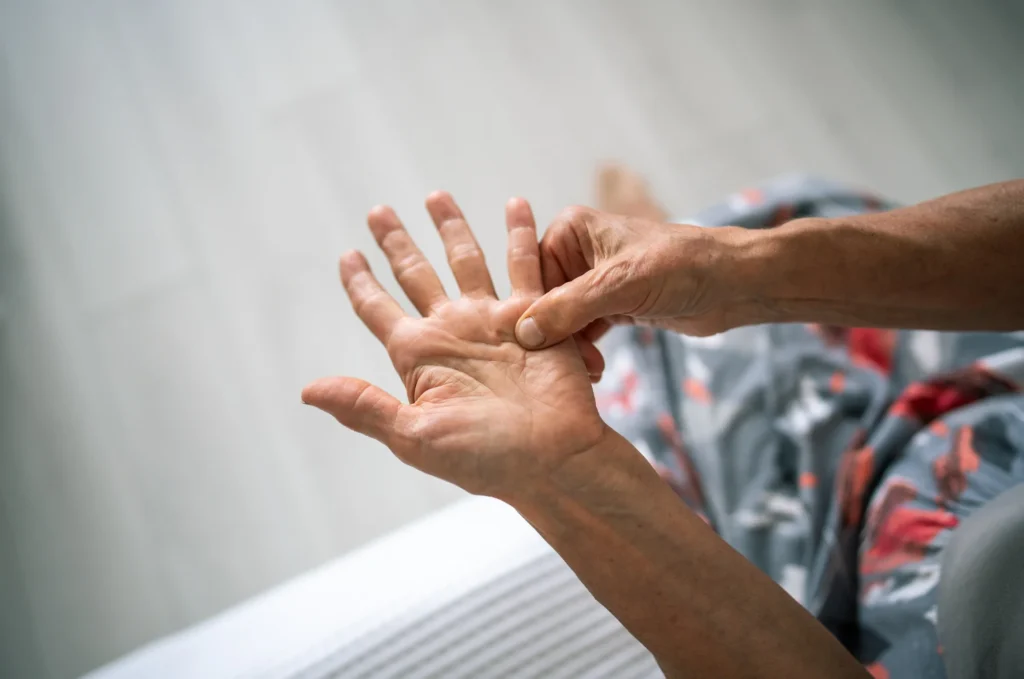
Dupuytren’s disease affects the fascia, the connective tissue beneath the skin of the palm. A contracture is a condition where one or more fingers bend toward the palm and become hard to straighten.
The condition often develops slowly, and some people have nodules or cords for years before they notice major hand limits.
The fascia can thicken and tighten over time. This thickened tissue may form small lumps, firm bands, or cords. The ring and small fingers are often the affected fingers, though symptoms vary by person.
Common signs include:
- A small lump in the palm
- Skin puckering
- Finger stiffness
- Trouble opening the hand fully
- Trouble putting the hand in a pocket or glove
- Trouble gripping objects
Pain can happen, but loss of function is often the bigger issue.
What Causes Dupuytren Contracture?
The exact cause is not fully clear. Common risk factors include family history, male sex, older age, diabetes, smoking, alcohol use, and Northern European ancestry. These factors do not mean someone will always develop Dupuytren’s, but they may raise the chance.
Dupuytren’s may worsen as the tissue tightens over months or years. Forceful stretching, repeated heavy gripping, or hand irritation may increase symptoms for some people. Progression depends on tissue behavior, genetics, hand load, health history, and daily demands.
Early Stage Dupuytren’s Contracture Treatment
Early-stage Dupuytren’s contracture treatment often focuses on education, monitoring, and safe movement. Conservative treatments may include gentle mobility work, changes in hand use, a discussion of splinting, and medical follow-up if finger bending progresses.
A simple way to track change is the tabletop test. Place your palm flat on a table and note whether the fingers can fully straighten. You can also track grip comfort, finger opening, and changes in daily tasks.
What to Expect in Physical Therapy
A PT visit usually starts with a history, movement screen, and hand function testing, which are common parts of hand therapy and rehab when care focuses on movement, strength, and daily function.
The physical therapist may assess finger motion, range of motion, grip strength, pinch strength, pain, skin mobility, and limits in daily tasks.
A plan of care should align with the condition’s stage and the person’s goals. A person with mild, early-stage stiffness needs a different plan than someone recovering after surgery.
A sound wave test, such as ultrasound imaging, may be used by medical providers in select cases, but many cases are assessed through history and physical exam.
Physical therapy and occupational therapy can both support hand function. Physical therapy often focuses on movement, mobility, strength, pain, and return to activity. Dupuytren’s contracture: Occupational Therapy exercises may focus more on daily tasks, adaptive tools, and splint use.
Dupuytren Contracture Physical Therapy Exercises and Stretches
Dupuytren contracture physical therapy exercises should be gentle, specific, and based on the stage of the condition.
Exercises for Dupuytren’s contracture may support range of motion, reduce stiffness, improve hand control, and help the hand tolerate daily activity. At the same time, broader hand therapy exercises may also focus on grip, coordination, and task-based movement.
Dupuytren contracture stretching exercises may help nearby joints and soft tissue move better, but they cannot reliably stretch out the cord itself.
Finger Opening and Closing
Start with the hand relaxed. Slowly open the fingers as much as possible without pulling on the cord, then close the hand into a loose fist. Repeat with steady control, staying within a comfortable range.
This exercise helps keep the fingers active during daily movement. It may also reduce guarding when the hand feels stiff. Stop the motion if it causes sharp pain, swelling, or increased tightness afterward.
Finger Extensions and Tendon Glides
Finger extensions help the hand practice opening. Place the hand on a table and gently try to straighten or lift one finger at a time. Do not press the finger down or force the palm flat.
Tendon glides move the fingers through several positions, such as a straight hand, hook fist, full fist, and flat fist. Hold each position briefly without forcing the joints. These movements may support smoother finger motion during typing, gripping, and hand opening.
Gentle Stretching Without Forcing
Stretching should feel mild and controlled. A low-load stretch is usually better than pulling hard on the finger because the cord is changed connective tissue, not normal muscle tissue that simply needs lengthening.
One option is a gentle palm-open position on a flat surface. Place the hand down softly and let the fingers rest as straight as they comfortably can. Do not push the fingers down or try to flatten the hand by force.
Grip, Pinch, and Task Practice
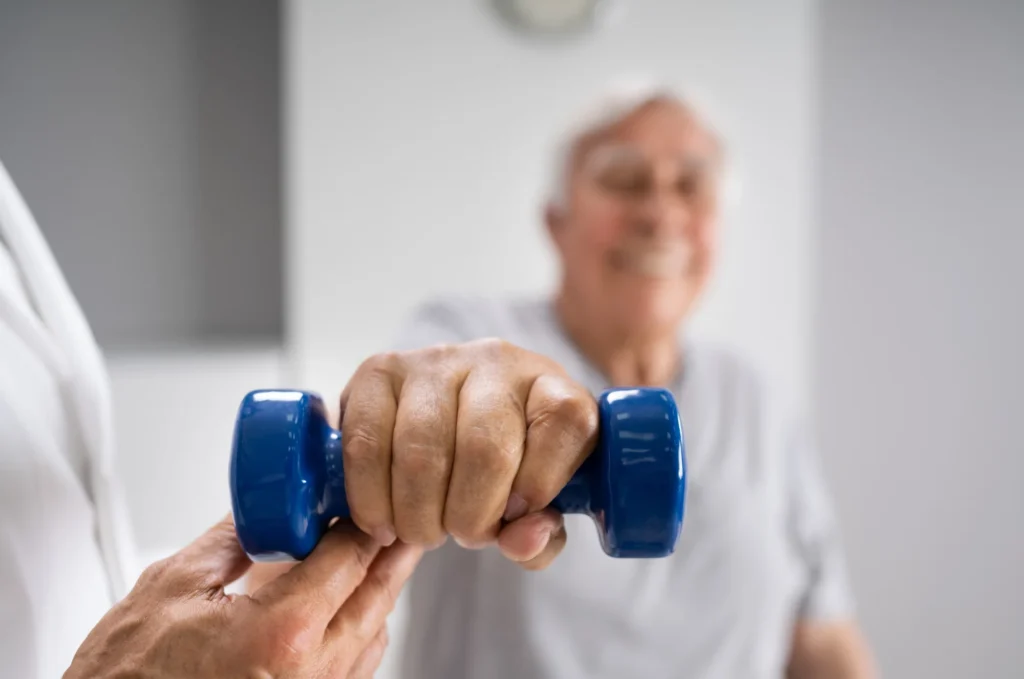
Grip and pinch practice may help improve hand control for daily tasks. Start with light resistance, such as gently squeezing a soft object or practicing a pinch between the thumb and fingers. The goal is control, not maximum force.
Task-based practice may include picking up coins, turning a key, holding a cup, folding a towel, or opening a light container. These movements connect exercise to real hand function. If a task causes strain, the grip, wrist position, or load may need to change.
When to Stop Exercise or Stretching
Stop exercise or stretching if pain increases, the hand feels irritated, or symptoms last longer after the activity. Also, stop if you notice swelling, numbness, sharp pulling, or a clear loss of motion after the exercise.
A physical therapist can help decide whether the issue is contracture, joint stiffness, nerve sensitivity, or another hand problem. This matters because each cause may need a different exercise plan.
What Physical Therapy Cannot Do?
Physical therapy cannot cure Dupuytren’s disease. It cannot remove cords, dissolve nodules, or guarantee that finger bending will stop.
Exercise, stretching, and massage can support movement and comfort. Still, they cannot predictably change the underlying tissue biology, which is why it helps to understand what hand therapy can and cannot do before setting expectations.
If the finger bend increases, conservative care may not be enough. A hand specialist may discuss treatment options such as injections, needle procedures, or surgery. The right choice depends on severity, function, health history, and goals.
Dupuytren’s Contracture Surgery Physical Therapy
Dupuytren’s contracture surgery and physical therapy focus on recovery after a medical procedure. Rehab may address swelling, scar mobility, finger motion, splint use, and gradual return to activity.
After surgery, the hand may feel stiff, swollen, or sensitive. Early therapy may focus on controlling swelling and safe movement. Later therapy may focus on grip strength, scar mobility, hand use, and return to normal tasks.

When to Seek Medical Care
Seek medical care if the finger bend limits daily tasks, the hand cannot lie flat, or symptoms progress. You should also seek care for numbness, severe pain, fast swelling, or signs of infection after a procedure.
A small palm nodule may not need treatment right away. A growing contracture that limits function deserves medical review.
Physical therapy can still play a role before or after medical treatment, depending on the stage, symptoms, recovery goals, and the hand’s daily demands.