


Keith Chan is a New York State-licensed physical therapist at ITNYCPT. He creates custom programs based on each patient’s pain, strength, and daily activity goals.
Key Takeaways
- Knee osteoarthritis has no cure, but symptoms improve with a consistent treatment plan that combines exercise, physical therapy, and weight management.
- Low-impact strengthening exercises – targeting the quadriceps, hamstrings, hip abductors, and calves – are the most effective starting point for reducing knee pain and protecting the joint.
- Avoiding exercise due to pain tends to make knee OA worse, not better, as muscle loss increases stress on the joint.
- A licensed physical therapist builds an individualized program based on your specific strength, movement limitations, and goals, and adjusts it as you progress – which is difficult to replicate with home exercise alone.
- Most people notice reduced knee pain within four to six weeks of regular exercise, with meaningful strength gains developing over eight to twelve weeks.
Does Knee Osteoarthritis Get Better with Treatment?
Yes. Knee OA breaks down cartilage between the bones, causing joint pain, stiffness, and limited movement. Symptoms respond well to a consistent treatment plan. Exercise, physical therapy, and weight management can all reduce pain and improve daily function.
What Is the Most Effective Medication for Arthritis?
Anti-inflammatories like ibuprofen help relieve pain and swelling. But medication alone does not build the muscle strength needed to protect the knee joint. A structured exercise program addresses that gap directly.
What Is the Best Exercise for Arthritic Knees?
Low-impact strengthening exercises work best for most people with knee OA. They build muscle around the joint and reduce stress on worn cartilage. Walking, cycling, and swimming add aerobic benefits without overloading the knee.
Why Exercise Helps Even When Your Knee Hurts
Strong muscles around the knee absorb load and protect the joint during movement. Regular physical activity also reduces inflammation over time. Avoiding exercise weakens those same muscles and often makes knee pain worse.
Exercises for Osteoarthritic Knees Used in Physical Therapy
PT for knee OA uses three types of exercise: range of motion, strengthening, and aerobic activity. The specific exercises chosen depend on your pain level and strength at the time of your evaluation.
Range-of-Motion Exercises
These exercises reduce stiffness and help the knee move freely. For a heel slide, lie flat on the floor, slowly bend your knee by sliding your heel toward you, then return to the start. A gentle hamstring stretch in the same position helps with full extension.
Exercises for Strengthening Knees with Osteoarthritis
These exercises build the muscles that support the knee joint:
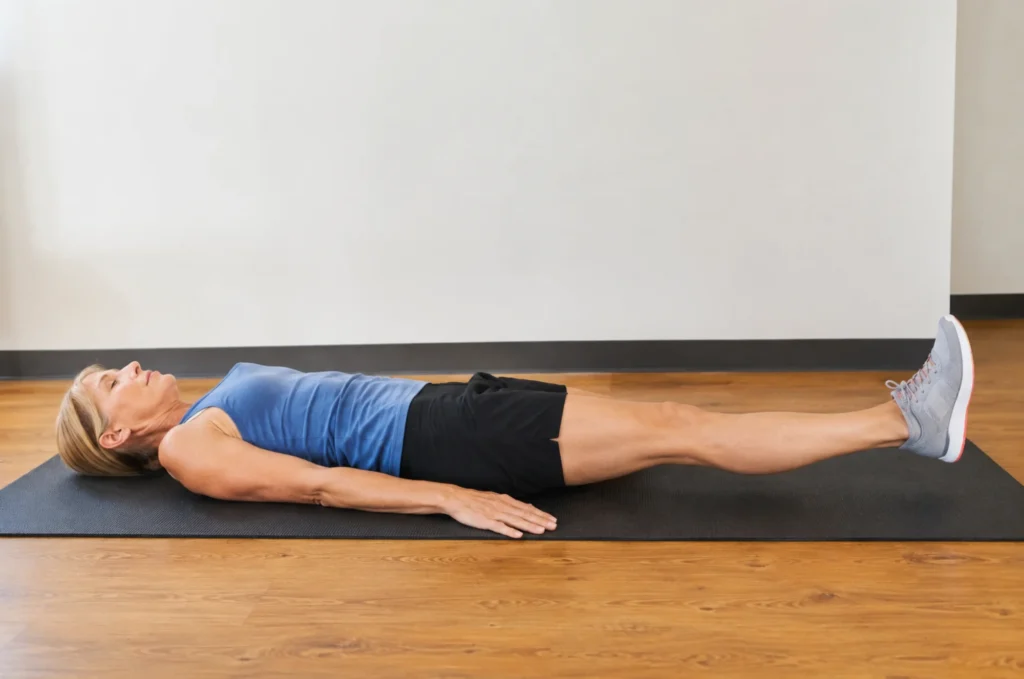
- Quad sets: lie flat on the floor, knee straight, tighten the thigh for 10 seconds
- Short arc quads: place a towel under your knee, straighten the leg, then slowly lower your leg
- Straight leg raise: with one knee bent and foot flat, lift the straight leg, then lower it slowly
- Sit to stand: rise from a chair without using your hands
- Clamshells: lie with knees bent, lift the top knee without rotating the hips
Does Walking Help with Arthritis?
Yes. Walking is one of the best forms of regular physical activity for people with knee OA. It keeps the joint mobile and supports weight management. Flat surfaces and supportive shoes help reduce stress on the knee.
How to Exercise Safely with Knee OA
How Hard Should These Exercises Feel?
Mild discomfort during exercise is normal with knee OA. Sharp pain or swelling after a session means the load was too high. Reduce repetitions and build up slowly.
Knee Arthritis Exercises to Avoid
Running, jumping, deep squats, and full lunges place excessive stress on worn cartilage. These are not safe starting points for most people with active knee OA symptoms. If you run regularly and are also dealing with knee pain, physical therapy for runner’s knee addresses the specific demands of that activity and differs from the approach used for OA.
Knee OA Exercises for Older Adults
Seated or supported exercises are a good starting point when balance is a concern. Chair-based quad sets and seated leg extensions are safe and effective. A healthcare professional can adjust any exercise to fit your current ability.
Physical Therapy for Knee OA vs. Exercising on Your Own
A physical therapist identifies weak muscles, identifies movement problems, and develops a plan tailored to your needs. The program changes as you get stronger, which is hard to manage on your own.
What Happens During a Physical Therapy Session for Knee OA?
The first session includes a movement screen, strength testing, and goal setting. The therapist then builds a plan with specific exercises matched to your presentation.
Sessions may include manual therapy, the Graston Technique for soft-tissue work, or Pilates-based therapeutic exercises for core strength and movement control.
Physical therapy treatment for knee osteoarthritis is delivered one-on-one by a licensed physical therapist. Home exercise guidance is part of every visit to carry progress between sessions.
Hip and Shoulder Osteoarthritis Physical Therapy Exercises
Hip Osteoarthritis Physical Therapy Exercises
Hip OA exercises build strength in the glutes and hip flexors. People commonly use bridges, clamshells, and leg raises. Low-impact aerobic activity, such as cycling, helps maintain hip mobility, and a PT who specializes in hip and knee pain can build a program tailored to your specific presentation.
Shoulder Osteoarthritis Physical Therapy Exercises
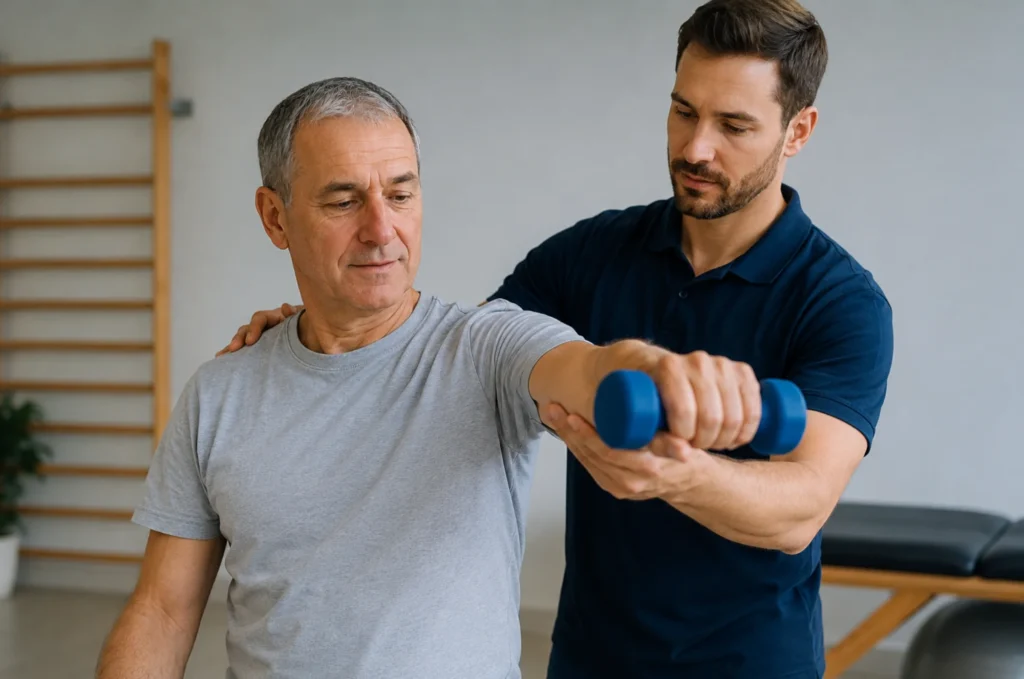
Shoulder OA exercises focus on range of motion and rotator cuff strength. Pendulum swings, wall slides, and rotation exercises are standard starting points. Soft tissue work may also help when stiffness limits movement, and structured physical therapy for shoulder pain follows the same individualized approach used for other joints.
How Long Until You Notice a Difference?
Most people notice less knee pain within four to six weeks. Muscle strength gains take eight to twelve weeks of consistent work. Progress depends on OA severity, consistency, and overall health.
When to See a Physical Therapist
See a healthcare professional if knee pain is limiting your daily activities or if self-treatment exercises for osteoarthritis have not helped. PT is also useful before or after knee surgery to rebuild muscle strength and restore range of motion.