

OI affects bone strength. Safe exercise often starts with controlled, low-impact moves. It should progress based on pain, tolerance, mobility, and fracture history.
ITNYCPT operates in New York City. Keith Chan is a New York State-licensed physical therapist. He serves as the subject-matter expert for this topic. The goal of OI PT is to build safer movement, not to force intensity or follow a generic routine.
Key Takeaways
- Osteogenesis imperfecta physical therapy exercises can help improve strength, balance, posture, walking ability, and daily function when they are adapted to fracture risk and medical history.
- OI PT should focus on controlled, low-impact movements rather than high-force exercises, jumping, contact sports, or fast resistance work.
- Safe exercise options may include seated marching, supported sit-to-stand practice, wall push-ups, light band rows, balance drills, gentle mobility work, and low-impact cardio.
- Adults and children with OI need different exercise plans based on age, goals, prior fractures, pain level, mobility, and daily activity needs.
- Exercise should stop if sharp pain, new bone pain, swelling, bruising, deformity, or changes in walking occur, and medical guidance may be needed.
Why OI Exercise Needs Precautions
OI exercise needs care. Bones can break more easily. Joints may move too far. Pain or fatigue can change what a safe day is from day to day. Sudden twisting, jumping, heavy resistance, contact, or uncontrolled movements can increase the risk of injury.
Safe physical therapy usually focuses on slow movements, stable positions, light resistance, balance support, and careful adjustments to repetitions, range of motion, and rest periods.
Osteogenesis Imperfecta Physical Therapy Treatment and Interventions
A PT evaluation usually starts with health history, fracture history, movement screening, strength testing, balance checks, and goal setting. The plan of care may include therapeutic exercise, walking practice, home exercise, education, and reassessment over time.
Readers comparing rare-condition rehab topics may also find this guide to Guillain-Barré syndrome physical therapy helpful.
Pilates-based therapy exercises may help improve core strength, control, and mobility. They may also help you return to activity with safe movement changes.
Common exercise categories may include:
- Gentle strength exercises, such as seated marching, sit-to-stand practice from a safe height, wall push-ups, light band rows, and heel raises with support.
- Balance and walking drills, such as weight shifts, supported single-leg stance, slow step taps, and gait practice with a stable surface nearby.
- Core and posture control, such as pelvic tilts, seated posture holds, modified bridges, dead bug variations, and breathing with abdominal control.
- Stretching and range of motion, such as gentle ankle circles, shoulder mobility, hip range work, and slow spinal mobility within a comfortable range.
- Breathing and low-impact fitness, such as walking, stationary cycling, pool-based movement, or seated cardio when appropriate.
For related examples of gait support and lower-leg control, this guide to physical therapy exercises for foot drop explains how PT may address walking mechanics in another movement-related condition.
Manual therapy may help with comfort, joint mobility, or soft-tissue symptoms in some cases. It should be gentle and tailored to each person. Graston Technique is a recognized soft-tissue tool. It may not suit everyone with OI.
Pressure tolerance and bruising risk can vary. The main part of care usually remains safe movement, education, and gradual exercise progression.

OI Physical Therapy Precautions
OI PT should avoid exercises that create high force, poor control, or sudden impact. Key precautions include:
- Contact sports: Pushing, tackling, or collisions can increase the risk of falls and fractures.
- Jumping and high impact: Running, trampolines, and repeated landing drills may place too much force on fragile bones.
- Heavy or fast resistance: Heavy lifting and explosive movements can strain bones and joints.
- Unsafe pain signals: Sharp pain, new bone pain, swelling, bruising, or changes in walking should stop the exercise and prompt medical guidance.
OI Adults and Children
Osteogenesis Imperfecta Adults
Adults with osteogenesis imperfecta may need exercise plans that support work tasks, home activities, joint protection, and long-term independence. Adult plans may focus on strength, posture, fall prevention, walking tolerance, and pain control. Prior fractures and daily workload can affect what exercises fit best.
Safe Exercises for Children With OI
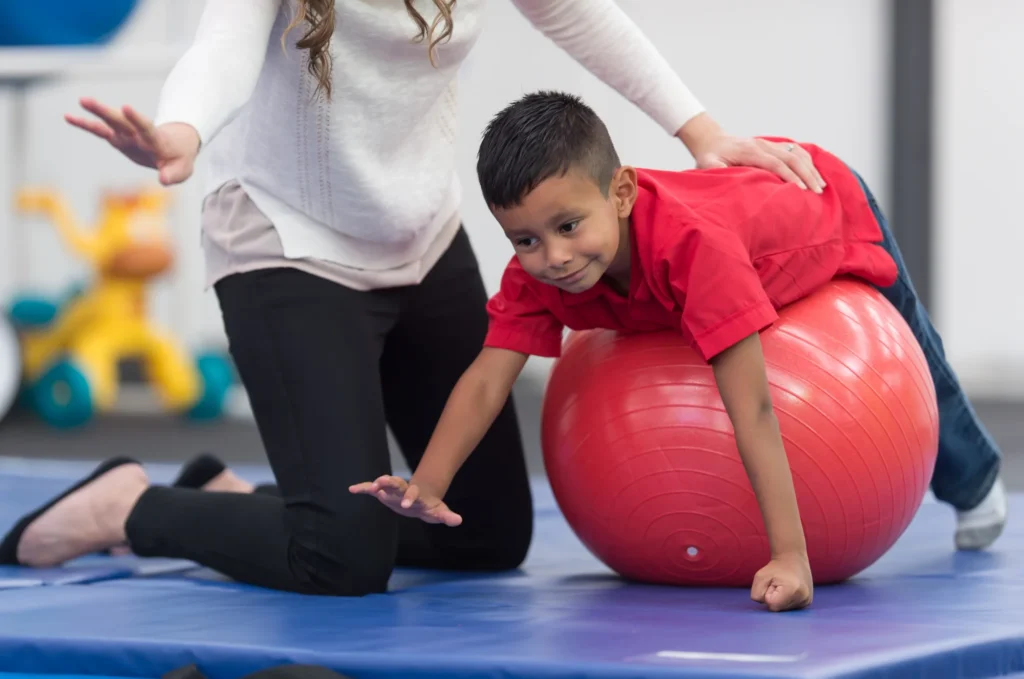
Children with OI may benefit from low-impact movement, supervised strengthening, balance practice, and adapted physical education, similar to how pediatric PT may adapt movement goals in Down syndrome physical therapy treatment.
Safe options may include swimming, supported walking, seated marching, gentle resistance band exercises, and controlled sit-to-stand practice, when approved by the care team. The goal is to build strength and confidence without jumping, collisions, or an avoidable risk of fracture.
School and Activity Modifications
School activities may need to be changed to reduce the risk of collisions, jumping, or falls. A child may still participate in movement through modified games, swimming, walking, or controlled strengthening. The best plan protects safety while keeping the child involved, where possible.
Common Misunderstandings About OI PT
- Can You Stretch With OI? Some people with OI can stretch, but stretching should be gentle and controlled. Aggressive stretching may irritate joints or place stress on fragile areas. Range-of-motion work often works best when it improves comfort and function without forcing movement.
- Can Massage Help OI? Massage may help with some soft-tissue discomfort, but it does not change bone fragility. Pressure should be light and adapted to bruising risk, pain sensitivity, and medical history. It should not replace strengthening, balance work, or medical care.
- Should Exercise Cause Pain? Exercise should not cause sharp pain, new bone pain, or lasting increases in symptoms. Mild muscle effort may be expected during strengthening, but pain that changes movement is different. Patients should report unusual symptoms before progressing.
When to Seek Medical Care
Seek medical care for new pain after movement, swelling, bruising, deformity, loss of function, or pain that makes weight bearing difficult.
Breathing symptoms, chest pain, or sudden severe discomfort need urgent evaluation. OI exercise should support safe movement, and medical guidance is important when symptoms suggest possible injury.