

Written by the clinical team at In Touch NYC Physical Therapy and reviewed by Keith Chan, New York State-licensed physical therapist. Last updated June 2026.
At In Touch NYC Physical Therapy, an outpatient clinic in New York City, you get one-on-one sessions. A New York State-licensed physical therapist leads each session.
Keith Chan, a New York State-licensed physical therapist and the subject-matter expert behind this guide, has worked with a wide range of patients for more than 10 years.
Key Takeaways
- Physical therapy does not cure pectus excavatum or move the sternum, but it can improve posture, breathing, and strength, which often eases symptoms in mild to moderate cases.
- A consistent exercise routine works best when done three to five times a week, with daily posture awareness, since habit matters more than intensity.
- Core exercises include chest and shoulder stretches, back strengthening, and breathing drills, most of which you can do at home with little or no equipment.
- Surgery, usually the Nuss procedure, is considered only when the condition is severe, presses on the heart or lungs, or affects quality of life.
- Results vary with severity, age, consistency, and overall health, so a licensed physical therapist should tailor the plan and confirm which exercises are appropriate for your case.
Can Physical Therapy Fix Pectus Excavatum?
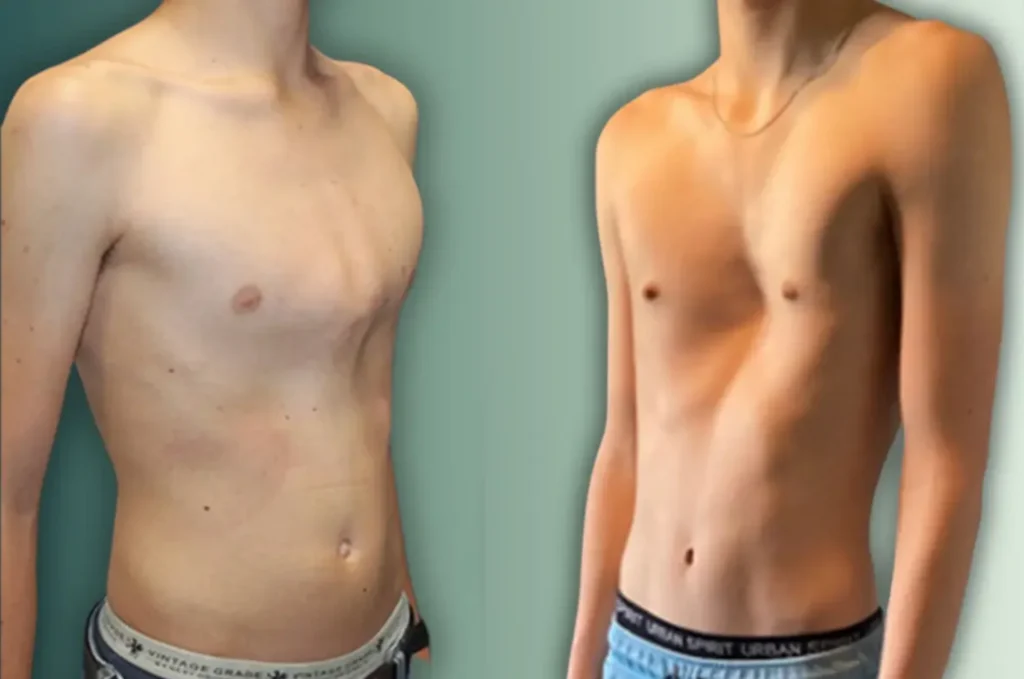
No. Physical therapy does not cure pectus excavatum. Exercise cannot push the sternum back into place, and the condition does not go away on its own. It usually stays stable or slowly deepens as the body grows.
What therapy does is strengthen the muscles around the chest, support posture, and improve breathing, which can reduce symptoms such as chest pain or shortness of breath in milder cases of pectus.
How to Fix Pectus Excavatum Without Surgery
You cannot fully correct a sunken chest without surgery, but conservative care can lower its impact. Non-surgical options work best for mild to moderate cases and often start with physical therapy and posture work.
Bracing is used mainly for pectus carinatum, the opposite condition in which the chest sticks out, whereas a vacuum bell device can lift the sternum over time. A therapist can review your case and explain which approach fits before any surgical intervention is considered.
What Physical Therapy Helps With
Physical therapy targets three areas that pectus excavatum commonly affects. A licensed physical therapist screens each one during the evaluation and builds the plan around your needs. The work usually centers on posture, breathing, and strength.
Posture and Alignment
A sunken chest often pulls the shoulders forward and rounds the upper back. Posture correction strengthens the muscles that hold you upright and balances the body’s front and back.
Better alignment makes the chest shape less noticeable and eases strain on the neck and back; Pilates-based work is one approach that can help relieve back pain. It can also reduce the flared ribs that sometimes come with the condition.
Breathing and Lung Function
When the sternum sits low, it can crowd the lungs and limit deep breaths. Targeted breathing exercises retrain the diaphragm to work fully, which supports lung function over time. Better breathing can make activity feel easier and build stamina. This matters most for people who notice shortness of breath during exercise.
Strength and Mobility
Weak chest, back, and core muscles let posture collapse further. Therapeutic exercise builds strength in these groups and keeps the ribcage mobile. As strength improves, the upper-body muscles provide the chest wall with more support. A therapist adjusts the load as you progress, since the right exercises change across phases of rehab.
Pectus Excavatum Physical Therapy Exercises
These exercises strengthen the chest, back, and core while opening the chest wall. They draw on routines used in clinics and post-surgical care, similar to those in a structured program for pectus recovery.
Check with a physical therapist before you start, since the right mix depends on your case. Do them slowly and with control, and stop if you feel chest pain. The rep counts below are a general starting point, not a prescription.
Chest and Shoulder Stretches
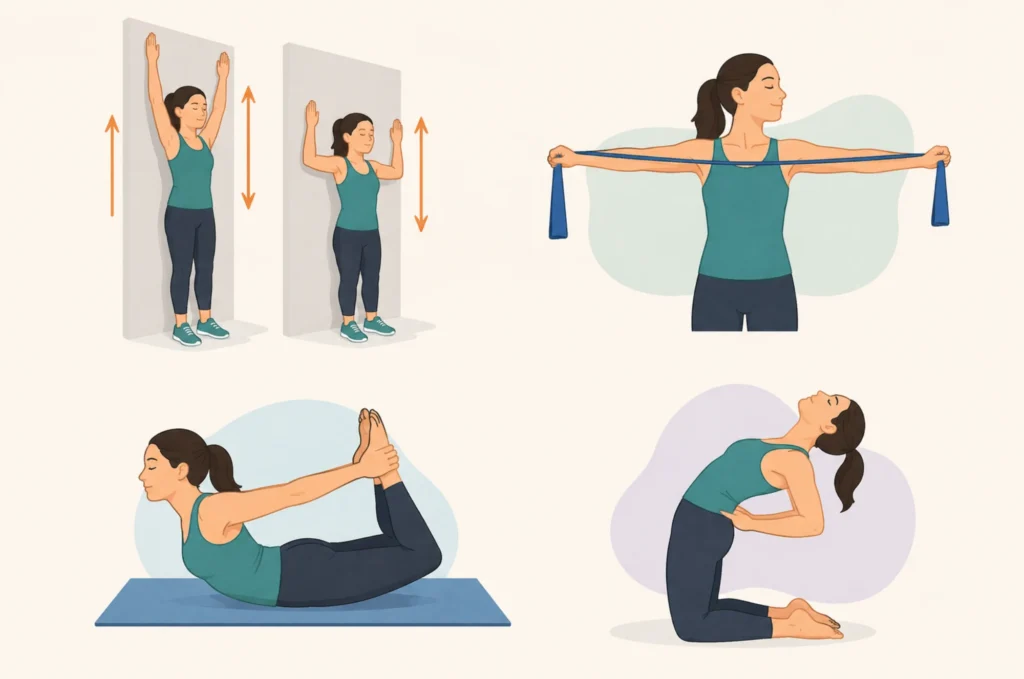
These moves open the chest and loosen the shoulders:
- Arm sliders: Stand with your back against a wall, raise your arms overhead, and slide them up and down while keeping contact with the wall. Repeat 10 to 15 times.
- T-stretch: Hold a light resistance band and open your arms into a T shape to stretch the chest muscles. Hold 15 to 30 seconds, repeat 3 times.
- Bow pose: Lie on your stomach, reach back to grab your ankles, and lift to open the front of the body. Hold 15 to 30 seconds, repeat 3 times.
- Camel pose: Kneel upright, place your hands on the back of your hips, and lean back gently to stretch the front of the chest and abdomen. Hold for about 15 seconds; repeat 3 times.
Back and Postural Strengthening
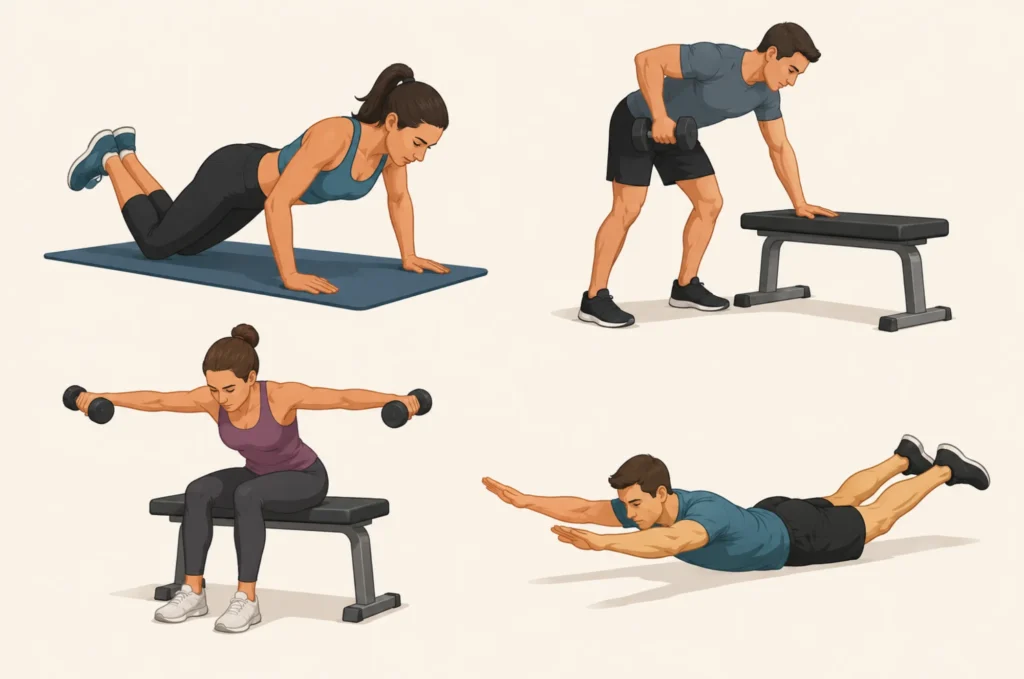
These exercises build the muscles that support good posture:
- Push-ups: Strengthen the chest muscles. Start on your knees if full push-ups feel too hard. Repeat 10 to 15 times.
- Dumbbell row: Bend forward at the hips with a flat back and pull light weights toward your ribs to work the upper back. Repeat 15 times.
- Rear delt fly: Sit and lean forward slightly, then lift light dumbbells out to the sides while squeezing the shoulder blades. Repeat 15 times.
- Superman: Lie face down and lift your arms and legs together to engage the back muscles. Hold for 3 seconds, repeat 10 times.
Breathing Exercises for Pectus Excavatum
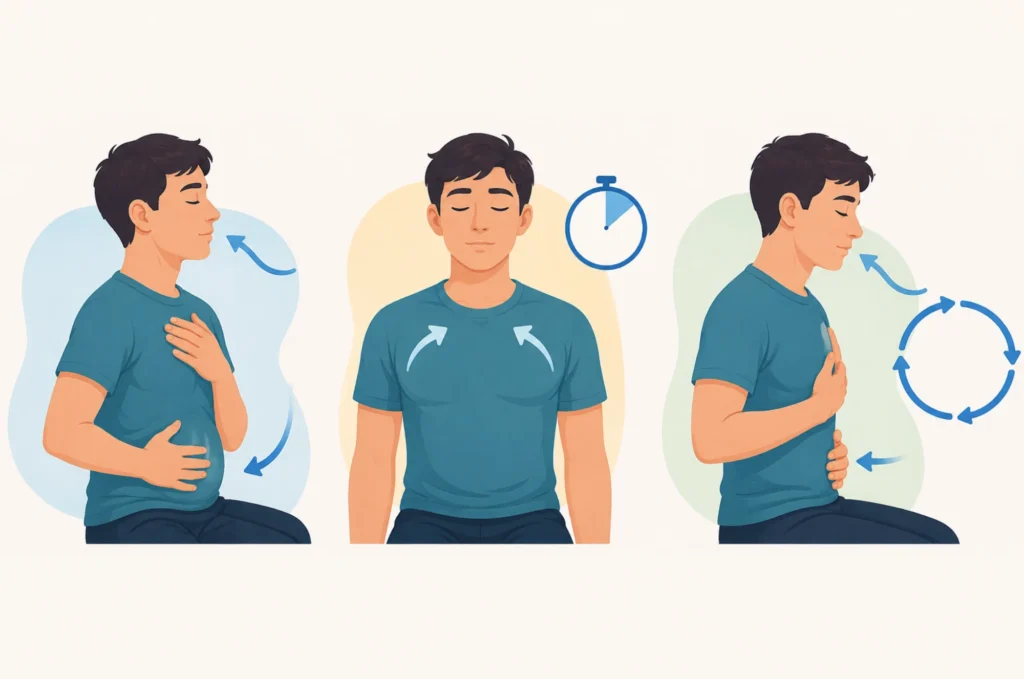
These drills train fuller, deeper breaths:
- Diaphragmatic breathing: Breathe down into your belly rather than your upper chest.
- Deep breath holds: Inhale fully, hold for a few seconds, then exhale slowly. Repeat about 20 times.
Sunken Chest Exercises You Can Do at Home
Most chest exercises for the sunken chest require little or no equipment. Arm sliders, push-ups, breathing drills, and a seated twist for spine mobility fit into a short routine you can do at home on a mat.
A resistance band and a pair of light dumbbells add options once you build a base. Keep the movements steady and focus on form rather than speed.
How Often to Do Pectus Chest Exercises
Do strengthening and stretching exercises three to five times a week. Practice posture awareness every day, since posture correction only helps when it becomes a habit.
Consistency matters more than intensity, and short daily sessions tend to work better than occasional long ones. A therapist can set a pace that fits your fitness level and goals.
Pectus Excavatum Treatment Exercises Around Surgery
Physical therapy supports recovery both before and after surgery. Before the Nuss procedure, exercises build strength and posture, so you start rehab from a stronger base.
After surgery, a structured program for pectus recovery moves through clear phases, starting with gentle shoulder movement, posture correction, and breathing in the first weeks.
Around six weeks, strengthening with bands and light weights is added, and a licensed therapist guides each stage to protect healing.
When Surgery May Be Recommended
Surgery becomes an option when pectus excavatum is severe or causes real problems. Doctors consider surgical intervention when the sunken sternum presses on the heart or lungs, when breathing is hard, or when the chest shape affects quality of life.
The Nuss procedure is the most common repair and places a curved bar behind the sternum to lift it. Mild cases rarely need surgery and often respond well to exercise and posture work.
What Affects Your Results
Results vary from person to person, and several factors shape them. The severity of the chest wall deformity, your age, and how consistent you are all play a part, along with your overall health and activity level.
Younger bodies tend to respond better, and steady effort over the long term usually beats short bursts. Treating pectus excavatum with exercise can improve overall posture and comfort, but it will not change a deep, severe dip.
Working With a Licensed Physical Therapist
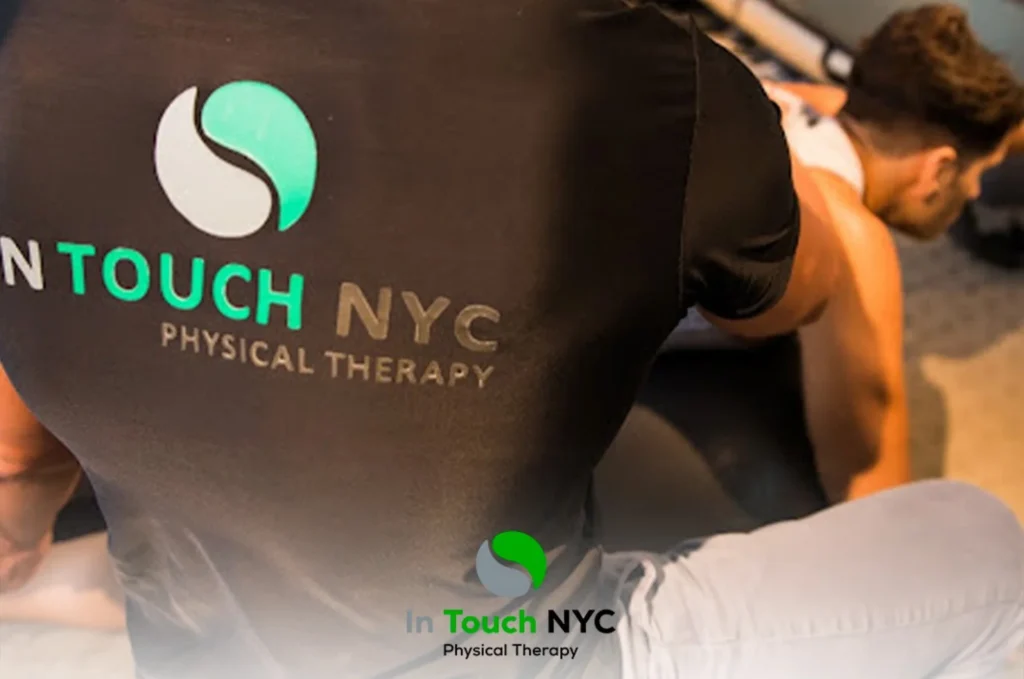
A licensed physical therapist designs a plan tailored to your body, symptoms, and goals. The process usually starts with an evaluation that covers your history, a movement screen, testing, and goal setting, followed by an individualized plan of care that progresses over time.
Care may include therapeutic exercise, physical therapy modalities such as manual therapy and the Graston Technique when soft-tissue work is needed, with regular reassessment and home exercises to carry progress between visits.
At In Touch NYC Physical Therapy, sessions are one-on-one and blend traditional physical therapy with Pilates-based exercises, including reformer Pilates, to support core strength, control, and return to activity.
Keith Chan brings more than 10 years of clinical experience and is a Graston Technique provider, which helps when soft-tissue restrictions limit chest or shoulder movement.
A clinician can tell you which exercises suit your case, since the wrong choices can make a severe sunken chest look worse. Before starting any new exercise program, check with your physician or physical therapist first.