


Keith Chan is a New York State-licensed physical therapist at ITNYCPT in New York City. He treats patients with migraines and other musculoskeletal headaches. The sections below explain what his treatment includes and who benefits most.
Key Takeaways
- Physical therapy can help with migraine when neck tension, poor posture, or muscle tightness contributes to the attacks, but it works best alongside medical treatment rather than in place of it.
- People with frequent tension-type or cervicogenic headaches tend to see more benefit from physical therapy than those with classic migraine driven mainly by neurological triggers.
- Treatment typically combines in-clinic manual therapy, such as cervical mobilization or the Graston Technique, with a home exercise program that maintains progress between sessions.
- Most treatment plans run 6 to 8 sessions before a noticeable change appears, though the timeline depends on how long symptoms have been present and how consistently the home program is followed.
- Physical therapy has limited benefit for infrequent classic migraine with clear neurological triggers, and any new or worsening symptoms should be discussed with a physician.
Can Physical Therapy Help Migraines
Yes. Physical therapy can help with migraines when neck tension, poor posture, or muscle tightness plays a role in triggering attacks. Physical therapists assess posture, neck movement, and muscle tightness to determine whether the pain originates from muscles and joints.
They also check if it comes from the brain alone. Migraine medication acts on the central nervous system. Physical therapy treatment works on the muscles and joints around it, which is why many patients use both approaches together.
Not every case of migraine responds the same way. People with frequent tension-type headaches or neck-related symptoms tend to see more benefit from PT for migraines than people with classic migraine driven mainly by neurological triggers.
Physical Therapy for Neck Pain and Migraines
Neck pain often appears before or during a migraine attack. Tight muscles at the base of the skull and in the upper trapezius can cause referred pain radiating into the head, and stiff joints in the upper neck can do the same.
Physical therapy for neck pain and migraines addresses both issues directly, using manual therapy and targeted exercise to restore normal movement and reduce that referred pain.
Common Physical Therapy Exercises for Headaches and Migraines
Physical therapy exercises for headaches typically combine hands-on treatment performed in the clinic with a home program the patient continues between visits.
The in-clinic work reduces muscle tightness and restores joint movement in the neck and upper back. The home program maintains those gains and builds strength that supports the neck over time. A typical treatment plan might include:
- Manual therapy to reduce muscle tension and improve joint mobility
- Postural correction exercises for the neck and shoulders
- Home stretches targeting trigger points in the upper back
- Breathing and relaxation techniques for stress management
Manual Therapy and Cervical Mobilization
Manual therapy includes soft tissue work and joint mobilization performed by the physical therapist. Cervical mobilization gently moves the joints of the upper neck to improve range of motion and reduce stiffness.
Some physical therapists, including Keith Chan, use the Graston Technique. It is an instrument-assisted soft tissue method.
It helps treat muscle tightness and trigger points. These issues can cause headache pain. Dry needling is another tool some physical therapists use for trigger points, though its use depends on the individual case and state scope of practice.
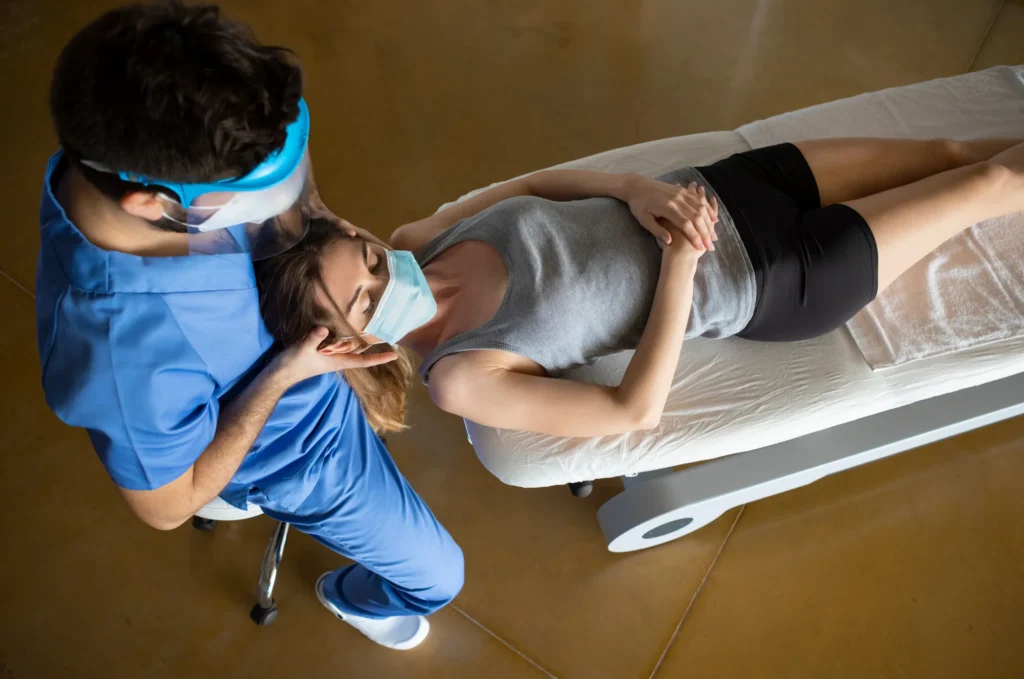
Postural Correction and Relaxation Techniques
Poor posture, particularly a forward head position from long hours at a desk or looking down at a phone, adds strain to the neck and upper back. Postural correction uses targeted exercises to improve postural alignment of the head and shoulders during daily activity.
Relaxation techniques, including controlled breathing and muscle release drills, support stress management and help lower overall muscle tension that can contribute to headache pain.
Physical Therapy for Migraine Relief: Who Benefits Most
Physical therapy for migraine relief works best for people whose headaches are linked to neck pain, posture, or muscle tension. People with infrequent, classic migraines and few muscle or joint symptoms may see less benefit. Their triggers are often less physical.
Health history, stress levels, sleep quality, and job demands, such as long hours at a computer, can all affect how well physical therapy works for a given person.
Cervicogenic and Tension-Type Migraine
Cervicogenic headache is one of several types of headaches that originate in the neck itself, with pain referred up into the head. Tension-type migraine often involves muscle tightness in the neck and shoulders.
Among the types of headaches physical therapists commonly treat, both of these respond well to physical therapy because the underlying problem is mechanical rather than purely neurological.
What to Expect from a Physical Therapist for Headaches
A first visit with a physical therapist for headaches starts with a full evaluation. This includes a review of migraine and headache history, a movement screen of the neck and shoulders, strength and posture testing, and discussion of the patient’s goals.
From that evaluation, physical therapists develop an individualized treatment plan that combines manual therapy with a home exercise program, aimed at practical headache relief rather than a one-size-fits-all routine.
A licensed physical therapist delivers care one-on-one. Some treatment plans use Pilates-based exercises to relieve neck pain and improve core strength, control, and mobility. This can support posture and help reduce neck strain over time. Progress is checked at regular intervals, and the plan is adjusted as symptoms change.
How Long Physical Therapy for Migraines Typically Takes
Most treatment plans run 6 to 8 sessions before a noticeable change appears, though this depends on the person and how long the symptoms have been present.
Some patients notice a difference within a few visits. Others need a longer course of care, particularly when muscle tension and postural habits have built up over years. Consistency with the home program between sessions affects how quickly results appear.

Risks and Limitations of Physical Therapy for Migraines
Physical therapy is not equally effective for everyone. Some people have migraine attacks triggered by physical activity, and in that group, certain exercises can worsen symptoms rather than improve them. Physical therapy has limited benefit for classic migraines that happen about once a month.
This is especially true when clear neurological triggers are present. These cases involve less muscle and joint involvement. A physical therapist should screen for these patterns before starting a treatment plan, and any new or worsening symptoms should be discussed with a physician.
How to Find the Right Physical Therapist for Migraine Care
Finding the right physical therapist starts with confirming that they hold a New York State license and have experience treating neck pain or headache conditions. Ask about their approach to evaluation, what manual therapy techniques they use, and how they track progress over time.
Insurance coverage varies by plan, so it helps to ask about deductibles, copays, and whether the practice is in-network before starting care. A therapist who explains results clearly and changes the plan based on them is a good sign.