


This disease affects movement, balance, walking, posture, and daily tasks. Physical therapy for Parkinson’s disease often plays a key role in care. It does not stop the disease, but it can help people move more safely.
It can also help them stay active and keep functioning longer. This happens through targeted exercise, practice, and steady progress over time.
For this article, Keith Chan is a New York State licensed physical therapist. He is also a subject matter expert for ITNYCPT in New York City. He provides clinical context on how outpatient PT is commonly used here.
Key Takeaways
- Physical therapy for Parkinson’s disease helps address walking, balance, posture, transfers, and other daily movement problems, but it does not stop the disease itself.
- A strong PT plan often includes gait training, balance work, strength and flexibility exercises, aerobic exercise, and home practice based on the person’s symptoms and goals.
- Home exercise matters because progress depends on regular repetition between visits, and simple routines are often easier to maintain than long programs.
- Rehabilitation can start early, and many people benefit from an initial phase of regular visits followed by home exercise and periodic reassessment as symptoms change.
- The right physical therapist should understand neurologic rehab, clearly explain the purpose of each exercise, and adjust the plan as the disease stage and daily needs change.
How Physical Therapy Helps Parkinson’s Disease
Parkinson’s is a movement disorder that can affect walking speed, turning, posture, arm swing, transfers, and activities of daily living. Many patients with Parkinson’s also notice stiffness, small movements, balance problems, or freezing episodes.
PT aims to manage symptoms by improving movement quality, confidence, and physical capacity. In practice, that often means better walking mechanics, safer transfers, and support for quality of life.
Physical therapy for Parkinson’s may also help people maintain regular exercise as the disease progresses. Early on, care may focus on movement quality, posture, and consistency of the exercise routine.
Later, PT may spend more time on fall risk, cueing strategies, gait changes, and energy use during daily tasks. Results vary, but a well-built program can support function and help people stay active.
Physical Therapy Approaches for Parkinson’s
There is no single best method for everyone, so Parkinson’s PT treatment usually combines several tools. Common parkinson’s physical therapy interventions include gait training, balance work, transfer practice, flexibility work, resistance training, and aerobic exercise.
The right mix depends on symptoms, goals, health history, fatigue level, and how the person responds over time. Good care is usually evidence-based and adjusted as needs change.
A PT evaluation often starts with a health history, symptom review, and movement screen. The therapist may test walking speed, turning, balance, posture, transfers, and task performance, then set clear goals with the patient. That process helps shape a treatment plan and gives a baseline for follow-up visits.
In outpatient care, you work one-on-one with a licensed physical therapist. The therapist can watch you closely. This integrative physical therapy approach can support step-by-step progress as the plan evolves.
Some programs also use specific Parkinson’s methods. One example is Lee Silverman Voice Treatment (LSVT BIG, which focuses on larger movement patterns during daily tasks.
A therapist may also use cueing, rhythm, or task-specific practice to improve movement size and timing. Occupational therapy may be added if dressing, grooming, handwriting, or other daily tasks become more difficult.
Physical Therapy Exercises for Parkinson’s Disease
Parkinson’s physical therapy exercises often focus on walking, turning, posture, balance, and getting up from a chair or bed. They may also include reaching, stepping, weight shifting, and dual-task practice.
Many exercise programs combine strength, mobility, and coordination work rather than relying on a single type of activity. The goal is to improve carryover into daily movement, not just performance in the clinic.
A program may include the following:
- Walking drills with bigger steps and better arm swing
- Sit-to-stand practice and transfer training
- Balance tasks, turning drills, and obstacle work
- Stretching for stiffness and resistance training for leg and trunk strength
- Aerobic exercise, such as cycling or treadmill work, when appropriate
Pilates-based therapeutic exercise can also be one option in rehabilitation for parkinson’s disease. It may help with core control, body awareness, posture, and movement quality when used in the right context.
Manual therapy may help when stiffness, pain, or soft-tissue limitations affect movement. It is usually a smaller part of care than exercise and task practice. When soft-tissue work is relevant, some therapists may use recognized tools, such as the Graston Technique, as part of a broader plan.
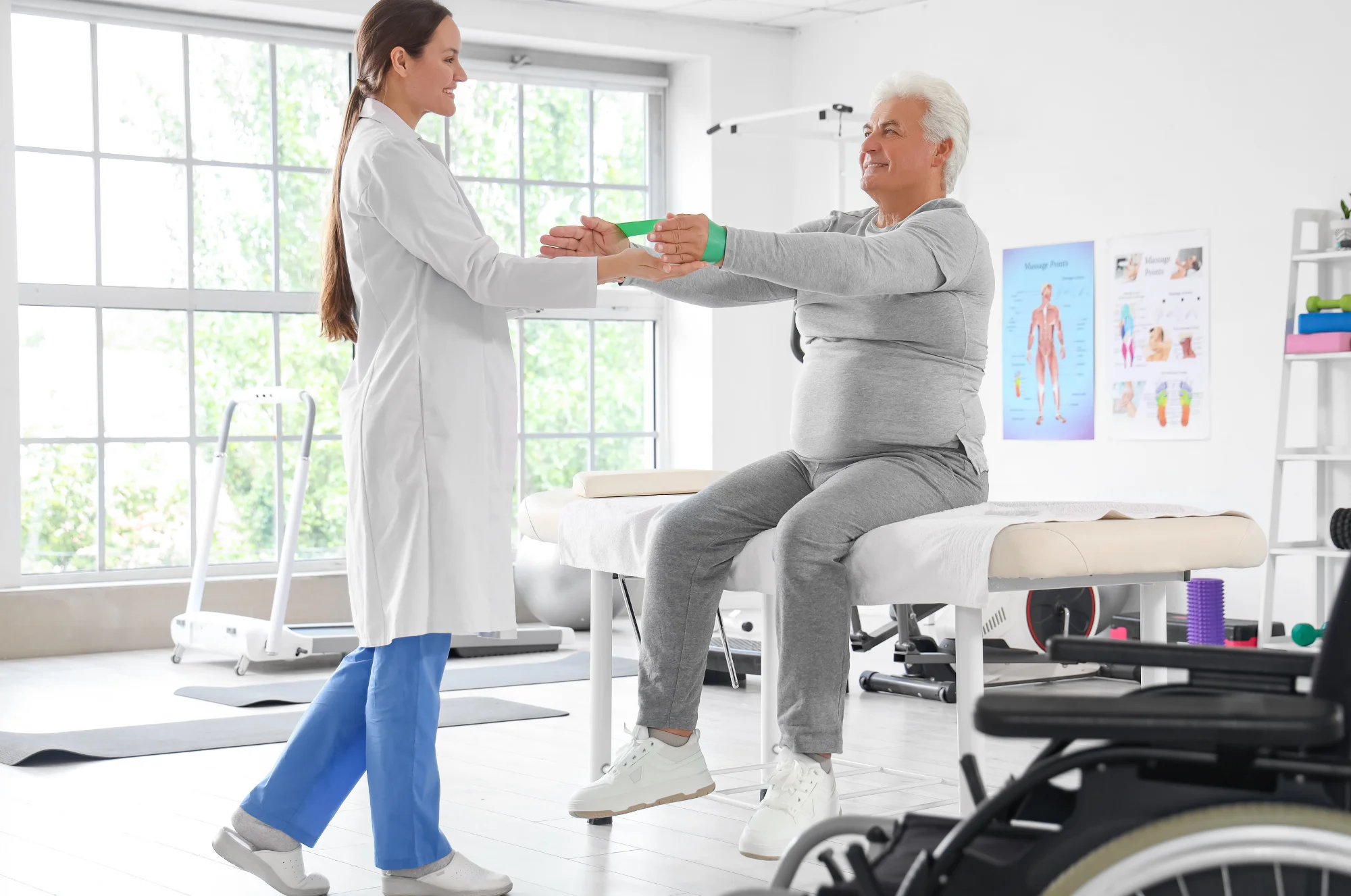
Home Exercise for Parkinson’s Disease
A home program is an important part of physical therapy for Parkinson’s disease because progress depends on regular practice between visits, including at-home exercises that match the person’s symptoms and goals.
The best home plans are short, specific, and built around daily problems such as slow walking, small steps, poor posture, freezing, or trouble getting up from a chair.
Common home exercises should match the person’s symptoms, balance, and stage of the disease. A PT may include:
- Large-step walking practice with a bigger arm swing
- Sit-to-stand drills from a firm chair
- Weight shifting and marching in place near a counter
- Turning practice with slow, deliberate steps
- Posture drills, such as standing tall against a wall
- Reaching exercises to promote bigger movement patterns
- Bed mobility and rolling practice
- Transfer practice for getting in and out of bed or a chair
- Calf, hip flexor, and chest stretching for stiffness
- Gentle resistance training for the legs and trunk
- Aerobic exercise, such as walking, cycling, or step practice, when safe
The plan should stay realistic and easy to repeat. Update it over time so it fits your current ability. This helps prevent the routine from becoming too hard or too long.

Rehabilitation Timeline And Follow-Up
Rehabilitation for parkinson’s disease can start early, even before major mobility problems develop. A common starting point is 1–2 visits per week for about 4–8 weeks, followed by home exercise and periodic rechecks every 1–3 months.
Some people need more frequent follow-up if walking, balance, transfers, or freezing get worse. The timeline depends on symptoms, goals, the stage of the disease, medication response, and overall health.
Choosing a Physical Therapist
A physical therapist for parkinson’s disease should understand neurologic rehab, movement analysis, and the specific challenges seen in Parkinson’s. That includes freezing, small movement patterns, posture changes, and how fatigue or multitasking can affect safety.
It also helps if the therapist can explain why each exercise matters and how to practice it at home. Clear education often improves follow-through.
Useful questions include whether the therapist often works with patients with Parkinson’s, how goals are measured, and how home exercise is updated.
In New York City, people may also want to ask whether care is one-on-one, whether reassessment is built in, and how communication works across visits.
If cost or coverage comes up, basic insurance terms can help. A deductible is what you pay before coverage starts; a copay is a set fee for each visit; and coinsurance is your share after the plan begins paying.
Limits of PT And Related Care
PT can help many people, but it has limits. It cannot cure Parkinson’s, and not every problem responds the same way at every stage of the disease.
Some people improve balance or walking more than others, and progress may slow when symptoms, fatigue, fear of falling, or other health issues become barriers. That does not mean care failed, but it does mean expectations should stay realistic.
Related services can also matter. Occupational therapy helps with hand use, home setup, and activities of daily living. Some people also benefit from tai chi, supervised group exercise, or community programs supported by groups such as the Parkinson’s Foundation.