

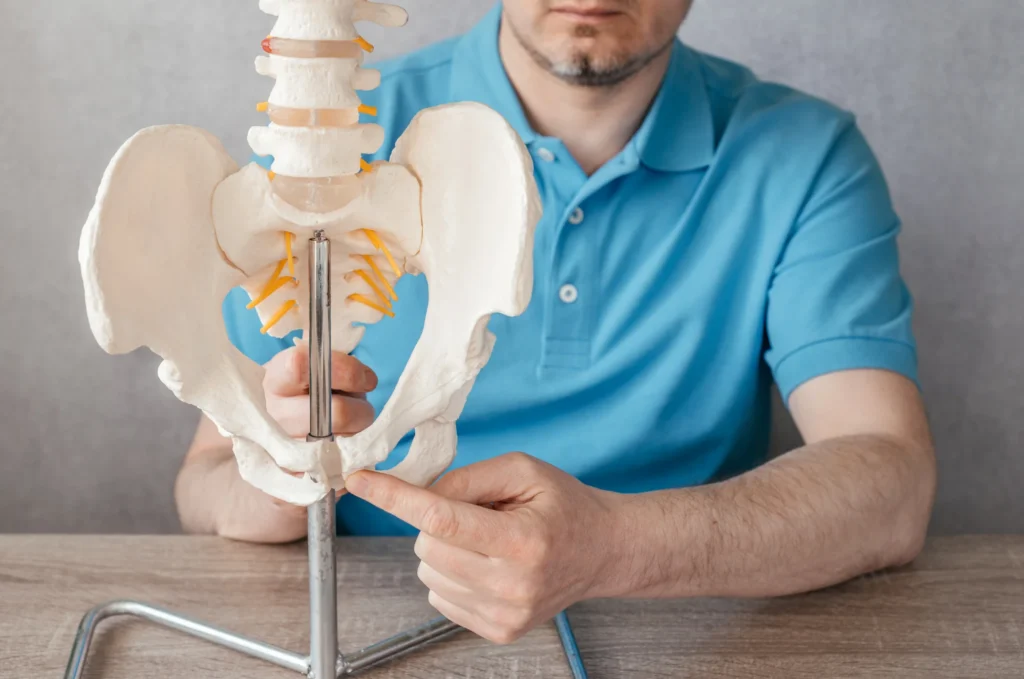
Pelvic pain at the front of the pelvis is disruptive and treatable. Physical therapy for pubic symphysis dysfunction targets the muscle weakness driving the pain, not just the symptoms.
Keith Chan, a New York State-licensed physical therapist at ITNYCPT in New York City, works with patients managing SPD at all severity levels.
Key Takeaways
- Pubic symphysis dysfunction causes pain at the front of the pelvis and worsens with weight-bearing activity, especially movements that load one leg at a time.
- Physical therapy addresses SPD by strengthening the pelvic floor, glutes, and hip muscles—not by treating the joint directly—which reduces mechanical stress on the pubic symphysis over time.
- Certain exercises and stretches can worsen SPD; single-leg loading, wide-stance movements, and stretches that force leg separation should be avoided until the pelvis is stable enough to tolerate them.
- Relaxin, the hormone that loosens ligaments during pregnancy, can stay elevated for months postpartum, meaning the pelvis may remain vulnerable well after delivery — a factor a PT accounts for when planning treatment.
- SPD responds better to physical therapy when addressed early; the longer it goes unmanaged, the more compensatory movement patterns develop, and the longer recovery tends to take.
How to Get Rid of Symphysis Pubis Dysfunction
Treatment for symphysis pubis dysfunction SPD combines physical therapy, activity changes, and often a pelvic support belt. PT rebuilds the muscle support the pubic symphysis joint needs to handle load without pain.
Does SPD Go Away on Its Own?
Mild cases sometimes improve with rest. Moderate to severe cases tend to persist without treatment. The underlying problem — poor support around an unstable joint — does not resolve on its own.
What Is Pubic Symphysis Dysfunction?
Pubic symphysis dysfunction (SPD) is a condition where the joint at the front of the pelvis becomes painful and unstable. That joint — the pubic symphysis — connects the two pubic bones using cartilage and ligaments. When those ligaments loosen or the surrounding muscles weaken, the joint moves more than it should, creating friction and pain.
It is also called pregnancy-related pelvic girdle pain, though SPD is not exclusive to pregnancy. Athletes, people with osteoarthritis, and those with a history of pelvic injury can develop it too.
Most pregnant patients notice symptoms of SPD between weeks 18 and 24, as added body weight increases the load on the pelvis. Outside of pregnancy, causes include repetitive stress from high-impact training, groin injuries, or inflammatory conditions like osteitis pubis.
What Does Pubic Symphysis Pain Feel Like?
Pain is felt as a sharp or deep ache just above the groin. Some people hear clicking from the pelvis. Others feel like the pelvis is shifting with each step.
Pain Patterns That Vary by Activity
SPD pain worsens with walking, climbing stairs, rolling over in bed, and getting in and out of a car. Single-leg activity is often the worst trigger.
Pubic Symphysis Pain on One Side
One-sided pain often means one side of the pelvis is absorbing more load. A physical therapist identifies this during assessment and adjusts treatment accordingly.
How Physical Therapy Addresses SPD
PT treats the muscles and movement patterns around the pubic symphysis joint, not the joint itself.
How SPD Is Assessed in Physical Therapy
A physical therapist reviews your symptoms and tests joint mobility, hip strength, and pelvic floor function. The Active Straight Leg Raise test checks how well the pelvis manages single-leg activity.
Pelvic Floor and Core Stabilization
The pelvic floor muscles work with the deep core to compress and stabilize the pelvis. When pelvic floor coordination is poor, the pubic symphysis absorbs excess stress. PT trains these muscles to activate correctly during movement, using pelvic floor physical therapy tools and techniques tailored to each patient’s presentation.
Hip Strengthening and Load Distribution
Weak glutes shift the load onto the front of the pelvis. Strengthening them helps reduce strain on the pubic symphysis joint.
Postural Correction and Movement Education
Pelvic tilting during pregnancy increases pressure on the pubic area. A PT teaches you to find a neutral pelvic position and keep it during daily tasks.
Manual Therapy for Pain and Muscle Tension
Soft tissue work and joint mobilization help reduce guarding. Keith Chan is trained in the Graston Technique, which can help reduce pain from tight muscles around the pelvis.
Physical Therapy Exercises for Pubic Symphysis Pain
Pubic symphysis pain exercises focus on stability. The symphysis pubis exercises below are commonly used in PT. Your physical therapist will confirm which ones are right for you.
- Glute bridges: Lift hips slowly from your back, pause, lower with control.
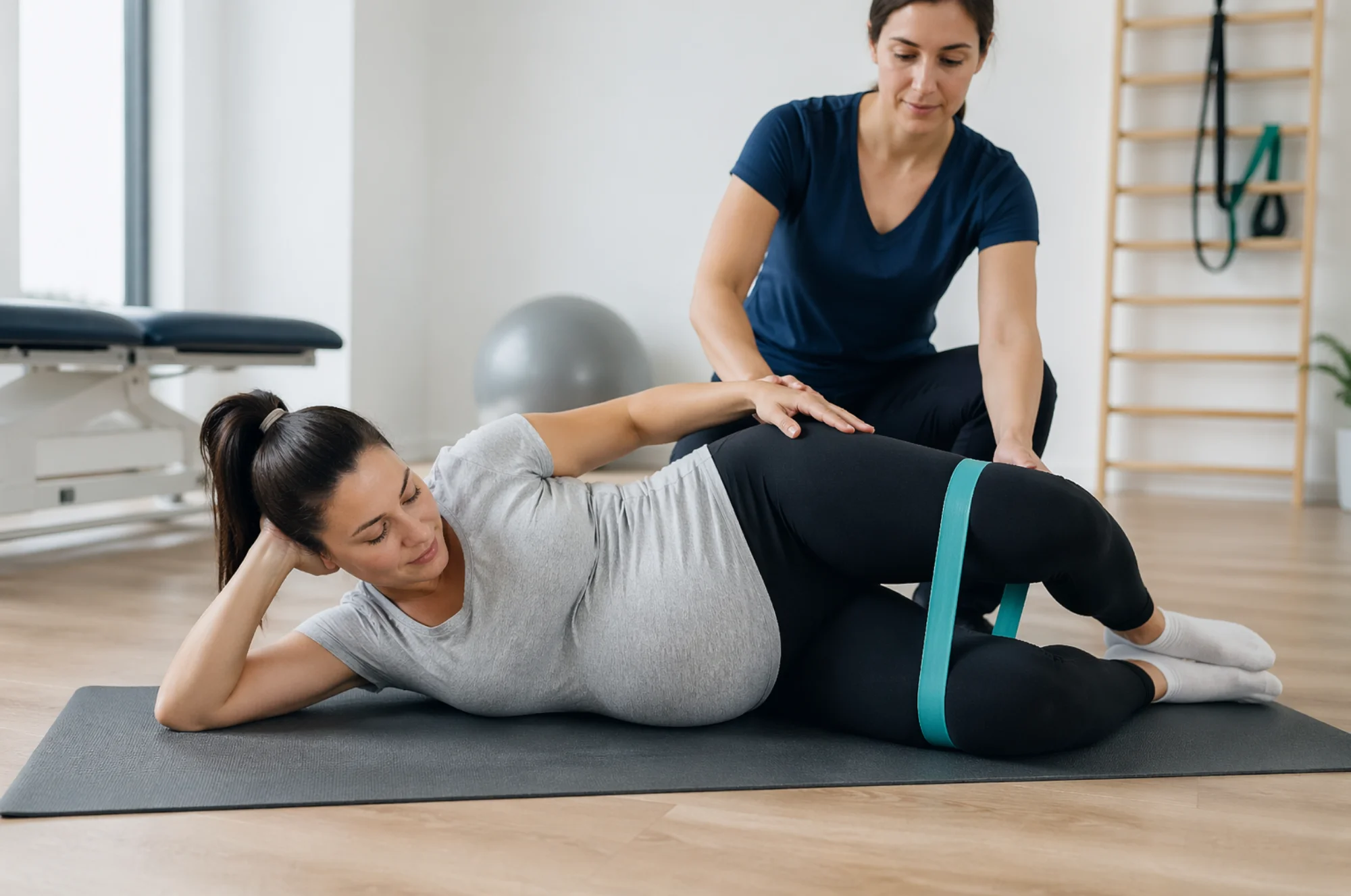
- Clamshells: Lift the top knee while lying on your side, keeping the pelvis stacked.
- Pillow squeeze: Gently squeeze a pillow between the knees for 5 to 10 seconds.
- Pelvic floor activations: A slow contraction and release, guided by your PT.
- Incline plank variations: Hands elevated, core engaged, less load than a full plank.
Symphysis Pubis Dysfunction Stretches to Reduce Tension
Symphysis pubis dysfunction stretches help reduce muscle tension pulling on the pelvis. They are not meant to increase joint mobility.
- Hip Flexor Stretch: Kneel with feet close together. Shift forward until you feel a stretch at the front of the back hip. Hold 20 to 30 seconds per side.
- Figure 4 Glute Stretch: Cross one ankle over the opposite knee. Lean forward until you feel the stretch in the glute. Releases the piriformis, which can contribute to pelvic pain.
- Child’s Pose: Sit back toward your heels with arms forward. Keep knees close if widening causes discomfort. Hold 20 to 40 seconds.
Exercises to Avoid with Pubic Symphysis Dysfunction
These limits apply while the pelvis is still unstable. A PT will reintroduce them when strength allows.
- Single-Leg Loading: Lunges and step-ups load the pelvis unevenly. Bilateral exercises are used early in rehab instead.
- Wide-Stance and High-Impact Exercises: Running, jumping, and wide squats create shear forces that the pubic symphysis cannot yet handle.
- Stretches That Force Leg Separation: Straddle and wide-stance stretches place direct stress on the pubic symphysis. A single-leg approach is safer.
Managing SPD During Pregnancy and Postpartum
How to Relieve Pubic Symphysis Pain During Pregnancy
Sleep with a pillow between your knees. Keep both feet together when getting out of a car. A pelvic support belt can help reduce pain during walks and daily activities. These strategies work best alongside prenatal physical therapy, not in place of it.
How Relaxin Affects Treatment Timing
Relaxin loosens ligaments and pelvic floor connective tissue during pregnancy. It stays elevated for months postpartum, especially during breastfeeding. A PT uses this to plan how quickly to progress loading.
Exercises for Pubic Symphysis Pain Postpartum
Rehab starts with gentle pelvic floor and glute work, then builds up. Going back to running or other impact exercise too soon is a common reason symptoms return, with shorter periods of relief before flaring again.
Three exercises commonly used in early postpartum rehab include:
- Pelvic floor activations: A gentle contraction held for several seconds and released slowly. This restores coordination between the pelvic floor and deep core before any loaded movement begins.
- Glute bridges: Performed with both feet flat and evenly weighted. This reactivates the glutes in a stable, symmetrical position without stressing the pubic symphysis.
- Clamshells: A side-lying hip exercise that targets the hip abductors. It builds the lateral hip strength needed to support the pelvis during walking and stair climbing.

What to Expect from PT for SPD
Who Should Treat Pubic Symphysis Dysfunction?
A licensed physical therapist should lead SPD rehab. At ITNYCPT, every session is one-on-one with a New York State-licensed PT. The same clinician evaluates, treats, and adjusts the plan throughout.
Typical Session Structure
Each session starts with a symptom check, followed by hands-on work if needed, then supervised exercise. Home exercises reinforce progress between visits.
Factors That Affect How Long Recovery Takes
Pregnancy-related SPD often improves within a few months postpartum. Non-pregnancy cases vary. Severity, consistency with home exercises, and daily activity demands all affect how quickly someone gets back to work and normal movement.
When to See a Physical Therapist for Pubic Bone Pain
See a physical therapist if pelvic pain affects walking, stairs, or basic daily tasks. Sharp pain during one-leg activity, pelvic instability, or symptoms that do not improve with rest need an evaluation.
SPD responds well to PT when addressed early. Waiting longer means the body develops compensations that take more time to correct.