

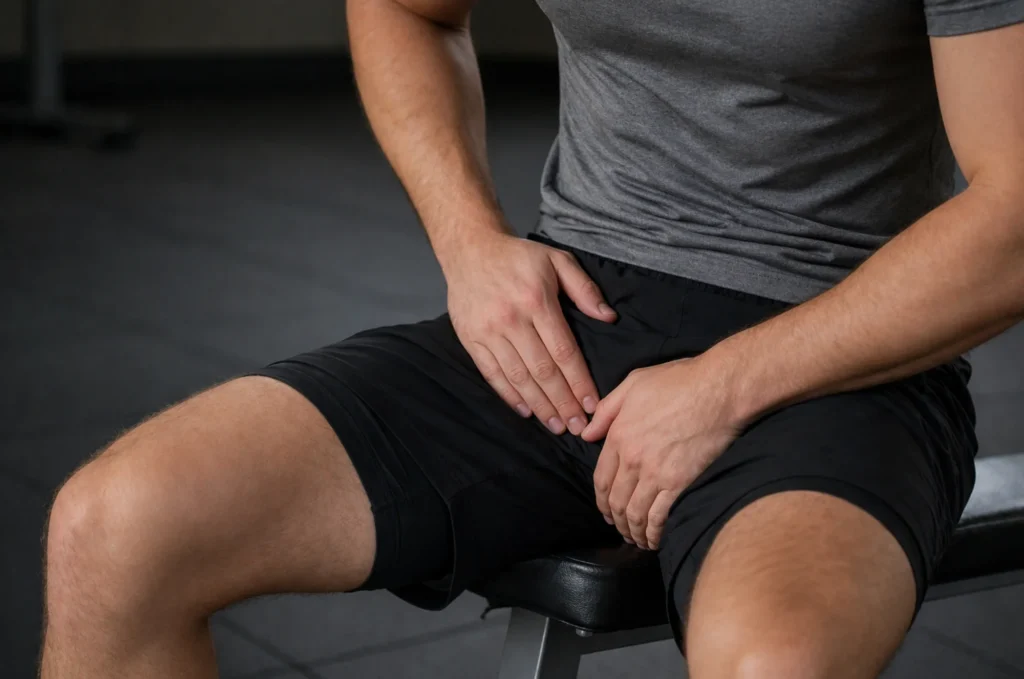
Sports hernia injuries are often misdiagnosed. Many people spend months treating the wrong condition before getting the right help.
Physical therapy for sports hernia rehabilitation is the standard first-line approach for most cases, combining pain management, progressive strengthening, and movement retraining to restore the ability to play sports at full capacity.
Keith Chan is a New York State licensed physical therapist at ITNYCPT in New York City. He helps patients manage groin and lower abdominal injuries like this. An accurate assessment and a well-structured rehab program can improve outcomes.
Key Takeaways
- A sports hernia is not a true hernia – it is a soft tissue injury involving a tear or strain in the muscles, tendons, or ligaments that attach to the pubic bone, with no visible bulge and no organ involvement.
- Physical therapy is the standard first-line treatment for most cases, and structured rehab programs produce return-to-sport rates above 90% in appropriate candidates, comparable to surgical outcomes.
- Rehab follows a four-phase progression moving from pain-free core activation to sport-specific training, and advancing too quickly between phases is one of the most common reasons recovery stalls.
- Recovery without surgery typically takes six to twelve weeks, though timelines vary based on injury severity, how early rehab started, and how consistently the program is followed.
- Maintaining strong glutes, adductors, and deep abdominal muscles year-round is the most reliable way to prevent a sports hernia from recurring after returning to sport.
What Physical Therapy Does for a Sports Hernia
A sports hernia develops because the core muscles, hip muscles, and adductor muscles around the pelvis stop working together effectively under load.
Sports physical therapy addresses the root cause by reducing sports hernia pain, restoring hip range of motion, and rebuilding the movement control needed for a safe return to sports.
Initial Evaluation and Assessment
A PT evaluation begins with a thorough history of how the injury occurred and what makes it worse. The therapist conducts a movement screen and hands-on testing to assess core activation, pelvic stability, and hip range of motion. The treatment plan is built from those findings, not a generic protocol.
Pain Management and Manual Therapy in Early Rehab
Early sports hernia rehab focuses on settling the injured tissue before loading it. Pain management at this stage may include ice, heat, soft tissue mobilization, and joint mobilization of the hip and pelvis.
When restrictions are present in the muscles, tendons, and surrounding tissues, the Graston Technique is one tool a trained clinician may use to improve mobility and reduce tightness around the injury site.
What Is a Sports Hernia?
A sports hernia is a soft tissue injury in the abdomen or groin involving a tear or strain in the muscles, tendons, or ligaments that attach to the pubic bone.
Despite the name, it is not a true hernia. There is no visible bulge and no organ involvement. The medical community prefers the term athletic pubalgia because it more accurately describes the injury.
Which Muscles and Tendons Are Affected
The oblique abdominal muscles are most commonly involved, along with the tendons connecting them to the pubic bone. The inner thigh adductor muscles often get hurt along with the abdominal muscles. This can make the pain feel spread out and hard to pinpoint.
Sports Hernia vs. Inguinal Hernia
An inguinal hernia produces a visible bulge in the groin. A sports hernia produces none. Both cause groin pain, and a physical exam combined with MRI imaging is typically needed to distinguish between them and determine the right course of treatment.
Symptoms That Suggest a Sports Hernia
Pain Patterns During Activity and at Rest
The most recognizable pattern with symptoms of a sports hernia is sharp groin pain during twisting, kicking, or sprinting that eases with rest and returns with activity.
Pain may also occur with coughing, sneezing, or performing a sit-up and may radiate to the inner thigh or lower abdomen.
When to See a Doctor Before Starting PT
See a doctor before starting PT if you notice any of the following:
- A visible bulge in the groin
- Pain worsening consistently over three to six weeks
- No relief at all with rest
- Pain is significant enough to affect daily activities
These signs may indicate a condition that requires imaging or surgical evaluation before sports hernia rehabilitation begins.
Sports Hernia Treatment without Surgery
Conservative treatment works well for most mild to moderate cases. Rest and avoiding sports activities for 1 to 2 weeks after the onset of injury allows the tissue to settle.
Non-Steroidal Anti-Inflammatory Drugs (NSAIDs) help manage pain and inflammation during this window. Research comparing structured rehabilitation to surgical repair has found return-to-sport rates above 90% in both groups for appropriate candidates, and how sports PT can help you avoid surgery is worth understanding before any surgical conversation begins.
Athletic Pubalgia Rehab Protocol: Phases From Rest to Return to Sport
Sports hernia rehab follows a phased progression. Advancing too quickly is one of the most reliable ways to stall recovery. Pain is the primary guide throughout.
Phase 1 – Core Activation and Pain-Free Movement
Beginning about two weeks after injury, this phase focuses on engaging the deep core muscles. It targets the transverse abdominis without causing pain.
Pilates-based therapeutic exercise works well here. It uses gentle, controlled movements. These movements activate the muscles that stabilize the trunk and pelvis.
Phase 2 – Strengthening the Hips and Abdomen
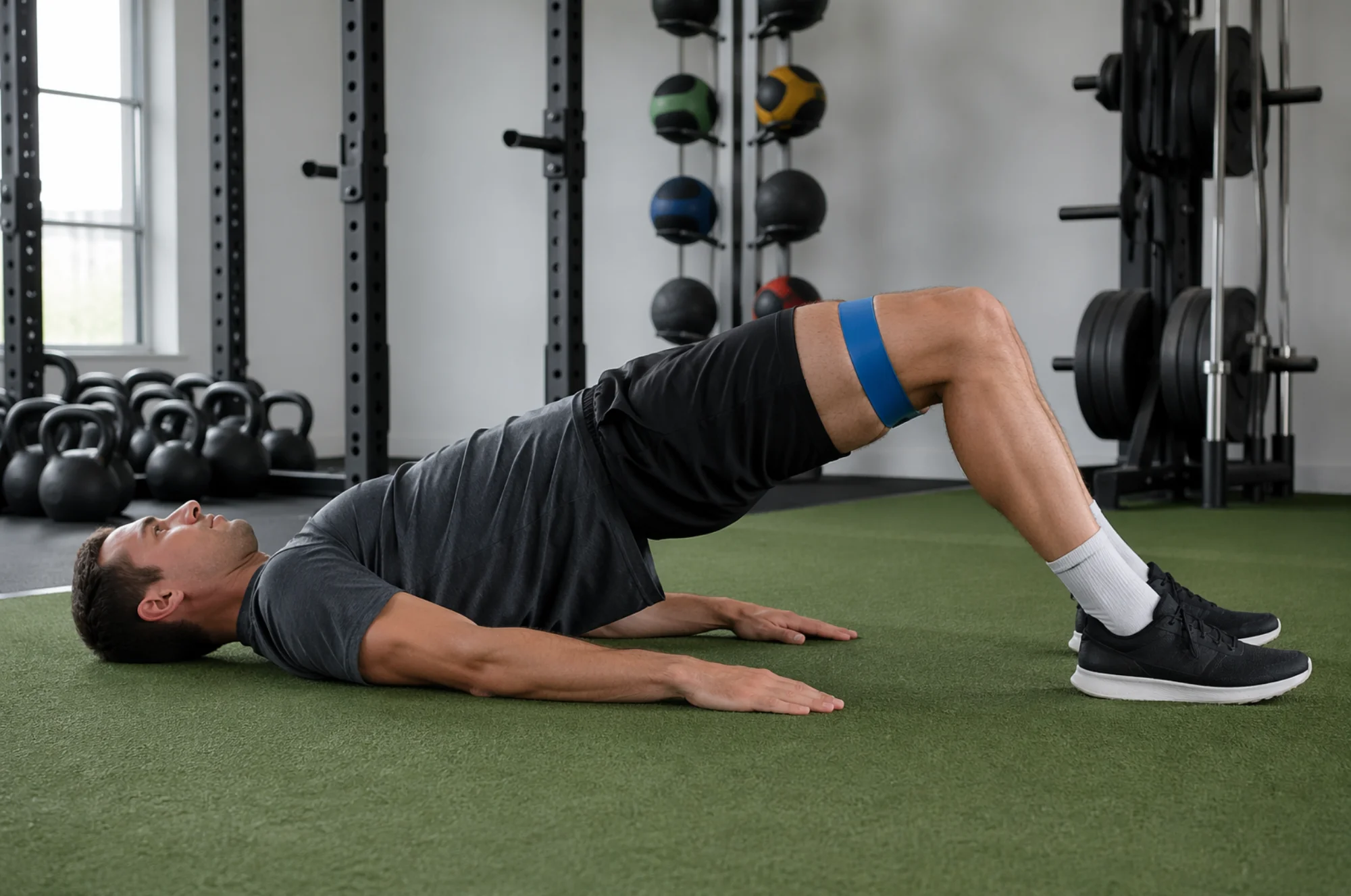
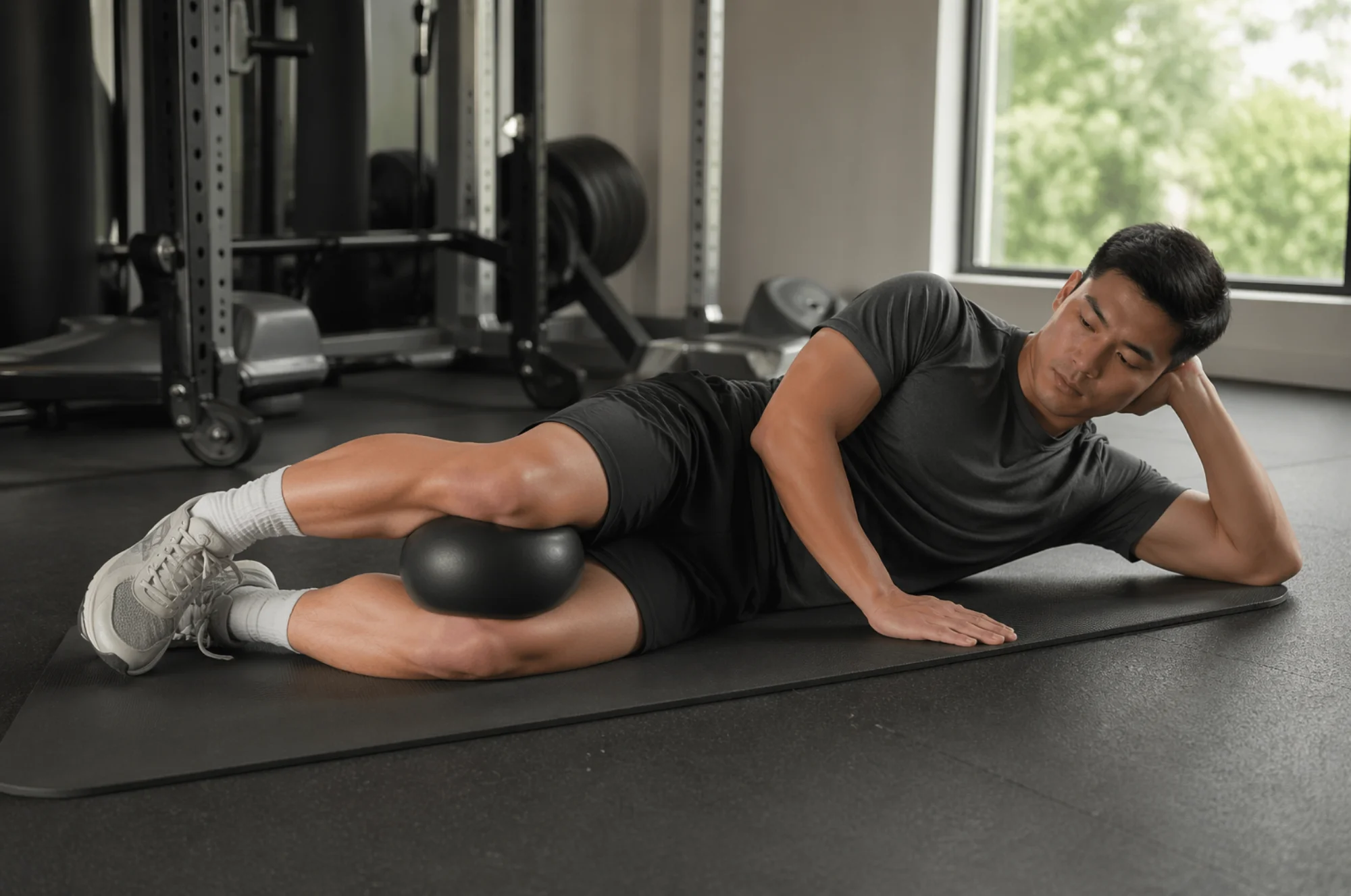
Once you establish pain-free movement, you begin core strengthening and hip work in earnest. Bridges with resistance, clamshells, and isometric adductor squeezes build strength in the muscles closest to the injury site.
Phase 3 – Rotational and Single-Leg Exercises
This phase reintroduces twisting and pivoting under controlled conditions through single-leg deadlifts, lunges, and lateral movements. Balance and endurance are stressed along with strength. Pelvic control at different movement speeds helps the body return to sport safely.
Phase 4 – Sport-Specific and Plyometric Training
The final phase introduces agility drills, plyometrics, and cutting patterns that mirror the demands of the athlete’s specific sport. A physical therapist monitors pain and movement quality before clearing a full return to sports activities.
Physical Therapy for Sports Hernia Rehabilitation Exercises
Isometric Core and Pelvic Holds
Isometric exercises build core stability without loading the injured tissue. Dead bugs, abdominal bracing, and static bridge holds are standard exercises for sports hernia in early rehab and form the foundation for more demanding work later.
Hip Strengthening and Adductor Work
Hip adduction exercises target the inner thigh muscles that attach near the injury site. Pairing this with hip abduction, glute bridges, and lateral band walks strengthens the full hip complex and reduces load on the pubic bone during movement.
Sports Hernia Exercises to Avoid
Heavy sit-ups, loaded hip flexion at end range, aggressive adductor stretching, and high-speed rotational movements should all wait until the appropriate phase. Returning to these too early is a consistent reason recovery extends beyond expected timelines.
How Long Does Sports Hernia Rehab Take?
Most patients following a structured program see meaningful pain reduction within 4 to 6 weeks. Full return to sport typically takes six to twelve weeks without surgery.
Post-surgical recovery follows the same phased structure but begins more conservatively, with most athletes returning to their prior level of activity within six to twelve weeks of the procedure.
Both timelines depend on injury severity, consistency with the program, and how carefully training load is managed between sessions.
When PT Is Not Enough: Surgery and Post-Op Rehab
Surgery is considered when sports hernia pain persists after 6 to 8 weeks of consistent PT, when imaging shows a complete tissue tear, or when the injury has recurred. Laparoscopic repair is a minimally invasive option that uses small incisions and generally results in a faster recovery than open surgery.
Both approaches carry success rates above 90% for return to the pre-injury level of activity. Post-op PT follows a structured path: gentle movement in the first two weeks, progressive core and hip strengthening through week six, and sport-specific training from week six onward.
What Affects Your Recovery
Injury severity matters. A partial strain in the muscle tendons heals faster than a complete tear, and involvement of both the oblique tendons and adductor muscles means a longer, more carefully managed program.
Long-term recovery outcomes also depend on staying consistent with the home exercise program. Limitations in hip mobility, past groin injuries, sleep quality, and physical job demands also shape them, and conditions like a hip labrum tear can compound recovery time when present alongside a sports hernia.
Patients who communicate clearly with their physical therapist about what aggravates symptoms tend to progress more predictably than those who push through pain without flagging it.
Can a Sports Hernia Come Back?
Yes. Athletes who return to play sports before completing the full rehab program, or who never address the underlying muscle imbalances, face a higher risk of re-injury.
Maintaining strong glutes, adductors, and deep abdominal muscles year-round, not just during recovery, is the most reliable way to keep the tissue around the pubic bone from being placed under the kind of load that causes a sports hernia in the first place.