

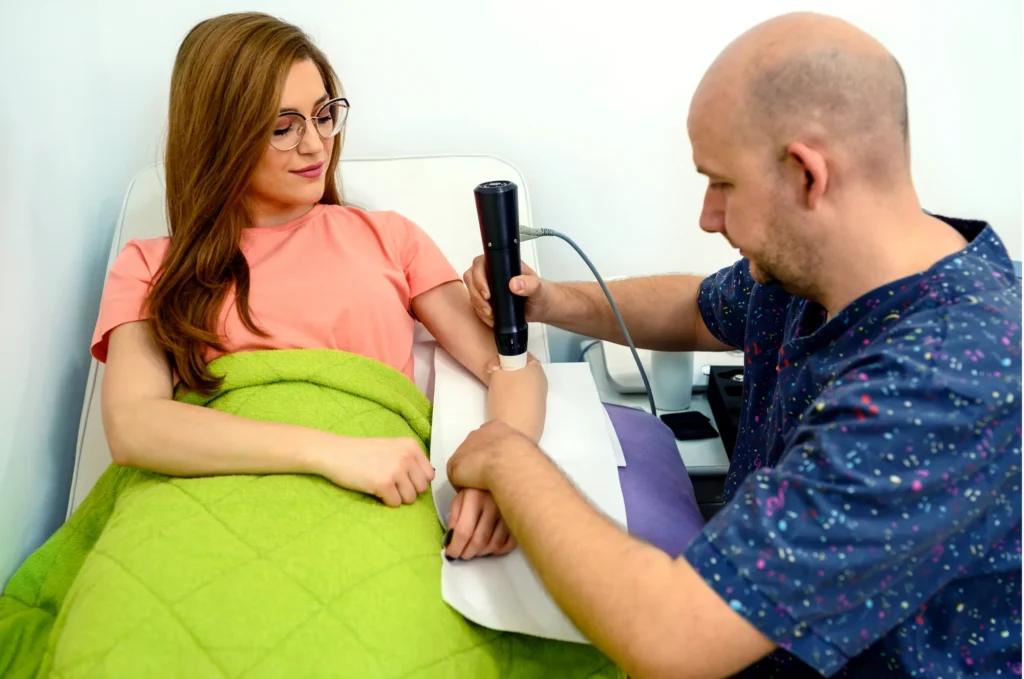
Ultrasound physical therapy is a widely used treatment in outpatient rehabilitation. It uses high-frequency sound waves to target soft tissues beneath the skin, helping reduce pain, promote healing, and prepare muscles and joints for movement.
During a session, a physical therapist applies a gel to the skin and uses a handheld device called a transducer to deliver the ultrasound waves directly to the affected area. These sound waves create gentle vibrations and deep heat within the tissue, which can improve blood flow and support the healing process.
Keith Chan, a New York State licensed physical therapist at ITNYCPT in New York City, uses therapeutic ultrasound as part of a personalized treatment plan for a range of musculoskeletal conditions.
Key Takeaways
- Ultrasound physical therapy uses high-frequency sound waves to treat soft tissue conditions through two distinct mechanisms: thermal effects that generate deep heat and increase blood flow, and non-thermal effects that stimulate cellular repair without raising tissue temperature.
- The research is mixed – evidence is strongest for knee osteoarthritis, carpal tunnel syndrome, and calcific shoulder tendinopathy. At the same time, studies show little to no benefit over sham treatment for chronic low back and neck pain.
- Therapeutic ultrasound parameters, including frequency, mode, and intensity, are not interchangeable; a trained physical therapist selects each setting based on the target tissue depth, the condition, and the stage of healing.
- The treatment has a low risk of side effects when applied correctly. Still, it is contraindicated in several situations, including overactive malignancy, implanted electronic devices, open wounds, and the pregnant uterus.
- Therapeutic ultrasound is a passive modality that works best as preparation for active treatment – it supports pain relief and tissue readiness. Still, it does not replace therapeutic exercise or address the root cause of an injury on its own.
Do Physical Therapists Perform Ultrasound Therapy?
Yes. The FDA has approved therapeutic ultrasound for use by licensed professionals. Physical therapists learn to decide when it is appropriate and how to apply it. A properly run clinic should never allow aides or unlicensed staff to perform it.
How Therapeutic Ultrasound Works
A physical therapist puts a water-based gel on the skin. Then they move a small handheld device, called a transducer, in slow circles over the area. The ultrasound wave travels into the soft tissues and creates a response in the body. The type of response depends on the settings the therapist chooses.
Some people search for “ultrasound massage” when looking into this treatment. The two are not the same thing. Therapeutic ultrasound does not involve any hands-on work on muscle tissue. The transducer moves across the skin, but the actual effect happens through sound waves, not physical pressure.
Therapeutic Ultrasound vs. Diagnostic Ultrasound (Sonography)
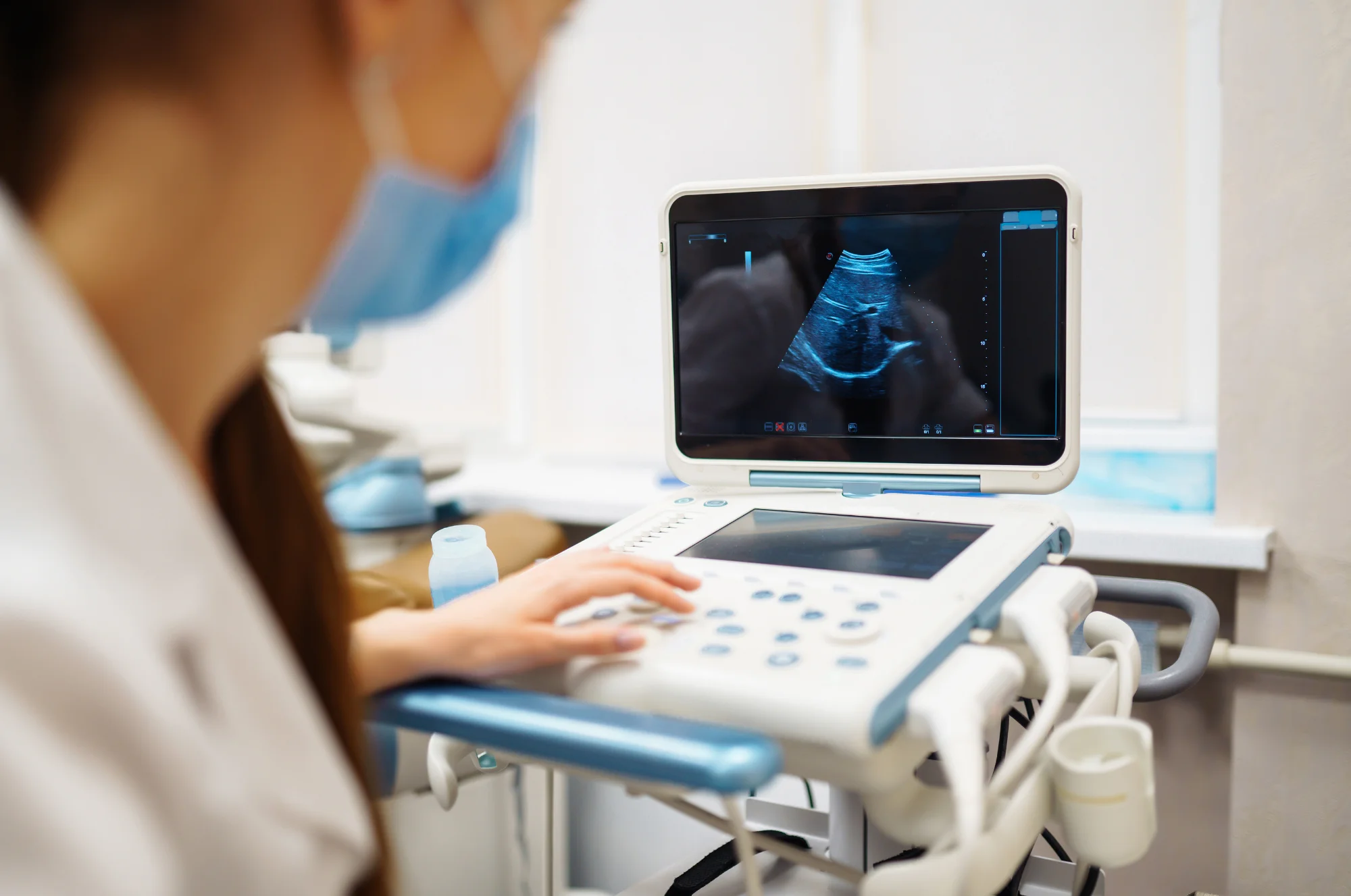
Diagnostic ultrasound, also called sonography therapy, creates images of the inside of the body. Therapeutic ultrasound does not take pictures. It delivers ultrasound energy to tissue, eliciting both physical and cellular responses. The devices look similar, but the settings, intensity levels, and goals are completely different.
Thermal and Non-Thermal Effects
Thermal ultrasound runs in continuous mode. It creates deep heat in the tissue. As energy is absorbed by dense structures such as tendons and ligaments, increased blood flow follows.
Tissue temperature rises, and collagen becomes easier to stretch. This is useful when the goal is to loosen tight tissue before exercise or manual therapy.
Pulsed ultrasound works differently. High-frequency sound waves cause tiny gas bubbles in the tissue fluid to expand and contract rapidly.
This is called cavitation. It stimulates cellular repair without producing heat. This approach works best in the early stages of injury, when deep heat could worsen inflammation.
What Conditions Is Therapeutic Ultrasound Treatment Used For?
ndinopathy, bursitis, muscle spasms, ligament sprains, plantar fasciitis, frozen shoulder, and scar tissue. Ultrasound treatment can also help with range-of-motion problems. The thermal effect softens collagen, which can be beneficial when combined with manual therapy or stretching.
Phonophoresis is a related technique. It uses a medicated gel instead of plain gel. The high-frequency sound waves push the medication into deeper tissues. It is used for tendon and joint inflammation.

Is Ultrasound Therapy Actually Effective?
The research is mixed. The strongest evidence supports its use for knee osteoarthritis, carpal tunnel syndrome, and calcific shoulder tendinopathy.
For chronic low back pain and neck pain, several Cochrane reviews found little to no benefit over sham ultrasound treatment. A good physical therapist looks at the evidence and the patient’s specific condition before making a recommendation.
What to Expect During a Session
A typical ultrasound physical therapy session is straightforward and pain-free. Your therapist applies gel to the skin and moves the transducer in slow circles over the treatment area. Treatment times run five to ten minutes per area, and you will not need to undress beyond exposing the area being treated.
The ultrasound therapy machine has a generator unit and a handheld transducer. Inside the transducer are crystals that vibrate when an electric current passes through them, and those vibrations produce the sound waves that travel into the tissue. Your therapist sets the frequency, intensity, and mode before the session begins based on your condition.
What you feel depends on the mode being used. In thermal mode, most people notice a mild warmth as energy is absorbed into the tissue. In pulsed mode, you may feel a light tingling sensation or nothing at all.
The treatment should not hurt. If you feel sharp heat or any discomfort at any point, let your therapist know right away so they can adjust the settings or reposition the probe.
Contraindications, Side Effects, and Dangers
Therapeutic ultrasound should not be used over or near:
- Active cancer, the pregnant uterus, or reproductive organs
- Pacemakers or implanted electronic devices
- Active infection, open wounds, or broken skin
- The spine after a laminectomy, or areas with very poor sensation
Keith Chan notes that contraindications are reviewed for each patient during their first visit. The main risk is a skin burn from holding the transducer still too long. Keeping the probe moving prevents this.
Standard outpatient therapeutic ultrasound parameters remain well below levels that could cause tissue damage.
Parameters, Home Use, and Fit Within a Treatment Plan
Therapeutic ultrasound parameters control where energy goes and what it does. At 1 MHz, the ultrasound wave penetrates about 4 cm, which is suitable for deeper tissues. At 3 MHz, energy is absorbed around 2 cm, which is better for surface-level tendons and ligaments.
Continuous mode creates deep heat for chronic conditions. Pulsed mode is better for acute injuries where heat could be a problem.
Consumer ultrasound machines are sold online without a prescription. Most run at lower and less reliable intensities than clinical-grade devices. Using them correctly requires training that most patients lack. They are not a replacement for a proper evaluation and treatment plan.
Therapeutic ultrasound is a passive treatment. It supports pain relief and gets tissue ready for active work. It does not build strength or fix the root cause of an injury on its own.
Used well, it leads into therapeutic exercise, manual therapy, Graston Technique soft-tissue work, or Pilates-based movement in the same session. A good PT plan moves toward active recovery over time. Passive tools like ultrasound therapy play a supporting role, not the lead one.