

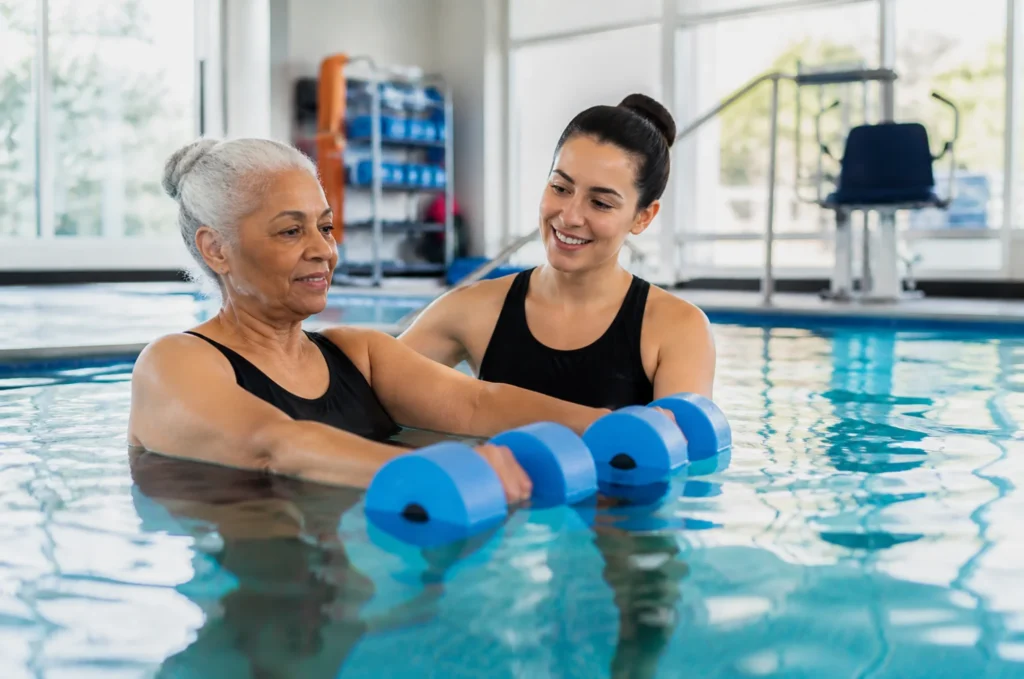
This guide explains water physical therapy. It covers who may benefit and what happens in treatment. It also explains what results may look like over time.
Reviewed for clinical accuracy by Keith Chan, a New York State-licensed physical therapist and ITNYCPT subject-matter expert.
Key Takeaways
- Water physical therapy uses water to reduce joint load and make rehab exercises easier to control.
- It may help people with joint pain, chronic pain, stiffness, balance limits, or recovery after injury or surgery.
- Pool hydrotherapy often includes walking drills, strengthening, stretching, balance work, and progression toward land-based exercises.
- Results vary by condition, consistency, health history, and exercise response, so timelines should be viewed as estimates.
- Hydrotherapy costs often range from $75 to $200+ per session, but insurance coverage depends on plan rules, provider type, and location.
What Is Water Physical Therapy?
Water physical therapy is performed in a pool or other water-based setting. It may also be called aquatic physical therapy, pool therapy, hydrotherapy, or water PT. The goal is to use water-based exercise to improve movement, muscle strength, balance, and range of motion with less strain on the body.
An aquatic therapy program may include walking drills, stretching, strengthening, balance work, and controlled movement. Pool hydrotherapy often uses warm water to help people move with less stiffness. This differs from casual swimming because the exercises follow a rehab plan.
How Hydrotherapy Helps Movement
Hydrotherapy helps with movement by reducing weight-bearing, which can lower pressure on joints during walking, squats, step work, or balance practice. This can make exercise easier when movement on land feels painful or limited.
Water also provides resistance in all directions, allowing aquatic exercise to build strength without heavy weights. Hydrostatic pressure may help with swelling and circulation, while warm water temperature may reduce stress and ease stiffness.
Unlike hot springs or soaking, rehab-based hydrotherapy uses planned exercise guided by a physical therapist.
Water Therapy Benefits and Limits
The benefits of aquatic therapy may include reduced joint stress, better exercise tolerance, improved mobility, and safer movement practice. Water therapy may also help increase blood flow and prepare the body for more active strengthening.
Water therapy cannot replace medical care, imaging, surgery, medication, or land-based rehab when those are needed. It also cannot promise long-term relief. Results depend on diagnosis, consistency, health history, pain sensitivity, sleep, workload, and daily activity demands.
Water physical therapy is not the right fit for every patient, and certain signs may indicate you need to reassess your plan or seek a new PT. Symptoms, medical history, skin health, balance, and pool safety should be reviewed before starting.
Who May Benefit from Water PT?
Water PT may help people who struggle with land-based exercise due to pain, stiffness, weakness, or balance limitations. It is often considered for arthritis, back pain, leg pain, sports injuries, post-surgical recovery, and chronic pain.
People with fibromyalgia or another chronic condition may tolerate pool-based movement better than high-impact exercise. The water can make motion easier to pace. The plan should still align with symptoms, fatigue, goals, and responses after each session.
What Happens During Pool Hydrotherapy?
Pool hydrotherapy should begin with a PT evaluation. This helps the physical therapist decide whether water-based care is appropriate for the person’s condition, goals, and safety needs.
A typical session may include:
- Health history review: The therapist asks about pain, injury history, surgery, symptoms, and activity limits.
- Movement screening: The therapist checks walking, bending, balance, squatting, or movement in the affected area.
- Strength and mobility testing: Helps identify weaknesses, stiffness, range-of-motion limits, and movement patterns.
- Water physical therapy exercises: Exercises may include walking drills, squats, hip movements, step work, stretching, balance practice, and core control.
- Progression over time: Later sessions may add resistance, faster movement, deeper strengthening, or land-based exercises.

Water Therapy vs Land Therapy
Water therapy and land therapy serve different roles. Water may help when pain, swelling, balance limitations, or reduced weight-bearing make normal movement harder.
Land therapy matters because daily life happens on land. Stairs, walking, lifting, work tasks, and sports require land-based strength and control. Many plans use pool work first, then shift toward land-based exercises when appropriate.
Water Therapy at Home and Safety
Safe home options may include gentle walking, mobility work, stretching, and clinician-guided strengthening. Home exercise helps carry progress from therapy into daily life.
Side effects of water therapy can include soreness, fatigue, dizziness, skin irritation, symptom flare-ups, or feeling overheated. Water temperature, session length, exercise intensity, and health history can affect tolerance.
Avoid pool therapy or ask a medical professional first if you have an open wound, fever, active infection, uncontrolled heart or breathing problems, severe dizziness, or poor bowel or bladder control. Seek urgent care for chest pain, severe shortness of breath, fainting, sudden weakness, or symptoms that feel unsafe.
Hydrotherapy Cost and Insurance
Hydrotherapy costs often range from $75 to $200+ per session, depending on location, session length, provider type, and insurance coverage. In NYC, costs may vary depending on whether care is in-network, out-of-network, or private pay.
Cost can vary based on:
- Session length: Longer visits may cost more.
- Provider type: Licensed physical therapy may cost differently than general pool exercise classes.
- Insurance status: In-network, out-of-network, and private-pay rates can vary.
- Plan rules: Deductibles, copays, coinsurance, authorization rules, and visit limits may affect cost.
- Facility setup: Pool access, location, and treatment structure can influence pricing.
Ask your insurer whether aquatic physical therapy is covered. You may also need to ask whether your plan requires a referral for physical therapy before starting care.
A deductible is what you pay before insurance starts covering care. A copay is a fixed fee per visit, while coinsurance is a percentage of the allowed cost.

How Long Results May Take
Results vary by condition, severity, consistency, and exercise response, so general physical therapy timelines should be treated as estimates. Some people feel short-term relief after moving warm water. Strength, balance, mobility, and function usually need more time and steady progression.
A general timeline may look like this:
- 1 to 3 sessions: Some people notice less stiffness, easier movement, or better exercise tolerance.
- 2 to 4 weeks: Strength, mobility, and movement confidence may start to improve with consistent sessions.
- 6 to 12 weeks: Function, balance, endurance, or return to land-based exercises may improve.
- Long-term: Chronic pain, arthritis, fibromyalgia, or other chronic conditions may need ongoing management.
References
- Cleveland Clinic explains that hydrotherapy uses water to manage symptoms and may also be called water therapy, aquatic therapy, or pool therapy. Cleveland Clinic
- APTA Private Practice explains that aquatic physical therapy uses buoyancy, resistance, compression, and heat to support rehab exercises. APTA Private Practice