


When someone has a stroke, undergoes surgery, or experiences a severe injury, they may not be able to manage at home right away safely. In these cases, inpatient rehabilitation is often the next step in recovery. Keith Chan, a New York State-licensed physical therapist at ITNYCPT in New York City, works with patients at various stages of rehabilitation.
This article explains what inpatient rehab is, who qualifies, how long it lasts, and what patients and families can expect during treatment.
Key Takeaways
- Inpatient physiotherapy means staying overnight at a rehabilitation center and receiving at least three hours of medically supervised therapy every day, seven days a week.
- It is typically recommended that after a stroke, traumatic brain injury, spinal cord injury, joint replacement, or any condition that requires daily intensive care, a patient cannot be managed at home.
- Inpatient rehab differs from both acute hospital PT (focused on early stabilization) and outpatient PT (clinic-based, one to three sessions per week) – patients generally move through all three settings in sequence as their function improves.
- The average stay at an inpatient rehabilitation facility is 12 to 16 days, though the length of stay depends on the severity of the condition, recovery pace, home situation, and insurance authorization.
- Medicare Part A covers inpatient rehab when specific criteria are met. Still, private insurance rules vary considerably, so contacting your insurer before admission to confirm coverage, network status, and costs is worth doing.
Inpatient Rehab Definition
Inpatient physical therapy means you stay at a rehabilitation center and receive medically supervised therapy every day. You have 24-hour medical care, and types of therapy include physical, occupational, and speech therapy. This differs from a standard hospital stay, where a therapist visits once as part of broader medical care.
The term “inpatient rehab” also appears in addiction treatment and mental health treatment program settings. In the physiotherapy context, it refers specifically to recovery from injury, surgery, or neurological events, and the criteria are distinct from those of other treatment centers.
Who Needs Inpatient Rehabilitation?
Common Conditions That Lead to Inpatient Rehab
Doctors refer patients to inpatient rehabilitation when daily intensive therapy is needed. Common reasons include stroke, traumatic brain injury, spinal cord injury, hip or knee replacement, major fractures, and serious cardiac events.
For patients recovering from orthopedic procedures, post-surgery rehabilitation exercises form the backbone of both the inpatient and outpatient recovery plans. These conditions affect movement and daily function in ways that require a full-day treatment program.
What Counts as Inpatient Physiotherapy?
Inpatient physiotherapy refers to intensive rehabilitation therapy provided while a patient stays at a hospital or inpatient rehabilitation facility. Not every hospital stay that includes therapy qualifies as inpatient rehabilitation.
In the United States, Medicare typically requires patients to participate in at least 3 hours of combined therapy per day and to obtain a physician’s certification that inpatient rehab is medically necessary. Routine therapy sessions provided during a standard hospital admission are usually considered acute care therapy rather than inpatient rehabilitation.
When Outpatient PT Is Not Enough
Outpatient PT works when you can travel to a clinic and function safely at home between visits. Inpatient rehab is the right level of care when you need hours of therapy each day and cannot yet manage on your own. The treating physician and discharge team make that decision together.
What Inpatient Physical Therapy Is Like
Daily Schedule and Therapy Intensity
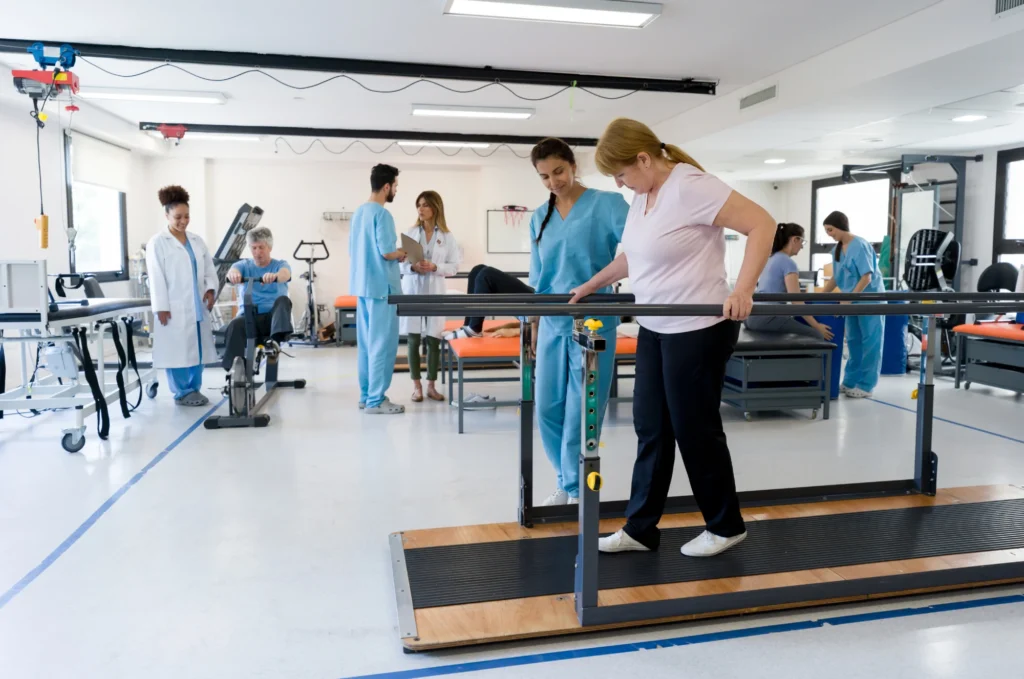
Inpatient rehab runs seven days a week. Patients complete at least three hours of therapy daily, split between morning and afternoon sessions. The treatment plan adjusts as your function improves throughout the stay.
Goals of Inpatient Physiotherapy
The goals are practical: move from bed to chair, walk a set distance, manage stairs, and handle daily tasks. Each session builds toward a clear discharge target. The recovery process is structured and goal-driven from day one.
Who Is on Your Care Team
Your care team typically includes a physiatrist, physical therapist, occupational therapist, speech-language pathologist when needed, nurses, and a case manager. Each provider focuses on a different part of your recovery. The team meets regularly to review progress and adjust the plan.
How Inpatient PT Compares to Outpatient and Acute Care
Outpatient PT is clinic-based care. You attend therapy sessions and go home the same day. Sessions run 45 to 60 minutes, one to three times a week.
One-on-one care with a licensed PT includes an evaluation and a personal treatment plan. It may also include manual therapy and exercises that progress over time. Clinics like ITNYCPT also use Pilates-based therapy exercises and the Graston Technique for soft-tissue work when needed.
What Is Acute Physical Therapy?
Acute PT happens in the hospital before any transfer to a rehabilitation center. The focus is on early movement and on preventing complications such as blood clots and muscle weakness. Sessions are shorter and less intensive than inpatient rehab.
How the Three Settings Differ
- Acute PT: in a general hospital, focused on early stability and mobility
- Inpatient rehab: at a dedicated rehabilitation center, three or more hours of therapy per day, 24 hour medical oversight
- Outpatient PT: at a clinic, one to three sessions per week, no overnight stay
Patients typically move through these settings in order as their function and independence grow.
How Long Does Inpatient Physiotherapy Last?
Average Length of Stay in Inpatient Rehabilitation
The average stay at an inpatient rehabilitation facility is 12 to 16 days. Stroke recovery may take two to four weeks. Joint replacement patients often leave in one to two weeks. Skilled nursing facility stays can run longer depending on the patient’s needs.
What Affects Your Length of Stay
Length of stay depends on your condition, how fast you improve, your home setup, support from a family member or caregiver, and your insurance limits. Insurers review progress at regular intervals and must continue to approve the stay.
Does Inpatient Rehab Work?
What Outcomes Research Shows
Does inpatient rehab work? For the right patients, yes. Research shows better long-term outcomes after stroke, joint replacement, and brain injury when patients complete inpatient programs.
The benefits of inpatient rehab come from intensity. Daily therapy hours can achieve results that weekly outpatient visits cannot match. This is especially true for complex conditions.
Factors That Affect Your Recovery
Recovery depends on when therapy starts, how well you tolerate intensive sessions, your overall health, and the support you have at home. Your physical therapist sets goals based on your current function and what you need to return home safely.
What Happens After Inpatient Physical Therapy?
Discharge Options: Home, Outpatient, or Skilled Nursing
After inpatient rehab, you may go home with outpatient PT, receive home health PT if you are homebound, or move to a skilled nursing facility before going home. Your function at discharge, your living situation, and support from a family member all shape that decision.
Home Exercise and Ongoing Care
Discharge is a transition, not a finish line. Your therapist sends you home with an exercise program to maintain your progress.
Outpatient PT continues the recovery process through regular therapy sessions and a structured treatment plan built on the work you did during inpatient care. The duration of physical therapy at that stage depends on your condition, goals, and the level of function you have already regained.

Does Insurance Cover Inpatient Physiotherapy?
Medicare and Inpatient Rehab Coverage
Medicare Part A covers inpatient rehab when the criteria are met: a prior three-day hospital stay, a physician’s certification, and a condition requiring medically supervised intensive therapy.
Medicare covers the first 20 days in full. Days 21 through 100 require daily coinsurance. Coverage ends after day 100 in that benefit period.
Private Insurance and Inpatient PT
Most private plans cover inpatient rehab when medically necessary, but rules vary. PPO plans give you more flexibility in choosing a rehabilitation center. HMO plans often require a referral and limit you to in-network facilities. Out-of-network care can cost considerably more.
Questions to Ask Your Insurance Provider
Call your insurer before admission and ask:
- Does my plan cover inpatient rehabilitation, and what are the criteria?
- Is this facility in-network?
- Do I need prior authorization?
- What is my deductible, and has it been met?
- What will I owe per day or per stay?
- How many covered days does my plan allow?
Clear answers before you go in help you plan for costs and avoid surprises during your recovery process.