


After a sudden impact, whether from a car accident or a fall, the neck can absorb forces it was never designed to handle.
Whiplash physical therapy addresses the pain, stiffness, and functional limitations that follow by combining hands-on treatment with progressive exercise tailored to each stage of recovery.
Keith Chan is a New York State licensed physical therapist at ITNYCPT in New York City. He works with patients who manage whiplash and related neck injuries in his outpatient practice.
This guide explains physical therapy for whiplash, what recovery can look like, and what affects the outcome.
Key Takeaways
- Whiplash physical therapy combines passive treatments like manual therapy and TENS with progressive active exercise, and lasting recovery depends on making that shift from one to the other as symptoms allow.
- The cervical spine, including its muscles, ligaments, discs, and nerve roots, can all be affected by whiplash, and the structures involved directly shape how treatment is structured and progressed.
- Recovery follows four phases from acute to reintegration, with most people seeing meaningful improvement within six to eight weeks. However, more severe injuries or delayed treatment can extend the timeline to six months.
- The most effective whiplash exercises include chin tucks to strengthen deep neck flexors, neck rotations to improve range of motion, and scapular squeezes for postural correction, with high-impact activities and resisted neck extension avoided in the early phase.
- Certain symptoms after a neck injury, including weakness or numbness in the arms or legs, difficulty walking, or loss of bladder and bowel control, require urgent medical evaluation before any physical therapy begins.
What Do Physical Therapists Do for Whiplash Treatment?
When whiplash occurs, the head and neck are forced through a rapid acceleration-deceleration cycle that strains the soft tissues of the cervical spine. A physical therapist assesses how the injury affects your movement, strength, and daily functioning, then develops a plan to address it.
Treatment is not limited to pain relief. The goal is to restore how your neck moves, how your muscles support it, and how confidently you can use it.
Passive treatment is applied to you and includes manual therapy, electrical stimulation, and heat or ice. It is most useful early on when pain limits movement. Active treatment requires your participation through therapeutic exercise, posture correction, and movement retraining.
A well-structured whiplash treatment plan progresses steadily from one stage to the next, and care is typically delivered one-on-one by a licensed physical therapist who guides the entire process.
What Is Whiplash and What Does It Injure?
Whiplash happens when the head snaps forward, then backward, faster than the neck muscles can react. This can cause soft-tissue injuries that often do not show up on standard imaging.
The muscles, tendons, and ligaments of the cervical spine absorb most of the force. Intervertebral discs can also experience stress or shift out of place. In more serious injuries, facet joints and nearby nerve roots may be involved.
When nerve roots are affected, symptoms extend beyond local neck pain. Numbness, tingling, or weakness in the arms or hands can suggest nerve involvement. Pain may travel from the neck to the shoulder or down the arm.
These symptoms need to be evaluated before starting exercise therapy. Spinal cord compression may require imaging first, such as a Magnetic Resonance Imaging (MRI) or Computed Tomography (CT) scan.
Whiplash-Associated Disorders (WAD): What the Term Means
WAD is a clinical grading system that classifies whiplash by severity. It ranges from Grade 0 (no symptoms) to Grade 4 (fracture or dislocation).
Most patients who enter outpatient physical therapy fall into Grade 1 or Grade 2, which involve neck pain, tenderness, and reduced range of motion in the neck without neurological signs. Knowing the grade helps a physical therapist calibrate treatment intensity from the start.
What Are the 4 Phases of Whiplash?
Recovery from whiplash generally follows four stages, though the timeline varies by injury severity, age, and individual health factors.
- Phase 1 – Acute (0 to 2 weeks): Pain and inflammation are highest. Treatment focuses on symptom control and gentle movement.
- Phase 2 – Subacute (2 to 6 weeks): Inflammation settles. Physical therapy shifts toward restoring range of motion and light strengthening.
- Phase 3 – Remodeling (6 weeks to 3 months): Exercise intensity increases and functional activities are gradually reintroduced.
- Phase 4 – Reintegration (3 months and beyond): Full return to normal activities. For most people, this is where formal PT ends.
When symptoms persist beyond three months, whiplash is classified as chronic. This is more likely when the first pain was severe, when there was a prior neck condition, or when major stress followed the incident. Chronic neck pain from whiplash may require pain management strategies alongside physical rehabilitation.
Whiplash Injury Physical Therapy: What Happens at Your First Appointment?
The first session is an evaluation, not a treatment. Your therapist will take a full history, examine your posture, measure the range of motion in the cervical spine, test muscle strength, and screen for neurological signs.
Common clinical tests include the Spurling Test, which checks for nerve root compression, and the Upper Limb Tension Test, which assesses neural tissue sensitivity running from the neck into the arm.
Come prepared to describe the location of your pain, what makes it better or worse, and whether symptoms radiate into your arms or hands.
What Exercises Are Best for Whiplash?
Exercise is the most important driver of long-term recovery when treating whiplash injury. The right exercises depend on your current phase of recovery. Early on, the focus is on restoring pain-free movement rather than building strength. As inflammation settles, strengthening and postural work are gradually introduced.
Whiplash Treatment Exercises: Where to Start
Here are the exercises most commonly used in whiplash rehabilitation, grouped by purpose:
Range of motion (subacute phase, weeks 2 to 6)
- Neck rotations: Slowly turn your head side to side within a comfortable range. Stop before pain increases.

- Cervical flexion and extension: Gently look down toward your chest, then back up. Keep movements slow and controlled.

- Lateral flexion: Tilt one ear toward the shoulder, hold briefly, then repeat on the other side.

These movements help reduce pain and stiffness by restoring circulation and gently mobilizing structures that tighten during the acute phase. Gentle movement in this phase also helps reduce inflammation more effectively than rest alone.
Strengthening (remodeling phase, weeks 6 to 12)
- Chin tucks: Sitting tall, draw the chin straight back without tilting the head down. This targets the deep neck flexors, which whiplash commonly weakens.
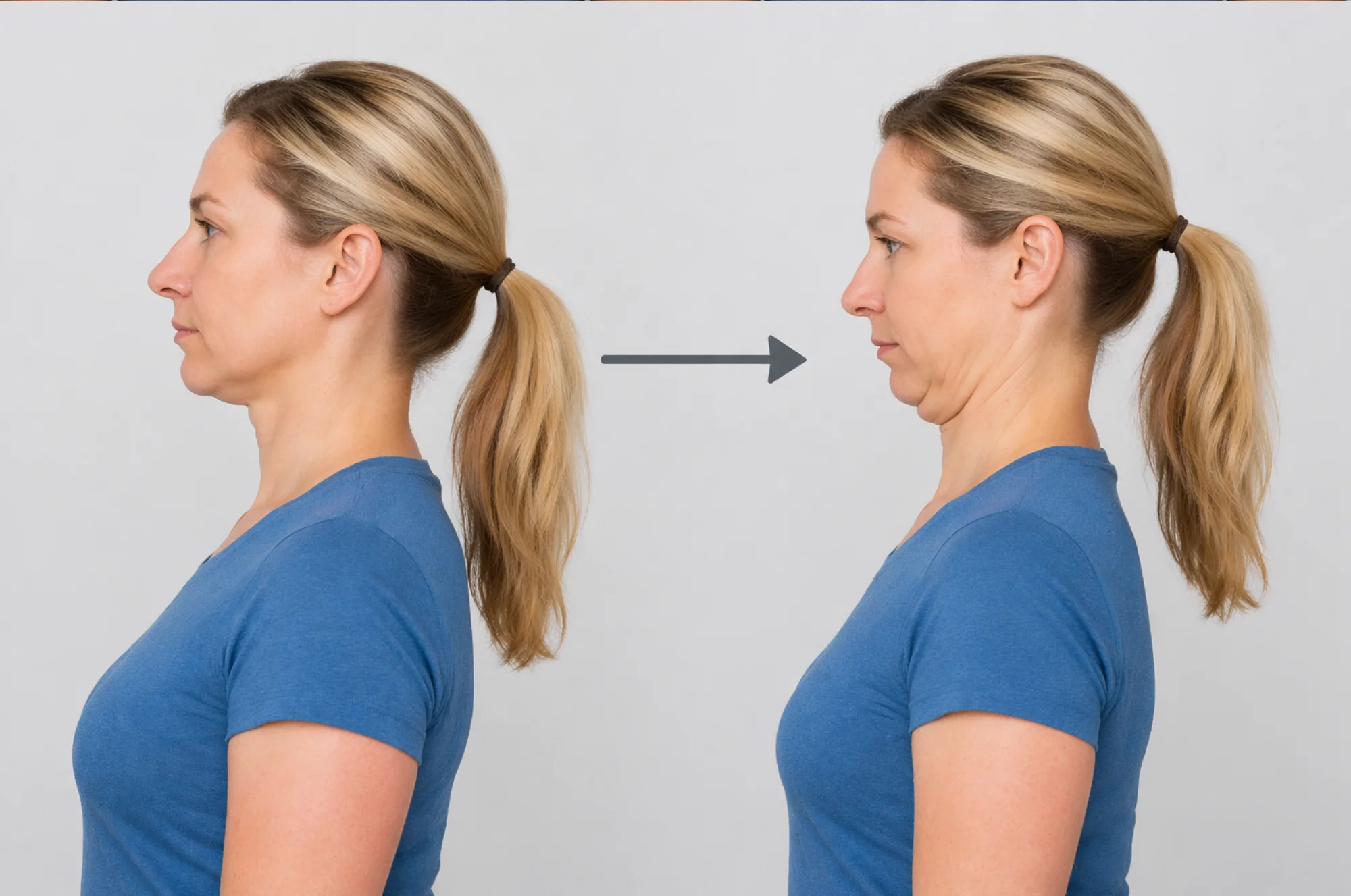
- Isometric holds: Press your hand lightly against your forehead, temple, or the back of your head, then resist with your neck. Hold for five seconds. These build cervical strength without movement.

- Scapular squeezes: Pull the shoulder blades together and down, hold for ten seconds, and release. This addresses the forward head posture that often follows whiplash.

Postural and stability work
- Wall angels: Stand with your back against a wall and slowly raise your arms overhead, keeping them in contact with the wall. This trains scapular control and upper back mobility.
- Pilates-based movements, such as spine lengthening and controlled breathing patterns, are a structured approach to building core stability and postural control alongside cervical rehabilitation.
Whiplash Exercises to Avoid Early in Recovery
In the acute phase, avoid rapid neck movements, resisted neck extension, heavy overhead loading, and high-impact activities. These can compress already irritated cervical structures, disrupt blood flow to tissues still healing, and set recovery back. Your physical therapist will clear you for more demanding work when your body is ready.
How Long Is PT for Whiplash? Factors That Affect Recovery Time
Most people with mild to moderate whiplash improve meaningfully within six to eight weeks of consistent physical therapy. More severe injuries or delayed treatment can extend recovery to three to six months.
Understanding how to heal whiplash and how to get rid of whiplash starts with the same foundation: early treatment, regular exercise, and realistic expectations about the timeline.
Recovering from whiplash is rarely a straight line. Some weeks feel like clear progress, others feel stagnant. That is a normal part of how soft tissue and the nervous system respond to rehabilitation.
Recovery speed depends on how severe the injury is. It also depends on age and overall health. Pre-existing cervical spine conditions can affect recovery. Starting treatment early can help. Consistent home exercises also support healing.
Fear of movement and post-injury anxiety can also affect recovery. These issues are sometimes addressed directly in a PT program.
Car Accident Neck Injury Treatment: What Physical Therapy Covers
Car accident neck injury treatment follows the same general PT principles as other whiplash cases. Still, vehicle collisions often involve greater forces that can affect multiple cervical structures simultaneously.
Symptoms often appear 24 to 48 hours after the car accident. Headaches, jaw pain, dizziness, and trouble concentrating are common with neck pain. Report them to your physical therapist. This helps them plan your treatment.
After a collision, you may also be working with a primary care physician, orthopedic specialist, or chiropractor alongside your physical therapist. Clear communication between providers keeps rehabilitation progressing logically.
When to Seek Urgent Care After a Whiplash Injury
Most whiplash injuries are safe to manage in an outpatient setting, but certain symptoms require immediate evaluation. Seek urgent care if you experience any of the following:
- Severe or rapidly worsening headache after the injury
- Loss of consciousness at the time of injury
- Significant weakness or numbness in the arms or legs
- Difficulty walking, poor balance, or loss of coordination
- Loss of bladder or bowel control
These symptoms can indicate spinal cord involvement, vertebral fracture, or vascular injury. Get evaluated and cleared before starting any exercise-based therapy to treat whiplash.