Manual Physical Therapy in NYC for Back & Joint Pain
Request An Appointment
What Is Manual Therapy in Physical Therapy?
Manual therapy is a hands-on treatment in which a licensed clinician uses their hands to move stiff joints, release tight muscles, and restore normal motion. It’s non-invasive, drug-free, and safe for most people when a trained provider performs it.
Physical therapists, massage therapists and athletic trainers all use versions of it. Outside the US, a manual therapy physiotherapist applies the same methods under a different job title.
Most people see a manual therapist for musculoskeletal pain in the back, neck, shoulders, hips, or knees. Depending on what your evaluation shows, your session may include joint manipulation, joint mobilization, muscle work, and kneading.
At ITNYCPT, manual physical therapy in NYC always comes paired with targeted exercise. Hands-on work loosens what’s stiff. Exercise helps your body hold on to the new range of motion.

Hands-On Manual Therapy Built Around Your Goals
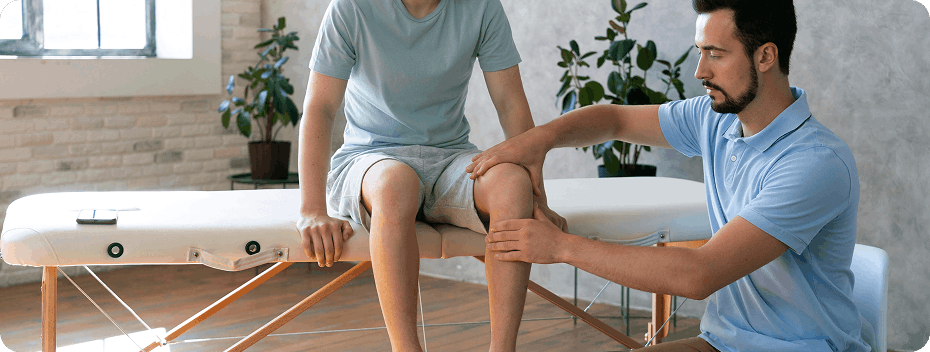
A trained manual physical therapist uses hands-on manual therapy to help you manage chronic pain, increase range of motion, reduce inflammation, treat joint structures, and support faster healing.
Keith Chan leads care. He’s a New York State licensed physical therapist with a Master’s degree from CUNY Hunter College, Graston Technique certification, and more than 10 years of clinical experience. Ian Fundal, DPT, also treats patients.
Musculoskeletal pain doesn’t have to be managed alone. Contact ITNYCPT to learn how hands-on care could help.
Posted on Google
 Monica Alonso
Trustindex verifies that the original source of the review is Google.
This practice is a breath of fresh air. From the front desk to the therapists, everyone is professional and welcoming. I’ve seen Keith for a sports injury and Beth for some chronic pain issues, and both are incredibly skilled. The one-on-one sessions are 30-50 minutes of undivided attention, which is so much better than other clinics I’ve tried. They accept a wide range of insurance plans, including for Pilates-based PT, which is a huge plus. I recommend them to everyone.Posted on Google Maria V.Keith Chan is a master of his craft. As someone who is very active, I needed a PT who understood that I wanted to get back to my workouts, not just be pain-free. Keith’s background as a personal trainer and his Graston certification made him the perfect fit. He created a plan that was both challenging and safe. Their Midtown clinic is clean, modern, and runs on time. I can’t recommend him enough for anyone looking to recover from an injury and get back to what they love.Posted on Google
 Zee D.My knee was in such bad shape when I first came to In Touch. I was practically immobile and somehow pushing myself through the day, but in Keith's hands I have gone through a remarkable transformation. His care and attention, coupled with an intense physical regiment has benefited me greatly. I am glad a good friend recommended him!Posted on Google
 Ava ShabahangThis place is great. Keith has reduced my pain so much, I don’t know what I did before him. It’s small and intimate and I’ve consistently received great care. Heather is also extremely helpful when it comes to booking and changing appointments. I would 100% recommend this practice.Posted on Google
 Jay Yang10/10 just finished day 1 and 10 minutes into the session I knew I came to the right place. Looking forward to working together furtherPosted on Google
 Susan GoldbergKeith understands the body better than other physical therapists I’ve been to. I didn’t think my neck and shoulders would ever get back to normal because I hurt for so long. Keith changed that. Never had to take advil to ease the tightness again. Highly recommend the practice.Posted on Google
 Dana SolaI’ve struggled with migraines and neck tension for years, and Beth at In Touch NYC PT has been a game-changer. She has a deep understanding of the body and doesn’t just treat the symptom; she gets to the root cause. Her Pilates-based approach was new to me, but it’s helped my posture and core strength so much. I’m finally seeing real, lasting results.Posted on Google
 Alma CesarI cannot say enough good things about Beth and the team at In Touch NYC. After having my second baby, I was dealing with pelvic floor issues that I thought I just had to live with. Beth specializes in this area and made me feel comfortable from the very first appointment. She is patient, understanding, and incredibly skilled. Their Midtown location is calm and welcoming, which makes a huge difference when you’re dealing with sensitive health issues. I finally feel like myself again. If you’re a mom looking for a pelvic floor PT in NYC, this is the place!!Posted on Google
 Camila GonzalezI’ve been to a few physical therapy clinics in NYC, but In Touch Physical Therapy is on another level. Keith Chan is incredibly knowledgeable and actually takes the time to listen. I went to their Midtown location for a lingering shoulder issue, and Keith built a plan that finally got me back to full strength. I always left feeling heard and confident in my recovery. Highly recommend if you want real one-on-one care.Posted on Google
 Cristina IncisaKeith is exceptional. Professional, knowledgeable, and incredibly attentive. I always feel I’m in the best hands and couldn’t recommend him more highly.
TYPES OF MANUAL THERAPY IN MANHATTAN
Your PT picks techniques based on your evaluation, your symptoms, and how your body responds. Most treatment plans combine two or three of the methods below.
Joint Mobilization
Pulled muscles are one of the most common reasons people book a PT visit. Rest often eases the soreness for a while. It often comes back when a nearby joint stays stiff, because the muscle keeps working around that restriction.
With joint mobilization, your therapist moves the restricted joint using slow, controlled glides of varying amplitude. The goal is to work gently toward the joint’s barrier and restore range of motion. It’s a low-force technique that most patients find comfortable.
Want more detail? Read how joint mobilizations are used in physical therapy.
Soft Tissue Mobilization
This technique targets fibrous, restricted muscle and connective tissue. Your clinician uses deep pressure and targeted rhythmic stretching to find the most restricted areas, then works to free them up.
When it helps, your PT may add instrument-assisted methods such as the Graston Technique, or complementary options like cupping therapy. Keith Chan is a certified Graston provider.
Your care includes:

Full evaluation and goal setting

Individualized treatment plan with phased rehabilitation programs

Progress tracking and regular reassessment
98%
High-Velocity, Low-Amplitude (HVLA) Thrust
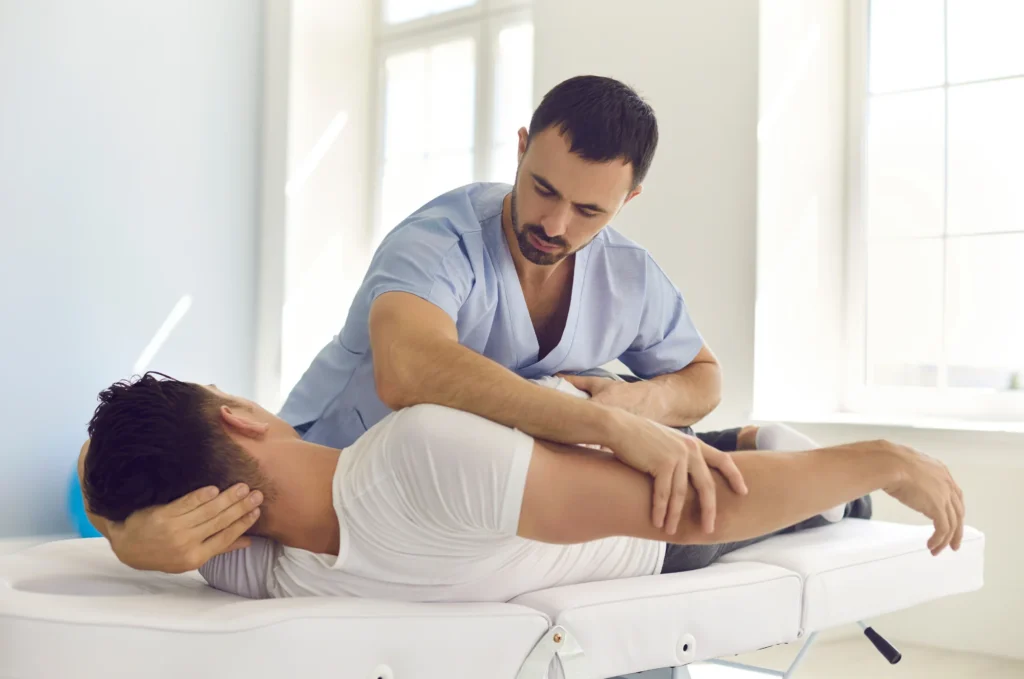
HVLA is a more assertive technique used to relieve chronic stiffness and restore range of motion. Your therapist brings a joint to its restrictive barrier, then applies a quick, small thrust. The movement stays within the joint’s normal anatomical limit.
You may hear a pop. The sensation is brief, and most patients tolerate it well. Before using HVLA, your PT screens for anything that rules it out, such as low bone density, a recent fracture, or certain circulation problems.
Strain-Counterstrain
This gentle method addresses abnormal neuromuscular reflexes that can lead to postural and structural problems. Your PT first finds a tender point, then positions your body so the tenderness eases.
Your PT holds that position for about 90 seconds, then slowly returns you to neutral. This gives the muscle a chance to reset and start healing. It’s safe for patients of all ages and commonly used for back pain.
Muscle Energy Techniques (METs)
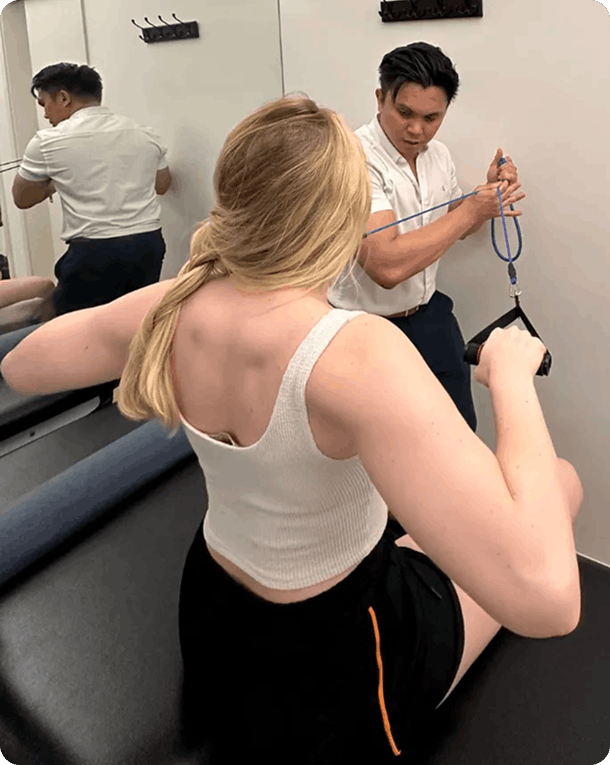
METs help lengthen shortened muscles and free up restricted joints. You gently contract a muscle against a controlled counterforce that your therapist applies in a specific direction.
When you relax, your PT takes the joint to its new barrier. Because METs use active muscle contraction, some patients feel an immediate change in range of motion. METs are active and pain-free, and they work best when you participate fully.
| Technique | How It Works | What It Feels Like | Often Used For |
|---|---|---|---|
| Joint Mobilization | Slow, controlled glides move a stiff joint toward its barrier | Gentle, rhythmic pressure | Stiff joints, lingering muscle strains |
| Soft Tissue Mobilization | Deep pressure and rhythmic stretching, sometimes with Graston tools | Firm pressure, mild tenderness | Tight muscles, restricted connective tissue |
| HVLA Thrust | A quick, small thrust at the joint's restrictive barrier | Brief, sometimes with a pop | Chronic joint stiffness, limited range of motion |
| Strain-Counterstrain | Holds a position of ease for about 90 seconds | Very gentle, passive | Back pain, postural tension |
| Muscle Energy Techniques | You contract against light resistance, then the joint moves further | Active, low effort | Shortened muscles, restricted joints |
Conditions Treated and Results You Can Expect
Hands-on treatment helps with a wide range of musculoskeletal problems, including:
- Back pain
- Pilates for neck pain relief
- Shoulder, hip, or knee pain
- Muscle tension and tightness from desk work, training, or stress
- Headaches and migraines linked to neck and shoulder tension
- TMJ-related jaw pain
- Tendon soreness from overuse
- Post-surgical recovery, including post-surgical recovery exercises for joint repair or replacement
- Balance issues or reduced coordination
- Difficulty walking, lifting, or training
Results depend on how long you’ve had symptoms, your general health, and how consistently you do your home exercises. Many patients move more easily within the first few visits. Lasting change usually takes several weeks of hands-on work combined with strengthening.
Manual Therapy for Chronic Pain in NYC
Long-standing aches often come with stiff joints, guarded muscles, and movement habits that keep the cycle going. Hands-on techniques reduce that stiffness so you can move and train with less discomfort.
Your PT then adds exercise to build strength around the problem area. For people with chronic pain, that combination tends to hold up better than rest or medication alone.

5-STAR GOOGLE RATING
We are proud to have a 5-star Google rating! This demonstrates our commitment to excellent service and hopefully builds trust with new customers!

Over 50 5-star google reviews
We are grateful for our more than 50 5-star Google reviews! We strive to continue delivering 5-star service at all of our locations!
— Long Term Recovery
How Is Manual Therapy an Effective Part of Physical Therapy?
Manual therapy works best as one part of a broader plan. Clinical practice guidelines from the American Physical Therapy Association’s orthopedic academy support combining hands-on techniques with exercise for neck pain and back pain.
Before treatment starts, your PT completes a full evaluation. That includes your history, joint mobility, strength and movement testing, plus screening for circulation or other issues that could make certain techniques unsafe.
From there, your PT picks the approach that fits your needs. Hands-on work can loosen scar tissue, reduce swelling, and prepare a joint for the strengthening exercises that follow. It’s non-invasive and suitable for patients of all ages.
Many patients come to us after surgery, especially knee or hip replacement, when scar tissue and stiffness limit how far a joint can bend. Others arrive after a fall, car accident, sports injury,y or illness that left them weaker than usual. Our PTs are trained to evaluate and treat the movement problems that follow.
Expect your plan to combine several approaches, each with a specific job. Some exercises build balance and strength; others restore range of motion. Hands-on techniques ease soreness, swelling, and inflammation so the rest of your plan can move faster.
Schedule an Appointment

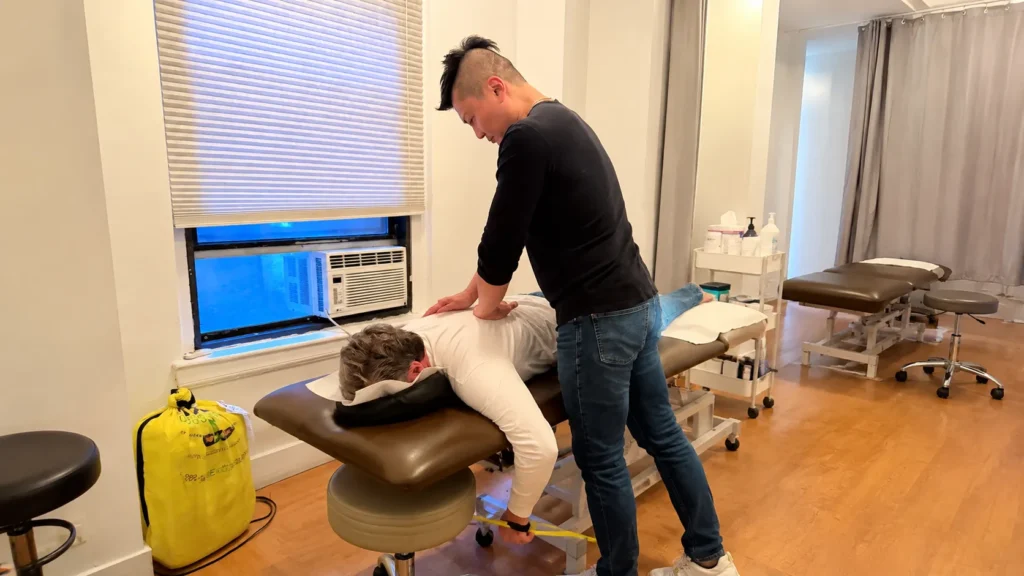
What to Expect During Manual Therapy Sessions
Most manual therapy sessions last 30 to 45 minutes. Your first visit starts with an evaluation, and your PT walks you through the plan before hands-on work begins.
Follow-up visits mix hands-on techniques with exercise and regular progress checks. One-on-one sessions are available on request.
ITNYCPT accepts many major insurance plans, and our team reviews your coverage before care starts. Self-pay patients pay $120 per session for physical therapy, including manual therapy.
| Detail | What to Expect |
|---|---|
| Session length | 30 to 45 minutes for most sessions |
| First visit | Evaluation, goal setting, and a treatment plan before hands-on work |
| Self-pay rate | $120 per physical therapy session |
| Insurance | Accepts many major plans; coverage reviewed before care starts |
| One-on-one care | Available on request |
| Manhattan clinics | Midtown West and Financial District |
Manual Therapy Near RYou in NYC
ITNYCPT offers manual therapy at two Manhattan clinics. Our Midtown West office on West 56th Street is a short subway or bus ride from the Upper West Side, the Upper East Side, the Fashion District, Flatiron, and the NoMad district.
Many of our Midtown and Upper East Side patients come in for manual therapy for neck and shoulder tension after long days at a desk.
Our Financial District office on John Street is a short walk from Tribeca and close to most downtown subway lines. Long Island patients can visit our Woodbury clinic.
Frequently Asked Questions
Does manual therapy hurt?
Most techniques feel like firm pressure or a deep stretch. You may feel some soreness for up to 24 hours after a session, similar to a workout. Tell your PT if anything feels sharp, and they’ll adjust the technique.
Is manual therapy the same as massage?
No. Massage mainly targets muscles for relaxation. Manual therapy from a PT targets specific joint and tissue restrictions found during your evaluation, and it’s paired with exercise to restore function.
How many sessions will I need?
It depends on your condition and history. Your first evaluation gives your PT a baseline, and your plan is adjusted at each follow-up based on how you’re responding.
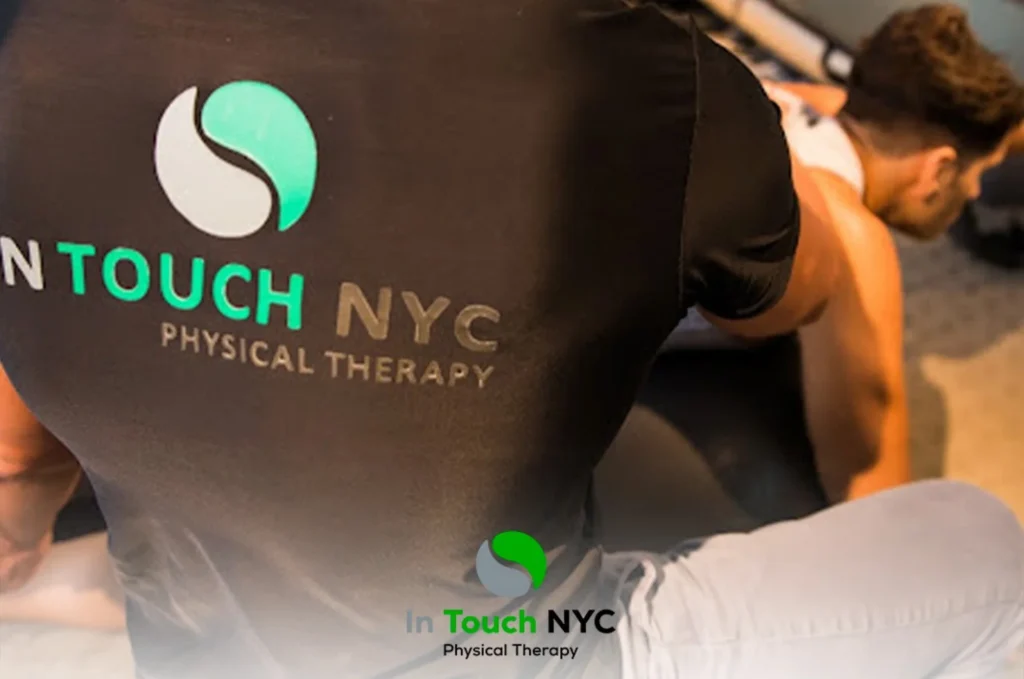
SEE OUR MANUAL THERAPY SPECIALISTS IN MANHATTAN
In New York, manual therapy falls within the scope of physical therapy practice. It works best in the hands of a PT trained in each technique.
Every manual therapy specialist on our team is a licensed physical therapist, and Keith Chan holds Graston Technique certification. If you think hands-on care could help, schedule an appointment with us today!