
Headaches Treatments in Manhattan: PT for Neck-Related Pain
Headache treatments in Manhattan range from neurology visits and medication to hands-on physical therapy. At In Touch NYC Physical Therapy (ITNYCPT), we focus on head pain linked to the neck, posture, and tight muscles, such as tension-type and cervicogenic headaches. Care combines manual techniques, targeted exercise, and posture retraining, and most sessions last 30 to 45 minutes.
Keith Chan, a New York State licensed physical therapist, treats these patients at our Manhattan offices. He earned his Master’s degree in Physical Therapy at CUNY Hunter College and is a Graston Technique provider, one of several physical therapy certifications he holds. If you searched for a headache physical therapist near me and landed here, this page covers what we treat, what a visit looks like, and when to see a doctor first.
PT is one of several headaches treatments in NYC that work without medication. It also fits well alongside care from your primary doctor or neurologist.
Request An Appointment
Which Headaches Respond to Physical Therapy?
The three most common primary headache types are tension-type, migraine, and cluster. Cervicogenic headaches, which start in the neck, are a fourth type where PT plays a lead role.
| Headache Type | How It Usually Feels | Common Drivers | Role of PT |
|---|---|---|---|
| Tension-type | Dull band of pressure across the forehead, temples, or back of the skull | Stress, long desk hours, tight neck and upper back muscles | Primary |
| Cervicogenic | One-sided pain that starts at the base of the skull and spreads forward | Neck joint stiffness, disc or soft tissue problems, posture | Primary |
| Migraine | Throbbing, often one-sided, with nausea and light sensitivity; lasts 4 to 72 hours | Neurological; triggers include sleep loss, alcohol, and certain foods | Supporting, alongside medical care |
| Cluster | Severe pain around one eye, several times a day for weeks | Neurological | Not a primary treatment; see a neurologist |
Tension-Type Headaches
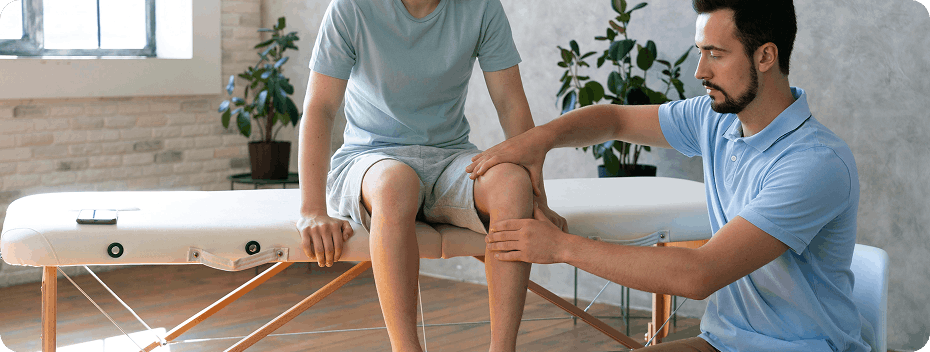
Tension-type headaches are the most common kind, according to the Mayo Clinic. They usually feel like a dull, aching band of pressure across the forehead, the temples, or the back of the skull. Most episodes are mild to moderate.
Stress is the most commonly reported trigger, and sore, tight muscles in the scalp, neck, and upper back often come with it. Researchers now think heightened pain sensitivity plays a bigger role than muscle contraction alone. That’s why care works on both muscle tightness and the daily habits behind it.
Much of the stress headache relief desk workers in Manhattan, NY, need comes from changing how they sit for eight or more hours a day. The tension headache treatment for Manhattan patients here pairs soft tissue work with exercises that make good posture easier to hold through a long workday.
Cervicogenic Headaches: When a Stiff Neck and Headache Go Together
A cervicogenic headache feels like it’s in the head but comes from the cervical spine, including its joints, discs, and soft tissues, as the American Migraine Foundation explains. It often stays on one side, starts at the base of the skull, and can spread toward the forehead or behind the eye. Certain neck movements or pressure on specific spots can trigger it.
A stiff neck and headache that show up together, plus a neck that turns less than it used to, is the pattern a PT evaluation checks for. Because other conditions can mimic this problem, a doctor’s assessment helps confirm the source. Once it’s confirmed, PT and a steady exercise routine often produce the best outcomes.
Migraine Headaches
Migraine attacks often bring nausea, vomiting, and sensitivity to light and sound. The pain tends to throb on one side and usually lasts 4 to 72 hours, according to the World Health Organization.
Migraine is a neurological condition, so medical care comes first. PT plays a supporting role when neck tightness or posture feeds into attacks. Headache and migraine treatments in Manhattan work best when your physician and your therapist share the same plan. For more on migraine relief through hands-on care, read our guide to physical therapy for migraines.
Cluster Headaches
Cluster headaches are far less common and affect fewer than 1 in 1,000 adults, according to the World Health Organization. They cause intense pain around one eye and strike several times a day for weeks or months, followed by a symptom-free period called remission. They need care from a neurologist, and PT is not a primary treatment.
How Physical Therapy Helps Relieve Head Pain
The head pain treatment for Manhattan patients at ITNYCPT centers uses three approaches, all aimed at the neck, upper back, and shoulders.
Posture Correction
Poor posture often contributes to recurring head pain. Hours at a laptop pull the chin forward and load the small muscles at the base of the skull. Your therapist looks at how you sit, stand, and work, then gives you stretches and exercises that take strain off those muscles.
Small desk changes help too, like raising a monitor to eye level or setting a reminder to stand every 30 minutes. Clinical Pilates is another way to build postural control; our article on Pilates for neck pain relief shows how it works.
Muscle Strengthening
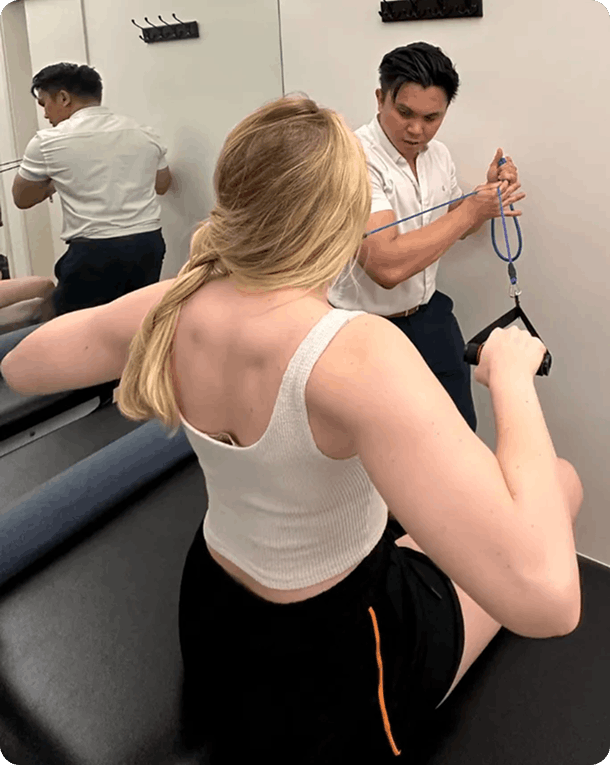
Weak muscles in the neck and upper back make good posture harder to hold, so nearby muscles overwork and tighten. Strengthening the deep neck flexors and the muscles between the shoulder blades can help reduce how often episodes happen and how intense they feel. Common exercises include chin tucks, rows, and shoulder blade squeezes.
Manual Therapy
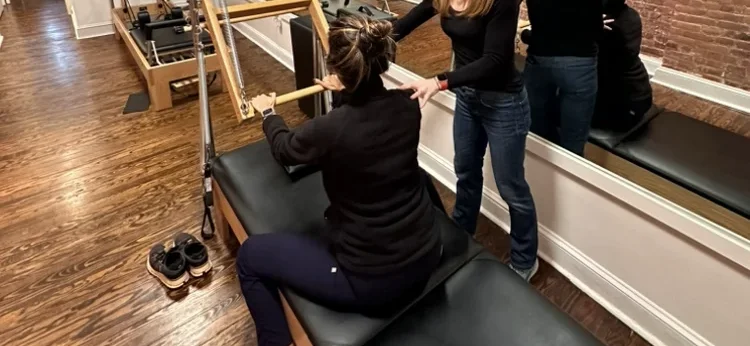
Manual therapy is a hands-on approach used for tension-type and neck-related headaches. It can include massage, trigger point therapy, myofascial release, gentle neck joint mobilization, and Graston instrument-assisted soft tissue work. These techniques ease tightness around the scalp, jaw, neck, and upper back, which can lower the frequency and severity of episodes.
When to See a Therapist for Chronic Headaches
A headache pattern becomes chronic when it occurs on 15 or more days a month for at least three months, according to the Mayo Clinic. At that stage, it affects work, sleep, and mood. Leaning on pain relievers can backfire, since medication-overuse headache is the most common secondary headache disorder, according to the World Health Organization.
Seeing a therapist for chronic headaches makes sense when you take headache medicine more than twice a week or when the pattern keeps you from normal activities. A physical therapist looks for drivers medication can’t reach, such as stiff neck joints, weak postural muscles, jaw clenching, and desk habits. Keep your doctor involved so both sides of your care stay aligned.
What to Expect From Headache Treatment at ITNYCPT
Your first visit starts with an evaluation. Your therapist asks about your symptoms, triggers, and medical history, then checks neck range of motion, posture, jaw movement, and muscle tenderness. If anything suggests a condition that needs medical care, your therapist will refer you to a physician.
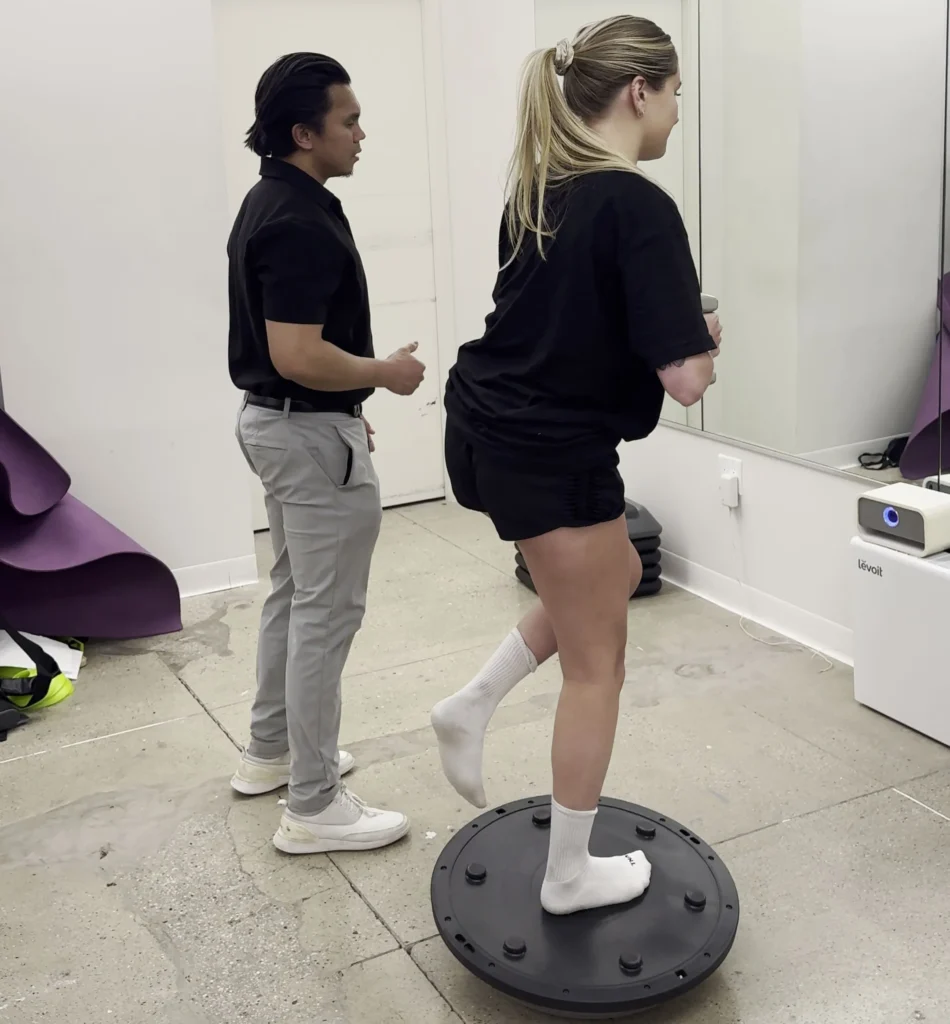
From there, you and your therapist build a plan together, usually a mix of exercises, stretches, and hands-on techniques. You’ll also get a short home program, since the work you do between visits drives much of the progress. Your therapist reviews your progress at each session and adjusts the plan as needed.
Most sessions last 30 to 45 minutes, and one-on-one sessions are available upon request. We accept many major insurance plans, and self-pay rates are listed below.
| Detail | What to Expect |
|---|---|
| Session length | Most sessions last 30 to 45 minutes |
| Self-pay rate | $120 per session |
| Clinical Pilates (optional add-on) | $120 per session |
| One-on-one care | Available upon request |
| Insurance | We accept many major insurance plans |
| Referral | Often not required in New York; some plans ask for one |
When a Headache Needs a Doctor First
PT is not the right first step for every headache. Get emergency care if you have any of these symptoms:
- A sudden, very severe headache
- A headache with fever, stiff neck, confusion, seizures, double vision, weakness, numbness, or trouble speaking.
- A headache after a head injury, especially one that keeps getting worse
See your doctor as well if your usual pattern changes or your headaches suddenly feel different.
Headache Care Across Manhattan
ITNYCPT’s Midtown office sits in the Fashion District, with a second location in the Financial District.
Tension headache treatment for Midtown professionals, asked about most often, starts with desk setup and screen habits. Patients also come in for headache pain relief from the Upper West Side, the Upper East Side, and the NoMad District, since each has an easy subway or walking route to our offices.
Posted on GoogleTrustindex verifies that the original source of the review is Google. This practice is a breath of fresh air. From the front desk to the therapists, everyone is professional and welcoming. I’ve seen Keith for a sports injury and Beth for some chronic pain issues, and both are incredibly skilled. The one-on-one sessions are 30-50 minutes of undivided attention, which is so much better than other clinics I’ve tried. They accept a wide range of insurance plans, including for Pilates-based PT, which is a huge plus. I recommend them to everyone.Posted on GoogleTrustindex verifies that the original source of the review is Google. Keith Chan is a master of his craft. As someone who is very active, I needed a PT who understood that I wanted to get back to my workouts, not just be pain-free. Keith’s background as a personal trainer and his Graston certification made him the perfect fit. He created a plan that was both challenging and safe. Their Midtown clinic is clean, modern, and runs on time. I can’t recommend him enough for anyone looking to recover from an injury and get back to what they love.Posted on GoogleTrustindex verifies that the original source of the review is Google. My knee was in such bad shape when I first came to In Touch. I was practically immobile and somehow pushing myself through the day, but in Keith's hands I have gone through a remarkable transformation. His care and attention, coupled with an intense physical regiment has benefited me greatly. I am glad a good friend recommended him!Posted on GoogleTrustindex verifies that the original source of the review is Google. This place is great. Keith has reduced my pain so much, I don’t know what I did before him. It’s small and intimate and I’ve consistently received great care. Heather is also extremely helpful when it comes to booking and changing appointments. I would 100% recommend this practice.Posted on GoogleTrustindex verifies that the original source of the review is Google. 10/10 just finished day 1 and 10 minutes into the session I knew I came to the right place. Looking forward to working together furtherPosted on GoogleTrustindex verifies that the original source of the review is Google. Keith understands the body better than other physical therapists I’ve been to. I didn’t think my neck and shoulders would ever get back to normal because I hurt for so long. Keith changed that. Never had to take advil to ease the tightness again. Highly recommend the practice.Posted on GoogleTrustindex verifies that the original source of the review is Google. I’ve struggled with migraines and neck tension for years, and Beth at In Touch NYC PT has been a game-changer. She has a deep understanding of the body and doesn’t just treat the symptom; she gets to the root cause. Her Pilates-based approach was new to me, but it’s helped my posture and core strength so much. I’m finally seeing real, lasting results.Posted on GoogleTrustindex verifies that the original source of the review is Google. I cannot say enough good things about Beth and the team at In Touch NYC. After having my second baby, I was dealing with pelvic floor issues that I thought I just had to live with. Beth specializes in this area and made me feel comfortable from the very first appointment. She is patient, understanding, and incredibly skilled. Their Midtown location is calm and welcoming, which makes a huge difference when you’re dealing with sensitive health issues. I finally feel like myself again. If you’re a mom looking for a pelvic floor PT in NYC, this is the place!!Posted on GoogleTrustindex verifies that the original source of the review is Google. I’ve been to a few physical therapy clinics in NYC, but In Touch Physical Therapy is on another level. Keith Chan is incredibly knowledgeable and actually takes the time to listen. I went to their Midtown location for a lingering shoulder issue, and Keith built a plan that finally got me back to full strength. I always left feeling heard and confident in my recovery. Highly recommend if you want real one-on-one care.Posted on GoogleTrustindex verifies that the original source of the review is Google. Keith is exceptional. Professional, knowledgeable, and incredibly attentive. I always feel I’m in the best hands and couldn’t recommend him more highly.

5-STAR GOOGLE RATING
We are proud to have a 5-star Google rating! This demonstrates our commitment to excellent service and hopefully builds trust with new customers!

Over 50 5-star google reviews
We are grateful for our more than 50 5-star Google reviews! We strive to continue delivering 5-star service at all of our locations!
Frequently Asked Questions
Can Physical Therapy Help With Headaches?
Yes, especially tension-type and cervicogenic headaches. PT eases muscle tightness, improves neck movement, and changes posture habits that feed recurring episodes. For migraines, it works best as a supporting part of medical care.
Do I Need a Referral to Start?
In New York, many patients can start PT without a referral, though some insurance plans require one. Our front desk can check what your plan needs before your first visit.
Is Every Session One-on-One?
One-on-one sessions are available upon request. Let us know your preference when you book.
How Is PT Different From Seeing a Headache Doctor?
A neurologist diagnoses headache disorders and manages medication, injections, and imaging. A physical therapist treats the physical drivers, such as neck stiffness, weak postural muscles, and muscle tightness. Many people do best with both.
Please fill out this form, and we will contact you about scheduling.
INCORPORATING PHYSICAL THERAPY INTO A TREATMENT PLAN
If you’re interested in incorporating physical therapy into a treatment plan for headaches, there are several things you can do. Here are some tips to get started:
Consult with a Physical Therapist
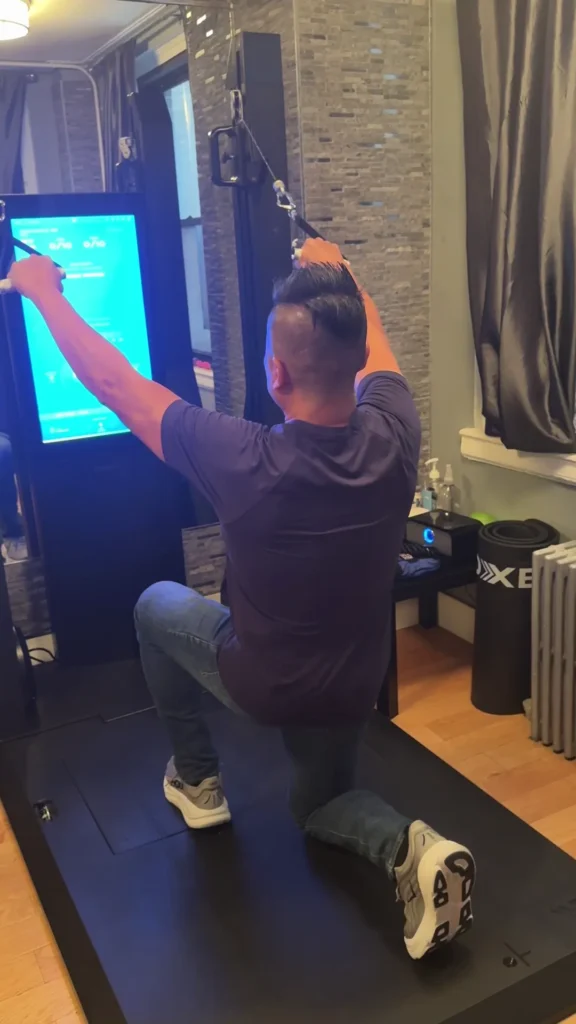
The first step in incorporating physical therapy into a treatment plan for headaches is to consult with a physical therapist. They can evaluate the patient’s condition and recommend a course of treatment that is tailored to their individual needs.
Develop a Treatment Plan
Work with the physical therapist to develop a treatment plan for the patient. This may include a combination of exercises, stretches, and manual therapy techniques that are designed to relieve tension in the muscles of the head, neck, and shoulders.