


Keith Chan, a New York State licensed physical therapist, notes that the approach and timing depend on the treatment stage and health history.
Key Takeaways
- Physical therapy can help at almost any stage of cancer care, including before surgery, during active treatment, and well into survivorship, not just after treatment ends.
- A physical therapist builds an individual plan of care around pain, fatigue, mobility, lymphedema, and balance, then adjusts it as blood counts and energy levels change during treatment.
- Some situations call for a modified or delayed start, such as active tumor sites, low blood counts, or recent surgery, so coordination with the oncology team matters before beginning care.
- Recovery timelines after chemotherapy vary widely, with fatigue often lingering the longest, sometimes for six months to a year after treatment ends.
- Many states allow direct access to physical therapy without a doctor’s referral, though insurance coverage and out-of-pocket costs still depend on the specific plan.
Is Physical Therapy Good for Cancer Patients
Yes, at nearly every stage, including cancer surgery, chemotherapy, and radiation recovery. A physical therapist builds an exercise program around each person’s current energy level and limits.
Research on oncology rehabilitation shows measurable gains. Prehabilitation before surgery has been linked to improved physical function and functional capacity afterward.
Structured exercise during treatment has been shown to reduce cancer-related fatigue. Physical therapy is also associated with better quality of life scores in cancer survivors, along with lower reported anxiety and depression during recovery.
Cancer survivors often return to daily activities more fully. In some cases, they also find it easier to return to work.
How Oncology and Physical Therapy Work Together
Surgery, chemotherapy, and radiation each bring their own treatment side effects. Cancer physical therapy targets these effects directly.
Pain after cancer surgery often gets better with post-surgery rehabilitation exercises and manual therapy. Cancer-related fatigue improves with steady, slowly increasing activity, not rest alone.
Mobility work restores range of motion in joints affected by surgery or scar tissue. Some physical therapists use the Graston Technique to treat tight or stuck soft tissue.
Lymphedema is swelling from a buildup of lymph fluid after lymph node removal or radiation. It responds well to complete decongestive therapy, one of several physical therapy modalities used to manage treatment-related side effects.
This approach combines manual lymphatic drainage, compression bandaging, and skin care. It has been shown to reduce swelling volume during treatment.
Nerve pain from chemotherapy, sometimes called chemotherapy-induced peripheral neuropathy, can cause numbness and tingling that affects balance and hand function. Physical therapy treats this with desensitization exercises and coordination training. Occupational therapy often joins in when numbness affects daily tasks like dressing or cooking.
Balance issues from chemotherapy raise fall risk. A physical therapist first identifies the cause, whether nerve damage, muscle weakness, or inner ear changes. Then they build exercises around that cause.
Beyond the physical side, structured exercise during and after treatment has also been linked to lower fatigue-related anxiety and improved mood, which matters since fatigue, reduced activity, and low mood tend to feed into each other over time.
Physical Therapy Contraindications for Cancer Patients
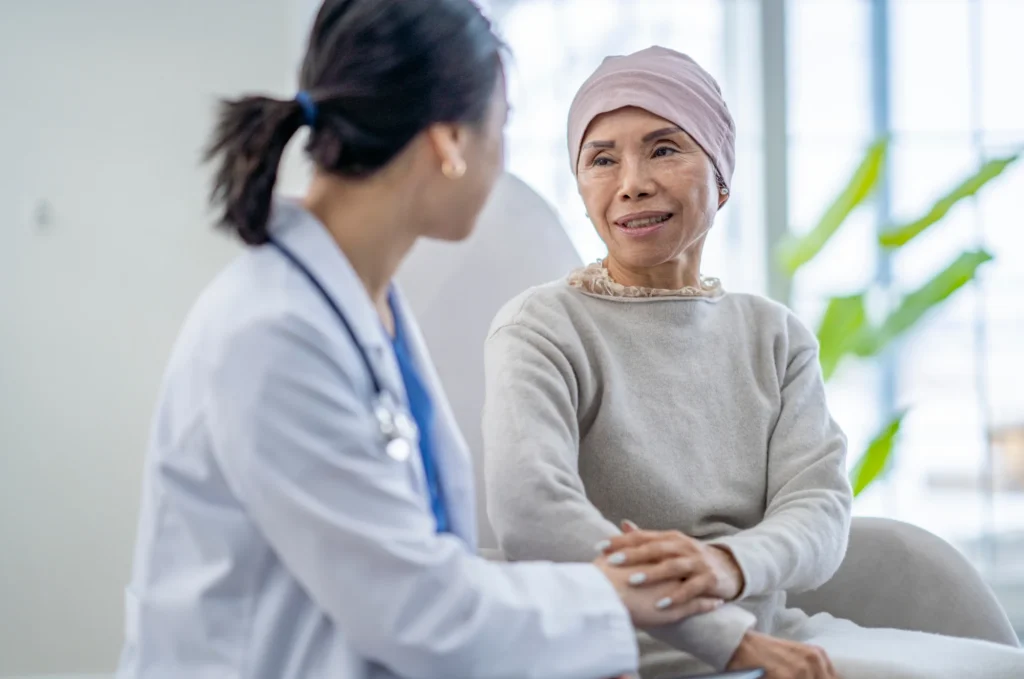
Physical therapists avoid direct pressure over active tumor sites. They use lighter touch when treatment has lowered bone density. Low blood counts, unstable vital signs, or recent cancer surgery may mean a delayed start.
Anyone undergoing cancer treatment should talk with their oncologist first about the timing of physical therapy. A physical therapist should also check in with the oncology team before starting in these cases.
When to Start Cancer Physical Therapy After Diagnosis
Timing depends on the treatment plan, not a set date. Prehabilitation builds strength before cancer surgery or chemotherapy, and starting this early has been associated with better functional outcomes once treatment begins.
During treatment, therapy manages side effects as they show up. After treatment, the focus shifts to rebuilding strength and managing anything that lasts into survivorship. Starting early is linked to better long-term function.
What Happens in an Oncology Physical Therapy Session
Before a session starts, it helps to know what to wear to physical therapy, since the appointment starts with a check of strength, range of motion, and balance. The physical therapist develops a treatment plan that includes manual therapy, targeted exercises, and a home program.
Some clinics use Pilates-based therapeutic exercises to improve core strength and mobility. Regular follow-up shows whether the plan needs to be changed.
Best Exercises for Cancer Patients
- Low-impact aerobic activity, like walking or stationary cycling, to support cardiovascular capacity
- Light resistance training to protect muscle mass and support bone density during treatment
- Range-of-motion exercises for joints affected by surgery or radiation
- Balance exercises for numbness, tingling, or medication-related dizziness
- Coordination exercises for hand function affected by neuropathy, useful for tasks like buttoning a shirt or holding utensils
Intensity gets adjusted based on fatigue and blood counts, since both change during treatment.
Where Cancer Physical Therapy Happens
Home-based programs use low-risk exercises matched to current energy level. Inpatient rehabilitation happens during a hospital stay after major cancer surgery. It focuses on basic function like walking and self-care tasks.
Outpatient care starts once someone is stable enough to travel. It focuses on longer-term goals related to strength, mobility, and rehab physical therapy aimed at returning to normal activities. In New York City, outpatient physical therapy clinics are a common next step after inpatient care.
How Long Recovery Takes After Chemo
Recovery time varies by treatment type and overall health. Many people notice more energy and strength within two to four weeks after finishing chemotherapy. Others, especially those on stronger treatment plans, need three to six months to feel closer to normal.
Fatigue often lingers the longest. It can last six months to a year after treatment ends. Long-term recovery also depends on age, other health conditions, and activity level before the cancer diagnosis.
These numbers reflect general patterns, not a promise for any one person. Real recovery time depends on treatment strength, cancer type, and overall health going in. A physical therapist tracking progress over real sessions gives a better sense of timing than any estimate alone.
Do You Need a Referral for Oncology Physical Therapy
Many states, including New York, allow direct access to physical therapy without a doctor’s referral. Insurance may still require one for reimbursement, though.
Deductible, copay, and coinsurance terms affect out-of-pocket cost. Coverage differs between PPO and HMO plans. Checking with the insurance provider confirms what’s needed.
How to Find the Right Physical Therapist for Cancer Care
Look for real experience treating people during or after cancer treatment, not just a general orthopedic background. Useful training includes lymphedema management and oncology-specific certifications.
Keith Chan, with a Master’s degree in Physical Therapy from CUNY Hunter College and a Graston Technique certification, reflects that kind of background. One-on-one care allows for steadier tracking of how someone responds over time.
Common Questions About Physical Therapy for Cancer Patients
- Can physical therapy help with cancer-related fatigue? Yes. Steady, gradually increasing exercise is well supported as a way to reduce fatigue during and after treatment.
- Is it safe to exercise during chemotherapy? In most cases, yes, with a physical therapist adjusting intensity based on blood counts and energy level.
- Does insurance cover oncology physical therapy? Most plans cover it when medically needed, though coverage varies by plan and network status.
- How many sessions does oncology physical therapy typically involve? It ranges from a short course for a single issue to ongoing therapy throughout long-term recovery.
- What is chemotherapy-induced peripheral neuropathy? Nerve damage from certain chemotherapy drugs can cause numbness, tingling, or weakness, most often in the hands and feet.