

Keith Chan, ITNYCPT’s subject-matter expert, is a New York State-licensed physical therapist. Cosmetic radiofrequency procedures are not part of routine physical therapy care. Anyone considering aesthetic RF should consult a licensed clinician with training and experience in the specific device being used.
Key Takeaways
- Radiofrequency treatment may improve mild skin laxity, fine lines, and skin texture, but results are usually gradual and subtle rather than surgical.
- Most visible changes occur within 2 to 6 months, depending on the device, treatment depth, number of sessions, and individual healing response.
- Before-and-after photos are most reliable when they use the same lighting, posture, camera angle, timing, and treatment details. Combined procedures and weight changes should also be disclosed.
- RF microneedling differs from noninvasive RF and may involve more downtime and higher risks, including burns, scarring, fat loss, and nerve damage.
- RF usually works best for mild to moderate looseness and cannot remove large amounts of excess skin or match the results of surgical skin tightening.
What Results Can You Expect?
RF treatment may improve skin firmness, texture, elasticity, and the appearance of small wrinkles by delivering controlled heat beneath the skin’s surface. This heat triggers a tissue repair response associated with collagen and elastin production.
Systematic reviews report measurable improvements in skin laxity and facial or body appearance, but results differ across devices, treatment settings, and study methods.
The best candidates usually have early signs of aging or mild to moderate looseness. The visible change is often subtle, such as a slightly firmer jawline, smoother surface, or softened fine lines. People seeking a large lift may not consider the result meaningful.
RF cannot remove large folds of loose skin or reposition deeper facial tissue. It also cannot match the results of surgical skin tightening when sagging is advanced. Surgical treatment can produce greater change, but it involves anesthesia, incisions, scars, and a longer recovery period.
Skin Tightening RF Before and After
Skin-tightening RF results before and after differ across the face, neck, arms, and abdomen because each treatment area has varying skin thickness, fat distribution, and tissue support.
Results also depend on the device, depth, temperature, and number of sessions. Photos from one body area should not be used to predict results in another.
Face and Neck Results
Facial radiofrequency skin tightening may soften fine lines and improve mild laxity around the cheeks, jawline, and neck.
Research reviews have reported improvements in elasticity, wrinkles, skin laxity, and overall facial appearance, although many studies rely on subjective ratings and use varying treatment protocols.
Temporary swelling may make the face appear tighter immediately after treatment. That early effect is not the same as new collagen formation. Photos taken several months later provide a better view of the lasting result.
Pain & Inflammation Reduction
INDIBA® tecar therapy session | IT NY Physical Therapy (New York, NY)
Post-Surgical Recovery
INDIBA® treatment series | IT NY Physical Therapy (New York, NY)
Sports Rehabilitation
INDIBA® tecar therapy session | IT NY Physical Therapy (New York, NY)
Radiofrequency Arms Before and After
Radiofrequency arm before-and-after photos may show mild smoothing or tightening when the skin has limited looseness. Substantial excess tissue, low elasticity, major weight loss, and natural aging can reduce the visible effect.
Monopolar and bipolar RF devices have shown measurable improvements in body skin laxity, but the expected degree of change varies.
Arm position can make results look larger or smaller. Both images should use the same shoulder position, elbow angle, camera distance, and lighting. Rotating or pressing the arm against the body can change the appearance of folds.
Radio Frequency Tummy Tightening Before and After
Radio-frequency tummy-tightening before-and-after images may show modest smoothing across the abdomen. RF cannot repair abdominal muscle separation, remove a large skin fold, or replace an abdominoplasty. Weight changes, pregnancy history, scars, fat distribution, and skin elasticity can all affect the outcome.
Some abdominal treatments combine RF energy with liposuction or another body-contouring procedure. Those photos cannot show how much improvement came from RF alone. Every procedure should be disclosed beside the images.
Readers comparing body-focused RF options can also learn how INDIBA body treatment uses radiofrequency energy for aesthetic and therapeutic purposes.
How Long Until Results Appear?
Most meaningful results develop within 2 to 6 months because the body needs time to produce and reorganize collagen and elastin. Some people notice temporary firmness after one session, but swelling and short-term tissue contraction may contribute to that early change.
Cleveland Clinic reports that some patients need two to six treatments, depending on their response and treatment goals.
The answer to “How long after radio frequency do you see results?” also depends on the type of procedure. Noninvasive surface RF, fractional RF, and RF microneedling deliver energy in different ways. They should not be grouped into a single universal timeline.
Several factors can change the final result:
- Degree of skin laxity and sun damage
- Device type, depth, and treatment settings
- Number and spacing of sessions
- Age, smoking, weight changes, and health history
- Use of fillers, lasers, liposuction, or other procedures
More sessions do not guarantee greater improvement. Treatment depth, device selection, clinician training, and tissue response also matter. A treatment plan should follow the device’s authorized use and the patient’s clinical assessment.
How Radio Frequency Treatment Works
Radiofrequency RF devices deliver electrical energy that creates controlled heat in selected tissue layers. This heat can stimulate fibroblasts, which are cells involved in collagen production and tissue repair. The repair process may lead to improved skin firmness and elasticity over time.
Traditional RF skin treatment delivers heat without needles entering the skin. RF microneedling uses small needle-like electrodes to deliver energy at selected depths.
The two approaches differ in invasiveness, recovery time, potential outcomes, and side effects. In rehabilitation, INDIBA radiofrequency therapy uses a controlled 448 kHz current for therapeutic heating, which differs in purpose from cosmetic RF skin tightening.
Devices may use monopolar, bipolar, multipolar, fractional, or needle-based energy delivery. Research shows large differences in treatment parameters and technologies across clinical studies. Results from a single device should not be taken as proof that every RF system will perform the same way.
What Happens During RF Treatment?
An RF treatment should begin with a review of medical history, medications, previous procedures, skin condition, and treatment goals. The provider examines the treatment area and explains expected benefits, limits, alternatives, recovery, and risks.
This cosmetic assessment differs from a physical therapy evaluation, which focuses on symptoms, movement, strength, functional testing, goals, and rehabilitation planning. Physical therapy may also use modalities such as therapeutic ultrasound, which delivers sound waves rather than RF energy to tissues beneath the skin.
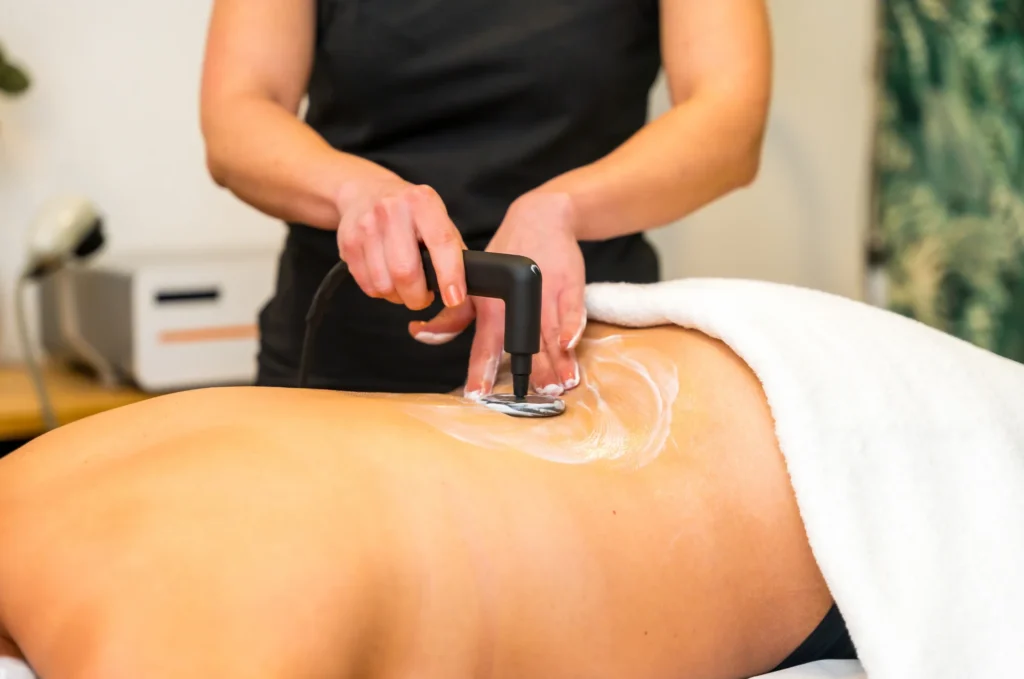
During noninvasive RF, the clinician cleans the skin and moves an applicator across the treatment area. The skin may feel warm, tingly, or mildly uncomfortable. Intense burning or sharp pain should be reported immediately.
RF microneedling uses needles that enter the skin before delivering energy. Numbing medication is often used, but pressure, pinching, or discomfort may still occur.
Recovery may include redness, tenderness, swelling, crusting, or pinpoint bleeding. RF microneedling should not be confused with dry needling in physical therapy, which targets muscle tissue and does not deliver radiofrequency energy.
Who Is a Good Candidate?
RF generally suits people with mild to moderate skin laxity who want gradual improvement without surgical skin removal.
It may be used across many skin tones because RF does not rely on pigment targets in the same way as some laser procedures. This does not mean every device, depth, or setting carries the same risk for every skin type.
Suitability depends on health history and the specific procedure. Active infection, open wounds, poor healing, inflammatory skin conditions, pregnancy, blood-thinning medication, abnormal scarring, or certain implanted devices may affect the decision. The treating clinician should screen for device-specific contraindications.
Someone with severe sagging may be medically eligible but unlikely to achieve the desired result. In that case, the main limitation is not always safety. The procedure may be unable to produce enough correction.
Side Effects and Safety
Common side effects include short-term redness, swelling, tenderness, bruising, discomfort, or temporary changes in skin texture. Systematic reviews also report temporary pain, crusting, edema, hyperpigmentation, and acne-like reactions across different RF technologies. Recovery varies with treatment depth and whether needles penetrate the skin.
Serious complications are less common but possible. On October 15, 2025, the FDA warned that certain uses of RF microneedling had been associated with burns, scarring, fat loss, disfigurement, nerve damage, and cases requiring medical or surgical treatment.
The FDA states that RF microneedling is a medical procedure and should not be performed with at-home devices.
A safe and effective procedure depends on appropriate patient screening, clinician training, device selection, energy settings, and aftercare. FDA clearance applies to specific devices and intended uses, not to every claim made about a machine. Patients should ask for the device name and the purpose for which it is being used.
Contact the treating clinician for worsening pain, blisters, spreading redness, drainage, unusual numbness, weakness, or unexpected facial movement. Seek urgent care for trouble breathing, severe swelling, or signs of a serious allergic reaction. Do not treat a suspected burn or infection with an unapproved home product.
How Long Do Results Last?
Radiofrequency skin-tightening results may remain visible for 1 to 3 years, but this estimate does not apply to every person or device. Natural aging continues, and sun exposure, smoking, weight changes, skin care, and overall health can affect the long-term result. RF results are not permanent.
Some people choose maintenance treatments after the first series. The timing should reflect the previous response, the present skin condition, the treatment goals, and the device instructions. Maintenance should not follow an automatic package without reassessment.
How Much Does an RF Facial Cost?
An RF facial may cost several hundred to several thousand dollars depending on the device, provider, location, treatment area, and number of sessions.
A single noninvasive treatment and a multi-session RF microneedling plan may have very different total costs. Cosmetic radiofrequency treatments are usually not covered by health insurance.
Compare the complete treatment plan rather than one advertised session price. Ask whether the estimate includes the consultation, numbing, follow-up visits, photography, treatment of multiple areas, and care for complications. Also ask whether another procedure is included in the quoted result.
RF vs. Surgical Skin Tightening
RF usually has less downtime than surgery, but it also creates a smaller change. It may suit someone with mild looseness who accepts gradual and limited improvement. Surgical skin tightening can remove excess tissue and reposition deeper structures when greater correction is needed.
Surgery may involve anesthesia, incisions, swelling, scars, and activity restrictions. RF may require multiple sessions and later maintenance. The choice depends on the amount of loose skin, desired result, medical history, budget, and tolerance for recovery.
Frequently Asked Questions
Can RF Reduce Cellulite?
Some RF devices may reduce the appearance of cellulite by heating tissue and affecting collagen or underlying structures. Results vary, and treatment does not completely remove cellulite. The device should be intended for the body area and purpose being treated.
Pain & Inflammation Reduction
INDIBA® tecar therapy session | IT NY Physical Therapy (New York, NY)
Post-Surgical Recovery
INDIBA® treatment series | IT NY Physical Therapy (New York, NY)
Sports Rehabilitation
INDIBA® tecar therapy session | IT NY Physical Therapy (New York, NY)
Can RF Be Combined With Other Treatments?
RF may be combined with fillers, lasers, microneedling, neuromodulators, or body-contouring procedures. Combined care can change both the result and the risk profile. The FDA notes that it has not cleared microneedling devices for use with another product, so patients should ask exactly what is being combined and why.
Does RF Require Downtime?
Many noninvasive radiofrequency treatments require little downtime, and some patients resume normal activities within a day. RF microneedling may cause redness, swelling, tenderness, crusting, or pinpoint bleeding for several days. Recovery depends on the device, treatment depth, settings, and individual healing response.
References
- U.S. Food and Drug Administration. Potential Risks With Certain Uses of Radiofrequency Microneedling. October 15, 2025.
- Cleveland Clinic. Radio Frequency Skin Tightening: Benefits and Risks.
- Austin GK, Struble SL, Quatela VC. Evaluating the Effectiveness and Safety of Radiofrequency for Face and Neck Rejuvenation.
- Vassão PG, et al. Radiofrequency and Skin Rejuvenation: A Systematic Review.
- Rohrich RJ, et al. Minimally Invasive Skin Tightening of the Face and Body: A Systematic Review.