

In New York City, patients often research these procedures alongside other rehabilitation and wellness questions. They may also look at answers from outpatient clinics like ITNYCPT.
Keith Chan is a New York State-licensed physical therapist at ITNYCPT with a Master’s degree in Physical Therapy from CUNY Hunter College. He is the clinical reviewer cited throughout this guide, providing context on how soft tissue and body composition topics relate to physical therapy care.
The sections below cover how the treatment works, what results and timelines to expect, who is a good candidate, and how it compares with other fat reduction methods.
Key Takeaways
- Radiofrequency lipolysis heats fat cells until their membranes break down, and the body clears them naturally over several weeks.
- Results depend on completing a full series of sessions, usually four to six sessions spaced about a week apart.
- Destroyed fat cells do not return, but the remaining ones can still expand with future weight gain.
- Side effects stay mild, mostly temporary redness or warmth, with little to no downtime.
- Radiofrequency is one of several non-invasive fat reduction options, alongside cryolipolysis and laser lipolysis, each working through its own mechanism.
What Is Radiofrequency Lipolysis and How It Works
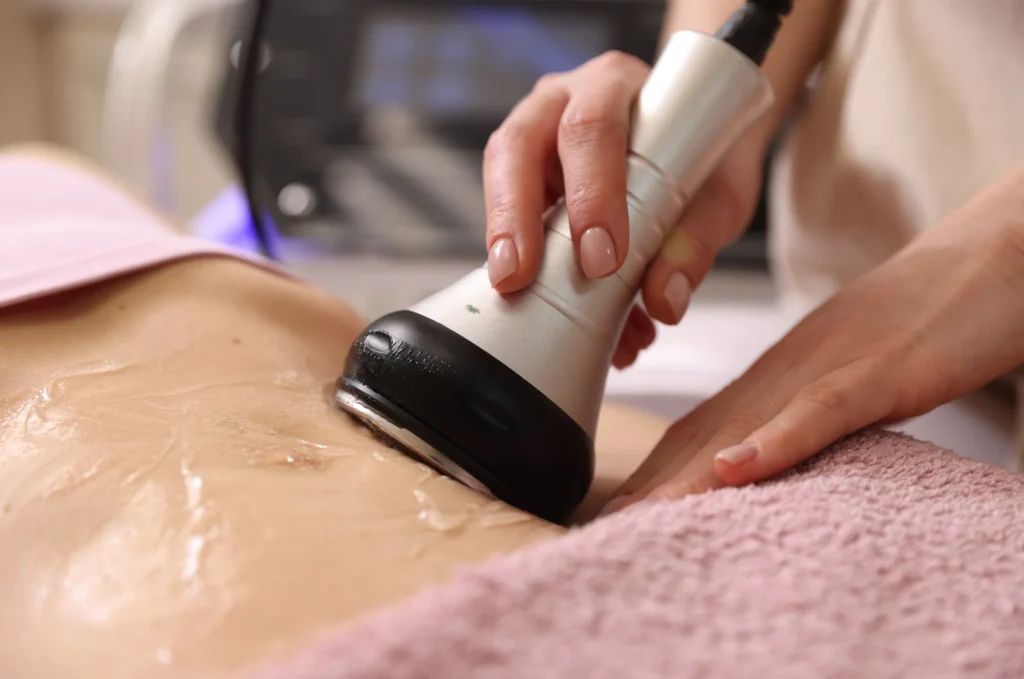
Radiofrequency lipolysis is a cosmetic procedure that uses radiofrequency energy to heat fat cells beneath the skin. As the subcutaneous fat layer reaches a target temperature, the membranes of those fat cells begin to break down.
The body then clears the damaged cells gradually through its lymphatic system over the following weeks. Unlike surgical treatments such as liposuction, this approach does not require an incision, needles, or anesthesia.
A handheld applicator delivers energy to the treatment area without cutting into the skin. Most plans call for a series of sessions spaced roughly a week apart, since the effect builds gradually rather than all at once.
This is one of several nonsurgical options patients consider before looking at more invasive surgical procedures for the same body areas. Some readers may also encounter similar energy technologies in devices marketed for physical therapy, such as INDIBA radiofrequency therapy, which applies related principles to musculoskeletal treatment rather than fat reduction.
Because the treatment works only on existing fat cells in a defined area, it is generally positioned as a targeted option rather than a broad weight loss solution.
Radio Frequency Machines Used for Weight Loss
Radio-frequency machines marketed for weight loss generally fall into two categories: monopolar and multipolar. Monopolar devices use a single electrode and penetrate deeper into tissue, making them a common choice for larger treatment areas such as the abdomen.
Multipolar devices distribute energy across several electrodes closer to the skin’s surface, often preferred for thinner areas where deeper heating is unnecessary.
It is worth being precise about the marketing language attached to these devices. They are not cleared as general weight loss tools in the way a diet program or exercise routine might be described.
Instead, they are classified for RF fat removal in specific body areas, a narrower and more accurate description of what the technology actually does. This distinction matters for anyone comparing fat removal options, since the device targets a specific fat pocket rather than producing overall weight loss.
What Frequency Breaks Down Fat Cells
Most radiofrequency devices used to reduce fat operate somewhere between 400 kHz and 1 MHz. At this range, energy converts to heat as it passes through tissue, and fat cells are more sensitive to that heat than the skin and muscle surrounding them. This difference in sensitivity is what allows the treatment to target fat without damaging nearby structures.
Some devices are also associated with stimulating collagen production in the surrounding skin, which can contribute to modest skin tightening as a secondary effect of the heat.
A 2024 study in the journal In Vivo, evaluating a multi-channel radiofrequency device, documented measurable shrinkage in fat cell size along with an increase in supportive fibrous tissue, without visible skin damage to the treated area.
This dual effect, on both fat cells and the surrounding tissue, is part of why some patients notice fat reduction along with a change that can improve skin texture in the treated area.
How Effective Is Radiofrequency for Fat Loss
Radiofrequency for fat loss has measurable data behind it, though results shift depending on the device, the treatment area, and the individual. Clinical studies have documented reductions in fat layer thickness after a completed series of sessions.
No one leaves a single appointment with a visibly different treatment area, since the body needs time to clear the affected cells. Results build gradually over several weeks rather than appearing right away.
Consistency across sessions plays a larger role in outcomes than many patients expect going in. Skipping sessions or spacing them too far apart can reduce the amount of fat reduction achieved by the end of a treatment plan. Providers typically recommend completing the full series before evaluating whether the desired results have been reached.
Average Fat Reduction and Results Timeline
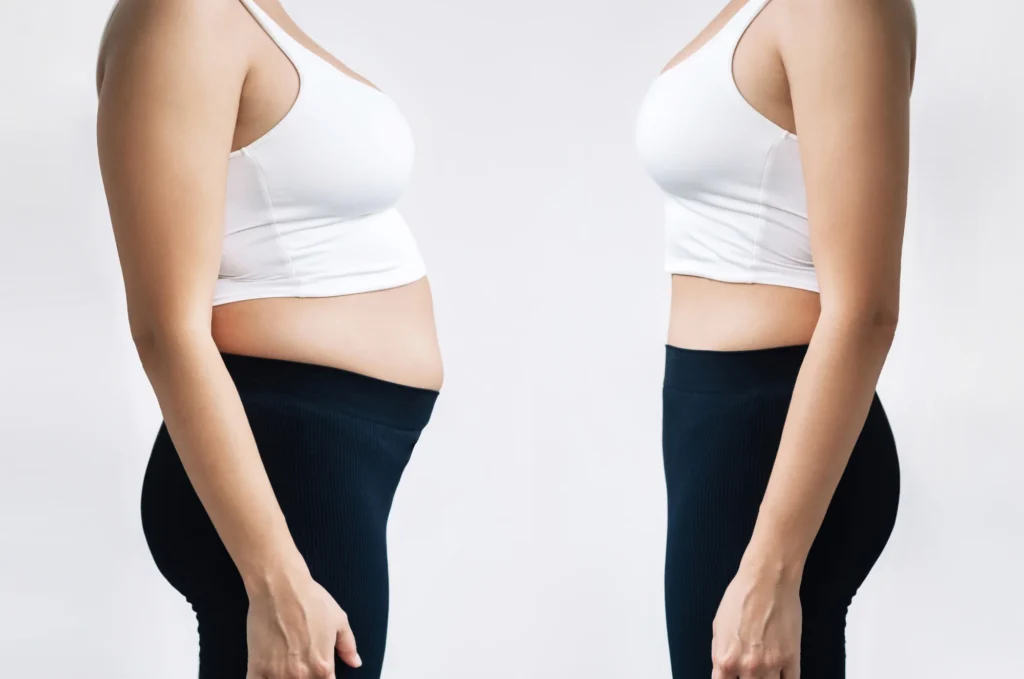
Patients treated for the abdomen have shown an average reduction of just under two inches in circumference after completing a full series of sessions, though not everyone sees a measurable or visible change.
Most protocols call for four to six sessions, spaced roughly a week apart. Visible changes tend to appear four to six weeks after the first session, which aligns with the duration of the body’s natural fat-clearing cycle.
Is RF Permanent Fat Reduction Possible
No. Whether RF permanent fat reduction actually holds depends on what happens after treatment ends. Fat cells destroyed during the procedure do not return, since mature fat cells generally do not regenerate in adults.
The fat cells that remain in the area, however, can still expand if a person gains weight afterward, in which case the treated area can appear to have regained fat, even though the cells removed by treatment are gone for good.
Who Is a Good Candidate for Treatment
A good candidate for radiofrequency fat treatment is usually someone already close to a stable, healthy weight who has one or two stubborn fat pockets that have not responded to diet and exercise.
This is a refinement option rather than a substitute for meaningful weight loss. Patients who go in expecting a modest, gradual change in a specific treatment area tend to report more satisfaction than those hoping for a dramatic transformation.
At an outpatient clinic like ITNYCPT in New York City, any new treatment considered alongside physical therapy typically starts with an evaluation. This includes a review of health history, a movement screen, and a discussion of goals, which helps determine whether a cosmetic procedure like this fits into a broader, individualized plan of care.
That evaluation step applies whether the added focus is on rehabilitation, therapeutic exercise, or body contouring.
Who Should Avoid Radiofrequency Fat Treatments
This treatment is not appropriate for everyone. Providers generally advise against radiofrequency fat treatments for:
- People who are pregnant or breastfeeding
- Anyone with a pacemaker or other implanted electronic device
- Anyone with an active skin infection in the treatment area
- People with loose or poor-quality skin tone, who may see limited benefit since the treatment reduces fat volume but does not address skin laxity in a major way
A full medical history review with a qualified provider should come before any treatment plan, especially for patients managing a chronic condition or nerve-related sensitivity.
For patients already receiving manual therapy, including soft-tissue techniques such as the Graston Technique or INDIBA body treatment, a provider can discuss whether combining approaches makes sense for a given treatment area, though the two serve different purposes.
Manual therapy is one of several physical therapy modalities that address soft tissue restriction and movement, while radiofrequency targets fat cells directly.
Radio Frequency Fat Reduction Side Effects and Recovery
Radio frequency fat reduction side effects are generally mild. The most common side effect is temporary redness or warmth in the treatment area, similar to a mild sunburn sensation. Some patients notice slight swelling or tenderness that resolves within a few hours to a couple of days.
Downtime is close to nonexistent for most patients. Since the procedure involves no cutting, needles, or anesthesia, most people return to normal activity immediately after a session.
Patients who are also working through a physical therapy plan can typically continue scheduled therapeutic exercise, including Pilates-based work aimed at core strength and control, without needing to adjust their routine around this treatment.
Radio Frequency Treatment for Fat Reduction: Comparing Methods
Radiofrequency is one of several nonsurgical options for reducing fat, and each works through a different mechanism. Understanding these differences can help clarify which fat-reduction treatment best fits a particular goal.
All of these approaches are considered less invasive than plastic surgery, though none produce the same immediate change associated with surgical procedures like liposuction.
Radiofrequency vs Cryolipolysis
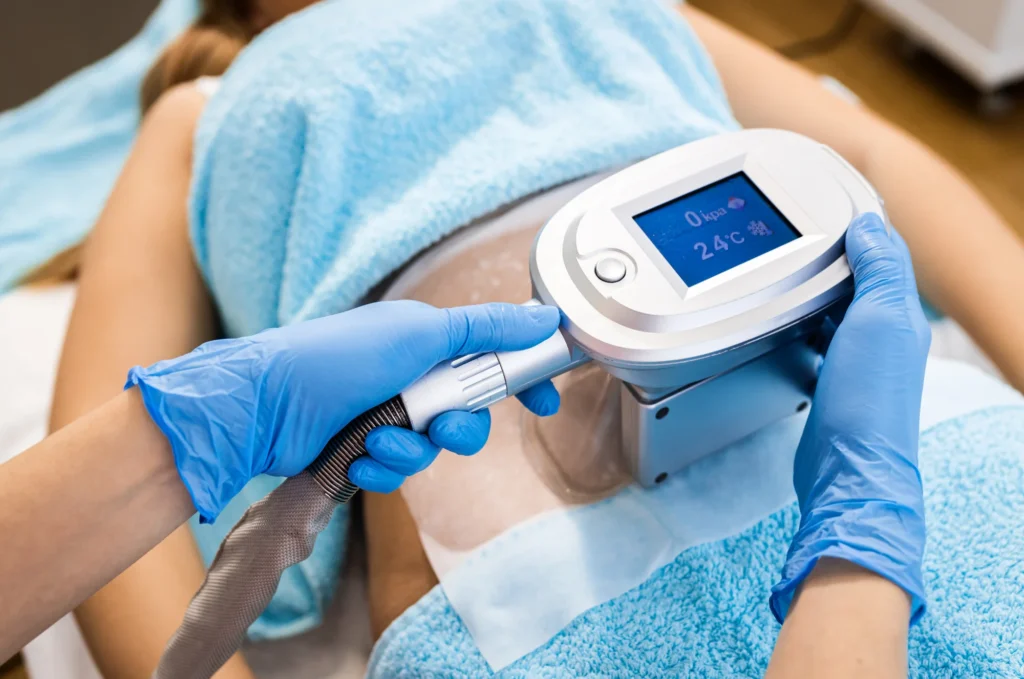
Cryolipolysis, often sold under the brand name CoolSculpting, uses controlled cooling instead of heat to damage fat cells.
Both approaches destroy cells that the body naturally clears over time, but cryolipolysis often requires fewer total sessions because a single cooling treatment can produce a measurable result. Radiofrequency usually requires a series of sessions to achieve a comparable effect.
Radiofrequency vs Laser Lipolysis
Laser lipolysis uses focused light energy to heat and disrupt fat cells, following a principle similar to radiofrequency but using a different energy source.
Laser treatments tend to penetrate to a more consistent depth, whereas radiofrequency depth can vary depending on the device and applicator used. Both are non-invasive and share a similar recovery profile, with mild redness as the main reported effect for either.}
RF Fat Removal Cost
RF fat removal cost varies by provider, treatment area, and the number of sessions a plan calls for. Nonsurgical radiofrequency treatments typically run between $500 and $2,000 per session, though some devices are priced lower, ranging from $300 to $1,200 per session.
Since most protocols call for four to six sessions, the total cost of a full treatment plan often exceeds the single-session price, sometimes reaching several thousand dollars, depending on the treatment area and device used.
For context, the American Society of Plastic Surgeons reports an average cost of $1,157 for nonsurgical fat reduction overall, a category that includes radiofrequency lipolysis alongside similar technologies. That figure is a single average across providers.
It does not include related costs, like consultations. So, actual prices at a given clinic may be higher or lower. Patients should treat any online estimate as a starting point rather than a fixed number.
Because this is generally considered a cosmetic procedure rather than a medically necessary nonsurgical procedure, it is typically not covered by health insurance, unlike outpatient physical therapy costs, which insurance often covers in part.
Patients considering this treatment should ask their insurer about coverage. Terms like deductible, copay, coinsurance, and out-of-network status can change costs. These terms affect what a PPO or other plan pays for elective procedures.
Confirming these details, along with the total number of sessions a provider recommends, before starting a treatment plan can prevent unexpected costs later.
Frequently Asked Questions About Radiofrequency Fat Loss
Does Radiofrequency Treatment Hurt
No. Most patients describe the sensation as warmth rather than pain, closer to a warm massage than anything uncomfortable. A properly calibrated device should not produce burning or sharp discomfort at any point in a session. Providers typically track skin temperature throughout treatment and adjust settings in real time to keep the experience comfortable.