
At ITNYCPT in New York City, Keith Chan serves as a subject-matter expert and is a New York State-licensed physical therapist.
This guide explains how physical therapy may help. It covers possible treatments. It explains symptoms that may affect care. It also explains why recovery timelines vary.
Key Takeaways
- Reflex sympathetic dystrophy is now more commonly called CRPS type 1, and it can affect pain, movement, swelling, skin temperature, and sensitivity.
- Physical therapy for RSD usually focuses on gentle movement, desensitization, graded motor imagery, strength, balance, and daily activity tolerance.
- RSD physical therapy exercises should match the affected limb, symptom level, and stage of rehab, since pushing too hard can trigger flares.
- CRPS diagnosis is usually clinical, so a medical clinician reviews symptoms, signs, history, and other possible causes before confirming the condition.
- Recovery timelines vary because injury type, pain sensitivity, sleep, stress, consistency, work demands, and health history can all affect progress.
How Physical Therapy Helps With RSD
Physical therapy treatment for reflex sympathetic dystrophy usually starts with education, gentle movement, and gradual exposure to normal activity. The goal is not to force the body part through pain. The goal is to help the nervous system and affected limb respond more normally to touch, motion, pressure, and load.
Treatment often changes by phase. Early care may focus on reducing sensitivity, improving range of motion, controlling swelling, and keeping the limb involved in simple tasks. Later care may add strengthening, balance work, gait training, Pilates-based therapeutic exercise, or more specific activity practice.
Physical therapy for CRPS should be tailored to the person’s symptoms, injury history, goals, and pain response. Pain level, sleep, stress, health history, work demands, and exercise consistency can all affect progress. Some patients with CRPS need a slower plan because the nervous system may react strongly to small changes in movement or pressure.
A good treatment plan also explains what should happen outside the visit. Home exercises, pacing strategies, rest breaks, and symptom tracking can help the person understand what is helping and what is too much. Structured follow-up matters because the plan should change when symptoms improve, flare, or stop responding.
What Is Reflex Sympathetic Dystrophy?
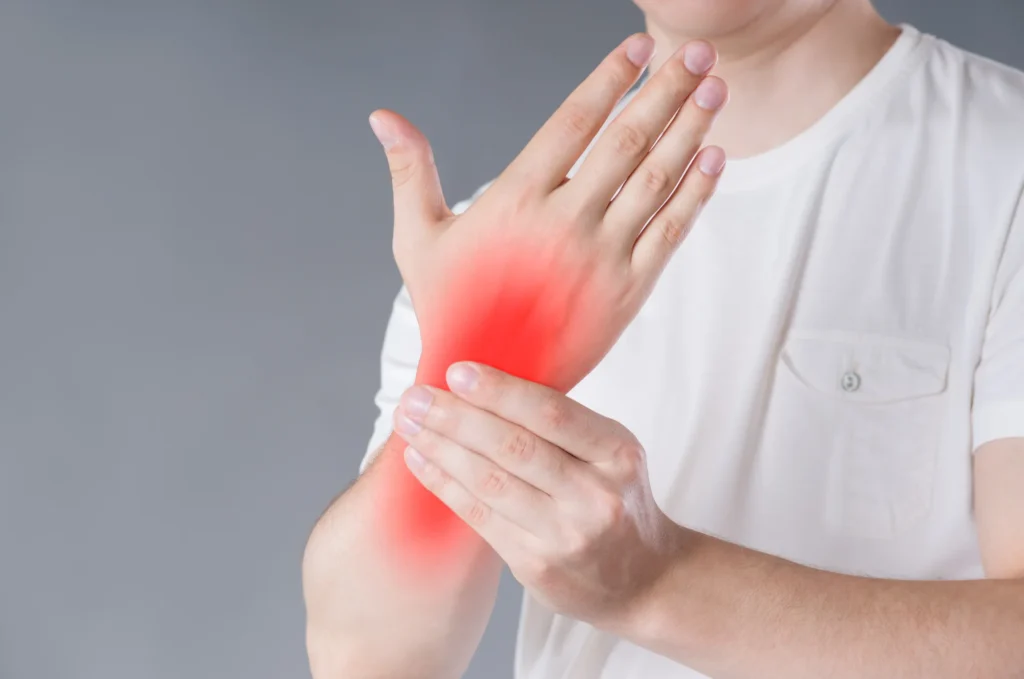
Reflex sympathetic dystrophy is an older name for a pain condition that usually affects one arm, hand, leg, or foot after an injury, surgery, fracture, or other trigger. The current medical term is complex regional pain syndrome. You may also see the phrase regional pain syndrome CRPS, but the full term is complex regional pain syndrome.
RSD usually refers to CRPS type 1. CRPS type 1 happens without a confirmed major nerve injury, while CRPS type 2 involves a known nerve injury. Both types of CRPS can cause pain, swelling, stiffness, weakness, sensitivity, and changes in skin temperature or color.
The condition may involve the brain and spinal cord, the immune system, blood vessels, and pain pathways. Some people look for the central nervous system or the peripheral nervous system when trying to understand CRPS.
A simpler explanation is that the brain, spinal cord, and nerves can become more protective after injury or stress to a body part.
CRPS does not mean the pain is imagined. It means that pain processing, movement control, and protective responses may no longer match the original tissue injury. This is one reason treatment often combines education, movement, sensory training, medical management, and follow-up over time.
Reflex Sympathetic Dystrophy Treatment & Management
Reflex sympathetic dystrophy treatment & management often involves more than one type of care. A person may work with a physician, physical therapist, occupational therapist, pain specialist, psychologist, or other clinician. The care team depends on symptoms, medical history, function, and pain severity.
The purpose of treatment is to reduce the impact of symptoms and improve use of the affected limb. Treatment may include education, medication, movement therapy, desensitization, nerve blocks, mental health support, or other medical care. Physical therapy is often one part of a broader plan to treat CRPS, not a single cure.
A physical therapist will work on movement, function, strength, sensitivity, and daily activity tolerance based on the person’s symptoms and goals.
A PT plan may include home exercises, pacing strategies, reassessment, and changes in exercise difficulty over time. The plan should help the person use the limb more often without creating repeated large flares.
This broader care model is helpful because CRPS can affect more than just pain. It may change sleep, mood, confidence, work capacity, walking, hand use, or exercise tolerance.
Clear roles between providers can reduce confusion and help the patient understand which symptoms belong in therapy and which symptoms need medical review.
CRPS Diagnosis Criteria and Symptoms
CRPS diagnostic criteria focus on pain that is stronger or longer-lasting than expected, along with symptoms and clinical signs within specific categories.
Many clinicians use the Budapest criteria, which look at sensory, temperature, color, swelling, sweating, movement, and tissue changes. A clinician also needs to rule out other conditions that could explain the symptoms.
There is no single test that proves CRPS in every case. Diagnosis is usually clinical, meaning the clinician reviews the history, physical exam, symptoms, and visible signs. Imaging, nerve studies, or lab tests may help rule out fractures, infection, circulation problems, inflammatory conditions, or other nerve injuries.
Symptoms of CRPS include:
- Burning pain, deep aching, or sharp pain
- Touch sensitivity or pressure sensitivity
- Swelling, stiffness, or weakness
- Skin temperature or color changes
- Sweating changes or shiny skin
- Reduced use of the affected limb
The signs and symptoms of CRPS can change over time. A hand may feel too sensitive to touch, grip, wash, type, or hold objects. A foot may hurt when standing, walking, wearing socks or shoes, using stairs, or tolerating light pressure.
Diagnosis can take time because CRPS can look like other conditions. Sprains, fractures, nerve irritation, infection, circulation problems, and inflammatory conditions may also cause pain and swelling. This is why a medical review should come before assuming that every painful limb problem is CRPS.
Complex Regional Pain Syndrome Physical Therapy
Complex regional pain syndrome physical therapy focuses on safe movement, symptom control, and better daily function. A PT evaluation usually includes a health history, movement screen, strength testing, sensitivity checks, gait or balance review, and goal setting. The findings guide the first phase of care and help the therapist choose a safe starting point.
The plan may include pain education, desensitization, gentle movement, graded motor imagery, mirror therapy, strengthening, balance training, and other physical therapy modalities based on the person’s symptoms and tolerance.
Manual therapy may be used when joint or soft-tissue stiffness limits range of motion, but it should be matched to the person’s tolerance. Graston Technique may be considered when soft-tissue work is appropriate, but it is not appropriate for every patient or every stage.
Pain education explains why symptoms may feel intense even when tissues are not being harmed in the same way. CRPS can make the nervous system more protective. Understanding this can help a person approach movement with less fear and better pacing.
Desensitization training uses gentle, repeated exposure to safe sensations. This may include soft fabric, light pressure, texture changes, vibration, or warm and cool input. The goal is to help the affected limb tolerate normal contact without triggering a large flare.
Gentle movement therapy helps maintain joint motion and reduce guarding. Early movement may include small motions of the hand, wrist, ankle, foot, shoulder, or knee. The therapist may adjust speed, position, repetitions, and rest time so the person can practice without overwhelming symptoms.
Graded motor imagery trains the brain’s movement system without starting with full movement. It may include left-right recognition, imagined movement, and mirror therapy. Mirror therapy uses the reflection of the unaffected limb to help the brain process movement as safer.
Strength and balance training usually come later, once basic motion and touch tolerance improve. Strength work may start with light resistance, bodyweight, bands, or Pilates-based therapeutic exercises. Balance work may help when CRPS affects standing, walking, stairs, or confidence on the affected side.
RSD Physical Therapy Exercises
RSD physical therapy exercises should match the affected area, pain sensitivity, and stage of rehab. Exercises may focus on range of motion, light loading, balance, coordination, strength, or daily tasks. A home program should be clear, realistic, and adjusted when symptoms change.
Common exercises may include:
- Finger bends: Slowly bend and straighten the fingers to maintain hand mobility. This may help when stiffness limits gripping, typing, or daily hand use.
- Wrist circles: Move the wrist in small circles in both directions. This can help improve motion without adding a heavy load.
- Thumb touches: Touch the thumb to each fingertip one at a time. This helps with coordination and light hand control.
- Ankle pumps: Move the foot up and down while seated or lying down. This can help maintain ankle motion and support circulation.
- Toe curls: Gently curl and relax the toes. This may help keep the foot active when walking or standing is sensitive.
- Seated heel raises: Lift the heels while keeping the toes on the floor. This introduces light loading through the foot and ankle.
- Weight shifts: Shift body weight gently from side to side while standing. This helps the affected foot or leg tolerate pressure again.
- Texture exposure: Touch the affected area with soft fabric, a towel, or another safe texture. This may help reduce sensitivity over time.
Exercises for CRPS hand symptoms may start with finger bends, wrist circles, thumb movements, or gentle opening and closing of the hand, all of which are common elements in hand therapy exercises. If touch is painful, the person may start by exposing themselves to soft textures before gripping objects.
Later exercises may include towel slides, light squeezing, putty work, reaching tasks, or short practice with daily objects.
Exercises for CRPS foot symptoms may start with ankle pumps, toe curls, towel slides, seated heel raises, or gentle foot contact with the floor. Some people start seated before adding standing work. Later progressions may include weight shifts, balance drills, step practice, or short walking intervals.
Weight-bearing exercises help the limb tolerate load again. For a hand, this may mean gentle pressure through the palm on a table. For a foot, this may mean seated pressure, standing weight shifts, or short walking practice.
Exercise should not be judged only by pain during the activity. The response afterward matters too. If symptoms spike for many hours or the next day, the exercise may need fewer repetitions, less pressure, a shorter session, or more recovery time.
What Progress Can Look Like
Progress with CRPS is often uneven, so improvement should be measured by function as well as pain. A person may notice easier dressing, better walking tolerance, reduced fear of touch, improved hand use, or greater confidence on stairs. These changes may appear before the pain fully settles.
Early treatment goals often focus on calming symptoms and maintaining mobility. This may include gentle range-of-motion exercise, basic desensitization, strategies for managing swelling, pacing, and education. The person should understand what to practice at home and what signs mean that the plan needs adjustment.
Long-term goals often focus on strength, endurance, mobility, and return to normal daily tasks. This may include walking longer, lifting objects, typing, gripping, climbing stairs, exercising, or returning to work duties.
Pilates-based therapeutic exercise may help some people improve control, core strength, mobility, and body awareness when it fits their stage of rehab.
Timelines vary because CRPS does not follow one fixed path. A person with early symptoms after a minor injury may progress differently from someone with severe pain after surgery, fracture, or nerve trauma.
Progress often depends on repeated small steps, consistent practice, careful load changes, and the body’s response between sessions.

What Can Affect Results?
Results can vary because the original injury, pain sensitivity, sleep, stress, workload, and general health influence CRPS. A fracture, sprain, surgery, crush injury, or peripheral nerve injury can each change the rehab plan. Tissue healing rules still matter even when CRPS is present.
Exercise consistency also affects progress. Short, regular practice may work better than occasional intense sessions. Home exercise carryover helps the nervous system learn that safe movement can happen again.
Pain flares can happen during CRPS rehab. A flare does not always mean damage occurred, but it may mean the plan needs adjustment. The therapist may reduce intensity, add rest breaks, change the exercise position, or return to desensitization.
Work and daily life can also affect results. A person who stands all day, types for hours, carries equipment, or commutes in NYC may need different pacing than someone with lighter daily demands.
A realistic plan should consider the person’s actual routine, not only what happens in the clinic, and some patients may discuss water physical therapy when lower-impact movement is appropriate.
When to Seek Medical Care
People with suspected CRPS should seek medical care when symptoms are new, worsening, severe, or hard to explain. Physical therapy can support movement and function, but it does not replace medical diagnosis. A medical clinician should review symptoms that change quickly or do not match normal healing.
Worsening pain, swelling, sudden changes in color, major changes in skin temperature, or loss of function should be evaluated.
Medical care is more urgent when symptoms include fever, sudden calf swelling, chest pain, shortness of breath, sudden weakness, or loss of sensation. These symptoms may indicate problems beyond routine physical therapy care.
Medical review is also important when the person cannot use the limb for basic tasks. This may include walking, gripping, dressing, typing, reaching, or bearing weight. An earlier review can help rule out other causes and support a safer treatment plan.
References
- ChoosePT: Physical Therapy Guide to Complex Regional Pain Syndrome
- National Institute of Neurological Disorders and Stroke: Complex Regional Pain Syndrome
- UMass Memorial Health: Treating Complex Regional Pain Syndrome