

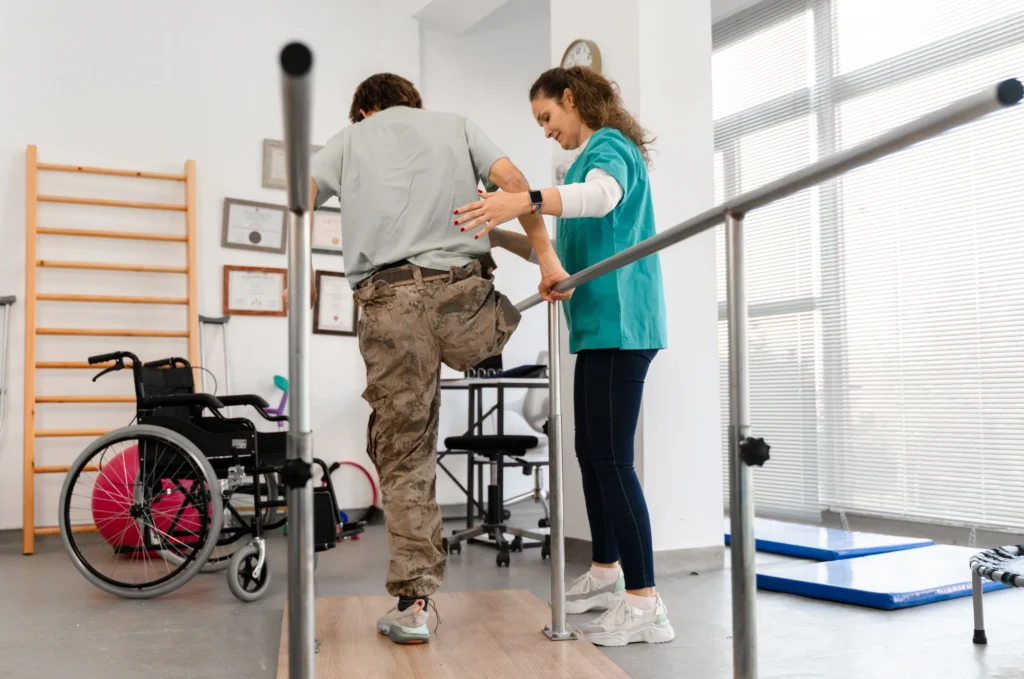
At ITNYCPT in New York City, Keith Chan, a New York State-licensed physical therapist, works in this field as part of the clinical team. This guide walks through what the rehab timeline typically includes, who is usually involved, and what to expect at each stage.
Key Takeaways
- Amputation rehabilitation happens in stages, from pre- and post-operative care through pre-prosthetic training, prosthetic fitting, and reintegration into work and daily life, and not everyone moves through these stages in the same order or at the same pace.
- A typical care team includes a physical medicine and rehabilitation doctor, physical therapists, occupational therapists, and a prosthetist, each addressing a different part of recovery from medical oversight to daily living skills to device fit.
- Recovery timelines vary widely based on amputation level, overall health, and consistency with therapy, with above-knee amputations generally requiring more balance and strength work than below-knee amputations.
- Physical therapy typically begins before a prosthetic device is available, focusing on wound healing, strength, and mobility using the sound limb to prepare the body for prosthetic training later on.
- Emotional recovery is a normal part of the process, and addressing it through counseling or peer support alongside physical therapy tends to support better overall outcomes.
How Amputee Therapy Helps You Recover
Amputee therapy focuses on rebuilding strength, movement, and confidence after limb loss. A physical therapist works with the person to restore range of motion, improve balance, and prepare the body for daily tasks, whether or not the plan includes a prosthetic limb.
This work often includes therapeutic exercise that shifts over time, starting gently and becoming more demanding as the body heals and adapts. Some physical therapists use Pilates-based therapeutic exercise to build core control, stability, and movement quality during this process.
The goal of physical therapy for amputees is not just physical recovery. It also focuses on restoring independence and quality of life, since everyday tasks like dressing, walking, or climbing stairs often require relearning after limb loss. Rehabilitation for amputees typically becomes more specific and goal-driven as recovery progresses.
The Phases of Rehabilitation for Amputees
Amputation rehabilitation is often described in phases because goals and care settings change as healing progresses.
Not everyone goes through each phase the same way, and the order can shift depending on the circumstances of the amputation. Understanding these prosthetic phases can help set realistic expectations for what comes next.
Pre- and Post-Operative Care
When time allows, physical therapists may work with the person to strengthen the unaffected limb and maintain mobility.
This stage, sometimes called pre-habilitation, isn’t always possible, especially after a sudden injury. After surgery, the focus shifts to supporting wound healing, managing swelling, and encouraging safe, early movement of the amputated limb.
Post-operative care also involves closely monitoring the surgical site to reduce the risk of complications like infection or skin breakdown.
Gentle stretching and light strengthening typically begin once the surgical team confirms it is safe. For someone healing after an amputation from diabetes or vascular disease, this stage often needs extra care. It includes close attention to blood flow and skin care.
Wound healing can take longer than after a trauma-related amputation. This early stage lays the groundwork for everything that follows in prosthetic training.
Pre-Prosthetic Training with Physical and Occupational Therapy
Before a fitting prosthetic limb, the focus shifts to shaping and strengthening the residual limb. Physical therapists and occupational therapists often work together here, since physical therapy focuses on strength and mobility. Occupational therapy, in contrast, addresses daily living skills and adapting the home or work environment.
Manual therapy, including soft tissue techniques like the Graston Technique, may be used when scar tissue or soft tissue restriction is affecting movement.
Clinicians trained in the Graston Technique, including Keihandle, perform this soft-tissue work. Clinicians use it when scar tissue slows a person’s progress toward a prosthesis.
This phase also includes teaching transfer techniques, such as moving safely between a bed and a wheelchair, before a prosthesis is available. For upper-limb amputations, occupational therapists often play a larger role, since fine motor skills and daily hand tasks are central to recovery.

Prosthetic Training and Gait Work
Once an artificial limb is fitted, physical therapy shifts toward learning to use it safely and efficiently. This typically includes gait training for lower-limb prosthetics, which means relearning how to walk with proper alignment, balance, and weight distribution.
For upper-limb prosthetics, training instead focuses on coordination, grip,p and functional hand use. Early sessions often involve checking how the socket, the part of the prosthetic that fits over the residual limb, sits against the skin, since discomfort here can slow progress if it is not addressed early.
Prosthetic training is gradual by design. Sessions usually start with short, supervised practice before progressing to more complex surfaces like stairs, uneven ground, or outdoor environments.
For example, a person with a below-knee amputation may walk on flat ground within weeks after being fitted. A person with an above-knee amputation often needs more time on balance and weight-shifting drills first.
The pace depends on the individual’s healing, strength, and comfort with the device.
Life after an Amputated Leg
As training progresses, the focus moves toward practical, real-world goals. This often includes returning to work, resuming hobbies, or managing household tasks independently with the prosthetic limb.
For some, this stage also means adjusting to a long-term relationship with the device, including fit checks, maintenance, and occasional retraining.
Life after amputation looks different for everyone, since job demands, activity goals, and overall health all shape what “returning to normal” actually means. For example, a mail carrier with a physically demanding route has different needs than someone returning to a desk job.
Who’s Involved in Your Amputee PT Sessions
Amputee PT sessions typically begin with an evaluation, where the physical therapist reviews medical history, performs a movement screen, and discusses the person’s specific goals.
The therapist creates a plan there and adjusts it over time based on progress, which is why rehabilitation is rarely a fixed, one-size-fits-all treatment. One provider alone does not handle amputee treatment. Several professionals make up part of the care team. These typically include:
- A physical medicine and rehabilitation doctor, who oversees the overall treatment plan
- Physical therapists, who address strength, balance, and movement
- Occupational therapists, who focus on daily living skills and independence
- A prosthetist, who designs and adjusts the prosthetic device
Sessions generally include hands-on treatment, guided exercise, and a home exercise program to continue between visits. Regular reassessment helps confirm whether the plan of care still matches the person’s current needs and goals.
Factors That Affect Your Recovery Time
Recovery time after limb amputation varies widely from person to person. Age, overall health, and whether conditions like diabetes or vascular disease were involved in the amputation can all influence healing speed. Consistency with therapy and home exercises also plays a meaningful role in how recovery progresses.
Other factors include the person’s activity goals and job demands, since someone aiming to return to physically demanding work may need a longer or more intensive training period. Pain levels, sleep quality, and general health history can also affect how the body responds to rehabilitation over time.
Recovery after an Above-Knee Leg Amputation
An above-knee amputation generally requires more muscle strength and balance work than a below-knee amputation because the knee joint can no longer assist with walking mechanics.
Prosthetic training for this level often takes longer, and gait patterns may need more adjustment. This does not mean outcomes are worse; it just means the rehabilitation process and timeline tend to differ based on amputation level.
Coping with the Emotional Side of Amputation
Limb amputation affects more than the body. Many people experience grief, frustration, or anxiety as they adjust to a new physical reality, and these feelings are a normal part of the process rather than a sign that something is wrong.
Addressing this emotional side is often part of a complete rehabilitation plan, alongside the physical work.
A rehabilitation psychologist or counselor may be included in the care team for this reason. Support groups and peer connections, where someone can speak with another person who has gone through limb loss, are also commonly recommended.
For example, someone adjusting to early prosthetic use may find it helpful to hear from a peer who has already been through that stage, since that perspective differs from what a clinician alone can offer.
Addressing both the physical and emotional sides of recovery tends to support a better overall quality of life during this transition.

Common Questions about Amputation Rehabilitation
How Long Does Amputation Rehab Take
Recovery timelines vary significantly based on the amputation level, overall health, and consistency with therapy. Some people progress through prosthetic training in a few months, while others take a year or longer. A physical therapist can give a more specific estimate based on individual circumstances.
Can You Walk Again After a Leg Amputation?
Many people who have a leg amputation can walk again, often with a prosthetic limb and structured gait training. Outcomes depend on factors like health history, amputation level, and commitment to rehabilitation. Not everyone pursues a prosthetic device, and people can still meet mobility goals through other means.
Do You Need a Prosthetic to Start PT
No, physical therapy typically begins before a prosthetic device is available. Early rehabilitation focuses on wound healing, strength, and mobility in the sound limb, preparing the body for later prosthetic training. This early stage is an important part of overall recovery and shouldn’t be skipped or delayed.