


The plan may include exercise, hands-on care, and education. The same approach also helps manage long-term conditions and lowers the risk of reinjury.
The first visit is an evaluation. Your therapist reviews your history. They test your strength, motion, and balance. They also set goals with you.
Treatment then follows your plan in sessions, and you practice exercises at home between visits. Your therapist reviews your progress and updates the plan. Timelines vary by the condition, its severity, and your consistency.
This guide comes from ITNYCPT, an outpatient clinic in New York City, with Keith Chan, a New York State-licensed physical therapist, as the subject matter expert.
Key Takeaways
- Physical therapy, also called physiotherapy, is a licensed health care treatment that helps you move better, reduce pain, and restore function after injury, illness, or surgery.
- A licensed physical therapist evaluates how you move and builds a personalized plan of exercise, hands-on care, and education. You practice at home between visits, and the therapist updates the plan as you progress.
- It treats injuries, post-surgery recovery, and neurological and long-term conditions. Most orthopedic plans run about 6 to 12 weeks, while surgery and nerve conditions can take months.
- In New York, a licensed physical therapist with at least three years of experience can treat you without a referral for 10 visits or 30 days. Your insurer may still require a referral for payment.
- Seek urgent medical care for sudden severe pain after an injury, spreading numbness or weakness, chest pain, or loss of bladder or bowel control.
Physical Therapy Meaning and Definition
Physical therapy meaning is simple: a licensed profession that evaluates and treats problems with movement, strength, and pain. Therapists use exercise, manual therapy, and education to restore or maintain function. People use it after injuries, after surgery, and for long-term conditions.
What Is Physical Therapy According to APTA
The American Physical Therapy Association (APTA) is the national professional body for physical therapists. APTA’s consumer site, ChoosePT, describes physical therapists as licensed movement experts who treat people of all ages and abilities. That sets physical therapy apart from general exercise, which has no examination or treatment plan.
What Is Physiotherapy vs. Physical Therapy
What is physiotherapy? It is the same profession under another name. Physiotherapy is the common term in the United Kingdom and Canada.
Physical therapy is the common term in the United States. The definition of physiotherapy matches the definition above, so you can treat the terms as interchangeable. For a closer look at the two terms, see physical therapy vs. physiotherapy.
What Exactly Does Physical Therapy Do
Physical therapy assesses how you move, treats the cause of your symptoms, and teaches you how to maintain your progress. A therapist tests strength, motion, balance, and movement patterns. Treatment then matches those findings and your goals.
What Is the Purpose of Physical Therapy
The purpose of physical therapy is to reduce pain, restore movement, and help you return to daily activities. It also lowers the chance of repeat injury by correcting weak links, such as poor hip strength or stiff joints. A runner with knee pain, for example, may need hip strengthening and gait practice, not only rest.
Who Provides Physical Therapy
In New York, licensed physical therapists and the assistants they supervise provide physical therapy. According to the New York State Education Department, New York therapists complete an approved college program and pass a national licensing exam.
Keith Chan is a New York State licensed physical therapist. He has over 10 years of experience treating a wide range of patients. You can verify any license on the State Office of the Professions website.
What Is Physical Therapy Used For
Physical therapy treats pain, movement limits, and loss of function from injuries, surgery, and long-term conditions. It fits problems involving muscles, joints, nerves, balance, or endurance. The cause of the problem, not only its location, guides treatment. Common conditions include:
- Sprains, strains, and tendon problems
- Back and neck pain
- Recovery after joint replacement or other surgery
- Arthritis and other long-term joint pain
- Stroke-related balance and walking problems

Physical Therapy for Injuries
Physical therapy for injuries covers sprains, strains, tendon problems, and overuse pain. The therapist first identifies what is injured and what load it can handle. Recovery depends on injury severity, activity level, and health history.
Surgery, Neurological, and Chronic Conditions
After surgery, such as a joint replacement, therapy restores motion and strength in stages set with your surgeon. For neurological conditions, such as stroke, it targets balance, walking, and coordination. For chronic conditions, such as arthritis, it focuses on managing symptoms and staying active.
Why Would Someone Go to a Physical Therapist
People usually go because pain or stiffness limits something they need to do. Common reasons include a new injury, pain lasting beyond a few weeks, trouble after surgery, or fear of falling. A doctor may also suggest it.
What Are the Four Main Types of Physical Therapy
Physical therapy is commonly grouped into four main types by body system or age group. Many therapists also specialize in areas such as sports or women’s health, so the count varies by source. These four are cited most often:
- Orthopedic: muscles, bones, joints, and ligaments, such as fractures and sprains.
- Neurological: the brain, spinal cord, and nerves, such as stroke and Parkinson’s disease.
- Cardiovascular and pulmonary: heart and lung conditions that limit endurance.
- Pediatric: movement and development in infants, children, and teens.
What Happens in a Physical Therapy Session
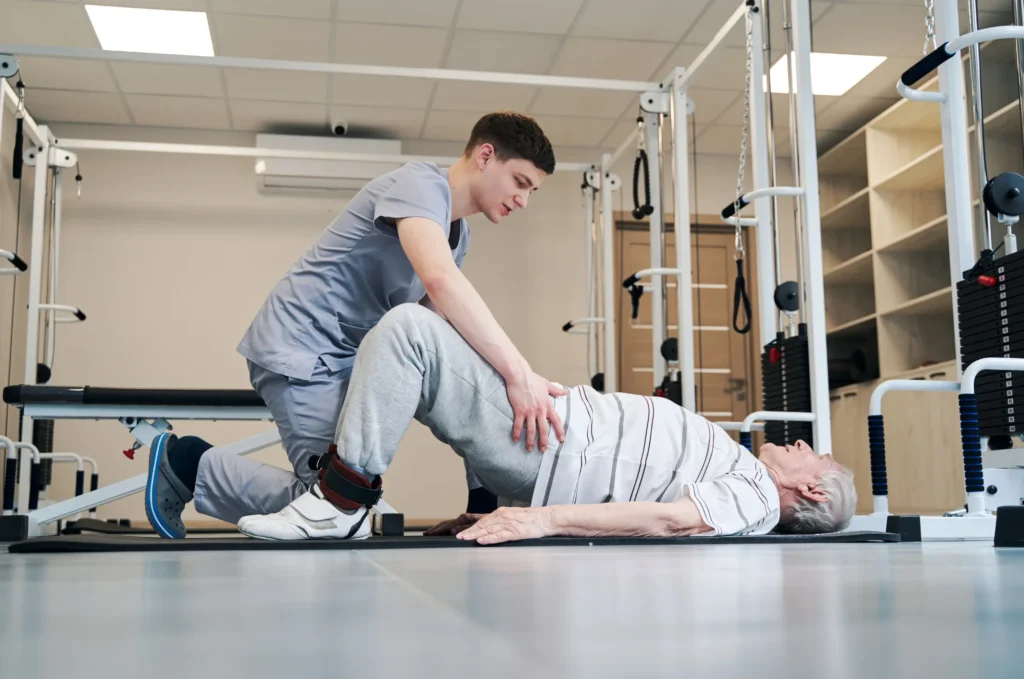
A session usually combines a check-in, treatment, and instructions for home practice. Many outpatient sessions are one-on-one with a licensed physical therapist, who can adjust exercises in real time. Length varies by clinic and plan, often 30 to 60 minutes.
What to Expect at the First Visit
The first visit is an evaluation. Your therapist reviews your history, screens your movement, and tests strength, mobility, and balance. You then set goals and agree on a plan of care that lists treatments and visit frequency.
Treatment Techniques and Home Exercises
Therapeutic exercise is the core of most plans and changes by phase: gentle motion, then strength, then control and return to activity.
Pilates-based therapeutic exercise is one approach that can build core strength, control, and mobility. Manual therapy uses skilled, hands-on techniques to support exercise.
Keith Chan provides the Graston Technique, an instrument-based soft tissue method used when appropriate. Home exercises carry progress between visits.
Physical Therapy Examples in Practice
After an ankle sprain, a person may start with gentle motion and balance work, then add strength and hopping drills.
After a knee replacement, a person may start with walking and range-of-motion exercises, then build leg strength for stairs. Your therapist reassesses often and changes the plan as your body responds.
What Is Physical Therapy Good For
Physical therapy can reduce pain, improve movement, build strength, and restore daily function. It works best when you practice between visits. It is not a quick fix, and results vary from person to person.
Is Physical Therapy Worth It
Yes. Many people find it worthwhile when the plan fits their goals, and they stay consistent. It asks for time, effort, and some early soreness. Whether it is worth it for you depends on your condition, goals, coverage, and schedule.
Risks, Limits, and When to Seek Urgent Care
Physical therapy is generally safe, but it has limits. Exercise can cause temporary soreness, and some problems, such as a suspected fracture, need medical care first. Tell your therapist your health history so the plan fits you. Seek urgent medical care for any of these signs:
- Sudden severe pain after a fall or injury, or inability to bear weight
- Numbness or weakness that is new or spreading
- Loss of bladder or bowel control, especially with back pain
- Chest pain or shortness of breath
- Calf swelling, warmth, or redness, or fever and spreading redness near a surgical incision
How Long Recovery Takes
Most orthopedic physical therapy plans run about 6 to 12 weeks, with sessions often two to three times a week at first and fewer later. Your timeline depends on what is injured, how severe it is, and your goals. Simple problems may need a few weeks, while surgery or nerve conditions can take months. Typical timelines look like this:
- Mild ankle sprain: a few weeks, with four to six weeks of therapy common for a routine sprain.
- Knee replacement: formal therapy usually lasts 4 to 12 weeks, but strength and swelling keep improving for up to a year.
- ACL reconstruction: commonly 6 to 9 months or longer, and many specialists now recommend waiting 9 to 12 months before returning to sport.
- Low back pain: pain lasting beyond about 12 weeks is considered chronic and follows a longer timeline.
- Stroke: rehabilitation can continue for a year or more.
These ranges are typical, not promises. Injury severity, training age (how long you have exercised regularly), workload, and home exercise consistency can change them. Health history, pain sensitivity, sleep, and job demands can also shorten or lengthen them. Your therapist reassesses progress at set points and updates the plan of care.
These ranges are typical, not promises, and how long physical therapy takes depends on the factors below.
What’s the Difference Between PT and OT
Physical therapy (PT) focuses on movement, strength, balance, and pain, while occupational therapy (OT) focuses on daily tasks such as dressing, cooking, and working. Many people see both after a stroke or major surgery, and a guide to physical and occupational therapy explains how the two work together. The table below shows how the two differ.
| Physical Therapy (PT) | Occupational Therapy (OT) | |
|---|---|---|
| Main focus | Movement, strength, balance, and pain | Daily tasks and independence |
| Common methods | Therapeutic exercise, manual therapy, and education | Task practice, adaptive tools, and home setup |
| Example after a hip replacement | Walking and climbing stairs | Bathing and preparing meals safely |
Access depends on New York law, your insurance plan, and your provider choice. State law sets when you can start without a referral, and your plan sets what it pays. The next sections cover each.
Do You Need a Referral in New York
According to the New York State Office of the Professions, a licensed physical therapist with at least three years of experience may treat you without a referral for 10 visits or 30 days, whichever comes first. The law is in Education Law Section 6731.
The therapist must give you a written notice that your plan may not cover treatment without a referral. After that period, treatment continues with a referral from an authorized provider, such as a physician or nurse practitioner. Your insurer may require a referral for payment even when state law does not.
Insurance Terms and Questions to Ask
A deductible is what you pay before your plan starts paying, a copay is a fixed fee per visit, and coinsurance is your percentage share of the cost after the deductible.
In-network means the provider has a contract with your plan. Out-of-network means it does not. A PPO plan often covers out-of-network care, but it costs you more.
Ask your insurer whether you need a referral or prior authorization, how many visits it covers, what you will pay per visit, and whether the provider is in-network. For a closer look at price ranges, see how much physical therapy costs.

How to Choose a Physical Therapist
Start by verifying the therapist’s license on the New York State Office of the Professions website. Ask whether a licensed therapist or an assistant treats you at each visit, how long sessions last, and how progress is measured. A good fit is a therapist who explains your plan clearly and answers your questions.
Sources and Clinical Review
This guide draws on the American Physical Therapy Association, the New York State Education Department’s Office of the Professions, and Cleveland Clinic’s physical therapy overview.
Referral rules and insurance terms can change, so confirm current details with the state and your insurer. Keith Chan, a New York State licensed physical therapist, serves as the subject matter expert for this article. This guide is educational and does not replace an evaluation by a licensed provider.