


Pain deep in the buttock that flares during a run, lingers after prolonged sitting, or spikes when you bend forward – these are the defining features of proximal hamstring tendinopathy. Physical therapy for proximal hamstring tendinopathy is often recommended. It focuses on gradual loading rather than rest or passive care.
Keith Chan, a New York State licensed physical therapist at ITNYCPT in New York City, works with patients across a range of hamstring injuries, and his clinical experience reflects what the research supports. This condition responds to the right program, applied at the right time.
Key Takeaways
- Proximal hamstring tendinopathy is a tendon condition caused by cumulative mechanical overload, not a muscle tear, and it requires a different treatment approach than a hamstring strain.
- Progressive loading is the foundation of recovery. Complete rest reduces pain in the short term but does not restore the tendon’s capacity to handle load, which is why symptoms return without structured rehab.
- Physical therapy follows a phased approach, starting with isometric exercises to reduce irritability and advancing through resistance training, kinetic chain work, and a gradual return to running or sport.
- Hamstring stretching is one of the most common mistakes with this condition. Stretches compress the proximal tendon against the sit bone and tend to increase irritability rather than relieve it.
- Most people see meaningful improvement within 3 to 6 months of consistent physical therapy. However, full return to sport can take longer depending on activity demands, symptom duration, and how closely the program is followed.
What Is Proximal Hamstring Tendinopathy?
The hamstring muscle group, which includes the semimembranosus, semitendinosus, and biceps femoris, attaches to the ischial tuberosity at the base of the pelvis through a shared proximal tendon.
The ischial tuberosity is the sit bone, the bony prominence you feel when you sit on a hard surface. When tendon loads repeatedly exceed the tissue’s capacity to recover, it degrades and becomes painful.
This is classified as a tendinopathy rather than tendinitis because the primary driver is cumulative mechanical stress, not acute pain and inflammation.
Where the Pain Comes From
Buttock pain from this condition sits deep and local, directly at the sit bone. It can spread down the back of the thigh, but the source is the tendon insertion. It is not the sciatic nerve or the hamstring muscle belly.
Running uphill, long sitting, squats, lunges, and bending forward often trigger symptoms. These activities stretch or compress the tendon near its attachment.
Who Gets It and Why
Distance runners are the most frequently affected group. Still, the condition also appears in cyclists, sprinters, and people who sit for long hours without any athletic history – making it a common case type in sports physical therapy settings and general outpatient clinics alike.
The most common risk factors include a sudden jump in training volume, returning after a break, and weak hip muscles. The tendon breaks down not because it is weak, but because something demands more of it than it is prepared to handle.
How It Differs from a Hamstring Strain
A hamstring strain is an acute muscle tear caused by a sudden, forceful contraction. Pain from a strain arrives immediately, sits in the hamstring muscle belly, and is often accompanied by bruising or swelling.
Hamstring injuries from tendinopathy, by contrast, develop gradually with no single moment of injury. The pain is at the tendon insertion, not the muscle. These two conditions require different treatment approaches, which is why an accurate diagnosis matters before starting any exercise program.
Can you fix proximal hamstring tendinopathy?
Yes. Most people recover fully with structured physical therapy. The condition does not resolve with rest alone, but it responds well to progressive loading applied consistently over time.
Complete rest removes the mechanical stimulus the tendon needs to remodel. It can reduce pain in the short term, but it does not address the underlying capacity problem. Tendons adapt to mechanical load – a principle that applies across a range of tendon conditions, from proximal hamstring tendinopathy to biceps tendon injuries.
How a Physical Therapist Evaluates This Condition
A physical therapist evaluates this condition clinically, not through imaging. The first session covers symptom history, aggravating factors, and activity goals. The physical therapist then assesses hip extension and knee flexion strength, screens movement patterns using a hip hinge or single-leg bridge, and palpates the sit bone to confirm the location of pain.
At ITNYCPT, sessions can be one-on-one with a licensed physical therapist, and the plan of care is built around your specific presentation. Imaging is typically unnecessary, as MRI-detected tendon changes are common even in asymptomatic individuals.
A structured reassessment at regular intervals is an important part of the process. As strength, range of motion, and pain tolerance improve, the physical therapist updates the program to reflect your current capacity.
Home exercise carryover between sessions plays a significant role in how quickly you progress, particularly in the early phases, when the loading volume needs to build gradually over days rather than in a single session.
Proximal Hamstring Tendinopathy Treatment: the Phases of Rehab
Treatment for proximal hamstring tendinopathy follows a phased, progressive-loading model. Progressing too quickly is one of the most common reasons people stall.
Phase 1: Isometric Exercises to Reduce Irritability
Isometric strengthening exercises contract the hamstring without moving the joint, avoiding the compression and stretch that aggravate the tendon. A double-leg hamstring bridge held for 30 to 45 seconds with the hip neutral is a standard starting point. Some pain during exercise is acceptable, up to a 3 out of 10, provided it settles within 24 hours.
Phase 2: Isotonic and Resistance Loading
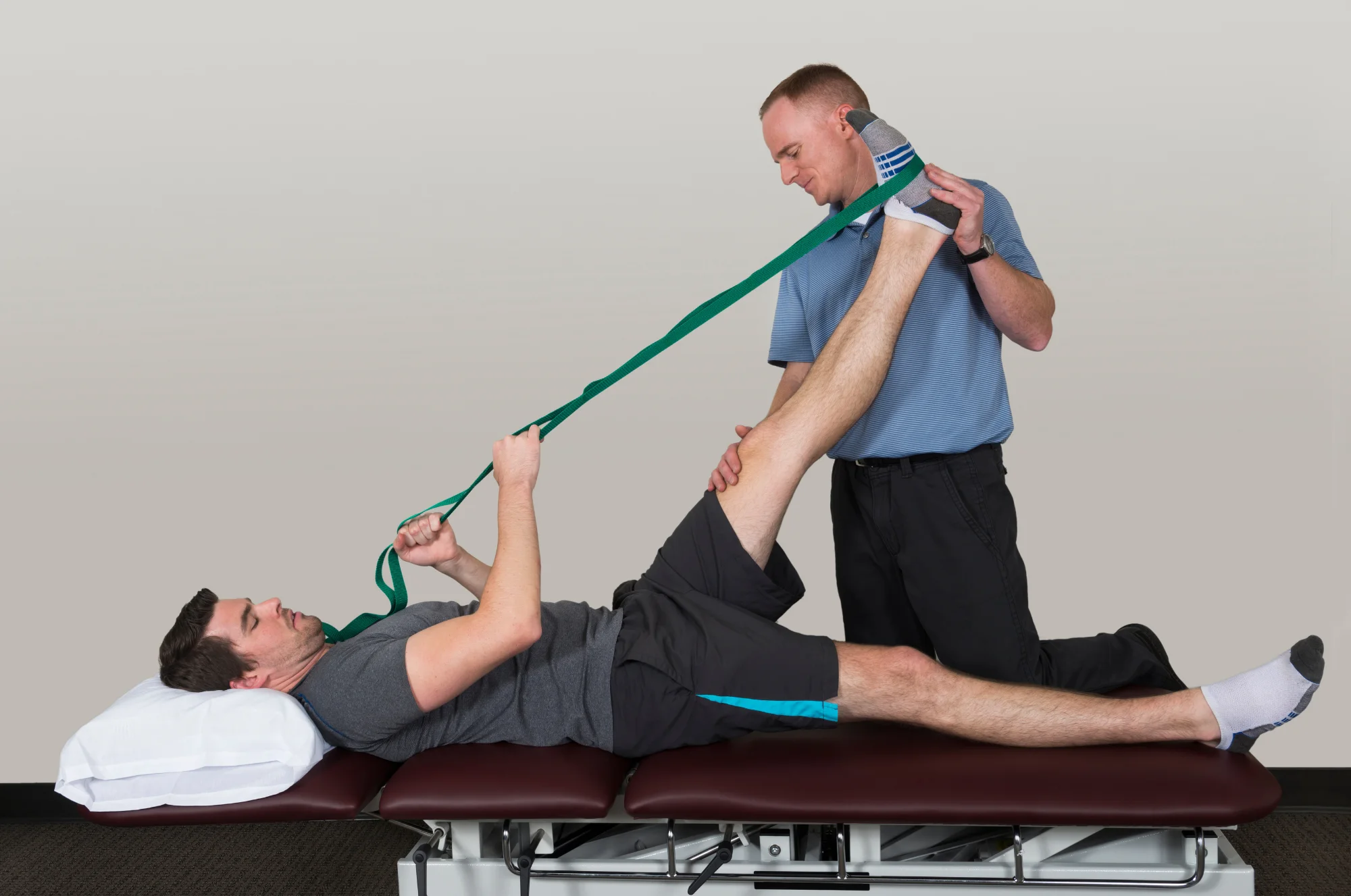
Once irritability settles, the program shifts to isotonic exercises through a range of motion. Heavy, slow resistance training has the strongest evidence base here. The hamstring curl, Romanian deadlift, and single-leg bridge are common choices. Hip flexion angles increase over time, as the tendon can handle more load.
Phase 3: Kinetic Chain and Functional Exercises
This phase targets nearby muscles, especially weak glutes and adductors, which often overload the hamstring tendon. Pilates-based therapeutic exercise can be useful here for rebuilding hip and core control in a controlled setting before returning to higher-demand activity.
Phase 4: Return to Running and Sport
Running is reintroduced gradually on flat surfaces before adding hills or speed work. The same pain monitoring rule applies throughout.
What often catches people off guard in this phase is how much tendon capacity is still needed beyond feeling pain-free at rest. A tendon that feels fine during a 20-minute jog may still not be ready for a tempo run, a long training block, or repeated acceleration and deceleration.
Your physical therapist will use your symptom response after each session to guide how quickly the load progresses. Sport-specific movements are introduced last, once the tendon has demonstrated it can handle sustained, varied demand without a prolonged reaction.
Physical Therapy Exercises for Proximal Hamstring Tendinopathy
Proximal hamstring tendinopathy exercises follow a clear progression: start with minimal hip flexion and low tendon loads, then increase range of motion and resistance as the tendon adapts.
Exercises to start with:
- Double-leg hamstring bridge hold (isometric, hip neutral)
- Single-leg hamstring bridge hold
- Prone hamstring curl against light resistance
Exercises to progress to:
- Romanian deadlift (double-leg, then single-leg)
- Nordic hamstring curl
- Single-leg hip hinge and hip thruster
- Lateral band walks for lumbopelvic control
What Aggravates Proximal Hamstring Tendinopathy?
Why Stretching Makes It Worse and What to Do Instead
Stretches for hamstring tendonitis, like a standing forward fold or seated toe touch, press the upper tendon against the sit bone.
Hamstring stretching is one of the most common mistakes people make with this condition and tends to increase irritability rather than reduce it. Progressive strengthening is more productive than stretching during recovery.
How to Sit with Hamstring Tendinopathy
Prolonged sitting is a daily aggravator for most patients. Taking standing breaks every 30 to 45 minutes, using a seat wedge to redistribute pressure off the sit bones, and using a standing desk when available can meaningfully reduce tendon compression during the more irritable phases of recovery.
For patients who commute or travel frequently, car and plane seats present evidence of long-term benefits, the same compressive load as a desk chair. Bringing a small cushion or adjusting your seat can reduce hip flexion. This can make a clear difference in how the tendon feels the next day.
Other Treatment Options: Massage, Injections, and Shockwave Therapy
Patients researching treatment for proximal hamstring tendinopathy often encounter massage, injections, and shockwave therapy as alternatives or additions to exercise-based rehab. Each has a different role and a different level of supporting evidence.
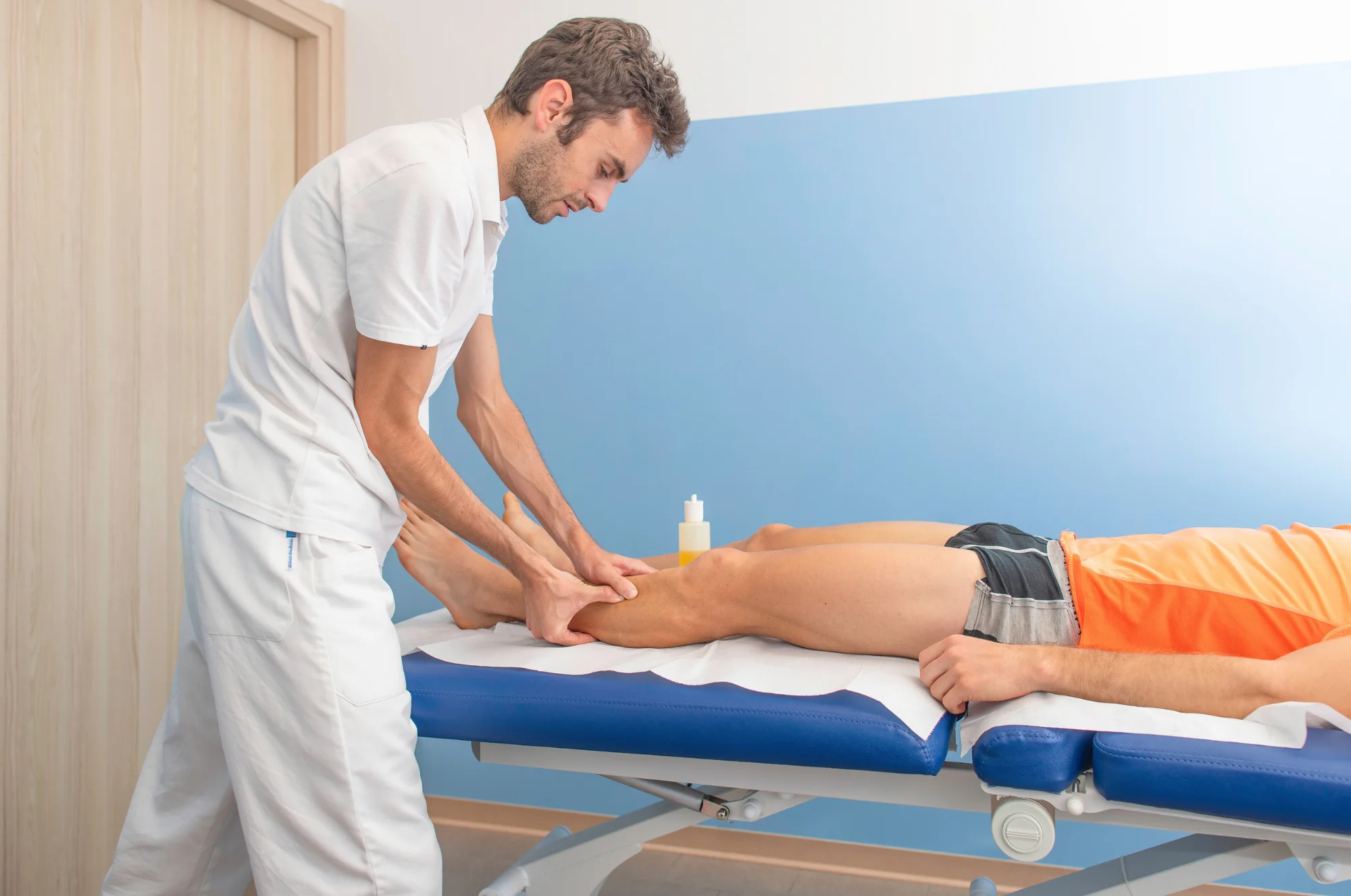
Soft tissue work on the hamstring muscle belly can reduce muscle tension and support comfort during the rehab process, but it does not directly load or remodel the tendon. The Graston Technique, an instrument-assisted soft tissue mobilization method, is one approach some physical therapists use to address restrictions in the surrounding musculature.
Keith Chan is a Graston Technique provider at ITNYCPT and may incorporate it when clinically appropriate. Corticosteroid injections can reduce pain and inflammation in the short term. Still, research does not support strong evidence of long-term benefits for this condition, and repeated injections carry documented risks to tendon tissue integrity.
Shockwave therapy delivers mechanical energy to the tendon to stimulate tissue response and has a reasonable evidence base for chronic cases that have not improved with a structured exercise program.
It is not a first-line option, but it is worth discussing with your clinician if several months of consistent progressive loading have not produced adequate results.
How Long Does It Take to Rehab Proximal Hamstring Tendinopathy?
Most people see meaningful improvement within 3 to 6 months of consistent physical therapy, though how long physical therapy takes depends on more than just the diagnosis. A full return to running or sport can take longer, depending on the demands of the activity.
How fast you progress depends on how sensitive the tendon is when you start treatment. It also depends on how long you have had symptoms. It depends on how closely you follow the program between sessions.
A recreational runner returning to easy jogging has different demands than someone returning to competitive sport, and both timelines are valid.
Recovery is slowed by premature return to loading, continued hamstring stretching, inconsistent adherence to the program, prolonged sitting without modification, and lifestyle factors like poor sleep and high stress, all of which affect tendon health.
When to See a Physical Therapist for Proximal Hamstring Tendinopathy
If sit bone pain has persisted for more than two to three weeks, interferes with running or sitting, or keeps returning after rest, a physical therapist can confirm the diagnosis and develop a structured recovery plan. Seek medical evaluation if pain starts suddenly during a sprint or explosive movement.
This may indicate a tendon tear rather than tendinopathy. Sharp or shooting leg pain, notable weakness in hip extension or knee flexion, or lack of improvement after several weeks of rest also warrant clinical assessment.