

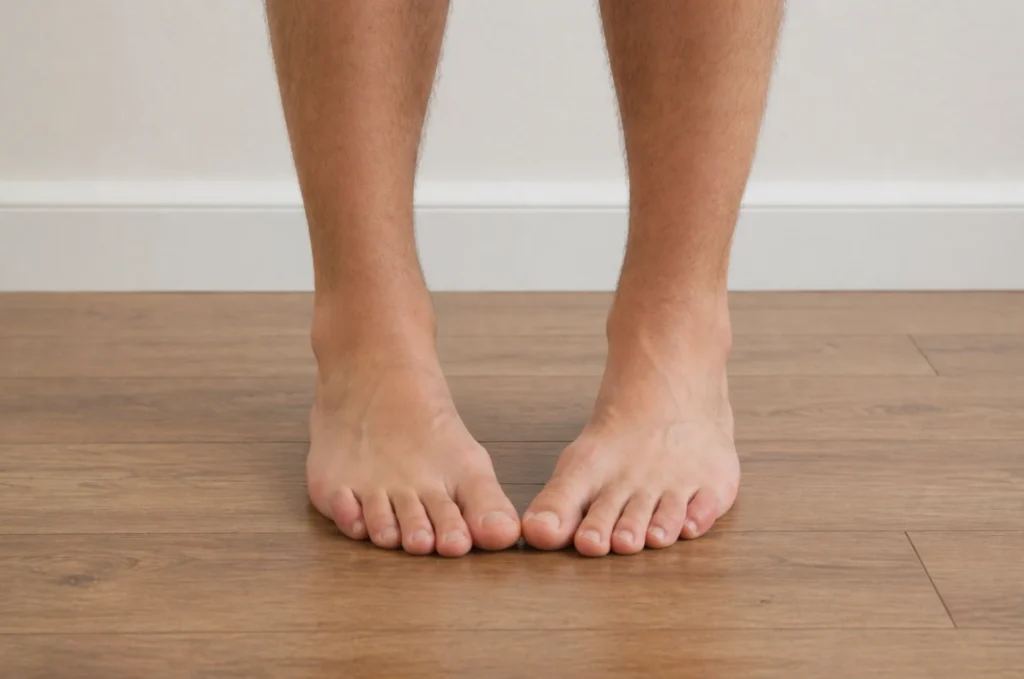
Doctors call it pigeon toe, or intoeing, when the feet turn inward during walking or standing. Pigeon-toe physical therapy addresses the root cause. It treats it with exercise and movement retraining. Sometimes, it also uses hands-on care.
Keith Chan is a New York State licensed physical therapist at ITNYCPT in New York City. He helps patients with gait and alignment issues, including intoeing.
Key Takeaways
- Pigeon toe has three main structural causes – femoral anteversion, internal tibial torsion, and metatarsus adductus – and identifying which one is driving the intoeing determines what treatment can realistically achieve.
- Physical therapy works best when the cause is functional, such as weak hip external rotators or poor movement habits, rather than a fixed bony rotation that exercise alone cannot fully correct.
- Most children with mild intoeing improve naturally as they grow, but adults rarely see spontaneous improvement and typically need 8 to 16 weeks of consistent PT to see meaningful change.
- A PT program for pigeon toe generally progresses through stretching the internal hip rotators, strengthening the external rotators, and functional training that carries the corrected alignment into daily walking.
- Pigeon toe surgery is uncommon and reserved for severe structural cases in children who have not improved by age 8 to 10, or adults with significant functional impairment who have not responded to conservative care.
Can Physical Therapy Help with Pigeon Toe?
PT can help when the cause involves muscle imbalances, soft tissue tightness, or movement habits. When looking at bony rotation results, PT can reduce pain and improve function. But exercise alone cannot fully correct the bone position. Like most musculoskeletal conditions, what PT can and cannot do depends heavily on whether the cause is functional or structural.
Functional Causes vs. Structural Causes
Functional causes involve weak or overactive muscles that pull the leg inward. These respond well to exercise and retraining.
Structural causes involve the bones, such as a rotated femur thigh bone or a twisted shin bone. Exercise can help, but only up to a point. Unlike being bow-legged, where the knees angle outward, intoeing is an inward rotation that starts at the hip, shin, or foot.
In some cases, it is also linked to conditions such as cerebral palsy, in which abnormal muscle tone causes the lower limbs to turn inward while walking.
What Is Pigeon Toe?
Pigeon toe is not one single condition. It is common in children and has three main causes.
Femoral anteversion is when the femur, the thigh bone, rotates inward and pulls the child’s legs with it. Internal tibial torsion is a condition in which the shinbone twists inward in toddlers who have just started walking, causing their toes to point inward.
Metatarsus adductus is when the front of the foot curves inward at birth. Each cause has its own treatment path and window for natural correction.
Does Pigeon Toe Go Away on Its Own?
For children, the answer is often yes. Pediatric orthopedics guidelines support a watch-and-wait approach for mild cases.
Internal tibial torsion often resolves as the child grows. Femoral anteversion tends to self-correct by age 9 or 10. For adults, improvement on its own is unlikely without active treatment.
What Happens If You Don’t Correct Pigeon Toe?
Mild intoeing with no pain may never require treatment. When the pattern is more severe and left unaddressed, the load on the knee and hip shifts away from the joint centers. Over time, this can lead to knee pain, hip tightness, and joint wear.
Frequent tripping while walking, knee pain during exercise, or hip pain during daily activities are signs worth checking out.
How Physical Therapy Evaluates and Treats Pigeon Toe
A PT evaluation screens the hips, knees, and feet to identify where rotation begins. The therapist then makes a plan based on those findings. They may choose options like exercise, manual therapy, gait retraining, and orthotics.
Keith Chan’s strength-training background helps him create step-by-step exercise plans tailored to each patient’s history and ability.
The goal of how to fix pigeon-toed patterns in PT is to strengthen the muscles that rotate the hip outward, mainly the gluteus maximus and posterior gluteus medius. Gait retraining then helps carry that new alignment into daily walking.
Pilates-based exercise can support this through slow, controlled movement that builds body awareness and core control. When tight soft tissue in the lower leg limits movement, manual therapy or the Graston Technique may also be used.
What Exercises Help Correct Pigeon Toes?
The right exercises depend on where the intoeing originates, but most programs follow this progression:
Stretching targets the internal hip rotators, including the adductors and tensor fasciae latae.
- Butterfly stretch: sit with feet together, press knees toward the floor, hold 30 seconds
- Frog stretch: lie on your stomach, spread knees wide, hold for 30 seconds

Strengthening builds the external rotators that keep the femur in a neutral position.
- Clamshells: lie on your side, lift the top knee, hold 3 to 5 seconds, repeat 20 times
- Lateral band walks: loop a resistance band above the knees, take 15 steps in each direction
- Resistance band squats: push knees outward against the band throughout the movement

Functional training transfers those gains into real movement.
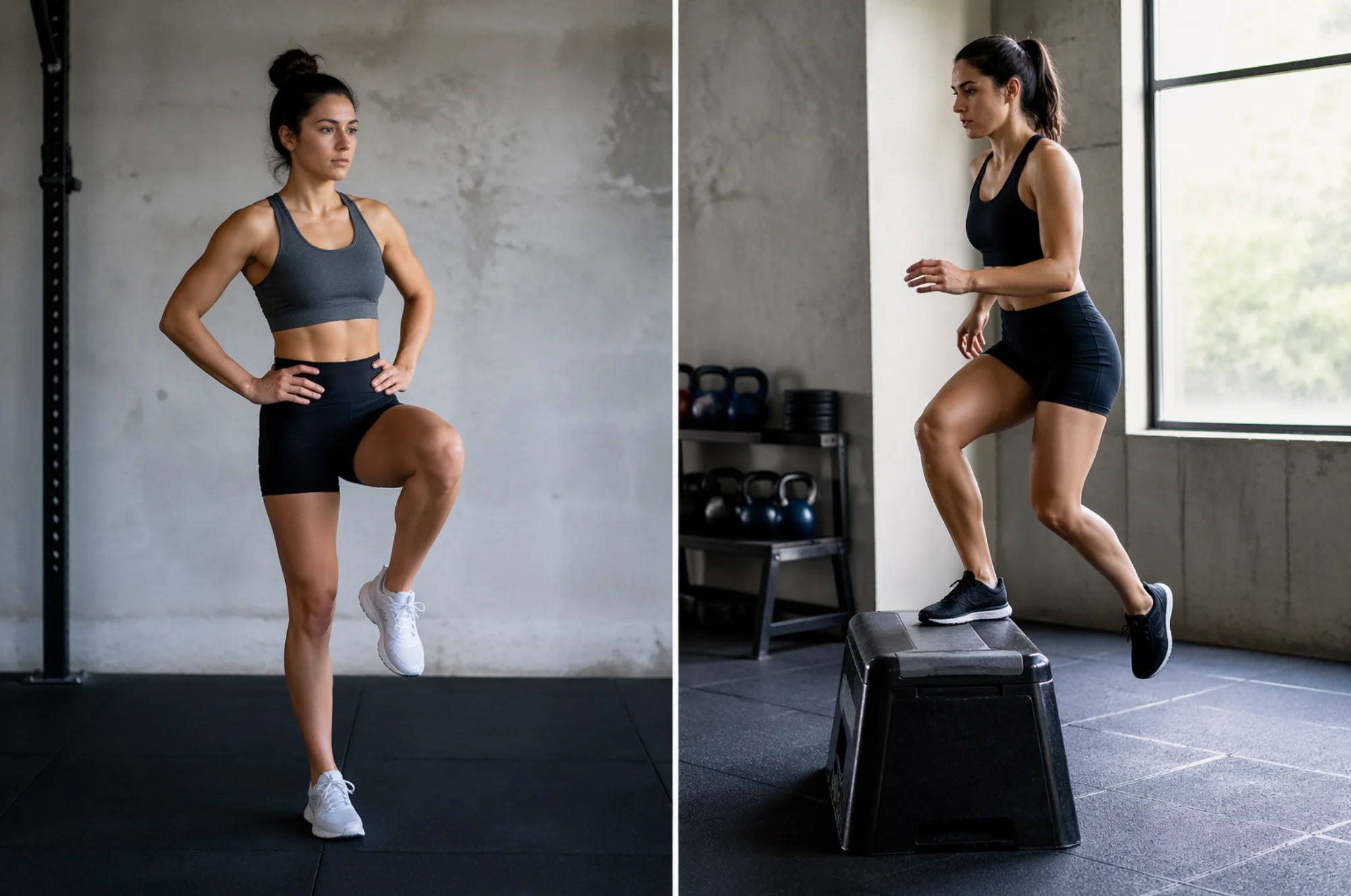
- Single-leg balance: hold 60 seconds per side, keeping the foot and knee pointing forward
- Step-ups and step-downs: focus on keeping the knee aligned over the foot throughout
Pigeon Toe in Infants, Kids, Teens, and Adults
Pigeon toe looks different depending on the patient’s age, and so does the treatment.
Infants
- Metatarsus adductus is the most common cause in babies
- Mild cases diagnosed and treated early often resolve on their own
- Rigid cases may need casts or special shoes to restore proper alignment
Young children
- Pigeon-toe correction braces are one treatment option for children with tibial torsion.
- Most mild cases improve naturally as the child grows
- PT focuses on movement awareness and hip strengthening when intervention is needed
Older children and teens
- Braces and special shoes are less commonly used at this stage
- PT shifts toward functional retraining and building strength in the hip external rotators
- The window for structural change narrows, but functional improvement is still very achievable
Adults
- Spontaneous correction is unlikely without active treatment
- PT focuses on managing symptoms and improving movement quality
- Most adults see clear improvement within 8 to 16 weeks of consistent work
Pigeon-toe surgery is rare across all age groups. It is reserved for severe structural cases in children who have not improved by the ages of 8 to 10. It is also for adults whose deformity affects daily function, and conservative care has not helped.