

A physical therapist uses stretching, strengthening exercises, and hands-on therapy to reduce pain. These methods improve plantar fascia flexibility and support daily movement.
Surgery is not the first step. This approach manages symptoms rather than curing the underlying nodule, and results vary based on nodule size and how long symptoms have been present.
In New York City, clinicians such as Keith Chan, a New York State licensed physical therapist at ITNYCPT, evaluate foot mechanics before building an individualized plan around these methods.
Treatment typically unfolds over several weeks, with exercises and manual techniques introduced gradually as tolerance allows. The sections below walk through the specific stretches, exercises, and manual techniques involved, and compare physical therapy with orthotics, injections, and surgery.
Key Takeaways
- Physical therapy does not remove a plantar fibroma, but it reduces pain and improves daily function through targeted stretching, strengthening exercises, and manual therapy.
- Plantar fibromatosis, also called Ledderhose disease, is a benign condition that rarely resolves on its own, so most conservative care focuses on managing symptoms rather than eliminating the nodule.
- When conservative options do not relieve pain, further steps may include shockwave therapy, steroid injections, or surgical removal, each with different risks and considerations.
- Surgical removal carries a meaningful recurrence rate, since new nodules can form even after the affected tissue is removed.
- Recovery timelines vary by treatment path, with physical therapy typically showing gradual improvement over several weeks and surgical recovery taking longer due to limited weight-bearing.
Can Physical Therapy Treat Plantar Fibromatosis?
Physical therapy cannot remove a plantar fibroma, but it can reduce pain and improve daily activities.
A physical therapist evaluates foot mechanics, reviews plantar fibroma symptoms, and screens for related issues such as ankle sprains before creating a plan focused on stretching, strengthening, and manual therapy.
Treatment reduces tension on the fibrous tissue forming the nodule rather than shrinking it directly.
What Is Plantar Fibromatosis?
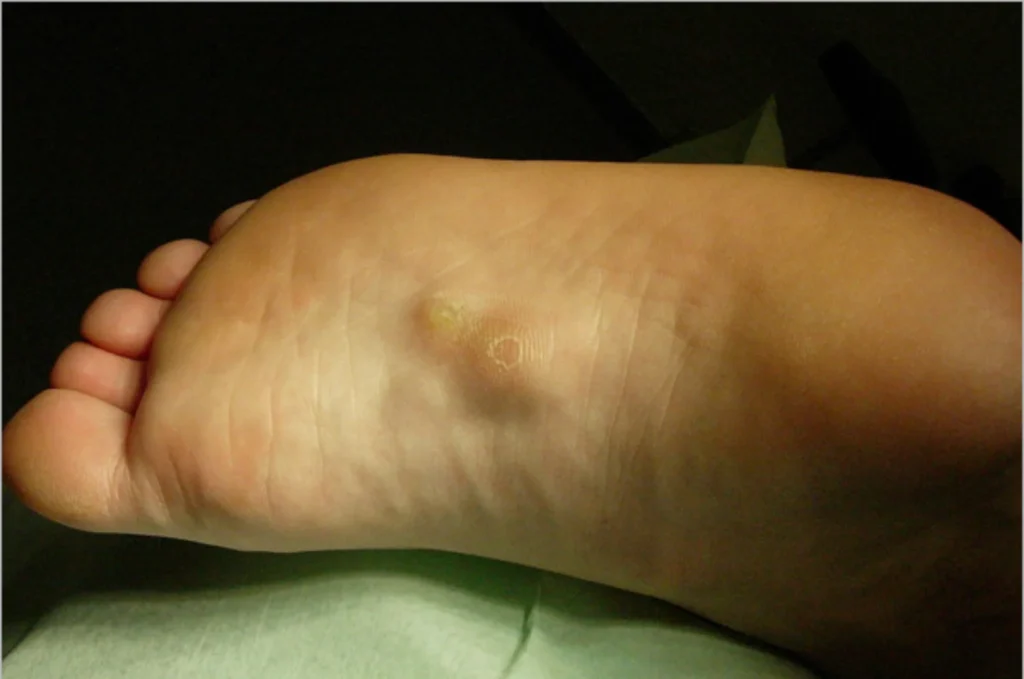
Plantar fibromatosis, also called Ledderhose disease, is a benign condition where fibrous nodules form within the plantar fascia on the bottom of the foot. The nodules are not cancerous, but they can press against the arch of the foot and contribute to foot or ankle pain when walking or wearing shoes.
Plantar Fibroma Causes and Risk Factors
According to Cleveland Clinic, the exact causes of plantar fibromas remain unclear. Still, several factors raise risk, including age over 40, family history, and medical conditions such as diabetes, thyroid disorders, and chronic liver disease. Long periods of standing and repeated foot trauma are also associated factors.

Common Symptoms to Watch For
Common symptoms of plantar fibromas include a firm lump along the arch, pain when standing barefoot, and discomfort from shoe pressure. Lumps can slowly grow over months or years, and some people develop more than one nodule at a time.
How Plantar Fibromatosis Is Diagnosed
Diagnosis usually starts with a physical exam and review of medical history. A clinician may order an MRI or ultrasound to evaluate the soft tissue involved and rule out other causes of a foot mass, consistent with standard orthopedic diagnostic practice.
Do Plantar Fibromas Ever Go Away?
Plantar fibromas rarely disappear on their own, and nodules tend to grow slowly over time. Some stay stable for years without major pain, while others gradually increase in size. Conservative care, including physical therapy, aims to manage pain rather than eliminate the nodule.
How to Get Rid of Plantar Fibroma
No guaranteed way exists to get rid of a plantar fibroma, but several conservative options can reduce pain and improve foot function. Most plans combine stretching, exercise, manual care, and supportive devices before considering advanced treatment.
Stretches for Plantar Fibroma
Stretches for plantar fibroma focus on the calf and plantar fascia, since tight tissue adds tension to the arch of the foot. These stretches don’t shrink the nodule, but regular practice can reduce pulling during standing.
Calf Stretch
- Stand facing a wall and place both hands on it at shoulder height.
- Step the affected foot back about two feet, keeping the back knee straight and the heel flat on the floor.
- Lean forward from the front leg until you feel a stretch along the back of the calf.
- Hold for 20 to 30 seconds, then relax.
- Repeat three times.
Arch Stretch
- Sit in a chair and cross the affected foot over the opposite knee.
- Hold the big toe between the thumb and index finger.
- Gently pull the toe back toward the shin until you feel a stretch along the arch.
- Hold for 20 to 30 seconds, then relax.
- Repeat three times.
Plantar Fibromatosis Physical Therapy Exercises
Exercises for plantar fibroma build strength and control beyond stretching alone. According to the American Academy of Orthopaedic Surgeons, strengthening exercises can help support the arch and improve flexibility, though they will not eliminate the fibroma itself. Similar strengthening principles apply to other conditions physical therapists treat, including foot drop.
Toe Pickup
- Sit with your foot flat on the floor and a small cup to one side.
- Using the toes, pick up a small object, such as a marble, and move it to the cup.
- Repeat 10-15 times per foot.
Towel Scrunch
- Sit with the foot flat on the floor and a small towel laid out lengthwise in front of it.
- Using only the toes, scrunch the towel and pull it toward the body.
- Release, reset the towel, and repeat for 10 to 15 repetitions.
Isometric Toe Press
- Sit with your toes pressed flat against the floor, keeping them uncurled.
- Hold a gentle downward press for 5 to 10 seconds, engaging the muscles under the arch.
- Release and repeat 8 to 10 times.
These plantar fibromatosis physical therapy exercises are introduced gradually, since too much load too soon can increase irritation around the nodule.
Plantar Fibroma Treatment at Home
Home treatment for plantar fibroma often includes supportive, cushioned shoes and avoiding bare feet on hard surfaces. Arch padding can reduce direct pressure on the nodule. Rest and activity modification during flare-ups help limit irritation.

Manual Therapy and Supportive Orthotics
Manual therapy addresses the soft tissue around the nodule through massage and controlled stretching of the plantar fascia. Some clinicians, including ITNYCPT’s Keith Chan, use the Graston Technique when it suits a patient’s needs. It is an instrument-assisted soft-tissue method. Orthotics redistribute pressure away from the nodule and are often paired with exercise.
Advanced and Surgical Treatment Options
When conservative care does not relieve pain, surgical options and procedural treatments may be considered for cases that significantly limit daily activities.
Shockwave Therapy for Plantar Fibroma
Shockwave therapy directs sound-wave pulses at the nodule to help reduce pain and is performed over a series of non-invasive sessions. Evidence for plantar fibromatosis is still developing compared to its established use for plantar fasciitis.
Steroid Injections
Steroid injections deliver anti-inflammatory medication directly into the nodule to reduce pain and swelling. Relief is often temporary, and injections do not shrink the fibroma itself.
Surgical Treatment Options
Surgical treatment is considered when pain significantly affects daily activities despite conservative care. Surgical removal, known as a fasciectomy, involves removing part or all of the affected plantar fascia and carries risks such as wound healing issues. Research on fasciectomy outcomes shows a meaningful recurrence rate, as new nodules can form even after removal.
What Recovery and Results Look Like
Recovery timelines vary by treatment path. Physical therapy generally improves gradually over several weeks as part of a broader rehab physical therapy plan, while surgical recovery takes longer and includes limited weight-bearing.
Most people see improved comfort and quality of life regardless of which conservative option they choose, even without full nodule resolution.
Questions to Ask about Insurance Coverage
Insurance coverage for physical therapy varies by plan, so it helps to understand a few terms before scheduling care. A deductible is paid before coverage begins, a copay is a fixed fee per visit, and coinsurance is a shared percentage of cost after the deductible is met.
Patients should ask their insurer about visit limits and what their plan covers for outpatient physical therapy.

Frequently Asked Questions
What Is the Best Treatment for Plantar Fibromatosis?
No single treatment works for everyone. Physical therapy, orthotics, and injections are common first steps, while surgery is reserved for cases where pain limits daily activities despite conservative care.
Is Walking Good for Plantar Fibroma?
Walking is generally fine for most people with plantar fibromatosis, especially in supportive, cushioned shoes. Pain during walking may signal a need for padding, orthotics, or a modified activity level.