
Knee Pain Relief in Midtown: Causes, Care, Recovery
Knee pain can make walking, climbing stairs, and exercising difficult, so many people seek relief close to work. In Touch Physical Therapy in New York City provides care from a New York State-licensed physical therapist. Licensed clinicians deliver sessions, including Keith Chan, who has more than ten years of experience treating musculoskeletal injuries.
ITNYCPT provides knee pain relief for Midtown East patients, along with care for surrounding neighborhoods, including physical therapy for knee pain in Murray Hill and the blocks around Grand Central. One-on-one sessions are available upon request, allowing closer attention to how you move and faster adjustments to the plan when needed.
Request An Appointment
What Causes Knee Pain and When to Get It Checked
Knee pain comes from one of three broad sources: a single injury, gradual overload from repeated activity, or wear in the joint surfaces over time. Stairs, long walks on hard pavement, and standing on subway platforms all load the knee in ways that expose weakness elsewhere in the leg.
Where the pain sits often points toward the cause. Pain at the front of the knee, around or under the kneecap, often involves tracking and load tolerance. Pain along the outer side often involves tissue on the side of the thigh. Pain deep inside the joint, with stiffness after sitting, more often relates to the joint surfaces.
Some signs suggest the knee should be looked at sooner rather than later:
- The knee gives way or feels unstable under weight
- You cannot fully straighten or bend the knee
- Swelling appears quickly after an injury
- Pain wakes you at night or does not settle after a few days of reduced activity
- Locking or catching happens when you bend the knee
These warning signs align with Mayo Clinic guidance on knee pain.
Knee pain treatment options in Manhattan range from rest and activity changes to surgery. Physical therapy sits between those, and for many overuse and joint-related problems it is a reasonable first step rather than a last resort.
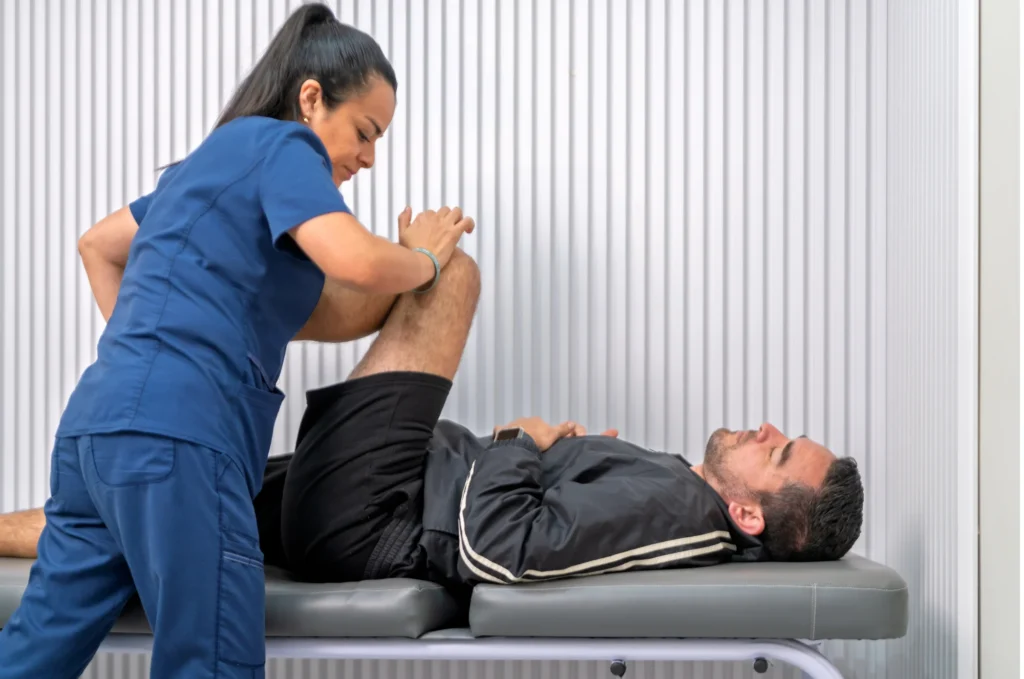
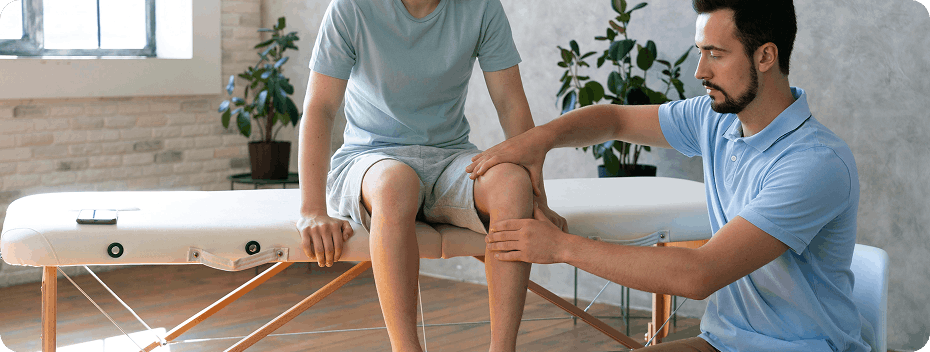
Knee Conditions Treated at the Midtown Office
Physical therapy for knee pain in Midtown often helps when the problem involves the joint, muscles, or tendons around the knee. Treatment focuses on improving strength and restoring healthy movement. The conditions below account for most of the knee cases seen here.
Runner’s Knee Treatment in NYC
Runner’s knee, clinically known as patellofemoral pain syndrome, causes pain at the front of the knee that worsens on stairs, during squats, or after sitting with the knee bent. It is common in runners but can affect anyone whose activity volume climbs faster than their strength.
Runner’s knee treatment in NYC patients receive here follows the same approach covered in our guide to physical therapy for runner’s knee: hip and quadriceps strength, load management, and how the leg absorbs force during running or walking. Treatment rarely means stopping activity altogether. In most cases, the plan adjusts distance, surface, and pace while strength work progresses underneath it.
Patellar Tendinitis Physical Therapy NYC and Jumper’s Knee
Patellar tendinitis, often called jumper’s knee, causes pain just below the kneecap where the tendon attaches. Anyone searching for jumper’s knee physical therapy in NYC is usually describing this same tendon condition, since the two terms refer to the same injury. It develops from repeated jumping, hard landings, or a sudden increase in explosive training.
Patellar tendinitis physical therapy in NYC centers on graded loading, because tendons respond to progressive load rather than rest alone. Recovery tends to be slower than with muscle strains, since tendons adapt over weeks rather than days. For more detail on this condition, see Patellar Tendinopathy Physical Therapy.
IT Band Therapy NYC
Iliotibial band syndrome causes pain on the outer side of the knee, often appearing at a predictable point in a run or a walk and easing with rest. It relates to how the hip and trunk control the leg during single-leg movement rather than to tightness alone.
IT band therapy in NYC: Patients receive a combination of hip strength work, gait or running adjustments, and soft tissue treatment where it applies, the same approach covered in our guide to IT band pain physical therapy. Foam rolling alone rarely resolves this, since the pattern driving the friction also needs to change.
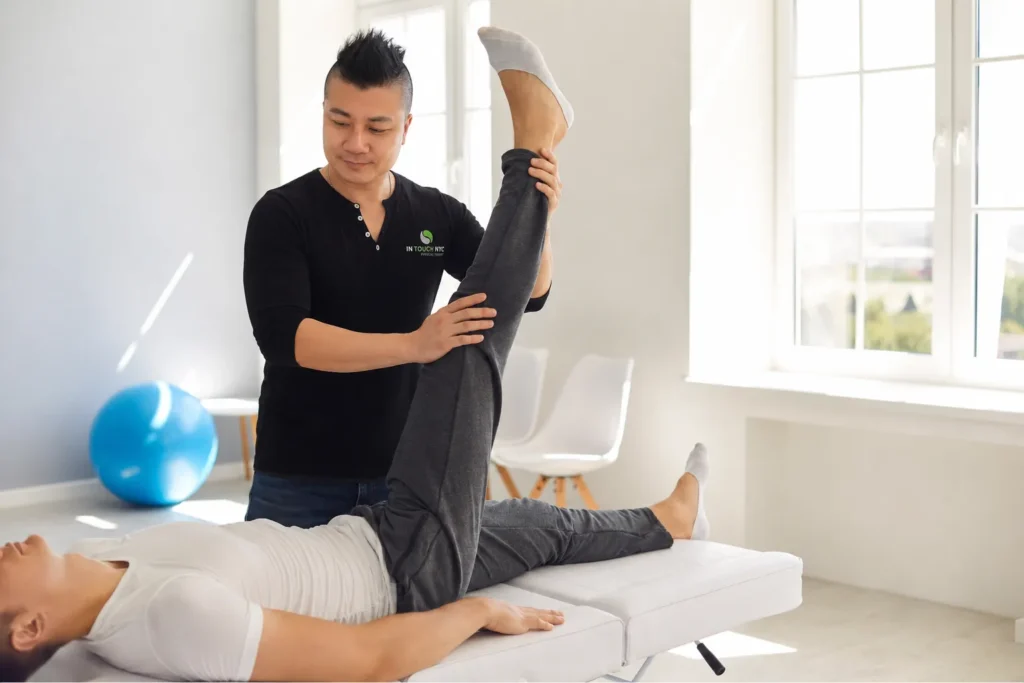
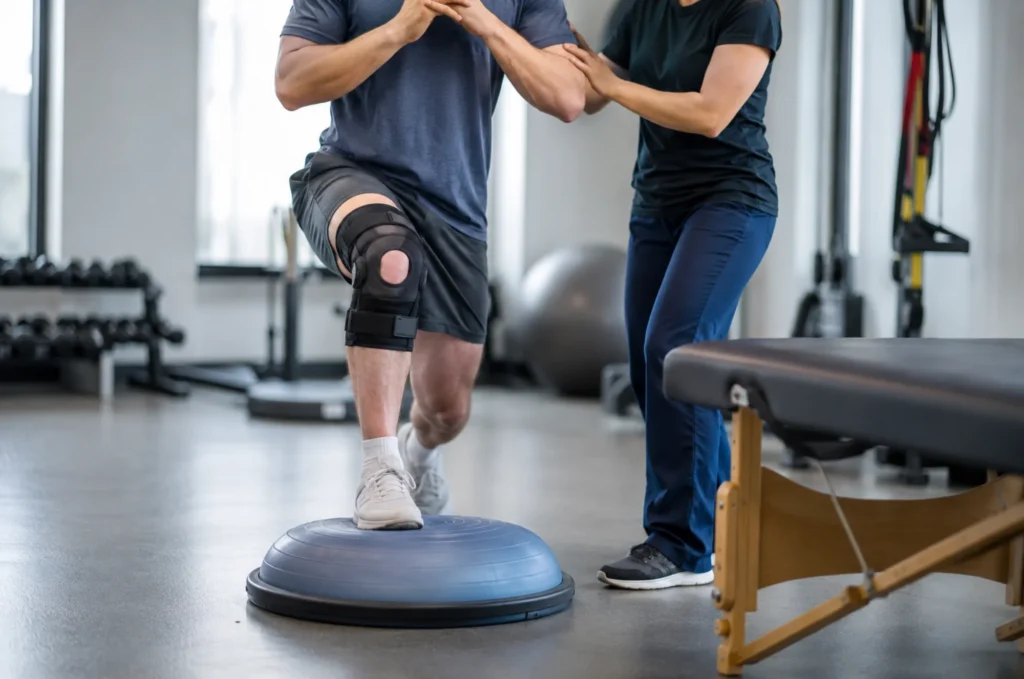
Joint Pain Treatment in Midtown for Arthritis and Cartilage Wear
Osteoarthritis is the most common joint condition affecting the knee. It develops as cartilage thins over time, which leads to stiffness after rest, aching with longer activity, and reduced tolerance for stairs. Joint pain treatment in Midtown patients often assumes the only options are injections or replacement.
Exercise is a first-line treatment for knee osteoarthritis, and strength work around the joint can improve function even when imaging shows visible wear. Arthritis pain relief for Midtown residents often comes from building tolerance to load rather than avoiding it, an approach explained further in our guide to physical therapy for knee arthritis.
Physical Therapy for Knee Injuries in New York
Acute knee injuries follow a different path than overuse pain. Ligament sprains, meniscus tears, and post-surgical recovery all involve healing tissue on a defined timeline, which shapes what treatment can safely include at each stage. Common injuries treated include ACL sprains, meniscus tears, MCL injuries, and bursitis, alongside recovery after knee surgery, conditions covered in more detail on our hip and knee pain page.
Physical therapy for knee injuries in NY starts with protecting the healing structure, then rebuilds range of motion, strength, and the ability to change direction. Post-surgical cases follow protocols set by the operating surgeon, and progression criteria come from that protocol.
98%
How Physical Therapy Treats Knee Pain
Physical therapy focuses on restoring normal movement. For many patients, rehabilitation offers a minimally invasive route to pain relief before medical procedures are considered.
Treatment combines manual therapy, targeted strengthening exercises, and Pilates-based stability work to address the cause of knee pain, not just the symptoms. We use soft tissue mobilization and the Graston Technique as needed to reduce tension and restore joint mobility. Exercise progresses gradually as the patient improves, keeping stress on the knee joint manageable at every stage.
Some patients also report related symptoms such as neck pain or back tension. These can develop when the body changes posture or movement to avoid knee discomfort, so treatment addresses the hip, ankle, and trunk alongside the knee.
What Happens at the First Visit
The first visit focuses on understanding the cause of knee pain. The therapist reviews your health history, activity level, and past injuries, then performs movement tests to assess flexibility, strength, and range of motion. Movement tests help identify how the knee joint moves and where it experiences stress.
After the evaluation, the therapist explains the findings and outlines the treatment plan. The session may include hands-on care and guided exercises. You will also receive home exercises to support recovery between visits.
The plan outlines exercises, treatment frequency, and home care. It is reassessed at intervals and adjusted as symptoms and capacity change.


5-STAR GOOGLE RATING
We are proud to have a 5-star Google rating! This demonstrates our commitment to excellent service and hopefully builds trust with new customers!

Over 50 5-star google reviews
We are grateful for our more than 50 5-star Google reviews! We strive to continue delivering 5-star service at all of our locations!
How Long Knee Pain Recovery Usually Takes
Recovery time varies for each person. Injury severity, daily activity, and exercise consistency all influence progress. Problems caught early often resolve faster than pain that has been carried for months, since both the tissue and the movement habit around it need to change.
General ranges give a starting expectation:
- Mild overuse irritation caught early: often a few weeks
- Runner’s knee and kneecap-related pain: commonly six to twelve weeks
- Patellar tendon problems: commonly three months or longer, given tendon adaptation
- Knee osteoarthritis: managed on an ongoing basis, with function often improving within the first several weeks of consistent strength work
- Post-surgical recovery: set by the surgeon’s protocol, frequently three to six months
Consistency with home exercise is the factor most within your control.
Your care includes:

Full evaluation and goal setting

Individualized treatment plan with phased rehabilitation programs

Progress tracking and regular reassessment
EXCELLENTTrustindex verifies that the original source of the review is Google. Very friendly service and excellent quality of care, would wholeheartedly recommend to anyone looking for a physiotherapist!Posted on GoogleTrustindex verifies that the original source of the review is Google. Great 1:1 attention. Very accommodating!Posted on GoogleTrustindex verifies that the original source of the review is Google. Beth is absolutely wonderful… Always feel that I get such personal time and understanding at each visit. She asks me each time what my needs are. It’s wonderful to work with a caring physical therapist.. Thank youPosted on GoogleTrustindex verifies that the original source of the review is Google. Helped me so much with my body pain and improved my strength so much!Posted on GoogleTrustindex verifies that the original source of the review is Google. I have been visiting Keith for a month now and my experience has been nothing short of great. I had multiple issues to address and in each session we continue to work on it bit by bit. I am already noticing improvement in my strength, posture and endurance. Thanks Keith!!Posted on GoogleTrustindex verifies that the original source of the review is Google. Keith is an awesome physical therapist and human being! He's been taking care of me for a few months now and I've been looking forward to my appointments. I have shown clear progress in my strength rehabilitation, and Keith does an excellent job explaining my exercises, calling out what needs to be done, ensuring progress is made for me, and being a great person to be around.Posted on GoogleTrustindex verifies that the original source of the review is Google. Pilates physical therapy has greatly reduced my migraines and other chronic issues - I highly recommend In Touch NYC.Posted on GoogleTrustindex verifies that the original source of the review is Google. Had an excellent experience at this physical therapy practice. From the start, the team was attentive, professional, and genuinely focused on my recovery. They took the time to listen to my concerns and tailored a treatment plan that felt thoughtful and effective. I’m grateful for their expertise and dedication. Highly recommend to anyone looking for knowledgeable, compassionate, and results-driven care.Posted on GoogleTrustindex verifies that the original source of the review is Google. Keith has been taken care of me for years, couldn’t recommend highly enough. Individual attention, finds and fixes issues. One of one.Posted on GoogleTrustindex verifies that the original source of the review is Google. Keith is great! The 1:1 sessions have been extremely helpful, and Keith is very knowledgeable and puts great effort into tending to all his patients.
Session Length, Cost, and Insurance
Most sessions run 30 to 45 minutes and combine hands-on treatment with guided exercise. We set visit frequency during the evaluation and adjust it as symptoms change.
Self-pay physical therapy sessions are $120 per session. Insurance coverage depends on your specific plan and policy year, and some patients need a referral while others do not. Contact ITNYCPT to confirm your coverage and referral requirements before your first visit.
About the, Clinician
Keith Chan, a licensed physical therapist practicing in New York City, directs care. He earned a Master’s degree in Physical Therapy from CUNY Hunter College and has more than ten years of clinical experience.
Before working full-time in rehabilitation, he spent more than five years as a Tier 3 trainer at Equinox and has more than 17 years of experience as a certified personal trainer. He is a Graston Technique provider.
Clinically reviewed by Keith Chan, PT. Last reviewed: September 9, 2026

Frequently Asked Questions About Knee Pain Relief in Midtown
Do I need a referral to start physical therapy for knee pain?
New York allows direct access to physical therapy for a limited period without a referral, subject to conditions. Your insurance plan may still require one for coverage, so confirm both before the first visit.
Can physical therapy help me avoid knee surgery?
For many overuse conditions, and for some degenerative meniscus tears, physical therapy is a commonly recommended first step before surgery is considered. The evaluation identifies which situation applies and when a referral is appropriate.
How soon will I feel a difference?
Some patients notice changes in movement or comfort within the first few visits. Others take longer, particularly when symptoms have been present for months or when more than one factor is involved.
Should I rest my knee or keep moving?
Complete rest is rarely the answer beyond the first few days after an acute injury. Most knee conditions improve with modified activity rather than stopping altogether. The plan sets which movements to reduce and which to continue.
What should I bring to my first appointment?
Bring shorts or clothing that allows the knee to be examined, any imaging reports you have, and your insurance details. A list of the activities that trigger your pain is also useful.