Keith Chan, ITNYCPT’s expert and a New York State-licensed physical therapist, reviewed this guide. He explains how screening, heat settings, and treatment techniques can affect safety.
Medically reviewed by Keith Chan, PT.
Keith Chan earned a Master’s degree in Physical Therapy from CUNY Hunter College. He has worked with a wide range of patients for more than 10 years.
Key Takeaways
- INDIBA treatment side effects are usually mild and may include short-term redness, warmth, tingling, or skin sensitivity.
- Sharp pain, burning, blisters, severe swelling, or lasting numbness are not expected and should be checked by a healthcare professional.
- INDIBA treatment may not be suitable during pregnancy or for people with pacemakers, electronic implants, thrombophlebitis, active infections, or reduced skin sensation.
- Research suggests possible short-term gains in pain and function, but long-term evidence remains limited and results vary by condition.
- INDIBA therapy should support active rehabilitation, including exercise, reassessment, and clear progress tracking, rather than replace it.
What Are INDIBA Treatment Side Effects?
Common Reactions and Warning Signs
Mild redness, warmth, tingling, or skin sensitivity may occur after an INDIBA treatment. INDIBA states that slight redness may develop in sensitive skin and that tingling may occur after higher tissue temperatures. These effects should remain mild and fade with time.
Sharp pain, burning, blisters, major swelling, or lasting numbness are not normal treatment responses. A sudden hot spot may mean the setting is too high or the applicator needs to move. The patient should inform the therapist immediately so that treatment can be adjusted or discontinued.
How Long Reactions May Last
Mild warmth or tingling should fade within minutes after treatment. Slight redness may last for a few hours, mainly after higher heat settings or in people with sensitive skin. These are general estimates, not fixed timelines. Symptoms that last beyond 24 hours, worsen, or include pain or swelling should be checked by a healthcare professional.
Are There Long-Term INDIBA Side Effects?
What Current Evidence Shows
Research on the long-term side effects of INDIBA treatment remains limited. Studies have examined 448 kHz radiofrequency therapy for knee osteoarthritis, shoulder pain, chronic pelvic pain, and tissue heating.
Some found short-term gains in pain, function, or temperature, but these results do not prove that INDIBA therapy works for every condition or has no long-term risks.
Many studies use small groups or short follow-up periods. Some also combine INDIBA with exercise or other forms of physical therapy. This makes it hard to know how much benefit came from the device alone. More independent research is needed on repeated treatment and lasting safety.
Risks From Repeated Treatment
There is no set number of sessions that fits everyone. Repeat care should depend on pain, movement, skin response, daily function, and progress toward a clear goal. Sessions should not continue without a reason or regular review.
Repeated radiofrequency treatments also expose the same area to heat and electrical current. Proper technique and patient feedback help control this exposure. A therapist should reassess whether the treatment continues to add value as rehabilitation progresses.
Is INDIBA Treatment Safe?
Who Should Avoid Treatment
INDIBA lists cardiac pacemakers and other electronic implants among its main contraindications. Pregnancy and thrombophlebitis are also listed as reasons to avoid or limit treatment. Active infection, bleeding, or treatment near an active tumor may require added medical review.
Metal plates, joint replacements, pins, and other passive metal implants are not the same as electronic implants. INDIBA states that its 448 kHz devices are not automatically restricted in people with many passive metal implants. A clinician should still review the implant type, location, and health history before care begins.
Risk Factors and Medical Clearance
Some people may need medical clearance before treatment. This may include people who take blood thinners, receive cancer care, have circulation problems, or have reduced skin sensation. Reduced sensation can make excessive heat harder to detect.
Patients should report any medicines, implants, pregnancy, recent surgery, skin damage, fever, or changes in sensation. The therapist can then decide whether to avoid treatment, change the setting, or contact another healthcare provider. Safety decisions should match the patient’s diagnosis and medical history.
What Should INDIBA Treatment Feel Like?
Normal Warmth and Tingling
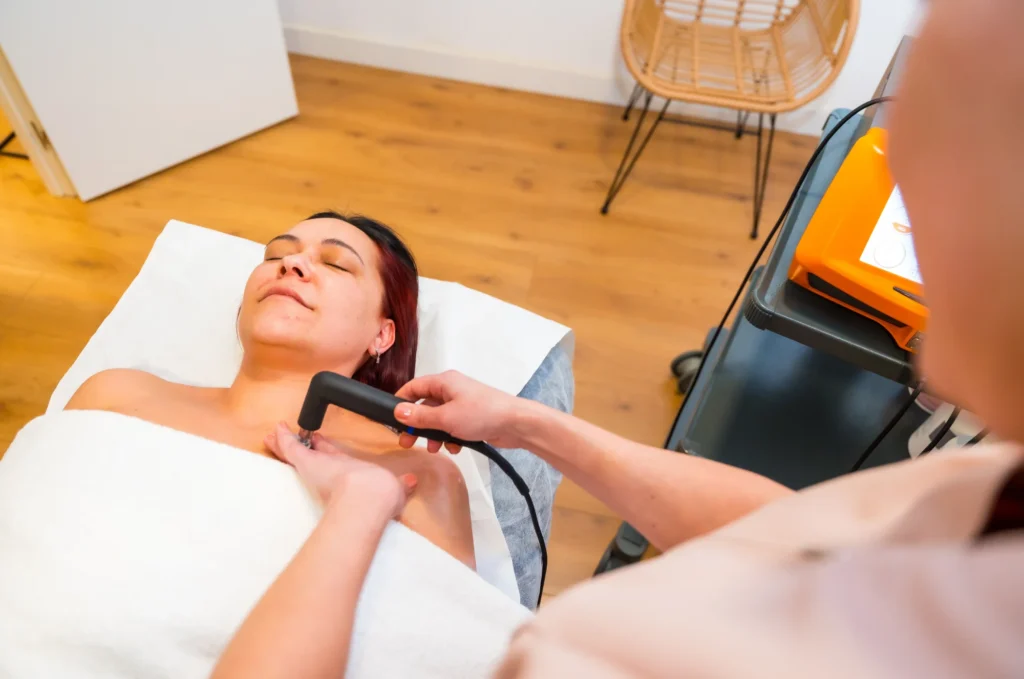
INDIBA radiofrequency therapy often creates mild warmth. A patient may also feel light tingling as radiofrequency energy passes through the treatment area. The feeling should remain comfortable and easy to report.
Heat may feel different across the skin and deeper tissues. Areas with less padding or greater sensitivity may warm faster. The therapist should keep the applicator moving and ask for feedback during the session.
Excessive Heat and Abnormal Discomfort
Sharp pain, burning, or a sudden hot spot is not expected. The therapist should lower the setting, change the applicator position, or stop care. Patient feedback helps protect the skin and soft tissues.
The skin should also be checked after treatment. Blisters, marked redness, dark color, or an open sore need medical review. Another session should not take place until the reaction has been assessed.
How Does INDIBA Therapy Work?
INDIBA Radiofrequency Therapy
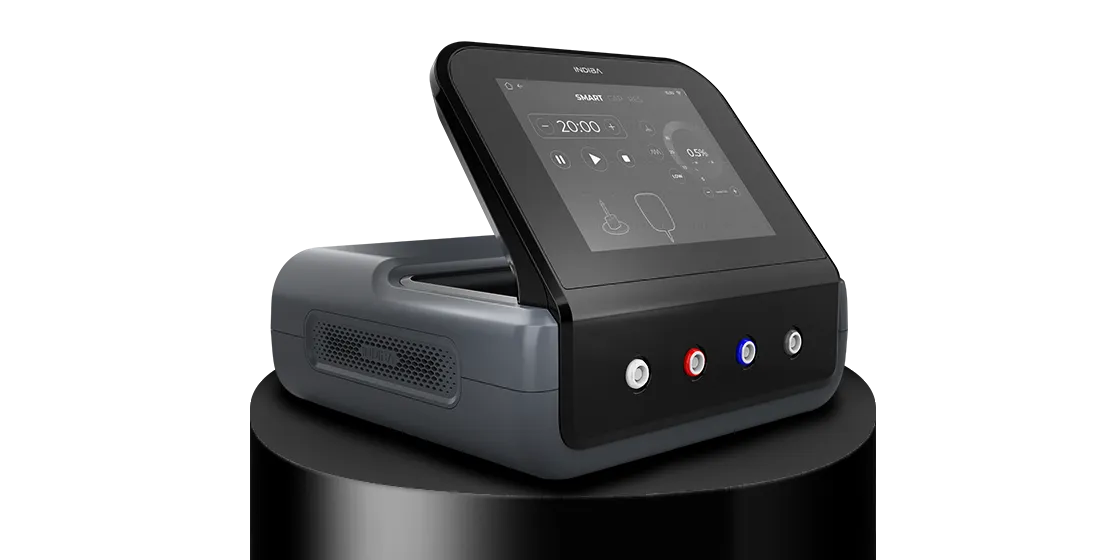
What is INDIBA? INDIBA radiofrequency uses a frequency of 448 kHz. This radiofrequency current passes between electrodes and through body tissues. Thermal settings can raise local temperature and may affect blood flow and tissue flexibility.
Research in healthy adults has shown that 448 kHz treatment can raise and hold skin temperature for a period after treatment. Other studies have examined changes in blood circulation and tissue temperature. The response depends on the setting, applicator, treatment time, and area treated.
What the Proionic Effect Means
The INDIBA Proionic Effect is the manufacturer’s name for proposed changes in ion movement and cellular activity at 448 kHz. INDIBA links this process to the body’s natural repair response, tissue regeneration, and tissue repair. These terms describe a proposed process, not a promise that treatment will heal every injury.
Human research has shown measurable changes in heat and local circulation. Evidence for lasting cell-level changes and clinical results varies by condition. Progress should be judged through pain, strength, movement, and daily function rather than biological claims alone.
Thermal and Nonthermal Settings
Higher settings create more heat and may improve circulation by increasing blood flow in the treated area. Lower settings send radiofrequency energy through tissue with less heat. The therapist should choose the setting based on the injury stage, pain level, skin response, and treatment goal.
INDIBA describes both thermal and subthermal applications. A warmer setting is not always better. Acute irritation, low heat tolerance, or reduced sensation may call for less heat or another treatment option.
What Are the Main INDIBA Benefits?
Pain and Mobility Support
Some studies suggest that INDIBA radiofrequency therapy may reduce pain or support function for certain conditions. Research has reported gains in people with knee osteoarthritis, chronic pelvic pain, and subacromial shoulder pain. The size and length of the benefit can vary.
The treatment may help a person move with less discomfort during exercise or hands-on care. It should not replace strength, balance, mobility, or gradual return to activity. Short-term comfort does not always mean that an injury has healed.
Swelling and Tissue Recovery
Practitioners may use INDIBA radiofrequency to manage swelling or improve tissue comfort before movement. Increasing blood circulation may change local warmth and make some movements feel easier. Claims that it can accelerate recovery should be viewed with care because results depend on the condition.
Some aesthetic providers use INDIBA body treatment to improve skin tone. That goal differs from treating muscles, joints, or deeper tissues in physical therapy. Evidence from cosmetic care should not be applied to injury recovery without support.
Evidence and Treatment Limits
INDIBA benefits may vary with the injury, health history, sleep, workload, pain sensitivity, and exercise habits. Radiofrequency treatments may help some people but not others. Like other physical therapy devices, INDIBA cannot correct every cause of pain or improve tissue health on its own.
Current research cannot confirm one ideal number of sessions for all patients. It also cannot prove that treatment prevents future injury or creates permanent tissue repair. A therapist should track function and change the plan when progress slows.
Questions about whether INDIBA really works are best answered by looking at the condition being treated, the available evidence, and whether the patient shows measurable progress.
Are INDIBA Results Permanent?
Fading Results and Rebound Effects
INDIBA results are not always permanent. Pain, stiffness, or swelling may return when the main cause, workload, or movement problem remains. The loss of a short-term benefit is not always a harmful rebound effect.
A person may also notice that cosmetic changes fade after treatment ends. This does not mean the body has become dependent on INDIBA therapy. It may mean that the treatment produced a temporary effect that needs maintenance or support from other care.
Maintenance and Lasting Progress
Repeat treatment may help maintain short-term relief. Lasting gains often depend on strength, mobility, load control, sleep, and home exercise. The plan should focus on what the patient can do, not only how the area feels after a session.
A physical therapist may track walking, lifting, range of motion, work tasks, or return to sport. These measures show whether care is leading to useful change. They also help determine when treatment should be reduced or stopped.
Is INDIBA Worth It?
INDIBA may be worth considering when it supports a clear rehabilitation goal and leads to measurable progress. Useful measures include pain during a task, motion, strength, swelling, walking tolerance, or return to work and sport. The cost and number of sessions should also be weighed against the benefit.
The treatment may offer less value when sessions continue without clear change. It should not delay exercise, medical testing, or other care that fits the condition. A regular review can help the patient and therapist decide whether to continue.
How Can Side Effects Be Reduced?
Simple steps can lower risk:
- Share your full health history and current medicines.
- Report implants, pregnancy, infections, or reduced skin sensation.
- Speak up if the area feels too hot or painful.
- Check the skin before and after treatment.
- Review progress before adding more sessions.
The clinician should control the heat, treatment time, applicator movement, and device settings. Care should change for sensitive skin, low heat tolerance, acute pain, or reduced feeling. Clear feedback helps prevent skin and tissue problems.
When Should You Seek Medical Advice?
Persistent Pain or Skin Injury
Seek medical advice if pain gets worse or the skin develops burns, blisters, dark color, or an open sore. These are not routine treatment effects. Do not repeat treatment until the area has been checked.
Mild redness that fades within a few hours is different from a skin injury. Pain that continues to rise also needs attention. Learning what may cause pain after physical therapy can help patients separate a mild treatment response from symptoms that need further review.
A healthcare professional can check whether treatment, another injury, or a health condition caused the reaction.
New Numbness or Severe Swelling
New weakness, lasting numbness, or severe swelling needs medical review. Chest pain, fainting, or trouble breathing requires urgent care. These symptoms should not be blamed on INDIBA treatment without an exam.
INDIBA Therapy in Physical Therapy
Combining INDIBA With Active Care
In physical therapy, INDIBA treatment may be one part of a larger plan. A PT evaluation may include a health history, movement screen, strength tests, symptom testing, and goal setting. The plan should change as pain control, strength, and activity tolerance improve.
A broader guide to rehab physical therapy can help explain how evaluation, exercise, and gradual progression work together.
Care may also include therapeutic exercise, manual therapy, the Graston Technique, or other physical therapy modalities, as appropriate for the condition.
Pilates-based therapeutic exercise may help build core strength, improve control and mobility, and support a return to activity. Passive treatment should support active care rather than replace it.
ITNYCPT operates in New York City and provides one-on-one care with a licensed Physical Therapist. Follow-up visits, reassessment, and home exercise carryover help show whether the plan is working. Treatment should be adjusted when the patient’s needs or goals change.
Questions to Ask Your Therapist
- Why are you recommending INDIBA treatment?
- What result will you track?
- How does it fit with therapeutic exercise?
- How many sessions will you review before deciding whether to continue?
- Which side effects should I report?
- What should I expect during and after treatment?
Sources
- INDIBA Group. Frequently Asked Questions.
- Kumaran B, Watson T. Thermal responses to 448 kHz radiofrequency therapy.
- Kumaran B, Watson T. 448 kHz radiofrequency for knee osteoarthritis.
- Carralero-Martínez A., et al. Radiofrequency with physiotherapy for chronic pelvic pain.
- Avendaño-Coy J, et al. Radiofrequency with exercise for subacromial pain.