

Keith Chan is a New York State licensed physical therapist and subject-matter expert at ITNYCPT in New York City.
Key Takeaways
- INDIBA radiofrequency therapy uses a controlled 448 kHz current to warm tissue and may help reduce pain, stiffness, or swelling.
- INDIBA differs from therapeutic ultrasound in that it uses radiofrequency energy rather than sound waves.
- Treatment may support physical therapy for muscle strains, joint pain, sports injuries, scar tightness, and post-surgical swelling.
- INDIBA works best as part of a wider rehab plan that includes exercise, reassessment, and gradual return to activity.
- Results vary, and the treatment may not suit people with implanted electronic devices, active bleeding, or certain other health risks.
What Is INDIBA Treatment?
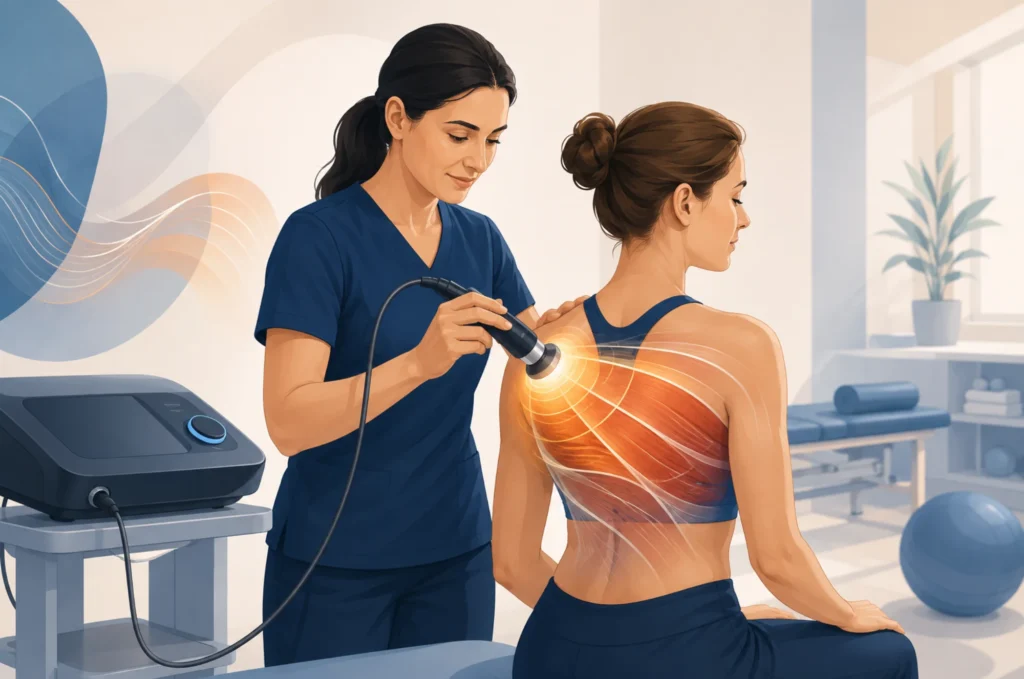
An INDIBA treatment uses a machine, an electrode, and a return plate. The therapist applies cream to the skin and moves the electrode over the target area. The current passes through the tissue without needles or cuts.
What Is the INDIBA Machine?
The INDIBA machine is a radiofrequency diathermy device. Diathermy means that energy warms tissue below the skin. The therapist can change the setting based on the treatment goal, body area, and patient comfort.
How Does INDIBA Radiofrequency Work?
INDIBA uses a radiofrequency current of 448 kHz. The current may create mild or deeper warmth based on the chosen setting. This heat may raise local blood flow, ease short-term stiffness, and make movement feel more comfortable.
Thermal and Nonthermal Effects
Thermal treatment creates clear warmth in the tissue. Lower settings may send energy through the area with little temperature rise. Claims that it starts the body’s natural healing process require caution, as faster healing has not been proven for every injury.
Capacitive and Resistive Modes
Capacitive mode is often used for muscles and soft tissues with more water. Resistive mode may direct more energy toward deeper or denser tissue. The therapist chooses the mode based on the symptoms, tissue type, and treatment goal.
Is INDIBA the Same as Ultrasound?
INDIBA is not the same as therapeutic ultrasound. INDIBA uses radiofrequency current, while ultrasound uses sound waves. Both may warm tissue, but they transfer energy in different ways.
A physical therapist may consider either tool for pain, stiffness, or limited motion. The choice depends on the injury, tissue type, health history, and care plan. Neither treatment is needed for every patient.
What Is INDIBA Treatment Used For?
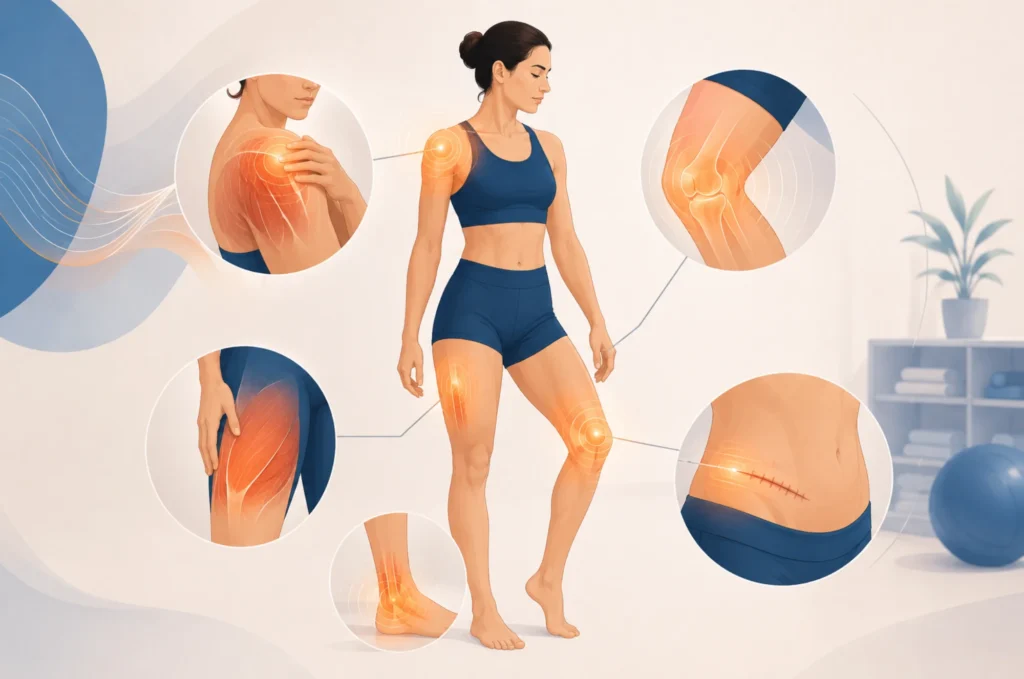
In physiotherapy, INDIBA may support the management of pain, stiffness, swelling, and reduced soft tissue movement. It is often used as one part of a wider rehab plan. It may help some patients move or exercise with less discomfort.
Possible uses include:
- Muscle strains and tightness
- Joint pain and stiffness
- Sports and overuse injuries
- Swelling after an injury or surgery
- Scar tightness and limited tissue movement
INDIBA does not fix the cause of every pain problem. Symptoms may also be related to weakness, excessive workload, poor sleep, stress, nerve sensitivity, or other health issues. A full physical therapy evaluation helps identify what should guide treatment.
What Happens During INDIBA Treatment?
A physical therapist first reviews the patient’s symptoms, health history, and goals. The evaluation may include strength tests, range-of-motion checks, movement tasks, and a pain review. INDIBA may be added when it supports a clear rehab goal.
Treatment Setup and Sensations
Most patients feel the electrode move over the skin with mild or moderate warmth. The treatment should not feel sharp, painful, or too hot. Patients should report burning, numbness, dizziness, or a sudden rise in pain.
Session Length and Number of Sessions
The INDIBA part of a visit may last about 10 to 30 minutes. The full session may also include exercise, manual therapy, movement work, and reassessment. The number of visits depends on the condition, health history, workload, goals, and response to care.
Some patients may receive a short trial rather than a fixed number of visits. Maintenance treatments may be considered when they support a clear goal, but progress should be checked often. The therapist should track pain, motion, strength, exercise tolerance, and daily function.
Aftercare and Downtime
Most people can return to normal light activity after treatment. Mild redness, warmth, or short-term soreness may occur as possible INDIBA treatment side effects.
Patients who notice new or worsening pain after physical therapy should stop the activity that caused it and tell their therapist. Exercise advice may change based on the stage of rehab and the patient’s response.
Does INDIBA Really Work?
Research on whether INDIBA really works suggests that 448 kHz radiofrequency can raise tissue temperature and may improve pain and function in some conditions.
One randomized trial reported better pain and function outcomes in people with knee osteoarthritis. These findings do not prove that INDIBA works for every injury or speeds all forms of healing.
Evidence Limits
The current studies differ in size, treatment dose, patient group, and follow-up time. Some focus on short-term pain or changes in heat rather than full recovery. INDIBA should be viewed as a possible part of care, not a proven cure.
Why Results Vary
Results depend on the condition, treatment dose, pain sensitivity, sleep, health history, and exercise habits. Work demands and sports load can also affect progress. A useful response should lead to better movement, function, or exercise tolerance, not only short-term warmth.
Is INDIBA Treatment Safe?
INDIBA treatment is often well tolerated when a trained clinician screens the patient and controls the heat. It is not suitable for everyone or every body area. The therapist should check the skin and ask about comfort during the session.
Contraindications and Precautions
INDIBA may not be suitable for people with implanted electronic devices, active bleeding, or certain pregnancy-related treatment areas. Care may also be needed with reduced skin feeling, blood flow problems, active cancer, recent surgery, or acute inflammation. The therapist may request medical clearance when health risks are unclear.
Is INDIBA FDA Approved?
Many INDIBA devices are FDA-cleared rather than FDA-approved. FDA 510(k) records list INDIBA radiofrequency devices as diathermy systems cleared through the substantial-equivalence process. Clearance applies to the device’s listed uses and does not prove every treatment claim made about it.
INDIBA Physiotherapy and Active Care
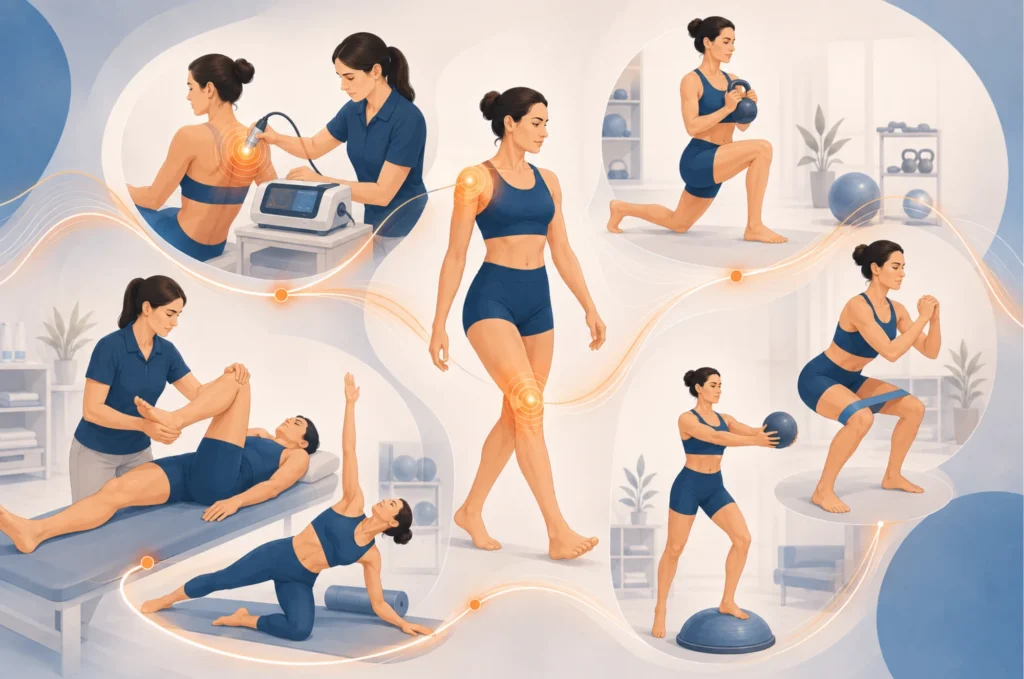
INDIBA body treatment may also be used as part of a broader physical therapy approach, depending on the patient’s condition and treatment goals.
Therapeutic exercise helps build strength, control, mobility, and tolerance for work, sports, and daily tasks. The plan should change as the patient’s function improves.
After an operation, post-surgery rehabilitation exercises may progress from gentle movement to strength, balance, and task-based training.
Other physical therapy modalities may include manual therapy, Graston Technique, or Pilates-based therapeutic exercise. These options may support soft-tissue movement, core control, balance, and movement quality when they align with the patient’s needs.
One-on-one care with a licensed physical therapist also allows regular testing, plan changes, and home exercise follow-up.
Common Questions About INDIBA
How Much Does an INDIBA Machine Cost?
A used professional INDIBA machine may cost about $10,000 to $30,000, depending on the model, age, condition, and included parts.
Recent listings for the INDIBA Activ CT8 fall within this range, with an average price near $20,500. New machines may cost more, but authorized suppliers often provide quotes based on the model, training, warranty, and service plan.
How Much Does INDIBA Treatment Cost?
Some insurance plans may cover a physical therapy visit that includes INDIBA treatment. Coverage depends on the deductible, copay, coinsurance, network status, and plan rules. When insurance does not apply, the stated self-pay cost at ITNYCPT is $120 per visit.