

Keith Chan is a New York State-licensed physical therapist at ITNYCPT with a master’s degree in Physical Therapy from CUNY Hunter College and a Graston Technique certification. He notes that Indiba radio frequency works best with other tools, not alone, and that its role in a plan of care depends on the tissue being treated.
Key Takeaways
- Indiba radiofrequency therapy uses a specific 448 kHz current to support tissue healing, reduce pain, and improve blood flow. It works in two modes: capacitive for surface tissue and resistive for deeper structures such as muscle.
- It is typically used alongside manual therapy, the Graston Technique, and Pilates-based exercise rather than as a stand-alone treatment.
- A session usually lasts 30 to 45 minutes with no pain, needles, or downtime, and most patients feel only a gradual warming sensation.
- Recovery timelines vary by injury, ranging from a few weeks for mild strains to several months for chronic or post-surgical cases, and depend on factors such as health history and consistency with home exercises.
- Cost runs $120 per self-pay session, and coverage depends on the patient’s specific insurance plan, so confirming details with the insurer beforehand is recommended.
How Indiba Radio Frequency Technology Works
Indiba radiofrequency therapy delivers radiofrequency energy to soft tissue via a controlled current. This can create heat or work without heat at all, depending on the setting used.
The device runs at a specific frequency of 448 kHz. This current moves through tissue in a closed loop, a design that lets it reach tissue depths that some other electrotherapy methods cannot reach without being invasive. At a low setting, the current stimulates cellular activity without adding heat.
This supports the body’s natural repair process. At a higher setting, the same frequency creates a warming sensation, driven by tissue resistance to the current. This can increase blood flow to the area, which may promote tissue repair and reduce pain and swelling.
The higher the setting and the longer the exposure, the more heat the tissue generates, which is why a therapist adjusts the intensity carefully rather than using a single fixed setting for every patient.
Indiba devices use two modes. Each one reaches a different depth of tissue:
- Capacitive mode works on soft tissue near the skin. It helps with swelling and mild soreness.
- Resistive mode reaches deeper tissues, such as muscle and connective tissue. It helps with older or deeper injuries.
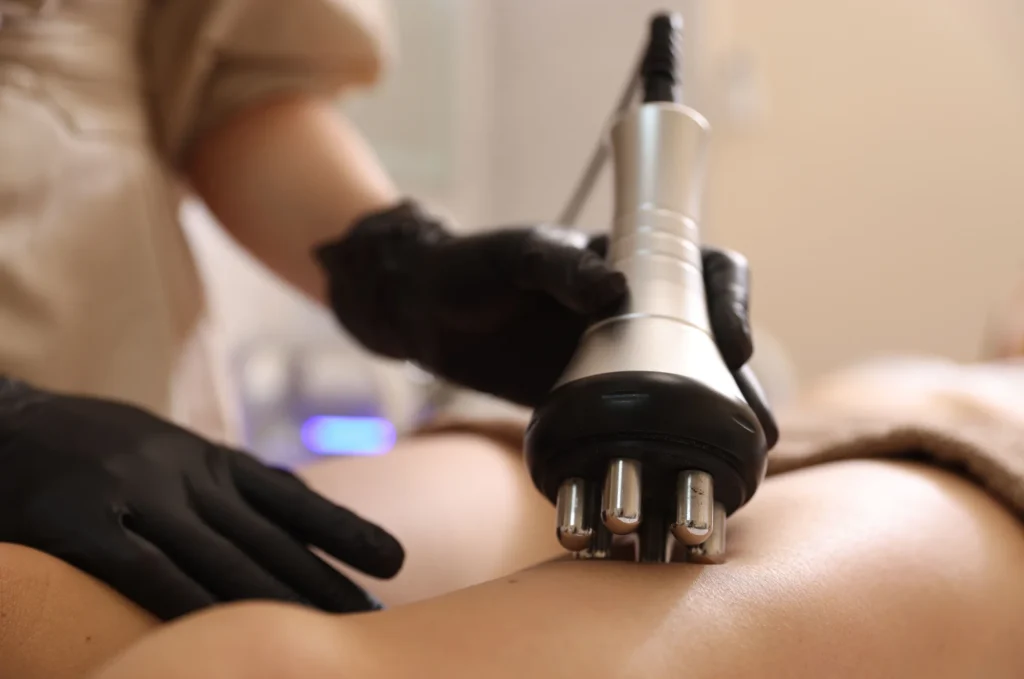
A therapist picks the mode, or uses both, based on where the injury sits. The therapist moves a handheld electrode over the skin in slow passes. Settings shift during the session to align with the treatment goal.
What Indiba Therapy Treats in Physical Therapy
Physical therapists use Indiba therapy for many muscle and joint issues. It is usually one part of a larger treatment plan, not a treatment used on its own.
Indiba treatment can help with tendon injuries, muscle strains, and joint pain. It may also ease long-term pain in the low back, neck, shoulder, hip, or knee, and help reduce pain related to swelling in the area.
After joint repair or replacement surgery, it may reduce swelling and accelerate tissue repair once the surgical site is ready.
A licensed physical therapist first assesses the injury, since each case responds differently to treatment, and factors like tissue depth and stage of healing shape how the device is set.
Radiofrequency devices are sometimes used to contour the body in skin care settings. For readers curious about the Indiba body treatment side of this technology, reports describe how the treatment improves skin quality over the treated area. In physical therapy, though, the goal stays on healing muscles and joints, not on skin looks.
What to Expect During an Indiba Session
An Indiba session happens as part of a normal physical therapy visit. Most sessions run 30 to 45 minutes.
The electrode touches the skin during the whole session. Most patients feel a warming sensation that builds up slowly as blood flow to the area rises.
There is no pain, no needles, and no downtime afterward. The number of sessions a person needs depends on the injury and how well they respond early on.
Effectiveness, Safety, and Cost of Indiba Treatment
Studies on this radiofrequency show improved circulation, reduced swelling, and support for tissue regeneration, though patients often ask whether Indiba really works for their specific condition. Results can differ from person to person based on the injury, its severity, and how the tissue responds to repeated sessions.
Some patients see mild Indiba treatment side effects such as short-term skin flushing after a session. Some also notice that the treatment improves skin tone in the area as blood flow increases.
These benefits of Indiba therapy support healing and may accelerate recovery, but they do not guarantee a fixed result. Cost depends on how long each session runs and how many sessions a person needs.
Some insurance plans may cover part of the cost, and self-pay visits are $120 per session, so it helps to check coverage with the insurer first.
Indiba Combined With Traditional Physical Therapy
Indiba radiofrequency is often used alongside manual therapy, the Graston Technique, and Pilates-based exercises. It is rarely used alone. A licensed physical therapist builds a plan that mixes these tools based on the patient’s injury and adjusts the mix as healing progresses.
Recovery Timelines and What Affects Results
Recovery time can vary a lot from person to person. Mild strains or soft-tissue irritation may ease within a few weeks, while chronic pain or post-surgical cases often take several months of consistent care.
Injury type, health history, sleep, job demands, and how well a patient sticks to home exercise all play a part in whether recovery proceeds at a steady pace. A therapist checks progress at set points and adjusts the plan, rather than using one fixed timeline for everyone.
A quick heads up: these ranges are general approximations meant to set expectations, not a promise of how any one person will heal. Actual recovery time still depends on the specific injury and how a patient responds to treatment.
Common Questions About Indiba Treatment

- Does Indiba radio frequency hurt? No, most patients feel only a mild warming sensation during treatment.
- How many sessions are typically needed? This depends on the condition and how the patient responds over time.
- Can Indiba be used soon after surgery? In many cases, yes, once a physical therapist confirms the treatment fits the patient’s stage of healing.
- What is the difference between capacitive and resistive mode? Capacitive mode targets soft tissue near the skin’s surface, while resistive mode reaches deeper structures such as muscle and connective tissue.
- Does Indiba replace manual therapy or exercise? No, it is typically combined with manual therapy, the Graston Technique, and Pilates-based exercise as part of a broader plan of care.